
- Home
- Attractions
- Malaysia
- Batu Caves: Complete 2026 Guide to Tickets, Timings, History & Travel Tips
Batu Caves: Complete 2026 Guide to Tickets, Timings, History & Travel Tips
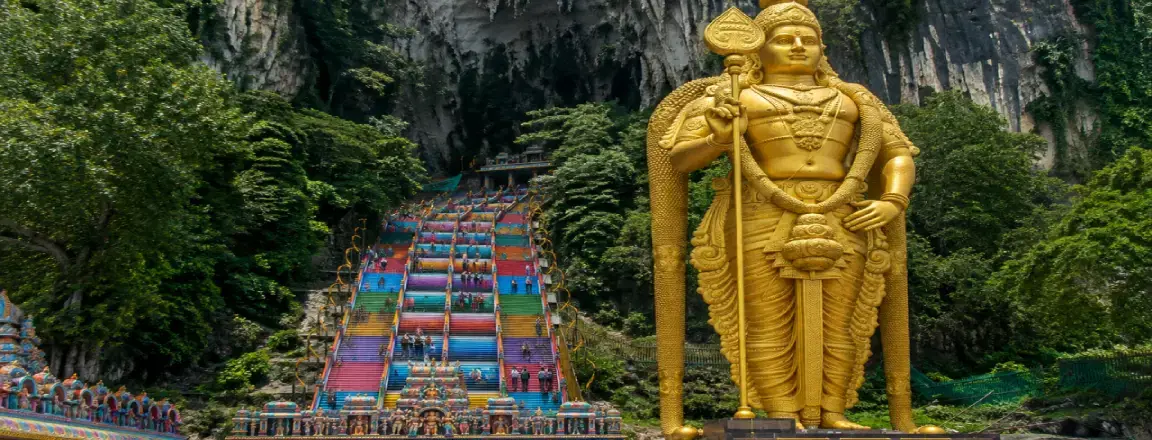
Batu Caves is a famous Hindu temple complex in Malaysia that draws millions of pilgrims and travellers every year. This temple is set inside a 400-million-year-old limestone cave and is known for its 42.7-metre-tall Lord Murugan statue and 272 colourful steps. The main Temple Cave is free to enter, making it an easy addition to any Kuala Lumpur itinerary, especially for travellers looking for a budget-friendly cultural experience.
Batu Caves is one of the most photographed sights in Southeast Asia, but for Indian travellers, this limestone complex is more than a photo stop. It is an important Hindu pilgrimage site and one of Malaysia’s most famous attractions. So, if you are planning to book a Malaysia package from India, this guide covers everything you need to plan your visit, including the opening times, entrance fees, dress code, history, and how to reach this beautiful landmark.
Quick Facts About Batu Caves
Quick Facts | Details |
| Location | Gombak, Selangor, about 13 km north of Kuala Lumpur |
| Opening hours | Daily, 6:00 am–9:00 pm (some sources list 7:00 am; Temple Cave itself has no fixed closing gate) |
| Temple Cave entrance fee | Free |
| Cave Villa entrance fee | RM7,~₹166 (Malaysians) / RM15, ~₹356 (non-Malaysians) |
| Ramayana Cave entrance fee | RM5 (₹118), all visitors |
| Murugan statue height | 42.7 metres — the second tallest Lord Murugan statue in the world |
| Steps to Temple Cave | 272, painted in rainbow colours since 2018 |
| Nearest train station | Batu Caves KTM Komuter, a short walk from the entrance |
Where Is Batu Caves Located?
Batu Caves is located in Gombak, Selangor, about 13 km north of central Kuala Lumpur. Its convenient location makes it an easy half-day trip from the city, whether you are staying around KLCC, Bukit Bintang, or KL Sentral.
Batu Caves is a limestone cave-temple complex featuring several caves and Hindu shrines. The main Temple Cave sits at the top of the famous 272-step staircase, while Ramayana Cave and Cave Villa are among the other attractions within the complex.
Batu Caves Entrance Fee & Tickets
The Batu Caves entrance fee for the main attractions is completely free, with no ticket required and no booking needed. So, you do not need to pay an admission fee to climb the 272 steps, visit the main cave or see the Lord Murugan statue. However, if you want to visit the other attractions within the complex, separate tickets apply:
Batu Caves attraction | Malaysian visitors | Non-Malaysian visitors |
| Temple Cave / Cathedral Cave | Free | Free |
| Cave Villa | RM7 (~₹166) | RM15 (~₹355) |
| Ramayana Cave | RM5 (₹119) | RM5 (₹119) |
TRAVEL TIP: For most first-time visitors, Temple Cave is the main attraction and can be visited without an entry ticket. You can therefore experience the colourful staircase, Lord Murugan statue and main cave without adding any extra penny to your Kuala Lumpur trip budget.
Batu Caves Opening Hours & Timings
Batu Caves is generally open daily from around 6:00 am to 9:00 pm, although opening hours can vary, particularly during religious festivals or special events. These hours refer to the main Batu Caves complex and Temple Cave; individual attractions within the complex may operate on shorter schedules.
For the paid attractions, Ramayana Cave is generally open during shorter daytime hours, while Cave Villa also closes earlier than the main complex. Current listings vary slightly, so if either attraction is important to your itinerary, check its latest hours before visiting.
Batu Caves Opening Hours at a Glance
Attraction | Typical Opening Hours |
| Temple Cave and main complex | Around 6:00 am–9:00 pm |
| Ramayana Cave | Around 9:00 am–6:00 pm |
| Cave Villa | Around 8:30 am–5:30 pm |
What Is the Best Time to Visit Batu Caves?
- For the most comfortable experience, arrive early in the morning, ideally before 8:00 am. The weather is generally cooler than later in the day, and visiting early can help you avoid some of the heavier crowds on the 272-step staircase.
- If you have flexibility, avoid the hottest and busiest part of the day, particularly around late morning and early afternoon.
- If you are visiting during Thaipusam or another major Hindu festival, expect significantly larger crowds and possible changes to normal access and visitor arrangements. Check the latest local information before travelling.
Batu Caves History & Religious Significance
The Batu Caves' history stretches far beyond its role as a Hindu pilgrimage site. The limestone formation is more than 400 million years old, but its religious history began much later. Batu Caves was established as a Hindu religious site in 1891, and the first Thaipusam festival was celebrated here the following year.
The Hindu connection is closely associated with K. Thamboosamy Pillay, a prominent Tamil businessman in Kuala Lumpur. He recognised the resemblance between the cave entrance and the shape of a vel, the sacred spear associated with Lord Murugan, and helped establish a shrine dedicated to Murugan at Batu Caves in the late 19th century. The site then gradually developed into an important Hindu pilgrimage destination.
Batu Caves Temple & Main Attractions
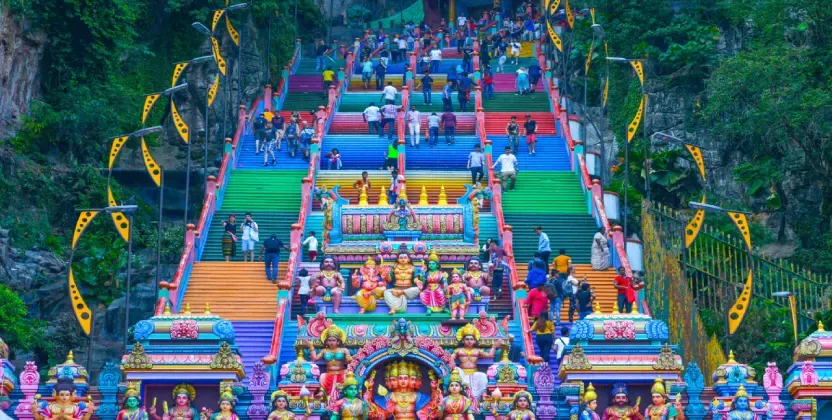
The Batu Caves temple complex includes several distinct attractions, from the famous Temple Cave and its Hindu shrines to smaller caves and cultural exhibits. The main sights are easy to understand once you know what to expect:
Temple Cave (Cathedral Cave): The main temple is reached by climbing 272 colourful steps. At the top, visitors can explore a huge natural cavern with Hindu shrines and statues set against the limestone rock.
- Entry: The entry to Temple Cave is currently free.
Cave Villa: Located at the foot of the hill, Cave Villa combines a water garden, koi pond, statues, shrines, and cultural displays.
- Entry: Admission is paid. RM15 (₹119) for tourists, RM 7 (~₹166) for Malaysians with MyKad
Ramayana Cave: Located near the base of the hill, this cave uses colourful displays and dioramas to depict stories from the Hindu epic Ramayana. A separate entrance fee applies.
- Entry: Entry requires a separate fee. RM 5 (~₹119)
Dark Cave: Located around the 204th step along the main staircase, Dark Cave is known for its cave ecosystem and guided exploration experiences. Currently, this is closed to public tours.
Things to do in Batu Caves
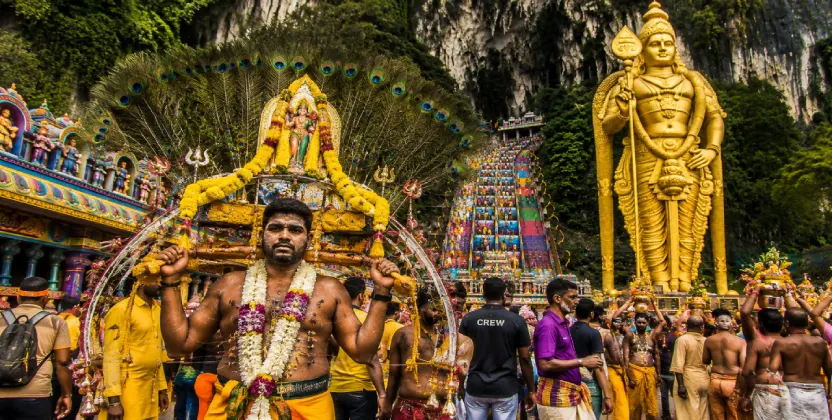
Batu Caves offers plenty to explore, from climbing the iconic 272 colourful steps to admiring the towering golden statue of Lord Murugan. Visitors can explore the limestone caves, visit the temples, enjoy the surrounding views, and experience the vibrant atmosphere of this famous Malaysian landmark.
1. See the Lord Murugan Statue at Batu Caves
The Batu Caves Murugan statue is one of Malaysia's most recognisable religious landmarks. The gold-painted Lord Murugan statue stands 42.7 metres (140 feet) tall at the foot of Batu Caves' main staircase. Lord Murugan, also known as Skanda or Kartikeya, is an important Hindu deity associated with courage, victory, and wisdom. At Batu Caves, his statue stands beside the colourful staircase leading to Temple Cave, making it one of the first sights visitors encounter.
The statue was unveiled in 2006 and stands beside the entrance to Temple Cave. It is widely recognised as the world's second-tallest statue of Lord Murugan, making it one of the most photographed landmarks at Batu Caves.
2. Experience Thaipusam at Batu Caves
Batu Caves is also the main venue for Thaipusam in Malaysia, one of the country's most important Hindu festivals. The festival is usually held in January or February, depending on the Tamil lunar calendar, and attracts hundreds of thousands of devotees and visitors.
During Thaipusam, devotees make pilgrimages to Lord Murugan, and many carry elaborate kavadis, ceremonial structures carried as an act of devotion. The festival combines religious rituals, music, processions and offerings, creating one of the largest Hindu gatherings in Malaysia.
3. Climb the 272-Step Staircase of Batu Caves
The Batu Caves steps are one of the landmark features of the temple complex. The 272 colourful steps lead from the base of the hill to the main Temple Cave, with vibrant shades of red, yellow, blue and green making the staircase one of the most recognisable sights in Batu Caves.
As you climb, you can also see Hindu statues and shrines along the route, while the surrounding greenery and limestone landscape provide views back towards the city. The main Temple Cave is at the top of the 272 steps, making the staircase an integral part of the Batu Caves experience rather than simply an entrance route.
NOTE: Long-tailed macaques are commonly seen around the staircase. They can grab food, drinks and loose belongings. So keep your bags closed and avoid carrying food openly.
Tips for Climbing the Batu Caves Steps
- Start early: Tourism Malaysia recommends arriving before 8:00 AM if you want to experience Batu Caves with fewer crowds.
- Carry water: The staircase is outdoors, and Kuala Lumpur's tropical climate can make the climb hot and humid.
- Secure your belongings: Keep food and loose items away from the macaques.
- Dress respectfully: Batu Caves is an active Hindu religious site, so wear clothing that covers your shoulders and knees.
- Take your time: Take the climb at your own pace. Pause when needed and enjoy the limestone surroundings and views.
Batu Caves Dress Code
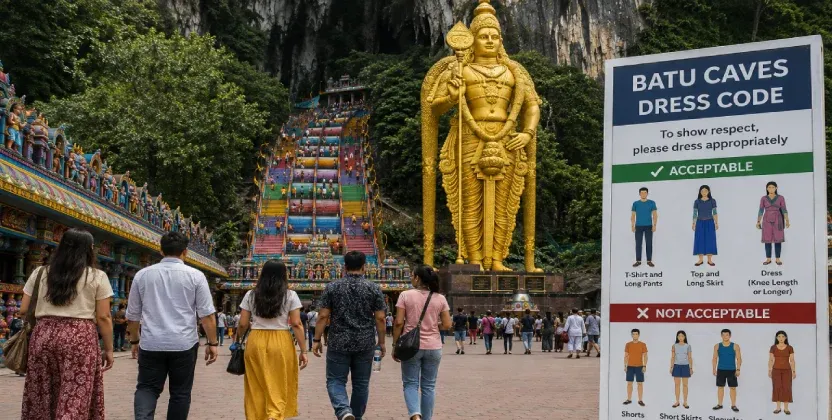
As Batu Caves is an active Hindu place of worship, visitors should dress respectfully when visiting the temple area.
What to Wear at Batu Caves
- Cover your shoulders: Avoid sleeveless tops and wear a T-shirt, shirt or other top that covers the shoulders.
- Cover your knees: Choose trousers, long skirts or dresses that reach below the knees.
- Choose lightweight clothing: Loose, breathable fabrics are more comfortable in Kuala Lumpur's hot and humid weather.
- Wear comfortable footwear: You will need to climb 272 steps to reach Temple Cave.
What to Avoid
- Shorts that end above the knee
- Short skirts or dresses
- Sleeveless tops
- Clothing that is overly revealing
TIP: If your clothing does not provide enough coverage, sarongs may be available near the entrance for visitors who need additional coverage. Availability and charges can vary, so it is better to dress appropriately before arriving.
How to Reach Batu Caves from Kuala Lumpur?
Getting to Batu Caves from Kuala Lumpur is easy, with the KTM Komuter train being the most convenient option for many travellers. You can also reach the caves by Grab or taxi, depending on your budget and where you're staying.
By KTM Komuter Train
The KTM Komuter train runs directly from KL Sentral to Batu Caves station, making it one of the simplest ways to reach the attraction without dealing with Kuala Lumpur traffic.
- Route: KL Sentral → Batu Caves
- Travel time: Around 30–40 minutes
- Fare: Approximately RM2.60–RM3 (₹61-71), depending on the current fare
- Where to get off: Batu Caves station
- Walk from the station: The temple complex is only a short walk from the station.
- Best for: Budget travellers and visitors staying near KL Sentral or along the KTM Komuter route
Train schedules can change, so check the latest KTM Komuter timetable before travelling, particularly if you plan to arrive very early or return late.
By Grab or Taxi
A Grab ride or taxi is a convenient alternative, especially for families, groups or travellers carrying luggage.
- Travel time: Around 20–45 minutes, depending on traffic
- Typical cost: Around RM20–RM60 (₹473-1,420), depending on your pickup location, traffic and demand
- Best for: Groups, families and travellers who prefer a door-to-door journey
What is the Best Way to Reach Batu Caves?
For most independent travellers, the KTM Komuter train offers the best combination of price and convenience. Grab or a taxi is more comfortable if you are travelling in a group or want to avoid transfers and walking.
Tip: If you're planning an early-morning visit to beat the crowds, check the first available KTM Komuter service on the day of your trip rather than relying on a fixed timetable.
Batu Caves and Genting Highlands Day Trip
Combining Batu Caves and Genting Highlands in one day is possible and makes sense for travellers who want to see two very different sides of Malaysia. Batu Caves offers Hindu heritage and ancient limestone caves, while Genting Highlands is a mountain resort known for entertainment, attractions and cooler weather.
How to Get from Batu Caves to Genting Highlands
- By car or private driver: The road distance is roughly 46 km, and the journey can take around 45–60 minutes in normal traffic. This is generally the fastest and most convenient option.
- By public transport: The journey takes longer and usually involves multiple connections. Depending on the route and traffic, allow around 2–3 hours for the journey.
- By organised day tour: Combined Batu Caves and Genting Highlands tours can be a convenient choice if you want hotel pickup and transport arranged for you. Tour inclusions and prices vary, so compare what is included before booking.
Is a Batu Caves and Genting Highlands Day Trip Worth It?
Yes, if you start early and are happy with a busy day. A practical itinerary is to visit Batu Caves first in the morning, then travel to Genting Highlands around late morning and spend the rest of the day there. For the least hassle, a private car or organised day tour is the most convenient option. Public transport can save money, but the additional transfers make the journey considerably longer.
Conclusion: Is Batu Caves Worth Visiting?
Yes, Batu Caves is worth adding to your Kuala Lumpur itinerary. The main Temple Cave, colourful 272-step staircase and Lord Murugan statue can all be visited for free, while optional attractions such as Cave Villa and Ramayana Cave have separate entry fees.
For Indian travellers, the site offers a meaningful cultural connection as well as a memorable sightseeing experience. Arrive early, dress up with your shoulders and knees covered, carry water and keep your belongings secure around the macaques. Whether you visit for its Hindu heritage, ancient limestone caves or striking architecture, Batu Caves is an easy and budget-friendly addition to a Malaysia trip.
FAQs
Is Batu Caves worth visiting?
Yes, Batu Caves is worth visiting for its Hindu temples, 272 colourful steps, 42.7-metre Lord Murugan statue and ancient limestone caves. The main Temple Cave is also free to enter, making it a budget-friendly attraction near Kuala Lumpur.
How much time do you need at Batu Caves?
Most travellers should allow 1.5 to 3 hours for Batu Caves. This gives you enough time to see the Lord Murugan statue, climb the 272 steps, explore Temple Cave and visit optional attractions such as Ramayana Cave or Cave Villa.
What is the best time to visit Batu Caves?
The best time to visit Batu Caves is early morning, ideally before 8:00 am. You can avoid some of the larger crowds and climb the 272 steps before the weather becomes hotter. Tourism Malaysia also recommends visiting before 8:00 am for a quieter experience.
Can you visit Batu Caves without climbing the 272 steps?
Yes. You can visit the main entrance area, see the Lord Murugan statue and admire the colourful staircase without climbing it. However, the main Temple Cave is at the top, so you need to climb all 272 steps to enter it. There is currently no lift or ramp to the main cave.
Is Batu Caves suitable for children and older travellers?
Yes, but the 272-step climb can be tiring, especially in Kuala Lumpur's hot and humid weather. Children and older travellers should climb slowly, take breaks and carry water. Those who cannot manage the staircase can still enjoy the statue and lower areas of the complex.
What should I wear to Batu Caves?
Wear clothing that covers your shoulders and knees when visiting the Temple Cave, as Batu Caves is an active Hindu place of worship. Lightweight trousers, long skirts and tops with covered shoulders are good choices for the tropical weather.
How do you get to Batu Caves from Kuala Lumpur?
The easiest option for most travellers is the KTM Komuter train from KL Sentral to Batu Caves station. The journey takes about 30 minutes, and the station is only a short walk from the temple complex. Grab or a taxi is another convenient option, particularly for groups.
Can you visit Batu Caves and Genting Highlands in one day?
Yes. A Batu Caves and Genting Highlands day trip is possible if you start early. Visit Batu Caves in the morning, then travel to Genting Highlands around late morning and spend the afternoon and evening there. A private car or organised tour is the most convenient option.
Is Batu Caves free for Indian tourists?
Yes. Indian tourists can enter the main Temple Cave for free, just like other visitors. The 272-step staircase and Lord Murugan statue area are also free. Optional attractions such as Cave Villa and Ramayana Cave have separate entry fees. Tourism Malaysia currently lists Cave Villa at RM15 for non-Malaysians and Ramayana Cave at RM5.
What are Batu Caves opening hours?
The complex is open daily, generally listed as 6:00 am to 9:00 pm, 365 days a year. The paid side attractions, Ramayana Cave and Cave Villa, keep shorter daytime hours, roughly 9:00 am to 6:00 pm.
How tall is the Lord Murugan statue at Batu Caves?
The Lord Murugan statue at Batu Caves is 42.7 metres (140 feet) tall. It stands at the entrance to the temple complex and is one of the most recognisable landmarks in Malaysia. It is currently considered the second-tallest Lord Murugan statue in the world.