
- Home
- Attractions
- Malaysia
- Mount Kinabalu: Height, Climbing Guide, Best Time & Costs (2026)
Mount Kinabalu: Height, Climbing Guide, Best Time & Costs (2026)
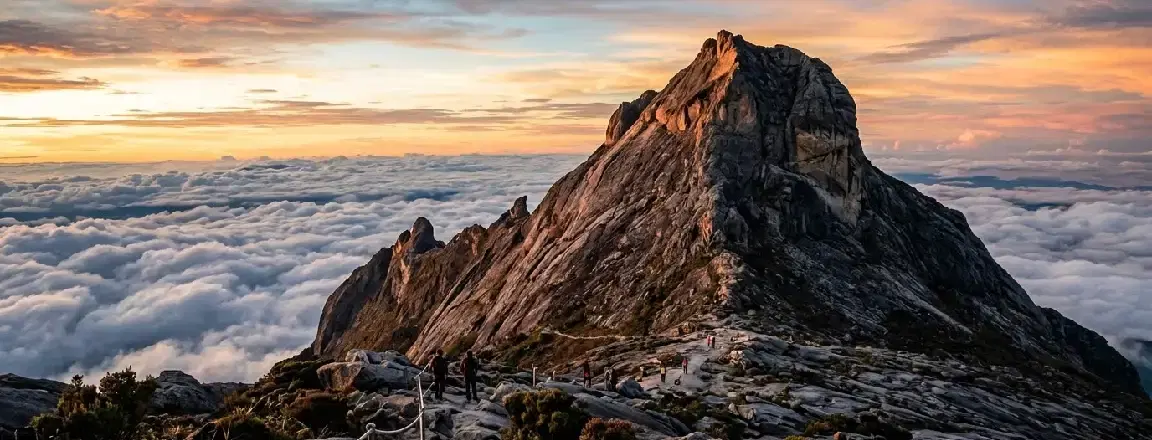
Rising above the clouds in Malaysian Borneo, Mount Kinabalu is the highest mountain in Malaysia and one of Southeast Asia’s most famous natural landmarks. This huge granite mountain stands within Kinabalu Park, a UNESCO World Heritage Site known for its rich plant and animal life.
At 4,095 metres, Mount Kinabalu is a challenging climb, even though it does not require ropes or advanced technical climbing skills. The trail has steep sections, changing weather, and high-altitude conditions. Most climbers also start their summit hike in the early hours to reach the top before sunrise. This guide covers everything you need to know about this famous Mount Kinabalu in Malaysia. It covers the best time to climb, weather, routes, difficulty, permits, costs, safety, how to get there and where to stay, which will help you plan your Malaysia itinerary.
Mount Kinabalu Facts at a Glance
Quick Fact | Details |
| Height | 4,095.2 metres (13,435 feet) |
| Location | Kinabalu Park, Sabah, Malaysian Borneo |
| Status | Highest peak in Malaysia |
| Type of mountain | Granite dome (not a volcano) |
| Park status | UNESCO World Heritage Site, Biosphere Reserve, and Global Geopark |
| Daily climber quota | Around 163 permits per day |
| Best time to climb | March to August (dry season) |
| Standard climb duration | 2 days, 1 night |
| Nearest city | Kota Kinabalu (about 2 hours by road) |
Why Climb Mount Kinabalu?
Climbing Mount Kinabalu is more than reaching the highest point in Malaysia. The journey takes you from dense tropical rainforest to rugged granite landscapes and high-altitude terrain, ending with a spectacular sunrise from Low’s Peak at 4,095 metres.
Here are the main reasons to climb Mount Kinabalu:
- Reach Malaysia’s highest mountain: At 4,095 metres, Mount Kinabalu is the highest mountain in Malaysia and the highest peak on Borneo.
- Watch the sunrise from Low’s Peak: The early-morning summit climb rewards trekkers with spectacular sunrise views above the clouds.
- Experience dramatic granite landscapes: The upper mountain features huge granite rock formations, steep slopes and rugged summit terrain.
- See changing mountain scenery: The trail passes through tropical rainforest, montane vegetation and rocky high-altitude landscapes as you gain elevation.
- Explore a UNESCO-listed natural site: Mount Kinabalu is located within Kinabalu Park, a UNESCO World Heritage Site known for its exceptional biodiversity.
- Take on a non-technical mountain climb: The standard route does not require ropes or advanced climbing skills, although good fitness is important because of the steep terrain, altitude and long walking hours.
Where Is Mount Kinabalu Located?
Mount Kinabalu sits inside Kinabalu Park, in the state of Sabah on the island of Borneo, in East Malaysia. As Mount Kinabalu tours have become more popular, hiking the mountain has turned into one of the favourite activities for travellers planning a Malaysia trip. As the highest peak in Malaysia, standing at 4,095.2 metres, Mount Kinabalu is also the tallest point between the Himalayas and the mountains of New Guinea.
Is Mount Kinabalu a Volcano?
A lot of people wonder about the Mount Kinabalu volcano question. No, Mount Kinabalu is not a volcano. It is a huge granite mountain formed from molten rock that cooled underground and was later pushed upward by tectonic movements.
Unlike a volcanic mountain, Mount Kinabalu does not have a volcanic crater and has no history of erupting. The mountain is also still changing because of movements in the Earth’s crust. Its unusual granite landscape was shaped by tectonic movements, weathering and ancient glacial activity over millions of years.
Mount Kinabalu Climbing Guide: Trails and Difficulty
A Mount Kinabalu hike does not require any technical mountaineering skill. However, you need a good level of basic fitness because the trail is steep and the climb involves long hours of walking at high altitude.
Mount Kinabalu Trail Options
There are two main paths up the mountain:
- Timpohon Trail: This is the main route from Timpohon Gate to Panalaban. The section is about 6 km long and climbs through steep rainforest trails, steps and rocky sections. Trekkers usually stay overnight at Panalaban before continuing to the summit.
- Panalaban to Low’s Peak: From Panalaban, climbers continue towards Low’s Peak, the highest point of Mount Kinabalu. This section is steeper and more exposed, with rocky terrain and colder conditions near the summit.
Important: The Mesilau Trail is currently closed since the 2015 earthquake. Climbers should check the latest trail and access rules before their trip, as mountain conditions and regulations can change.
How Difficult Is Mount Kinabalu to Climb?
Mount Kinabalu is a challenging hike, but it does not require technical climbing skills. The main challenges are the steep steps, long hours of walking, high altitude, and cold weather. A good level of fitness can make the trek easier, especially if you prepare with cardio, stair climbing, or hill walking for several weeks before your trip.
- First Climb: The first day usually involves a 6-kilometre uphill climb from Timpohon Gate to Panalaban, followed by an overnight stay.
- Second Climb: The final climb to Low’s Peak usually starts in the early morning, often around 2 AM, so climbers can reach the summit before sunrise. The second climb starts in the dark and includes steeper sections of the trail.
Mount Kinabalu Via Ferrata
For an extra challenge, Mount Kinabalu also offers Via Ferrata activities, including Walk the Torq and the Low’s Peak Circuit. These routes use fixed cables, metal steps, and other safety equipment attached to the rock face. They are separate from the standard Mount Kinabalu trek and are suitable for travellers looking for a more adventurous experience.
How Long Does It Take to Climb Mount Kinabalu?
The standard Mount Kinabalu climb takes 2 days and 1 night. On the first day, climbers hike from Kinabalu Park to Panalaban, where they stay overnight at an altitude of about 3,200 metres.
The second day starts early with the final climb to Low's Peak, followed by the descent back to Kinabalu Park. The goal is to reach the summit before sunrise. After spending some time at the top, climbers descend from the summit and continue down to Kinabalu Park on the same day.
Mount Kinabalu 2-Day, 1-Night Itinerary
- Day 1: Start at Timpohon Gate and hike uphill to Panalaban. The day involves several hours of steep walking before an overnight stay.
- Day 2: Wake up early for the summit push to Low's Peak. Climbers then descend from the summit and continue back towards Kinabalu Park.
NOTE: For most travellers, the 2-day, 1-night climb is the quickest standard option, while a 3-day trek is better if you want a slower pace and more time to adjust to the altitude.
Mount Kinabalu Sunrise: What to Expect
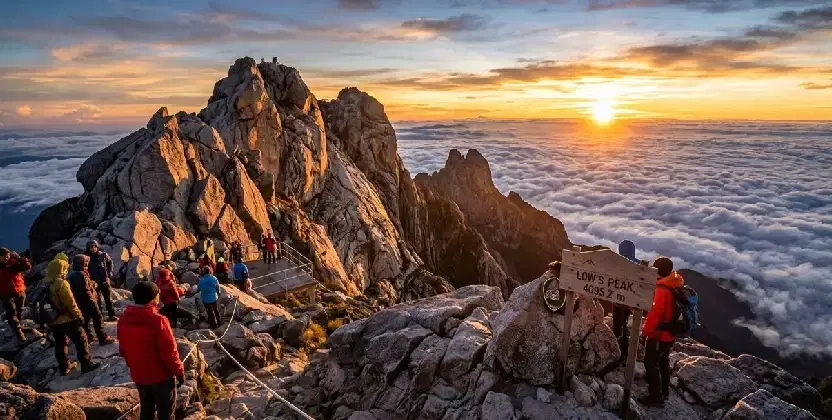
Watching the Mount Kinabalu sunrise from Low’s Peak is one of the most memorable highlights of the climb. Here is what climbers can expect after the hike:
- Climbers usually begin the final ascent from Panalaban at around 2:00 am so they can reach the summit before sunrise. The climb to Low's Peak normally takes about 3–4 hours, depending on fitness and trail conditions.
- At the summit, you can watch the sky change from dark to shades of orange and gold as the sun rises above the clouds. On clear days, you may also get wide views of Sabah and the surrounding landscape.
- The weather at the summit can be very cold and windy before sunrise, so wear warm layers and carry suitable gloves and a jacket. Sunrise times change throughout the year, so check the expected sunrise time when planning your summit climb.
Mount Kinabalu Park: UNESCO World Heritage Site
Mount Kinabalu National Park, usually just called Kinabalu Park, was Malaysia's very first national park, established in 1964. It covers more than 754 square kilometres of rainforest and mountain habitat. The park is home to over 5,000 plant and animal species, including the enormous Rafflesia flower, the largest bloom in the world.
Due to its incredible biodiversity, Mount Kinabalu Park earned UNESCO World Heritage status in 2000. Recently, the park has also been recognised as a UNESCO "Triple Crown" site, holding World Heritage, Biosphere Reserve, and Global Geopark status.
Best Time to Climb Mount Kinabalu
The best time to climb Mount Kinabalu is generally from March to August, when Sabah typically experiences relatively drier weather and better trail conditions. April to June is a popular period for climbing, with favourable conditions for hiking and clearer summit views.
Mount Kinabalu Climbing Seasons
- Malaysia in March to August: Generally the best period for climbing, with comparatively drier conditions.
- Malaysia in April to June: Popular months for hiking due to favourable weather and trail conditions.
- Malaysia in December to January: Typically among the wettest months due to the North-East Monsoon, with slippery trails and reduced summit visibility.
- Year-round: Mountain weather can change quickly, so rain and poor visibility are possible even during the drier months.
Tip: Keep your Mount Kinabalu itinerary flexible and consider adding one extra day as a buffer in case heavy rain or poor weather affects your summit attempt.
Mount Kinabalu Permit, Guide & Climbing Cost
A Mount Kinabalu permit is required for every climber, along with a licensed mountain guide. Unguided climbing is not allowed.
- Climb permit: RM100 (₹2,333) for Malaysian citizens; RM400 (₹9,333) for foreign visitors.
- Mandatory mountain guide fee: From RM350 (₹8,166), often shared among a small group
- Full climb packages (permit + guide + accommodation + meals): Roughly RM1,430–RM3,240 (₹33,365–₹75,597) per person, depending on the package and whether Via Ferrata is included
- Porter service (optional): Around RM14 (₹326) per kilogram of luggage carried
Bookings open online through their official Mount Kinabalu website. Slots for popular months can fill up weeks or even months in advance, so early planning is strongly recommended.
NOTE: For most visitors, booking a Mount Kinabalu hiking package or a full Mount Kinabalu tour through a licensed operator is the easiest way to handle permits, guides, transport, and accommodation all in one booking.
How to Reach Mount Kinabalu?
Wondering how to get to Mount Kinabalu? The easiest way to reach Mount Kinabalu is to fly to Kota Kinabalu International Airport (BKI) in Sabah. Kota Kinabalu is the main gateway for travellers visiting Mount Kinabalu and Kinabalu Park.
How to Get to Mount Kinabalu from Kuala Lumpur?
If you are travelling to Mount Kinabalu from Kuala Lumpur, take a direct flight from Kuala Lumpur to Kota Kinabalu. The flight takes about 2 hours and 35 minutes, and several airlines operate nonstop flights on this route.
After landing at Kota Kinabalu International Airport, continue by road to Kinabalu Park. The park is the main starting point for the climb. Climbers then travel from the registration area to Timpohon Gate, where the main summit trail begins.
- Direct Flight Options: AirAsia, Batik Air and Malaysia Airlines.
- The journey: Kuala Lumpur → Kota Kinabalu by flight → Kinabalu Park by road → Mount Kinabalu trailhead
Things to Do Near Mount Kinabalu
You do not have to climb to the summit to enjoy Mount Kinabalu and its surroundings. The park has nature trails, a botanical garden and scenic viewpoints. So, there are still plenty of things to do in Mount Kinabalu's surrounding rainforest and park grounds.
- Visit Poring Hot Springs: Relax in natural hot spring pools and enjoy a refreshing break after exploring the area.
- Walk the Canopy Walkway: Cross suspension bridges high above the rainforest and enjoy views of the trees and surrounding forest.
- Explore Kinabalu Botanical Garden: Discover Sabah’s rich plant life, including orchids, pitcher plants, and other native species.
- Try the Mountain Garden Trail: Take an easy walk near Kinabalu Park headquarters. It is a good option for families and visitors who do not want a long hike.
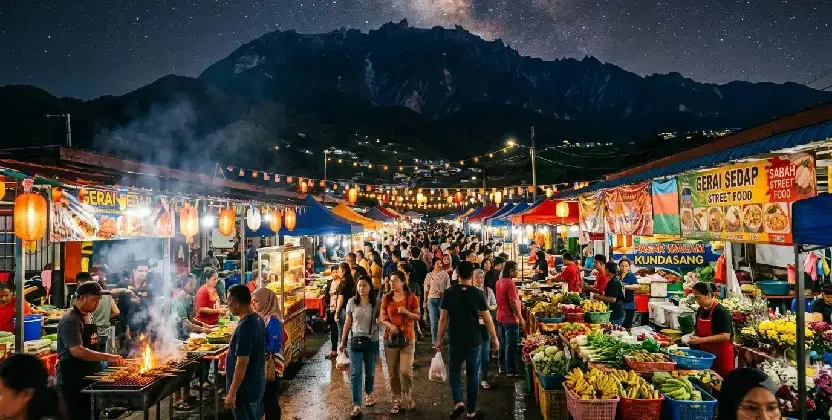
- Visit Kundasang Night Market: Browse local produce, snacks, and other regional foods at this popular evening market near Mount Kinabalu.
Where to Stay Near Mount Kinabalu
You can choose from several places to stay near Mount Kinabalu, depending on your budget and travel plans. Kundasang has hotels, resorts, lodges, and guesthouses with cool weather and mountain views. Staying here is a convenient option if you want to be close to Kinabalu Park before your climb.
1. Stay Inside Kinabalu Park
Kinabalu Park has several accommodation options, including hostels, chalets and suites. Staying inside the park is convenient if you want to be close to the climbing registration area and avoid a long drive on the morning of your trek.
- Options: Rock Hostel, Grace Lodge, The Hill Lodge, Liwagu Suite and other park lodges.
2. Stay in Kundasang
Kundasang is another popular base for travellers visiting Mount Kinabalu. You can find hotels, resorts and lodges with mountain views and a cooler climate. It is a good choice if you want more accommodation options before or after your climb.
- Options: Kinabalu Pine Resort in Kundasang and Sutera Sanctuary @ Kinabalu Park.
3. Stay at Panalaban During the Climb
You do not need to arrange separate accommodation at Panalaban. Overnight accommodation is part of the standard Mount Kinabalu climbing arrangements.
- Options: Lemaing Hostel and Panalaban Hostel, with dormitory-style beds and shared facilities.
Mount Kinabalu Climbing Tips
- Book your permit early: Mount Kinabalu has limited daily climbing slots. Permits can be in high demand during weekends and the popular April–June climbing period.
- Train before your climb: Build your fitness with regular walking, stair climbing, cardio and hill walks. The trail is steep, so good basic fitness will make the climb easier.
- Pack warm layers: Temperatures can fall sharply near the summit. Carry warm layers, a waterproof windbreaker, gloves and a waterproof head torch.
- Stay hydrated and pace yourself: The climb involves long hours of walking and steep sections. Take regular breaks and avoid rushing, especially during the early-morning summit climb.
- Carry some Malaysian Ringgit (MYR): Cash can be useful for snacks, porter tips, and other small expenses during your trip.
- Respect the mountain: Mount Kinabalu has deep cultural and spiritual importance to the local Kadazan-Dusun communities. Follow park rules and respect the mountain and its surroundings.
Is Mount Kinabalu Worth Visiting?
Mount Kinabalu is more than Malaysia’s tallest mountain. It is a rewarding adventure through Sabah’s rainforest, high-altitude landscapes and dramatic granite peaks. Although the climb does not require technical skills, the steep terrain, cold summit conditions and early-morning ascent need good preparation.
For the best experience, book your permit and accommodation in advance, train for steep climbs, pack for changing weather and allow enough time for the trek. Whether you climb to Low’s Peak for sunrise or explore the trails and attractions around Kinabalu Park, Mount Kinabalu offers an unforgettable way to experience the natural beauty of Malaysian Borneo.
FAQs
1. How tall is Mount Kinabalu?
Mount Kinabalu stands at 4,095 metres (13,435 feet) above sea level, making it the highest mountain in Malaysia and the highest peak on the island of Borneo.
2. Is Mount Kinabalu a volcano?
No, Mount Kinabalu is not a volcano. It is a granite mountain formed when molten rock cooled underground and was later pushed upward by tectonic movements.
3. How difficult is it to climb Mount Kinabalu?
Mount Kinabalu is a challenging but non-technical climb. Steep trails, long hours of walking, high altitude and cold summit conditions make good fitness and preparation important.
4. Can beginners climb Mount Kinabalu?
Yes, beginners can climb Mount Kinabalu if they have a reasonable level of fitness and prepare beforehand. No technical mountaineering experience is required, but the steep terrain and altitude can make the trek physically demanding.
5. How long does it take to climb Mount Kinabalu?
A standard Mount Kinabalu climb takes 2 days and 1 night. Climbers usually hike to Panalaban on the first day, stay overnight and make the early-morning ascent to Low's Peak on the second day.
6. What is the best month to climb Mount Kinabalu?
The best time to climb Mount Kinabalu is generally March to August, when Sabah typically experiences drier conditions. However, mountain weather can change quickly, so climbers should be prepared for rain, wind and cold temperatures at any time.
7. How much does it cost to climb Mount Kinabalu?
The cost of climbing Mount Kinabalu depends on the permit, guide, accommodation, meals, transport and optional activities. Foreign visitors pay RM400 (₹9,333) for the climbing permit, while complete climb packages can cost considerably more depending on the inclusions.
8. Do I need a permit and guide to climb Mount Kinabalu?
Yes, climbers need an official climbing permit and a registered mountain guide to climb Mount Kinabalu. Unguided climbing is not permitted.
9. Is Mount Kinabalu safe to climb?
Mount Kinabalu is generally considered safe for reasonably fit climbers who follow park rules, stay with their guide and prepare for high altitude, steep terrain and changing weather. Climbers should also pace themselves and follow all safety instructions.
10. How far is Mount Kinabalu from Kota Kinabalu?
Mount Kinabalu is approximately 90 kilometres from Kota Kinabalu by road. The journey to Kinabalu Park usually takes around 2 hours, depending on traffic and road conditions.
11. Is Mount Kinabalu worth visiting if you don't want to climb?
Yes, Mount Kinabalu is worth visiting even if you do not plan to climb. Kinabalu Park offers rainforest trails, botanical gardens, mountain scenery and diverse wildlife, while nearby attractions include Poring Hot Springs and the Canopy Walkway.
12. What Is the Mount Kinabalu Height?
Mount Kinabalu is 4,095 metres (13,435 feet) tall, making it the highest mountain in Malaysia. It is located in Kinabalu Park, Sabah, Malaysian Borneo. As elevation increases, the landscape changes from tropical rainforest to montane forest and sub-alpine vegetation.
13. Does It Snow on Mount Kinabalu?
No, Mount Kinabalu does not normally get snow. Its tropical location near the equator makes snowfall extremely rare, despite its 4,095-metre elevation. However, the summit can get very cold before sunrise, and frost or thin ice may occasionally form during particularly cold conditions.