
Rome Travel Guide 2026: Places to Visit, Budget, Visa & Travel Tips for Indians

Rome blends ancient history, remarkable architecture, world-famous art and everyday Italian life. From exploring the Colosseum and Roman Forum to tossing a coin at the Trevi Fountain and admiring the treasures of Vatican City, the Italian capital offers plenty to discover on a first visit. If you're planning a Rome trip from India, three to four days is a good starting point for the city's main attractions. April–May and September–October are generally comfortable months for sightseeing, although Easter, public holidays and peak travel dates can bring larger crowds. Budget for attraction tickets, accommodation, local transport and meals, and reserve popular sights in advance.
This Rome travel guide for 2026 covers the best places to visit, current attraction fees, Schengen visa requirements for Indian passport holders, flight options from India, where to stay, local transport and estimated trip costs to help you plan your holiday.
Essential Travel Information for Visiting Rome
| Detail | Information |
| Location | Central Italy, Capital of Italy (Lazio Region) |
| Language | Italian. (English is widely spoken in tourist areas) |
| Currency | Euro (EUR). 1 EUR ≈ ₹106–107 (2026 rates) |
| Nearest Airports |
|
| Visa | Indian passport holders require a Schengen visa. |
| Emergency Numbers | General: 112 | Police: 113 | Ambulance: 118 |
| Best Time to Visit | April–June and September–October (shoulder season with mild weather and fewer crowds) |
NOTE: The Schengen Visa allows entry to all 27 Schengen countries. Indian travellers can apply for an Italian visa through the Italian Embassy or a VFS Global Centre.
Best Places to Visit in Rome: Top Attractions, Tickets & Entry Fees

Exploring Rome is like walking through a living museum, where every corner reveals a piece of history, art, or culture. Among the top places to visit in Rome, we have highlighted some of the iconic landmarks that will offer you a glimpse of the Roman Empire.
Ancient Rome Highlights
1. Colosseum
The Colosseum is the most iconic landmark in Rome. This architectural marvel is the largest amphitheatre in the world and is listed as a UNESCO World Heritage Site. The amphitheatre was once a stage for gladiator battles and dramatic performances during the Roman Empire.
- Standard ticket: €18 (~ ₹1,912) per adult and free entry for children.
- Operational Days: Every day
- Opening Time: Generally 8:30 AM daily, with closing depending on the season.
NOTE: The ticket includes the Colosseum + Roman Forum + Palatine Hill. The ticket is valid for 24 hrs.
Pro Tip: Visit early morning or late afternoon to avoid long queues.
2. Roman Forum & Palatine Hill
The Roman Forum was the centre of public life in ancient Rome. This public space is a maze of the ruins of temples, government buildings and market stalls. The Palatine Hill forms a dramatic backdrop to this historical market space and is considered the site of Rome's earliest settlements.
- Entry cost: Standard ticket (includes Colosseum + Roman Forum + Palatine Hill) is ~€18 (~ ₹1,912).
- Opening hours: 8:30 AM – 7:00 PM (varies by season)
- Operational days: Open daily year-round except 25 Dec & 1 Jan.
3. Pantheon
Pantheon is a masterpiece of ancient engineering and one of the best-preserved monuments of the Roman Empire. This awe-inspiring landmark was originally built as a temple to all Roman gods around 125 AD. It is a must-stop landmark in any Rome Package, especially for architecture and history enthusiasts.
- Entry cost: EUR 7 (~ ₹744)
- Opening hours: 9:00 AM–7:30 PM
- Operational days: It is closed on public holidays.
Baroque Rome: Piazzas & Fountains
4. Trevi Fountain
The Trevi Fountain is the largest Baroque fountain in Rome and one of the most famous in the world. The fountain stands 26 metres tall and 49 metres wide.
- Entry passes: Free; €2 (~ ₹212) to access the closest viewpoint.
5. Piazza Navona
Piazza Navona is one of the finest Baroque piazzas. It features three stunning fountains, including Bernini's Fountain of the Four Rivers. The piazza feels magical throughout the day with street artists, outdoor cafes and evening diners.
- Entry tickets: Free
- Operational Days: Open 24/7
Museums & Art Galleries
6. Borghese Gallery
The Borghese Gallery houses one of the finest private art collections in the world within a stunning 17th-century villa. It features masterpieces by Bernini, Caravaggio and Raphael.
- Entry tickets: Standard ticket around €16–€20+ (~ ₹1,700 – ₹2,125).
- Opening hours: Tuesday – Sunday (9:00 AM – 7:00 PM)
- Operational days: Closed Mondays
NOTE: Admission is strictly limited to 2-hour time slots. Advance booking is essential for guaranteed tickets.
Religious Landmarks
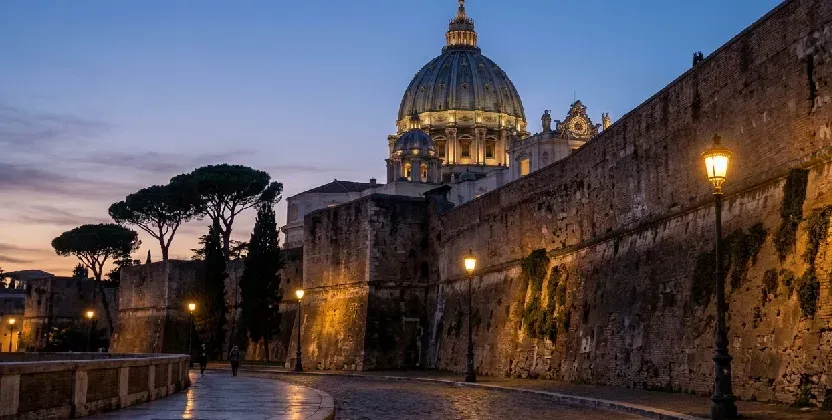
7. Vatican City
Vatican City is the smallest independent state in the world. The city is home to iconic landmarks like St. Peter's Basilica and the breathtaking Sistine Chapel, which draws millions of travellers each year.
- Entry: St. Peter's Basilica and St. Peter's Square are free, while the Vatican Museums require a ticket (€25/~ ₹2,656) per person.
- Tip: Wear clothes covering your shoulders and knees for entry.
Best Time to Visit Rome: Weather, Seasons & Travel Tips
Rome enjoys a Mediterranean climate with hot summers and mild winters. However, the city is a year-round destination. The best time to visit Rome is generally from April to June and September to October, when the weather is pleasantly warm, and crowds are more manageable.
| Season | Months | Temperature | Experience |
| Spring | March – May | 12°C to 22°C | Ideal weather, blooming gardens, Easter celebrations. |
| Summer | June – August | 25°C to 35°C | Peak tourist season. Very hot and crowded. |
| Autumn | September – November | 14°C to 25°C | Excellent weather, thinner crowds, harvest season. |
| Winter | December – February | 5°C to 13°C | Low crowds, lowest prices. Christmas markets in December are magical. |
Tip: The best times to visit are spring (April–June) and autumn (September–October), when temperatures are comfortable, and crowds are manageable.
How to Reach Rome from India?
Reaching Rome from India is easier with the right flight plan, especially if you want to save time and avoid long layovers. Indian travellers can take a non-stop flight from Delhi to Rome or choose connecting flights from other Indian cities via hubs such as Dubai, Doha or Abu Dhabi.
Flights from India to Rome: Airlines, Duration & Fares
Several Indian cities offer direct or one-stop connections to Rome's Leonardo da Vinci Airport (FCO).
| Departure City | Airline | Flight Duration | Approx. Fare |
| Delhi (DEL) | Air India, ITA Airways (direct) | ~9 hours | ₹ 45,000 – 90,000 |
| Mumbai (BOM) | Air India | ~9.5 hours | ₹ 50,000 – 95,000 |
| Bengaluru / Chennai | 1 stop via Dubai or Doha | ~12–14 hours | ₹ 40,000 – 75,000 |
NOTE: Fares below are indicative economy-class prices for advance bookings. The prices depend on routes and airline schedules. For the best flight connections and the best deals, check our customisable Italy Tour Packages.
Getting Around Rome: Metro, Buses & Ticket Prices
Rome's city centre is compact and is best explored on foot. For longer distances, visitors can use the metro or buses that connect most of the major landmarks.
- Ticket Cost: A single metro or bus ticket costs EUR 1.50 (~ ₹160) and is valid for 100 minutes across all modes.
Where to Stay in Rome: Best Areas & Hotels for Every Budget
If you are a first-time visitor, the historic centre offers you an energetic vibe. For a more relaxed and local vibe, Trastevere is the best neighbourhood. For budget travellers, areas near the Termini Station are well-connected and offer great value.
Luxury Hotels in Rome (EUR 200+ / ₹21,250+ per night)
- Hotel Hassler Roma — Spanish Steps
- Hotel de Russie — Piazza del Popolo
- Rome Cavalieri, A Waldorf Astoria Hotel — Monte Mario Hill
- Palazzo Manfredi — Colosseum
Mid-Range Hotels for Indian Travellers (EUR 80–200 / ₹8,500 – ₹21,250 per night)
- Hotel Artemide — Via Nazionale
- The Beehive — Near Termini
- Hotel Navona — Piazza Navona
- Hotel Concordia — Near Vatican
Budget Hotels & Hostels in Rome (EUR 30–80 / ₹2,800 – ₹7,500 / per night)
- The Yellow — Near Termini
- Alessandro Palace Hostel — Near Termini
- Hotel Sonya — Near Termini
- iQ Hotel Roma — Trastevere
Rome Trip Cost from India: Daily Budget for Indian Travellers
Travel Type | Daily Budget | Typical Experience |
| Budget Travel | EUR 65 – 100 (₹ 6,000 – 9,200) | Hostel dorms, street food, free attractions, and metro travel |
| Mid-Range Travel | EUR 150 – 220 (₹ 13,500 – 20,000) | 3-star hotels, city passes, guided tours of the Colosseum & Vatican Museums |
| Luxury Travel | EUR 300 – 500+ (₹ 27,000 – 45,000+) | 5-star hotels, fine dining, private guided tours, skip-the-line access, private transfers |
Plan Your Rome Holiday with Confidence
Rome is one of the most rewarding destinations for Indian travellers. This historic city is easily accessible with direct flights from Delhi and Mumbai. With its awe-inspiring Colosseum, artistic treasures of the Vatican City and lively neighbourhoods, Rome promises you a once-in-a-lifetime experience. This Rome Travel Guide gives Indian travellers the essentials to plan a 3–4 day holiday, including visa requirements, flights from India, must-visit landmarks, accommodation options and daily travel costs. Visit between April and June or September and October for comfortable sightseeing, and book popular attractions in advance to avoid last-minute hassles.
FAQs
1. What is the best time to visit Rome from India?
A: April to June and September to October are the best months to visit Rome from India. The weather is comfortable for sightseeing, and crowds are generally more manageable than during peak summer.
2. How many days are enough to explore Rome?
A: Three to four days are enough to explore Rome’s main attractions, including the Colosseum, Roman Forum, Trevi Fountain, Pantheon and Vatican City. Plan five to seven days if you want a relaxed holiday or day trips.
3. Do Indian citizens need a visa to visit Rome?
A: Yes, Indian passport holders need a Schengen visa to visit Rome for tourism. Apply through the authorised Italian visa application process and prepare your passport, travel itinerary, accommodation details, financial documents and travel insurance.
4. How much does a Rome trip cost from India?
A: A Rome trip from India can cost approximately ₹1.2 lakh to ₹2.5 lakh per person for a week, depending on flights, accommodation, season, food and sightseeing choices. Luxury holidays can cost considerably more.
5. Are there direct flights from India to Rome?
A: Flight availability depends on the departure city, airline and travel dates. Check current airline schedules for non-stop options from major Indian cities, including Delhi and Mumbai. Connecting flights via hubs such as Dubai, Doha and Abu Dhabi are other options.
6. What are the must-visit attractions in Rome?
A: The must-visit attractions in Rome include the Colosseum, Roman Forum, Palatine Hill, Pantheon, Trevi Fountain, Piazza Navona, Borghese Gallery and Vatican City. Visit St. Peter’s Basilica and the Vatican Museums to explore the city’s religious and artistic heritage.
7. Is Rome expensive for Indian tourists?
A: Rome can be expensive during peak travel months, but Indian tourists can manage their budget by travelling during quieter seasons, booking accommodation early, using public transport and visiting free attractions such as Piazza Navona and St. Peter’s Square.
8. What is the daily budget for a Rome trip?
A: A budget traveller may spend around €65–€100 (~ ₹6,060–₹9,330) per day, a mid-range traveller around €150–€220 (~ ₹14,000–₹20,530), and a luxury traveller €300–€500 (~ ₹27,990–₹46,650) or more. These estimates depend on accommodation, meals, transport and activities, and may exclude international flights.
9. What currency is used in Rome, and can Indians use UPI?
A: Rome uses the euro (€). International debit and credit cards are widely accepted, but carrying some euros is useful for small purchases. Indian UPI payments are not universally accepted, so arrange an international payment option before travelling.
10. How can tourists travel around Rome?
A: Walking is one of the best ways to explore Rome’s historic centre. For longer journeys, use the metro, buses and trams. A standard public transport ticket costs approximately €1.50, subject to current fares and ticket conditions.
11. Is Vatican City included in a Rome trip, and is entry free?
A: Yes, Vatican City is easy to visit during a Rome holiday. St. Peter’s Square and the basilica generally offer free entry, subject to security checks and access restrictions, while the Vatican Museums and Sistine Chapel require paid tickets.
12. Can you visit the Colosseum and Vatican City in one day?
A: Yes, but it can be tiring because both attractions require time to explore. It is better to visit the Colosseum, Roman Forum and Palatine Hill on one day and dedicate another day to the Vatican Museums and St. Peter’s Basilica.
13. What should Indian travellers wear in Rome?
A: Wear comfortable walking shoes and lightweight clothing in warm weather. Carry a light jacket for cooler evenings, and dress modestly when visiting churches and religious sites by covering your shoulders and knees.
14. Can you visit Rome on a budget?
A: Yes, you can visit Rome on a budget by travelling outside peak season, staying in affordable accommodation, using public transport and exploring free landmarks. Book popular attractions in advance and compare flight prices to control your overall expenses.
15. What are the best areas to stay in Rome for first-time visitors?
A: Centro Storico is ideal for travellers who want to stay close to major landmarks. Monti is convenient for the Colosseum, Trastevere is popular for restaurants and evening walks, Prati is useful for visiting the Vatican, and the Termini area offers transport connections and budget accommodation.