
- Home
- Attractions
- Italy
- The Grand Canal: A Visitor’s Guide to Venice’s Iconic Waterway
The Grand Canal: A Visitor’s Guide to Venice’s Iconic Waterway
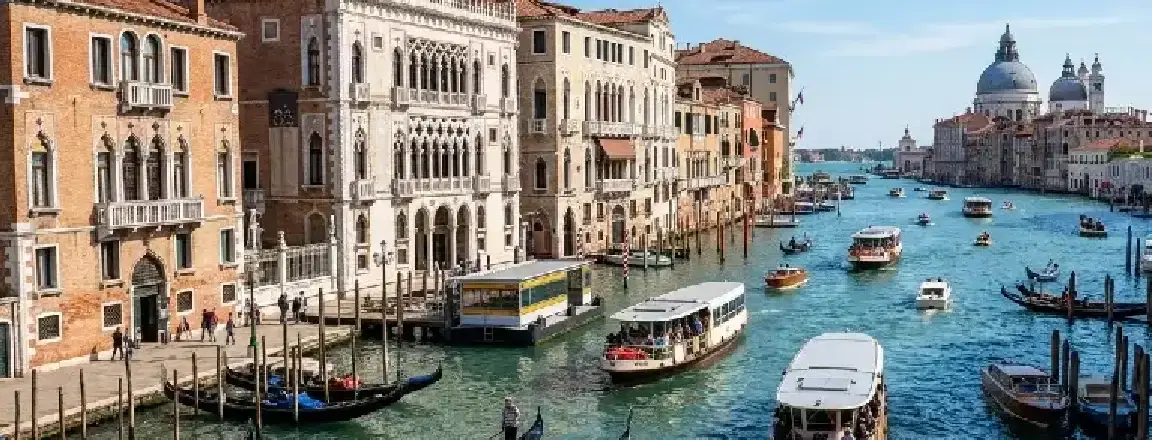
Imagine a city where the busiest street has no cars, bikes or buses, just boats gliding through the water. That’s Venice in Italy, and its most famous “street” is the Grand Canal. Winding for about 3.8 kilometres in an elegant inverted-S shape, the Venice Grand Canal cuts through the heart of the city, passing grand palaces, historic markets and iconic bridges before opening into the San Marco Basin.
A trip to Venice isn’t complete without seeing the city from its most famous waterway. If you’re planning an Italy tour package with family or loved ones, a vaporetto ride along the Grand Canal is one of the best things to do in Venice. From its centuries-old history and iconic bridges to transport options, ticket costs and the best time to visit, here’s everything you need to know before you go.
What Is the Grand Canal in Venice?
The Grand Canal is Venice’s main waterway and one of the city’s most important transport routes. It runs through the heart of Venice in a wide S-shaped curve, passing historic buildings, palaces and famous bridges.
Many types of boats use the Grand Canal every day. You can see vaporettos (water buses), gondolas and boats carrying goods moving along the water. For Venetians, the Grand Canal is more than a tourist attraction. It is an important transport route that connects different parts of the city.
A Quick History of the Grand Canal
The history of the Grand Canal is closely linked to the history of Venice. Venice was founded in the 5th century as people settled on small islands in the lagoon. As these settlements grew and the islands were connected into a larger city, the Grand Canal became the main route through Venice.
By the Middle Ages, the Grand Canal had become an important trade route. Wealthy merchant families built large homes called palazzi along its banks. These buildings showed the wealth and importance of Venice as a major trading power.
Many historic palazzi and other buildings still line the Grand Canal today. Together, they form an important part of Venice's historic landscape. Venice and its Lagoon were added to the UNESCO World Heritage List in 1987, helping protect the city's cultural and architectural heritage.
How Long and How Wide Is the Grand Canal?
The Grand Canal winds through the heart of Venice and is one of the city's main waterways. Its size makes it one of the most important waterways in the city.
Here are the key Grand Canal measurements:
- Length: About 3.8 kilometres
- Width: About 30 to 90 metres, depending on the section
- Average depth: Around 5 metres
- Historic buildings: More than 170 buildings line its banks
NOTE: Its size is only part of what makes it special. As you travel along it, you can see some of the important landmarks in Italy, including historic palaces, churches, bridges and other important Venetian buildings.
Which Bridges Cross the Grand Canal?
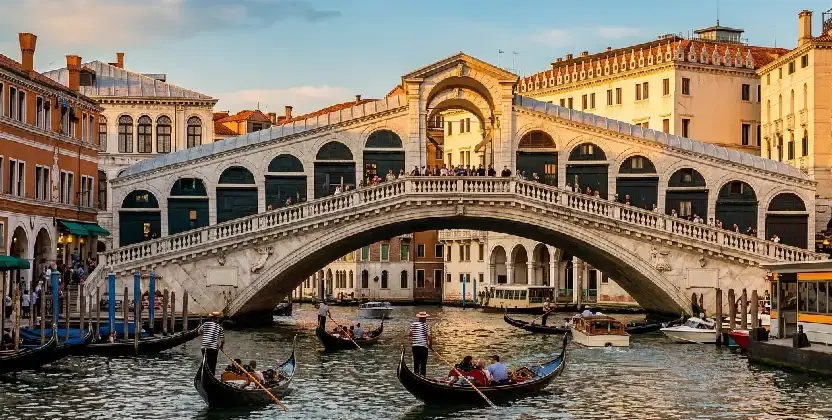
There are four main bridges that cross the Grand Canal in Venice. Each has a different design and connects different parts of Venice.
- Rialto Bridge: It is the oldest and most famous bridge over the Grand Canal. The bridge is lined with shops and offers great views of boats moving along the water.
- Ponte degli Scalzi: The Ponte degli Scalzi stands close to Santa Lucia railway station. It is often one of the first Grand Canal bridges visitors see when arriving in Venice by train.
- Ponte dell'Accademia: The Ponte dell’Accademia is a wooden bridge near the Gallerie dell'Accademia. It connects the San Marco and Dorsoduro areas and is known for its views along the Grand Canal.
- Ponte della Costituzione: This is the newest of the four Grand Canal bridges. Also called the Calatrava Bridge, it opened in 2008 and connects the Santa Lucia railway station with Piazzale Roma.
What Famous Buildings Can You See Along the Grand Canal?
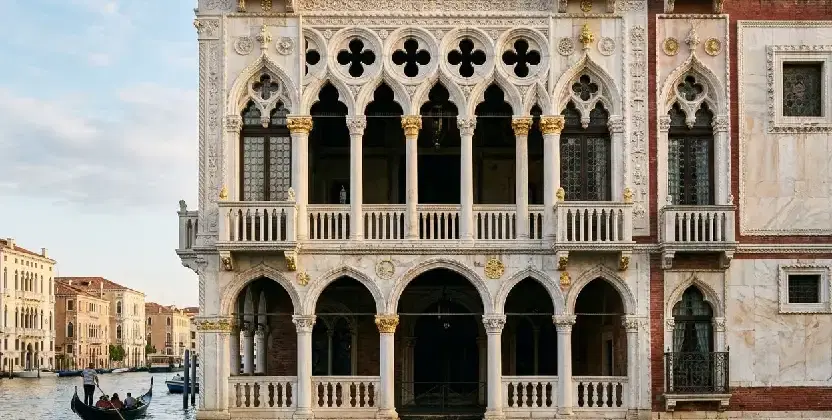
The Grand Canal is lined with more than 170 historic buildings, including palaces, churches and museums. Many date from the 12th to 18th centuries, giving you plenty to spot during a boat ride. Here are some of the most interesting buildings to look for:
- Ca' d'Oro: Also called the House of Gold, this Gothic palace is one of the most famous buildings on the Grand Canal. Today, it houses the Giorgio Franchetti Gallery, with a collection of artworks and historic objects.
- Basilica di Santa Maria della Salute: This large Baroque church stands at the entrance to the Grand Canal. Its huge dome makes it easy to spot from the water. It was built after the 1630 plague in Venice as a church dedicated to the Virgin Mary.
- Palazzo Barbarigo: This historic palace is known for its colourful Murano glass mosaics on the exterior. It stands along the Grand Canal near the Accademia Bridge.
- Peggy Guggenheim Collection: The museum is inside Palazzo Venier dei Leoni, an unfinished palace on the Grand Canal. It displays modern and contemporary art, including works from Peggy Guggenheim's personal collection.
How Can You Explore the Grand Canal?
There are three main ways to travel on the Grand Canal: gondola, vaporetto and water taxi. You can also walk between different parts of Venice using the bridges.
- Gondola: A gondola is Venice's famous flat-bottomed wooden boat, guided by a gondolier. It is mainly a sightseeing experience rather than a practical way to get around the city. A standard gondola ride lasts about 30 minutes and can carry up to five people.
- Vaporetto: A vaporetto is Venice's public water bus and one of the most useful ways to travel along the Grand Canal. Vaporetto Line 1 runs along the Grand Canal and makes many stops, so it gives visitors plenty of chances to see the palaces, bridges and busy waterfront. From Santa Lucia railway station, the full Line 1 journey to Lido takes about an hour.
- Water Taxi: A water taxi is a private motorboat that takes you directly to your destination. It is useful when you have luggage or want a direct trip without making several stops. However, it costs much more than public transport.
Mode of Transport | Best For | Approx. Duration |
| Gondola | A traditional Venice experience | 25–30 minutes |
| Vaporetto | Everyday sightseeing and getting around | About 1 hour |
| Water Taxi | Fast, direct travel | Varies by distance |
| Walking + Bridges | Short crossings, free of cost | 5–10 minutes per bridge |
TIP: For a first visit, consider taking Vaporetto Line 1 and sitting outside when possible. You get a slower view of the palaces, bridges and busy waterway as the boat moves through central Venice.
How Much Does It Cost to Visit the Grand Canal? 2026 Prices
There is no entry fee to see the Grand Canal. You only pay if you choose a boat ride or public transport.
- Gondola ride (30 minutes): A standard daytime ride costs €90 (~ ₹9,810) for 30 minutes per gondola. A gondola can carry up to five people, so families can share the cost. Night rides cost more.
- Vaporetto single ticket (75 minutes): A standard 75-minute ticket costs €9.50 (~ ₹1,035) per person. Children under 6 years can travel free on Venice's urban services.
- 24-hour vaporetto pass: The Venezia Daily Pass costs €25 (~ ₹2,725) per person. It allows unlimited travel on included ACTV waterbus services for 24 hours from the first validation.
TRAVEL TIP: You can also include transport planning when booking a Venice itinerary, making it easier to estimate your overall trip budget.
Venice Access Fee 2026: Do You Need to Pay to Visit the Grand Canal?
Venice introduced an Access Fee for day visitors on selected busy days in 2026. This was done to help manage visitor numbers in the historic city.
The trial applied on selected dates from 3 April to 26 July 2026, between 8:30 am and 4:00 pm. However, the 2026 trial has now ended, so no Access Fee is currently required unless new rules are introduced.
- Who pays: Visitors aged 14 and over who entered the historic centre without staying overnight in accommodation within the Municipality of Venice.
- Cost: €5 (~ ₹545) if booked at least four days ahead, or €10 (~ ₹1,090) if booked duri ng the four days to visit.
- Who is exempt: Children under 14, overnight hotel guests, residents, and workers.
- How it works: You register online at the official Venice access portal and receive a QR code to show at checkpoints near the Grand Canal and other entry points.
TRAVEL TIP: For travellers planning to book a Venice holiday package in the future, it is advised to check the official Venice Access Fee portal shortly before travelling, as the rules may change.
Best Time to Visit the Grand Canal
The best time to visit the Grand Canal depends on whether you want milder weather, fewer crowds or a quieter Venice experience.
- Spring (April–May): Mild weather makes this a comfortable time to explore Venice. April and May can be busy, especially around weekends and holidays, so early mornings are useful for a calmer experience.
- Summer (June–August): This is a busy period in Venice, with warm weather and lots of visitors. Book popular experiences in advance if you are travelling with family.
- Early autumn (September–October): September and October offer a good balance of pleasant weather and fewer visitors than the peak summer months. However, autumn can also bring high-water events in Venice.
- Winter (November–March): This is a quieter period with fewer tourists and a more peaceful atmosphere around the Grand Canal. Cooler weather and the chance of high water are worth keeping in mind.
What Is the Best Time of Day?
Early morning is a good time to see the Grand Canal with fewer boats and visitors. You can also get better views of the palaces and bridges before the waterway becomes busier later in the day.
Things to Spot Along the Grand Canal
A boat ride along the Grand Canal can be more fun when you have things to look for. This turns the journey into a simple Venice spotting game and see how many you can find:
- A gondolier in a striped shirt steering a traditional gondola. Gondoliers are known for their distinctive striped clothing.
- A working boat carrying goods. Venice uses boats for deliveries because there are no normal roads along the canals.
- The dome of Santa Maria della Salute, the large church that stands beside the Grand Canal near the San Marco Basin.
- Rialto Bridge, the famous stone bridge that crosses the Grand Canal.
- Ponte dell'Accademia, the wooden bridge near the Gallerie dell'Accademia.
- A colourful palace reflected in the water. The Grand Canal is lined with historic buildings, so children can look for different colours, windows and balconies.
- A vaporetto, Venice's public water bus, moving between the stops along the canal.
Ready to Explore the Grand Canal?
The Grand Canal is one of the easiest ways to experience the heart of Venice in a single trip. You can ride a vaporetto for a practical sightseeing experience, choose a gondola for a traditional family memory, or simply cross its famous bridges and enjoy the views.
For families, a little planning makes the experience smoother. Check the latest transport fares and visitor rules before you travel, choose an early time for fewer crowds, and plan a few nearby landmarks to visit after your ride.
FAQs
1. What is the Grand Canal in Venice?
The Grand Canal is Venice's main waterway, stretching about 3.8 kilometres through the heart of the city. It passes historic palaces, churches, markets and four major bridges before reaching the San Marco Basin.
2. Is the Grand Canal free to visit?
Yes. There is no entry fee to visit or see the Grand Canal. You can walk around Venice and cross its bridges for free. You only pay for transport or experiences such as a vaporetto, gondola or water taxi.
3. How much does a Grand Canal boat ride cost?
The cost depends on the boat. A standard 30-minute daytime gondola ride costs €90 (~ ₹9,810) per gondola, while a 75-minute vaporetto ticket costs €9.50 (~ ₹1,035) per person. A 24-hour vaporetto pass costs €25 (~ ₹2,725) per person.
4. What is the best way to see the Grand Canal?
The vaporetto is one of the most practical ways to see the Grand Canal. Line 1 follows the waterway and makes several stops, giving you views of palaces, bridges and busy waterfront areas. A gondola is better for a shorter, traditional Venice experience.
5. How long does it take to see the Grand Canal by vaporetto?
A vaporetto Line 1 journey along the Grand Canal takes around 40–45 minutes, depending on the route and stops. Allow extra time if you plan to get off, visit landmarks or explore the surrounding areas.
6. Is a gondola ride on the Grand Canal worth it for families?
A gondola ride can be a memorable family experience, especially because a standard gondola can carry up to five people. Families can share the €90 daytime fare, while the vaporetto is generally more practical for longer sightseeing and getting around Venice.
7. What is the best time to visit the Grand Canal?
Early morning is one of the best times to visit the Grand Canal for a quieter experience. There are usually fewer visitors and boats, making it easier to enjoy views of the palaces, bridges and waterfront.
8. Which bridges cross the Grand Canal?
The four main bridges crossing the Grand Canal are Rialto Bridge, Ponte degli Scalzi, Ponte dell'Accademia and Ponte della Costituzione. Rialto Bridge is the oldest and most famous of the four.
9. What can you see along the Grand Canal?
You can see historic palaces, churches, museums, bridges, gondolas, vaporettos and working boats along the Grand Canal. Major sights include Ca' d'Oro, Basilica di Santa Maria della Salute, Palazzo Barbarigo and the Peggy Guggenheim Collection.
10. Can you walk along the Grand Canal?
You cannot walk along the entire Grand Canal because much of it is bordered by buildings and water. However, you can walk through Venice's streets and cross the canal using its four main bridges, including Rialto Bridge and Ponte dell'Accademia.
11. Is the Grand Canal safe for young children?
Yes, the Grand Canal can be suitable for young children. Families should keep children close around busy bridges, piers and vaporetto boarding areas and follow the safety instructions provided on boats.
12. Do children need a ticket for the Venice vaporetto?
Children under 6 years old travel free on Venice's urban services. Older children generally need a valid ticket unless a specific fare or pass applies. Check the latest ACTV rules before travelling.
13. Is the Grand Canal included in the Venice Access Fee?
The Grand Canal itself does not have an entry fee. Venice's separate Access Fee applies to entry into the historic city on designated dates and times. The 2026 trial ended on 26 July 2026, so there is currently no 2026 Access Fee in operation. Future rules may change, so check the official Venice website before travelling.
14. Where does the Grand Canal start and end?
The Grand Canal runs from the Santa Lucia railway station area through central Venice to the San Marco Basin. Its S-shaped route connects several important areas of Venice along the way.
15. Is the Grand Canal the same as the canals in Venice?
No. The Grand Canal is Venice's largest and most important waterway, while the city has many smaller canals connecting its neighbourhoods. The Grand Canal is wider and carries major waterbus, taxi and boat traffic.
16. Can you take a water taxi on the Grand Canal?
Yes. Water taxis can travel along the Grand Canal and provide private, direct transport between many parts of Venice. They are convenient for travellers with luggage or families who want a direct journey, but they cost considerably more than a vaporetto.