
- Home
- Attractions
- Malaysia
- Orangutan Sanctuary Malaysia 2026 Guide: Where & How to See Them
Orangutan Sanctuary Malaysia 2026 Guide: Where & How to See Them
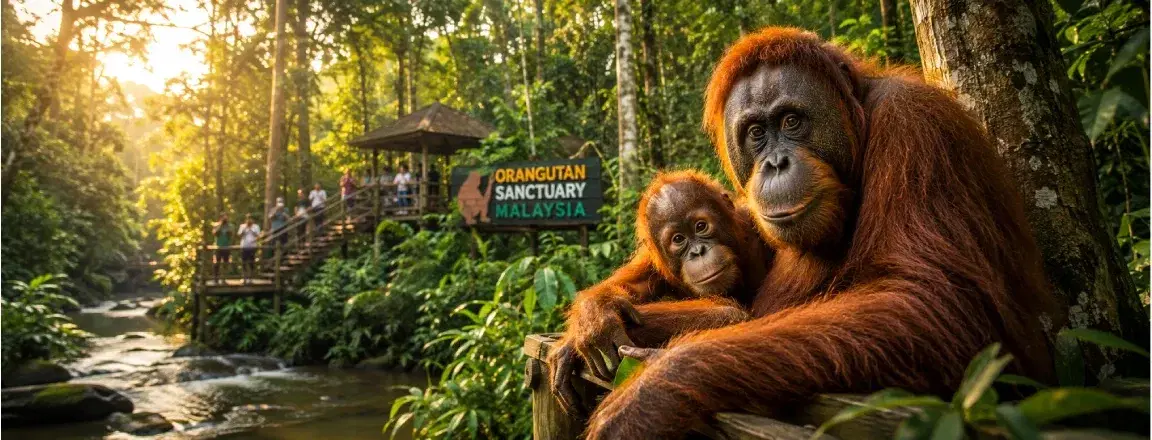
Imagine watching an orangutan swing through the rainforest canopy just a few metres away from you. An orangutan sanctuary in Malaysia is the ultimate destination to witness these highly intelligent and endangered primates in their natural habitat. From the lush forests of Sepilok in Sabah to the quieter setting of Semenggoh in Sarawak, Malaysia offers some of the best opportunities to see orangutans up close.
This guide covers the best times for feeding-hour sightings, conservation rules to protect the animals, and practical travel tips to maximise your jungle visit with a Malaysia adventure tour package.
Orangutan Sanctuaries in Malaysia — At a Glance
Sanctuary | Location | Type | Known For | Entry Fee (RM / INR) |
| Pusat Pemuliharaan Orangutan Sepilok | Sandakan, Sabah | Rehabilitation centre, semi-wild | Orangutan rehabilitation, feeding sessions, and rainforest sightings | RM30 / ~₹660 |
| Semenggoh Wildlife Centre | Kuching, Sarawak | Conservation viewing, semi-wild | Semi-wild orangutans and scheduled feeding sessions | RM5 / ~₹110 |
| Bukit Merah Orangutan Island Foundation | Simpang Empat Semanggol, Perak | Ex-situ / captive breeding | Orangutan breeding, research, and conservation | RM40 / ~₹880 |
Orangutan Rehabilitation Centres vs Attractions in Malaysia
Not every place called a “sanctuary” offers the same experience. For travellers, the key difference is whether orangutans live in a natural forest setting or an enclosed environment.
- Rehabilitation centres – Sepilok and Semenggoh: These centres care for orphaned and injured orangutans and help them develop forest skills. The animals live in large forest reserves and can roam freely. They may skip feeding platforms when natural food is available. Sightings are not guaranteed, but this is part of responsible rehabilitation.
- Ex-situ conservation centres – Bukit Merah: These facilities keep orangutans in enclosed environments for breeding, research, and conservation. The animals are not being prepared for release into the wild. Travellers should research the centre’s conservation practices and animal welfare standards before visiting.
For a more natural wildlife experience, Sepilok and Semenggoh are better choices. They offer the chance to see semi-wild orangutans in forest habitats while supporting rehabilitation and conservation efforts.
Places to See Orangutans in Malaysia
Malaysia is one of the best places to see orangutans in their natural habitats and dedicated conservation centres. From Sabah’s rainforests to wildlife rehabilitation centres, these are the best places to spot and learn about these remarkable primates.
1. Sepilok Orangutan Rehabilitation Centre, Sabah
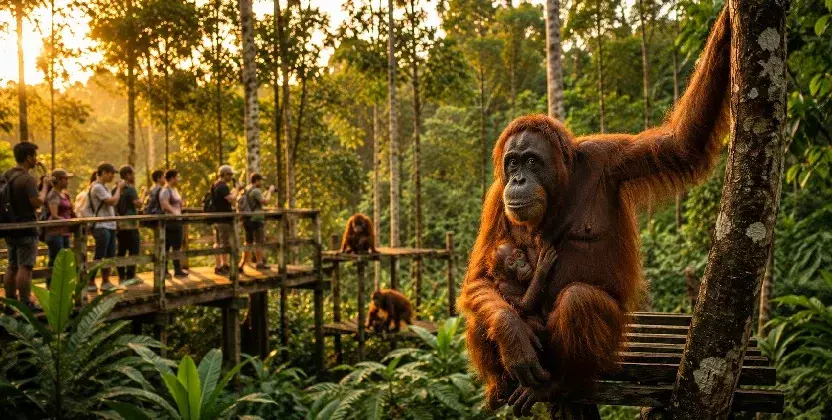
Located in the Sepilok-Kabili Forest Reserve near Sandakan, Sabah, Sepilok is the world’s first centre built specifically to rehabilitate orangutans. It was established in 1964. The centre is run by the Sabah Wildlife Department, with international conservation groups supporting its clinical and nursery work.
You’ll see around 60–80 semi-wild orangutans in the reserve. The nursery also cares for about 25 orphaned or injured youngsters aged six to nine. They are still learning basic forest skills, such as climbing and swinging.
Feeding is optional for the older orangutans. During fruiting season, the forest offers plenty of natural food. As a result, a few orangutans may visit the feeding platform. This is normal and does not mean you had a failed visit.
- Hours: Open daily, 9 am - 4 pm.
- Feeding times: Main platform at 10 am and 3 pm; outdoor nursery slightly earlier, around 9:30 am and 2:30 pm.
- Entry fee: RM 30 (₹660) for international visitors, RM 5 (₹110) for Malaysians (children roughly half). One ticket is valid all day, so you can attend both sessions.
- Camera fee: RM 10 (₹220) for any camera (phones excluded at some counters, so check on entry). Lenses 600mm or longer are charged separately and heavily — bring a modest lens, not a telephoto rig.
- Best months: March to October, Sabah's drier season, for clearer trails and better visibility. This is also peak tourist season, especially July–August school holidays, so arrive early regardless of the month.
Getting there: About 25 km from Sandakan, roughly a 30-minute drive. Buses run from Sandakan and Kota Kinabalu; a Grab or taxi covers the last stretch.
Nearby, in the same reserve: A Sun Bear Conservation Centre and a Rainforest Discovery Centre with an elevated canopy walkway, both worth combining into the same day if you're making the trip out to Sepilok.
2. Semenggoh Wildlife Centre
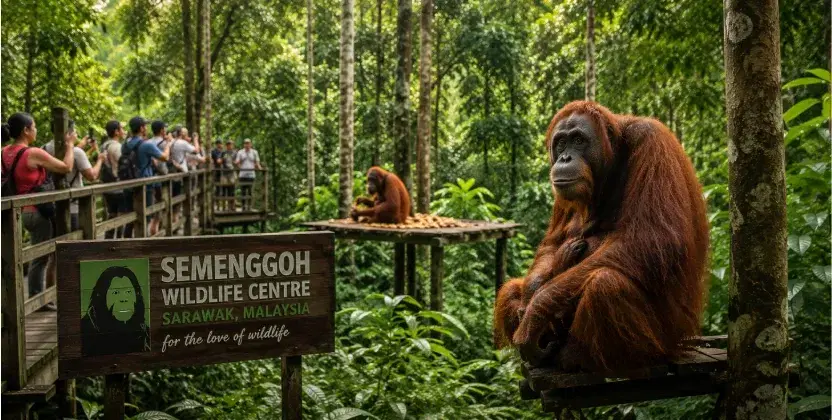
Nestled outside Kuching in Sarawak, Semenggoh was established in 1975. It initially rehabilitated various rescued wildlife before focusing on orangutans. Today, the 653-hectare forest reserve is home to over 20 semi-wild orangutans.
With the forest at its natural carrying capacity, the active rehabilitation has moved to Matang Wildlife Centre. Semenggoh now focuses on orangutan conservation, research, and viewing. It remains one of the best places in Sarawak to see orangutans up close.
What to expect: Feeding sessions at scheduled times draw orangutans down from the surrounding forest onto viewing platforms, similar in format to Sepilok but generally in a smaller, less crowded setting.
- Hours: Open 8 am–10 am and 2 pm–4 pm (viewing is restricted to these windows, unlike Sepilok's all-day access).
- Feeding times: 9 am and 3 pm daily.
- Entry fee: RM 10 (₹220) for foreign adults, RM 5 (₹110) for Malaysians (children less).
- Best months: April to November, when fruit is scarcer in the wild and orangutans are more likely to visit the platform.
- A local celebrity: Ritchie, the reserve's dominant alpha male at around 140 kg, is the animal most visitors hope to spot.
Getting there: About 24 km from Kuching, roughly 40 minutes. Bus 3A or K6 runs from Kuching's waterfront terminal for a few ringgit; Grab runs RM 25–35 (₹550–₹770).
3. Bukit Merah Orangutan Island, Perak
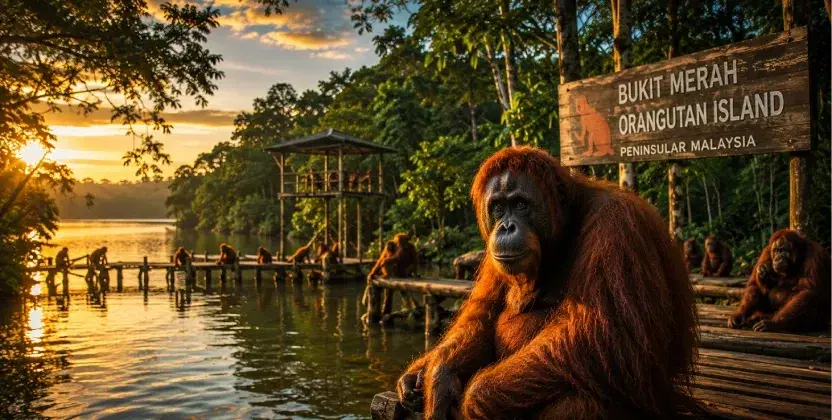
The Bukit Merah Orangutan Island in Perak is the most unique ecotourism sanctuary in Peninsular Malaysia. Located right inside the Bukit Merah Laketown Resort, this facility serves as a critical hub for ex-situ primate conservation, education, and research. Visitors can access the island via a scenic 15-minute boat ride across a freshwater lake.
Once on the island, visitors step into a protected, 150-metre-long caged viewing tunnel while the rescued orangutans roam completely free in the surrounding trees. This safe setup lets you observe their natural social interactions, playtime, and feeding routines from an incredibly close yet respectful distance.
Travellers exploring more of Peninsular Malaysia can also combine the visit with other nature-focused experiences, including some of the best islands in Malaysia and beaches in Malaysia.
Sepilok vs Semenggoh vs Bukit Merah Orangutan Island: Which Should You Visit?
Choose Sepilok for the best overall rehabilitation experience. Semenggoh is ideal for seeing semi-wild orangutans in a quieter forest setting. Bukit Merah Orangutan Island is better suited to travellers interested in captive breeding, research, and conservation.
- Sepilok: Best for first-time visitors and a dedicated orangutan rehabilitation experience.
- Semenggoh: Best for a more natural rainforest setting near Kuching.
- Bukit Merah: Best for learning about ex-situ conservation and orangutan breeding programmes.
For most travellers, Sepilok is the top choice. It offers strong conservation value and a good chance to see orangutans in a natural forest environment.
What Is the Best Time to See Orangutans in Malaysia?
The best time to see orangutans in Malaysia depends on the region you visit, but April to October is generally the ideal window. During these months, dry weather makes jungle trekking easier, and specific fruit cycles increase your chances of sightings.
By Season and Fruit Cycle (Borneo: Sabah & Sarawak)
- Dry Season (April to October): Malaysia in April to October is the best overall time to visit Sepilok (Sabah) and Semenggoh (Sarawak). Clearer skies mean easier travel, dry trekking trails, and better visibility through the rainforest canopy.
- The "Fruiting Season" Catch (November to March): Between November and March, the Borneo rainforest in Malaysia experiences a heavy fruiting season. Because natural food is abundant deep in the jungle, semi-wild orangutans rarely come down to the sanctuary feeding platforms.
- The Sweet Spot (April, May, and September): During these months, wild forest fruit is scarce, making the orangutans much more likely to visit sanctuary platforms for a snack. You also avoid the extreme crowds of the July–August school holiday peak.
Best Time of Day (Feeding Hours)
Orangutans are semi-wild and roam freely, so your best chance to spot them is strictly during scheduled morning and afternoon feeding sessions:
- Sepilok (Sabah): Arrive for the 10:00 AM or 3:00 PM feeding slots. The outdoor nursery is active slightly earlier, around 9:30 AM and 2:30 PM.
- Semenggoh (Sarawak): The park is only open during specific windows. Aim for the 9:00 AM or 3:00 PM daily feeding times.
Planning Your Malaysia Trip Around an Orangutan Sanctuary
Most travellers visiting Sepilok or Semenggoh will combine their wildlife experience with other destinations in Malaysia. Kuala Lumpur works well as an entry or exit point for an itinerary, while Langkawi can add a beach stay after a wildlife-focused trip.
Common Mistakes to Avoid at an Orangutan Sanctuary in Malaysia
- Trying to Touch or Interact with the Animals: Never touch, feed, or get too close to orangutans; maintain a safe distance and follow staff instructions.
- Sneaking Food, Drinks, or Bags Inside: Avoid carrying food or loose bags into viewing areas, as they can attract orangutans and cause unsafe interactions.
- Using Camera Flash or Large Tripods: Turn off the flash and avoid bulky equipment that may disturb or startle the animals.
- Forgetting to Check Conditions at Bukit Merah: Check the ferry schedule and lake conditions before visiting, as low water levels can affect access.
- Making Loud Noises or Standing Under the Canopy: Keep noise low and avoid standing directly beneath orangutans to prevent disturbing them or getting hit by falling debris.
- Expecting Guaranteed Sightings: Orangutans roam freely and may skip feeding areas when natural food is available.
- Ignoring Hygiene Rules: Follow handwashing and other health guidelines to protect both visitors and orangutans.
Final Thoughts: Which Orangutan Sanctuary in Malaysia Should You Visit?
If seeing orangutans in a natural setting is your priority, an orangutan sanctuary in Malaysia is a rewarding choice. Choose Sepilok for a dedicated rehabilitation experience and more feeding sessions. Pick Semenggoh for a quieter forest experience near Kuching. Bukit Merah is better for travellers interested in captive breeding, research, and ex-situ conservation.
For an authentic, ethical experience, prioritise visiting during feeding hours to see semi-wild orangutans in the rainforest. Whichever you choose, follow the sanctuary rules, keep your distance, and remember that sightings are never guaranteed.
Planning to explore more of the country after your wildlife experience? A Malaysia tour package can help you combine Borneo's rainforests with Malaysia's beaches, islands and cities in one itinerary.
FAQs: Orangutan Sanctuary Malaysia
Q: What is the best orangutan sanctuary in Malaysia?
A: Sepilok Orangutan Rehabilitation Centre is the best overall choice for first-time visitors, offering rehabilitation programmes, rainforest surroundings, and multiple daily feeding sessions. Semenggoh is another excellent option for a quieter wildlife experience.
Q: Where can I see orangutans in Malaysia?
A: The main places to see orangutans are Sepilok in Sabah, Semenggoh near Kuching in Sarawak, and Bukit Merah Orangutan Island in Perak. Each offers a different conservation and wildlife experience.
Q: Which is better, Sepilok or Semenggoh?
A: Sepilok is ideal for a dedicated rehabilitation experience with more structured visitor facilities. Semenggoh offers a quieter, more intimate setting where semi-wild orangutans roam freely through a protected rainforest reserve.
Q: What is the best time to see orangutans in Malaysia?
A: April to October is generally a good period for orangutan sightings. April, May, and September can be particularly rewarding, as limited natural fruit may encourage orangutans to visit feeding platforms.
Q: What are the feeding times at Sepilok Orangutan Rehabilitation Centre?
A: Sepilok generally holds orangutan feeding sessions at 10 AM and 3 PM. The outdoor nursery sessions are around 9:30 AM and 2:30 PM, making these periods ideal for potential sightings.
Q: What are the feeding times at Semenggoh Wildlife Centre?
A: Semenggoh usually conducts orangutan feeding sessions at 9 AM and 3 PM. Visitors should arrive early because the viewing areas operate within specific morning and afternoon opening windows.
Q: How much does it cost to visit Sepilok Orangutan Rehabilitation Centre?
A: International visitors generally pay RM 30 (₹660) for entry, while Malaysians pay RM 5 (₹110). Children usually receive discounted rates. Additional camera fees may apply depending on the equipment used.
Q: Can I see orangutans in their natural habitat in Malaysia?
A: Yes. Sepilok and Semenggoh allow visitors to observe semi-wild orangutans living in protected rainforest environments. However, sightings are not guaranteed because the animals can freely move through the forest.
Q: Is there an orangutan island in Malaysia?
A: Yes. Bukit Merah Orang Utan Island in Perak is a conservation, research, and breeding facility. Visitors can observe orangutans from a protected viewing tunnel surrounded by the island's forested environment.
Q: Is there an orangutan sanctuary near Kuala Lumpur?
A: Kuala Lumpur does not have a major orangutan rehabilitation centre. Travellers in Peninsular Malaysia can visit Bukit Merah Orang Utan Island in Perak, while Sepilok and Semenggoh are located in Borneo.
Q: Can I see orangutans in Penang?
A: Penang does not have a major orangutan sanctuary. Bukit Merah Orangutan Island in nearby Perak is a better option for travellers looking to see orangutans in Peninsular Malaysia.
Q: What should I avoid doing at an orangutan sanctuary?
A: Never touch, feed, or approach orangutans. Avoid flash photography, loud noises, and carrying food into viewing areas. Following staff instructions helps protect both visitors and the animals.
Q: Are orangutan sightings guaranteed at Malaysian sanctuaries?
A: No. Orangutans roam freely and may skip feeding platforms when natural food is abundant. Missing a sighting is normal and reflects the centre's commitment to allowing animals to behave naturally.