
- Home
- Attractions
- Malaysia
- Perhentian Islands Malaysia: Complete Travel Guide for 2026
Perhentian Islands Malaysia: Complete Travel Guide for 2026

Are you looking for a Malaysia beach holiday away from the crowds of Langkawi? The country has many beautiful beach destinations beyond its most popular beaches. The Perhentian Islands are one such hidden beach destination that stand out for their clear turquoise waters, coral reefs, sea turtles and baby reef sharks.
Located off Malaysia’s northeast coast, the Perhentian Islands in Malaysia are mainly made up of Perhentian Kecil and Perhentian Besar. These islands are less developed than places like Langkawi, which makes the experience feel more relaxed and close to nature. So, planning your Malaysia itinerary to these islands takes a little more planning, as there are no airports or roads on the islands. This Perhentian Islands guide covers the best time to visit, how to get there from Kuala Lumpur, where to stay, which island to choose and travel costs.
Perhentian Islands at a Glance
What to know | Quick answer |
| Location | Northeast coast of Malaysia |
| Main islands | Perhentian Kecil and Perhentian Besar |
| Best time to visit | March/April to October |
| Nearest jetty | Kuala Besut Jetty |
| Boat ride | Around 30–45 minutes |
| Best for | Beaches, snorkelling, diving and marine life |
| Getting around | Walking and water taxis |
| Main drawback | Monsoon-season closures |
Perhentian Kecil vs Perhentian Besar: Which Island Is Better?
The Perhentian Islands have two main islands: Perhentian Kecil and Perhentian Besar. They are close to each other, but the experience is quite different. So, choosing between Perhentian Besar and Perhentian Kecil is one of the first decisions to make when planning your trip to Malaysia.
Perhentian Kecil (Small Island)
Perhentian Kecil is the busier and more budget-friendly of the two islands. It has a lively atmosphere, especially around Long Beach and Coral Bay.
- Long Beach: The main beach for restaurants, budget stays and evening activities.
- Coral Bay: A quieter area known for sunsets and a more relaxed feel.
- Budget-friendly: You will find more affordable accommodation and food options than on Besar.
- Getting around: Walk between nearby beaches or take a water taxi when needed.
- Best for: Backpackers, young travellers, solo travellers and anyone who enjoys a lively atmosphere.
Perhentian Besar
Perhentian Besar is quieter and more relaxed. It has a more relaxed atmosphere and more resort-style accommodation, making it a good choice for families and couples.
- Quieter beaches: The island has a slower pace and fewer nightlife spots.
- More resort options: Accommodation is generally more comfortable and can cost more than on Kecil.
- Peaceful evenings: It is better for relaxing after a day of swimming or snorkelling.
- Best for: Families, couples, honeymooners and travellers who prefer a quiet beach holiday.
Perhentian Kecil vs Perhentian Besar: Which Should You Choose?
If you want | Choose |
| Budget accommodation | Perhentian Kecil |
| A lively atmosphere | Perhentian Kecil |
| More nightlife | Perhentian Kecil |
| Quiet beaches | Perhentian Besar |
| A family-friendly stay | Perhentian Besar |
| A romantic getaway | Perhentian Besar |
| A relaxed resort holiday | Perhentian Besar |
NOTE: Neither island has regular cars or paved roads. Travellers here can explore on foot or use water taxis and boats to travel between beaches. This makes getting around part of the island experience.
Best Time to Visit the Perhentian Islands
The best time to visit the Perhentian Islands is during the dry season, from around March or April to October. During these months, the weather is generally better for swimming, snorkelling, diving, and boat trips.
Travel period | What to expect | Best for |
| March–May | Fewer crowds, improving sea conditions | Quiet beach trips |
| June–August | Peak season, calmer seas, good diving | Snorkelling, diving and turtles |
| September–October | Fewer crowds, changing weather | Relaxed holidays |
| November–February | Monsoon, rough seas, many closures | Generally avoid |
NOTE: For the best balance of weather and crowds, consider April–May or September. If diving and turtle experiences are your priority, June to August is a better choice.
Best Things to Do in the Perhentian Islands
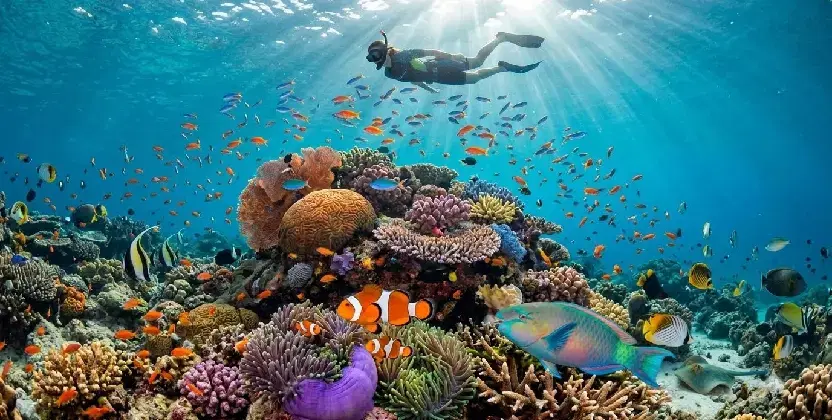
The best things to do in the Perhentian Islands include snorkelling, scuba diving, turtle spotting, beach hopping and water taxi rides. The islands are best known for their clear waters, coral reefs and rich marine life, making them ideal for a relaxed beach holiday with plenty of time in the water.
Snorkelling in the Perhentian Islands
Snorkelling is one of the best things to do in the Perhentian Islands. You can snorkel from several beaches or join a boat tour to explore different coral reefs and marine life. Travellers can expect to see colourful reef fish, corals, reef sharks and sea turtles, depending on the location and sea conditions.
Scuba Diving and Coral Reefs
Perhentian Islands is one of the best scuba diving spots in Sri Lanka. The best time for diving is generally from March to October, when sea conditions are more suitable for boat trips and underwater activities. June to August is particularly popular with divers, so booking ahead is recommended.
See Sea Turtles and Marine Life
Sea turtle spotting is one of the highlights of visiting the Perhentian Islands. Snorkelling trips often visit areas where turtles are commonly seen, along with reef fish and other marine life.
Relax on the Beaches
Relaxing on the beaches is one of the easiest things to do in the Perhentian Islands. Long Beach on Perhentian Kecil is a good choice for a livelier beach atmosphere, while Perhentian Besar is better for travellers looking for quieter beaches and a more peaceful stay.
Explore by Water Taxi
Water taxis are the main way to travel between beaches and resorts in the Perhentian Islands. Since the islands have no regular cars or paved roads, boats are useful for visiting different beaches, snorkelling spots and restaurants. You can hire a water taxi from the main beach areas or arrange one through your resort.
How to Get to the Perhentian Islands?
The Perhentian Islands do not have an airport, bridge, or direct road connection. Therefore, the ideal way to reach them is to travel to Kuala Besut Jetty in Terengganu and take a speedboat to the islands. The boat ride usually takes around 30 to 45 minutes, depending on the island, weather, and sea conditions.
For most travellers from India, the easiest choice is to fly to Kuala Lumpur. From here, travellers can fly to Kota Bharu or Kuala Terengganu and continue by road, or take a direct bus to Kuala Besut.
How to Get to the Perhentian Islands from Kuala Lumpur?
The distance to the Perhentian Islands, Malaysia, from Kuala Lumpur covers both land and sea. Kuala Besut is roughly 500 km from Kuala Lumpur by road, followed by a 30–45-minute boat ride to the islands.
By Flight: The Fastest Option
There are no direct flights to the Perhentian Islands. Instead, travellers need to fly to Kota Bharu Airport (KBR) and continue to Kuala Besut Jetty by road.
- Kuala Lumpur to Kota Bharu: Around 1 hour by flight
- Kota Bharu Airport to Kuala Besut: Around 1–1.5 hours by taxi or private transfer
- Kuala Besut to Perhentian Islands: Around 30–45 minutes by speedboat
- Best for: Families, couples
NOTE: You can also fly from Kuala Lumpur to Kuala Terengganu Airport (TGG). But the airport is located farther from Kuala Besut, so this option usually takes longer by road.
By Bus: The Budget-Friendly Option
Taking a bus from Kuala Lumpur to Kuala Besut is one of the cheapest ways to reach the Perhentian Islands. Direct buses leave from major terminals such as TBS (Terminal Bersepadu Selatan), and the journey takes about 7–9 hours, depending on traffic. From the bus terminal, the jetty is within walking distance, although you can take a short local transfer if you have heavy luggage.
- Best for: Budget travellers.
By Train: A Longer Route
There is no direct train to the Perhentian Islands or Kuala Besut. A train journey requires additional road transfers before reaching the jetty. This makes the train route much longer than flying or taking a direct bus. It is better suited to travellers who want to include a train journey as part of their Malaysia trip rather than those looking for the quickest route.
By Car: Best for a Flexible Road Trip
Driving from Kuala Lumpur to Kuala Besut gives you more freedom to stop along the way. The journey takes around 6–8 hours, depending on your route, traffic and stops. You cannot take your car to the Perhentian Islands, so you will need to leave it at a parking facility near Kuala Besut Jetty.
- Best for: Families, groups and travellers planning a Malaysia road trip.
Kuala Besut to Perhentian Islands: Speedboat, Fees and Travel Time
Once you reach Kuala Besut Jetty, the final part of your journey is a speedboat ride to the Perhentian Islands. The boat journey usually takes 30 to 45 minutes, depending on sea conditions and your destination on the island.
Travellers need to pay a small jetty entrance fee (around RM2/₹46) and a Marine Park Conservation Fee, which is RM30 (~ ₹700) per adult and RM15 (~ ₹350) per child for foreign visitors. The speedboat tickets cost RM70–100 (~ ₹1,640–2,340) per person.
How to Get to the Perhentian Islands from Johor Bahru?
There is no direct road or ferry connection from Johor Bahru to the Perhentian Islands. The best option is to fly from Senai International Airport to Kota Bharu and then continue by road to Kuala Besut. Another option is to travel by bus towards Kuala Besut, but this takes much longer.
How to Get to the Perhentian Islands from the Cameron Highlands?
There is also no direct connection between the Cameron Highlands and the Perhentian Islands. You can travel by road towards Kuala Besut and then take the speedboat to the islands.
Where to Stay in the Perhentian Islands: Best Resorts

Choosing the best resort in the Perhentian Islands depends on your budget, travel style and choice of island. Here are some popular Perhentian Island resorts to consider:
Bubu Resort: Best Resort in Perhentian Kecil
Bubu Resort is a beachfront resort on Long Beach, Perhentian Kecil. It is a good choice if you want to stay close to one of the island's busiest beaches. The resort offers air-conditioned rooms, beachfront access, restaurants, and spa services.
- Estimated Rate: RM 1,188 – RM 2,732 (~₹27,800 – ₹64,000)
- Best for: Couples, families, and travellers who want a comfortable beachfront stay on Perhentian Kecil.
Coral View Island Resort: Best Resort in Perhentian Besar
Coral View Island Resort is located on Teluk Pauh Beach on Perhentian Besar. The resort is a good option for travellers who prefer a quieter setting and easy access to the sea. Its location near coral-rich waters also makes it suitable for travellers interested in snorkelling and marine life.
- Estimated Rate: RM 577 – RM 1,300 (~₹13,500 – ₹30,400)
- Best for: Families, couples, and travellers looking for a peaceful beachfront resort.
Perhentian Islands vs Langkawi: Which Is Better?
Choosing between the Perhentian Islands and Langkawi depends on the type of Malaysia beach holiday you want. Langkawi is easier to reach and offers more activities, resorts, and shopping. The Perhentian Islands are better for clear waters, snorkelling, diving, and a quieter island escape.
Choose Langkawi if you want:
- Easy access: Langkawi has its own airport, so you do not need a boat transfer after flying in.
- More things to do: Visit the Sky Bridge and cable car, explore mangroves, enjoy water sports or spend time at the island's beaches.
- More accommodation choices: You can choose from budget stays to luxury resorts.
- Family-friendly facilities: Langkawi has more restaurants, transport options and attractions for families.
- Shopping: The island is well known for its duty-free shopping.
Best for: Families, first-time visitors, couples who prefer resort comfort and travellers who want more than just a beach holiday.
Choose the Perhentian Islands if you want:
- Better snorkelling and diving: The islands are known for their coral reefs and marine life, with snorkelling spots close to shore.
- A quieter island experience: Perhentian Kecil and Perhentian Besar have fewer roads and less development than Langkawi.
- Turtle and reef experiences: Sea turtles and other marine life are some of the main reasons travellers visit.
- A slower pace: The focus is more on beaches, swimming, snorkelling and diving than sightseeing and shopping.
- Budget-friendly island stays: Perhentian Kecil has many simple and affordable accommodation options.
Best for: Snorkellers, divers, backpackers, nature lovers and travellers who want to spend more time in and around the water.
Perhentian Islands Travel Tips:
- Visa: Indian passport holders can enter Malaysia visa-free for up to 30 days under the current exemption. You must also complete the Malaysia Digital Arrival Card (MDAC) before arrival.
- Carry cash: Keep some Malaysian Ringgit (RM) with you. Small resorts, local restaurants, dive shops, boat operators, and other island businesses may have limited card payment options.
- Pack light: The Perhentian Islands have no regular cars or paved roads. You need to walk along sandy paths or beaches when travelling. So, a small backpack or lightweight luggage is easier to carry.
- Protect the marine life: The Perhentian Islands are part of Malaysia's marine park system. Do not touch or damage coral, collect marine life, or leave rubbish in the sea. These rules help protect the coral reefs and other marine life around the islands.
- Check the weather: Boat services can be affected by rough seas and bad weather. So, it is recommended to check the latest boat schedule and sea conditions before travelling to the islands.
Perhentian Islands: Is It Worth Visiting?
The Perhentian Islands are a great choice if your idea of a Malaysian beach holiday is more about clear water, snorkelling, marine life, and a slower pace than sightseeing and shopping. There are no busy roads, large shopping areas, or airport transfers straight to your resort. Instead, you get quiet beaches, clear water, coral reefs, and days centred around swimming, snorkelling, diving, and marine life. So, if you want a Malaysia holiday that puts the sea and nature before shopping, sightseeing, and city attractions, the Perhentian Islands are a destination worth considering.
FAQs
1. What is the best time to visit the Perhentian Islands?
The best time to visit the Perhentian Islands is from March or April to October, when the weather is generally better for swimming, snorkelling, diving and boat trips. June to August offers the most reliable beach weather but also attracts more visitors, while March to May and September to October are better for a quieter trip.
2. Which is better, Perhentian Kecil or Perhentian Besar?
Perhentian Kecil is better for budget travellers, backpackers and visitors who want a livelier atmosphere and more nightlife. Perhentian Besar is better for families, couples and honeymooners looking for quieter beaches, comfortable resorts and a more relaxed holiday.
3. How many days are enough for the Perhentian Islands?
3 to 4 days are usually enough for a Perhentian Islands trip. This gives you time to relax on the beaches, go snorkelling or diving, explore different beaches by water taxi and enjoy the island's laid-back atmosphere. Add extra days if you want a slower holiday or multiple diving trips.
4. Are the Perhentian Islands good for families?
Yes, the Perhentian Islands can be a good choice for families who enjoy beaches, swimming and snorkelling. Perhentian Besar is generally more suitable for families because it has a quieter atmosphere and more resort-style accommodation, while Kecil is better for travellers looking for a livelier setting.
5. Are the Perhentian Islands good for couples and honeymooners?
Yes, the Perhentian Islands are a good choice for couples and honeymooners who want a relaxed beach holiday surrounded by nature. Perhentian Besar is particularly suitable for couples because of its quieter beaches, beachfront resorts and peaceful atmosphere.
6. What are the best things to do in the Perhentian Islands?
The best things to do in the Perhentian Islands include snorkelling, scuba diving, swimming, relaxing on the beaches, exploring nearby coves by water taxi and spotting marine life such as sea turtles and reef sharks. Snorkelling and diving are the main activities for most visitors.
7. Can you visit the Perhentian Islands during the monsoon season?
Visiting the Perhentian Islands during the November to February monsoon season is generally not recommended. Heavy rain, strong winds and rough seas can affect boat services, while many resorts and dive centres close during this period. The islands are best visited during the main operating season from around March or April to October.
8. How much does a trip to the Perhentian Islands cost?
The cost of a Perhentian Islands trip depends on your accommodation, transport and activities. Budget travellers can save money by staying on Perhentian Kecil, using buses and choosing simple accommodation, while resorts on Perhentian Besar generally cost more. You should also budget for boat transfers, the Marine Park Conservation Fee, food and activities such as diving.
9. Is it easy to get around the Perhentian Islands?
Getting around the Perhentian Islands is fairly simple, but there are no regular cars or paved roads. Travellers can walk between nearby beaches or use water taxis and boats to reach beaches and resorts that are farther away. Packing light is recommended because some journeys involve walking along sandy paths or beaches.
10. Are the Perhentian Islands worth visiting?
Yes, the Perhentian Islands are worth visiting if you want a quieter Malaysia beach holiday focused on clear turquoise water, coral reefs, snorkelling, diving and marine life. They are especially appealing to nature lovers, couples, divers and travellers who prefer a relaxed island experience over shopping, sightseeing and busy city attractions.
11. Can you snorkel directly from the beaches in the Perhentian Islands?
Yes, you can snorkel directly from several beaches in the Perhentian Islands. The islands have coral reefs and marine life close to shore, making it possible to see colourful fish and other sea life without always joining a boat tour. For the best experience, check local conditions and follow marine park guidelines.
12. Can you see turtles in the Perhentian Islands?
Yes, the Perhentian Islands are known for sea turtle sightings, especially during the main turtle season from around June to August. You may spot turtles while snorkelling or on organised boat trips to known turtle areas. Sightings are not guaranteed, so avoid touching or chasing marine life.
13. Is scuba diving good in the Perhentian Islands?
Yes, the Perhentian Islands are a popular destination for scuba diving, with coral reefs, tropical fish, sea turtles and other marine life. Diving conditions are generally best during the calmer months of the main operating season, although visibility and sea conditions can vary by site and weather.
14. Do the Perhentian Islands have ATMs?
ATMs and cash facilities are limited on the Perhentian Islands, so it is best to carry enough Malaysian Ringgit before taking the boat from Kuala Besut. Many small restaurants, resorts, dive shops and boat operators may have limited card payment options, making cash useful for everyday expenses.
15. What should I pack for the Perhentian Islands?
Pack lightweight beachwear, swimwear, sunscreen, insect repellent, comfortable footwear, a reusable water bottle and a dry bag for boat trips. Keep your luggage light because the islands have no regular cars or paved roads, and you may need to carry your bags along beaches or sandy paths.