
Bali Scams to Avoid: 12 common tourist traps to watch out for in 2026
Bali is one of the world’s most popular island destinations. Many travellers return from Bali with incredible memories, but some also encounter common tourist scams. From inflated taxi fares and fake money changers to overpriced tours and scooter rental tricks, these common Bali scams could have been avoided with a little preparation.
So, before planning your Bali package from India, understanding the most common scams can help you protect your money, avoid unnecessary stress and travel with confidence. In this Bali travel guide, you will learn about the most common scams in Bali, how they work, the warning signs to watch for and practical tips to help you stay safe and enjoy a worry-free holiday.
Is Bali Safe for Tourists?
Yes, Bali ranks as a safe destination for tourists, including solo travellers, couples, families, and honeymooners. Millions of international visitors travel to the island every year and enjoy a smooth, trouble-free holiday. While serious crime involving visitors is relatively rare, common Bali scams and petty theft can occasionally occur in busy tourist hubs such as Kuta, Seminyak, Canggu, Ubud, and popular beaches.
The best way to stay safe is to remain aware of your surroundings, use licensed transport, keep valuables secure and avoid deals that seem unusually cheap. By following a few sensible travel precautions and knowing how to spot common Bali scams, you can explore the island with confidence and enjoy a safe, memorable holiday.
12 Common Bali Scams and How to Avoid Them
While Bali is a safe destination for most visitors, knowing about the common Bali scams can help you avoid unnecessary stress and enjoy a smoother holiday. Most of these scams involve overcharging, misleading information, or taking advantage of first-time tourists rather than serious criminal activity. Here’s what to watch out for.
1. Fake Money Changer Scam
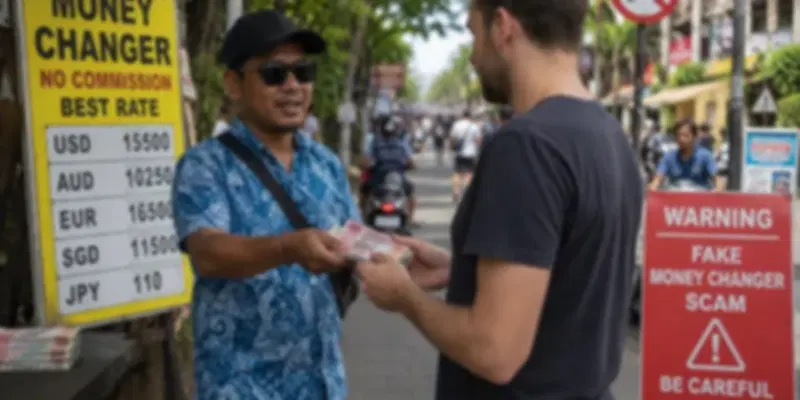
One of the most common Bali scams involves unofficial money changers offering exchange rates that appear much better than banks or licensed exchange counters. While the rates may look attractive, some dishonest operators use distraction techniques, quick counting, or note-switching to give tourists less cash than they are entitled to.
How to Avoid It
- Exchange money only at licensed money changers or banks.
- Avoid counters advertising rates that seem too good to be true.
- Count your cash carefully before leaving the counter.
- Don’t let anyone recount or handle your money after you’ve checked it.
- Use ATMs at reputable banks whenever possible.
2. Taxi Meter Scam
Taxi overcharging is another common scam, particularly around Ngurah Rai International Airport and busy tourist areas in Bali such as Kuta, Seminyak, and Canggu. Some drivers refuse to use the meter or deliberately take longer routes to increase the fare.
How to Avoid It
- Use reputable taxi operators like Blue Bird Taxi.
- Ask the driver to switch on the meter before starting the journey.
- Compare fares using ride-hailing apps like Grab or Gojek.
- Confirm the estimated fare if travelling to remote locations.
3. Scooter Rental Damage Scam
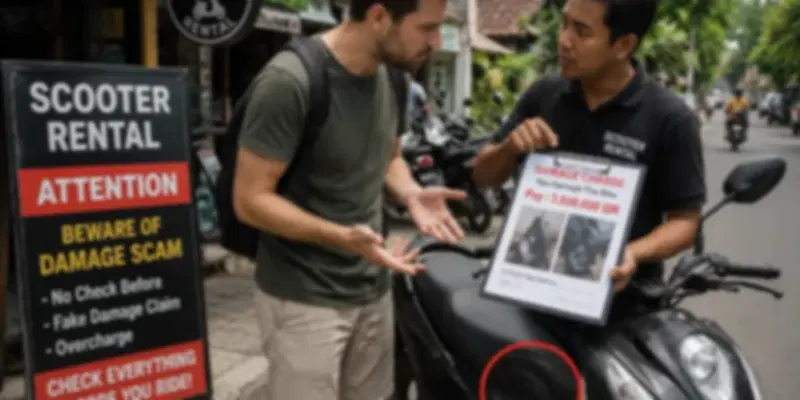
Scooter rentals are popular in Bali, but this is one of the common Bali scams that catches many first-time visitors. Some rental operators may claim you caused scratches or dents that already existed and then demand expensive repair charges or refuse to return your deposit.
How to Avoid It
- Photograph the scooter from every angle before riding.
- Record a short video showing existing scratches.
- Rent from businesses with good online reviews.
- Read the rental agreement carefully.
- Ensure your travel insurance covers scooter rentals if you plan to ride.
4. ATM Skimming Scam
Although relatively uncommon, ATM skimming is still among the common Bali scams reported in tourist areas. Criminals install hidden devices that copy your card details while discreet cameras record your PIN.
How to Avoid It
- Use ATMs located inside bank branches.
- Check the card slot for anything unusual.
- Cover the keypad while entering your PIN.
- Enable transaction alerts on your banking app.
- Avoid standalone ATMs in isolated areas.
5. Fake Temple Donation Requests
There are thousands of temples in Bali, many of which accept voluntary donations for maintenance. But scammers sometimes take advantage of tourists by demanding unofficial “mandatory donations” or selling fake blessing ceremonies. This is one of the easier common Bali scams to avoid with a little awareness.
How to Avoid It
- Purchase tickets only from official counters.
- Donate only through authorised donation boxes if you wish.
- Politely decline unofficial requests outside temple entrances.
- Check ticket prices in advance for major attractions.
6. Beach Vendor Overcharging
Overpricing by beach vendors is another common scam that visitors may encounter, especially at popular beaches in Bali. While most vendors are honest, some quote inflated prices to tourists unfamiliar with local rates.
How to Avoid It
- Ask for the price before accepting any service.
- Compare prices with nearby vendors.
- Carry small denominations of cash.
- Be polite but confident while negotiating.
7. Fake Tour Guide Scam

At busy attractions, unofficial guides may claim that hiring them is compulsory or advertise unusually cheap tours that later include hidden charges. This remains one of the common Bali scams affecting first-time visitors.
How to Avoid It
- Hire guides through reputable travel agencies.
- Verify guide credentials when visiting heritage sites.
- Avoid paying large amounts upfront.
- Read reviews before booking tours online.
8. Currency Confusion Scam
Indonesia’s currency uses large numbers, making it easy for first-time visitors to become confused. Some scammers exploit this by returning incorrect change or quoting misleading prices, making this one of the more common Bali scams involving cash payments.
How to Avoid It
- Familiarise yourself with Indonesian currency before your trip.
- Double-check the denomination before handing over cash.
- Count your change immediately.
- Use digital payments or credit cards where accepted.
9. Fake Parking Attendant Scam
Near beaches, markets, and tourist attractions, unofficial individuals sometimes pose as parking attendants and collect fees for public parking areas. Although the amounts are usually small, this remains one of the common Bali scams visitors may encounter.
How to Avoid It
- Park only in designated parking areas.
- Ask locals or your accommodation if parking charges apply.
- Request a parking ticket whenever possible.
- Carry small change if legitimate parking fees are required.
10. Souvenir Shop Pricing Scam
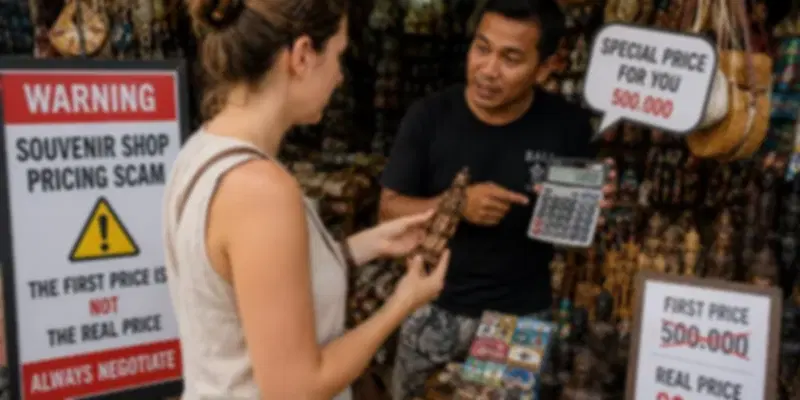
Many souvenir shops in Bali expect bargaining, but some intentionally quote heavily inflated prices to tourists. While negotiating is part of the shopping culture, excessive overpricing is among the common Bali scams in busy tourist markets.
How to Avoid It
- Compare prices at multiple shops.
- Visit local markets in Bali for better deals and a wider selection of authentic handicrafts.
- Negotiate respectfully.
- Avoid feeling pressured into making immediate purchases.
NOTE: If you are planning to shop in Bali, this detailed Bali shopping guide will help you learn about local prices, bargaining tips, and the best places to buy authentic souvenirs and local products.
11. Nightlife and Drink Safety
Bali nightlife offers something for everyone, and most venues are perfectly safe when you take basic precautions. However, travellers should still stay alert to drink tampering or overpriced bills, which occasionally appear among the common Bali scams in busy nightlife districts.
How to Avoid It
- Never leave your drink unattended.
- Accept drinks only from trusted staff.
- Travel with friends whenever possible.
- Use licensed taxis or ride-hailing apps after late nights.
- Drink responsibly and stay aware of your surroundings.
12. Fake Villa Booking Scam
With Bali’s popularity for luxury villas, fake online listings have become one of the fastest-growing common Bali scams. Fraudsters advertise attractive properties at unusually low prices, collect advance payments, and disappear before your arrival.
So, if you are planning a romantic getaway, it is advisable to book the best hotels for a Bali honeymoon only through a trusted and reputable source.
How to Avoid It
- Book through trusted travel companies or reputable booking platforms.
- Read verified guest reviews.
- Avoid making direct bank transfers to unknown individuals.
- Confirm the property’s location using Google Maps.
- Be cautious if the price is significantly lower than similar properties.
General Safety Tips for Travelling in Bali
Besides avoiding scams, follow this Bali trip checklist to make sure you’ve packed the right documents, travel essentials, and safety items for a hassle-free holiday.
- Keep digital copies of your passport and travel documents. Indian travellers should also check the latest Bali Visa on Arrival (VOA) requirements before travelling to avoid delays during immigration.
- Purchase comprehensive travel insurance before departure.
- Avoid carrying expensive jewellery unnecessarily.
- Save emergency contact numbers on your phone.
Emergency Numbers in Bali
| Service | Contact Number |
| Police | 110 |
| Ambulance | 118 or 119 |
| Fire Department | 113 |
| Tourist Police (Denpasar) | Available through local police assistance |
| Indian Embassy (Jakarta) | Keep the embassy’s emergency contact saved before travelling |
If you lose your passport or encounter a serious emergency, contact the nearest police station and inform the Indian Embassy or Consulate for assistance.
Quick Bali Safety Checklist Before You Travel
Before you leave for Bali, use this simple checklist to reduce the risk of encountering common Bali scams and enjoy a safer, stress-free holiday:
- Book accommodation only through trusted travel companies or reputable booking platforms.
- Exchange money at authorised money changers or bank branches.
- Withdraw cash from ATMs located inside banks whenever possible.
- Download Grab or Gojek for transparent and reliable transportation in Bali.
- Photograph and record your rental scooter before riding.
- Carry a mix of cash, international debit or credit cards, and digital payment options.
- Save important emergency numbers and your accommodation’s contact details.
- Respect local customs, temple etiquette, and cultural guidelines.
- Stay alert in crowded tourist areas and avoid deals that seem too good to be true.
A little preparation goes a long way. By following these practical tips and staying aware of common Bali scams, you can focus on enjoying Bali’s stunning beaches, vibrant culture, and unforgettable experiences with confidence.
Conclusion: Plan a Safe and Hassle-Free Bali Holiday
Knowing about common Bali scams before you travel doesn’t mean Bali is an unsafe destination. It simply means you are better prepared to enjoy everything the island has to offer with confidence. Before your trip, save emergency contacts, book accommodation and tours through reputable providers like Pickyourtrail, use licensed taxis or ride-hailing apps, exchange money only at authorised counters, and keep digital copies of your important travel documents. These simple precautions significantly reduce the chances of encountering common Bali scams, allowing you to focus on the best beaches, iconic temples, lush rice terraces, vibrant nightlife, and warm Balinese hospitality.
Frequently Asked Questions
Yes. In busy areas such as Ngurah Rai Airport and popular tourist hotspots, some individuals pretend to be Grab or Gojek drivers to charge inflated fares. Always book your ride through the official app, verify the driver’s name and vehicle registration number, and never accept rides from people approaching you inside the terminal without an app booking.
Most tourist scams are reported in busy areas with high visitor traffic, including Kuta, Seminyak, Canggu, Ubud, Legian, and around Ngurah Rai International Airport. While these places are generally safe, staying alert, using trusted transport, and avoiding unofficial services can help you avoid unnecessary problems.
If you’ve been scammed, stay calm and avoid arguing aggressively. Collect receipts, photographs, screenshots, or any available evidence, report the incident to the nearest police station or Tourist Police, and contact your bank immediately if your card or online payment was involved. Prompt reporting increases the chances of resolving the issue.
Yes, provided you use reputable booking platforms or trusted travel companies. Before making payment, read verified guest reviews, compare prices, confirm the property’s location on Google Maps, and avoid direct bank transfers to unknown individuals offering unusually cheap deals.
A licensed money changer clearly displays its business licence, provides printed receipts, and follows transparent counting procedures. Avoid small roadside counters advertising exchange rates that are significantly better than the market, as these are commonly associated with short-changing scams.
Using an international debit or credit card is generally safer for hotels, restaurants, and larger shops. However, carrying a small amount of Indonesian Rupiah is useful for local markets, street food, temple donations, and small businesses that may not accept card payments. Using both gives you the most flexibility while travelling.
Yes, if you use the official airport taxi counter or pre-book an airport transfer. Avoid drivers who approach you inside or just outside the arrivals hall offering “special prices,” as these often result in significantly higher fares than official taxis or ride-hailing apps.
Yes. Bargaining is normal at traditional markets, souvenir shops, and with some independent vendors. However, fixed-price businesses such as supermarkets, restaurants, shopping malls, and most licensed attractions generally do not negotiate prices. Always agree on the final price before purchasing goods or services.
It depends on your policy. Most comprehensive travel insurance plans may cover theft of valuables or financial losses resulting from specific incidents, provided you report the theft to the local police and meet the insurer’s documentation requirements. Always read your policy’s exclusions before travelling.
No. Bali remains one of Southeast Asia’s safest and most popular tourist destinations. Most visitors never experience any scams, and those that do are usually minor issues such as overcharging or misleading offers. With a little awareness and by using trusted transport, licensed businesses, and reputable booking platforms, you can enjoy a safe and memorable holiday.

Recommended articles for you








Discover Packages



















Bali City Packages
Packages By Departure City
Packages By Theme
Packages By Duration
Bali Combo Packages

Need help in planning?
Talk to our Travel Experts