
Whale Watching, Mirissa: Best Time, Price & Travel Guide

The ocean may look empty from the shore, but the waters off Mirissa can be home to some of the largest animals on the planet. Blue whales are the main draw, while sightings of sperm whales and dolphins can make the trip even more rewarding. If you are planning whale watching, Mirissa, the season matters, as sightings and sea conditions can vary throughout the year. November to April is the main whale-watching period, with December to March usually offering favourable conditions. You can also include this experience when planning to book a Sri Lanka tour package. This guide covers the best time to go, tour prices, timings, marine life, what to carry, seasickness, safety tips, and how to choose a responsible whale-watching operator.
Key Takeaways
- Best season: Whale watching in Mirissa is best from November to April. December to March usually offers better chances of sightings.
- Tour cost: Standard trips cost around LKR 10,000–16,000 (₹2,500–₹4,000) per person. Budget and private tours are also available.
- What you may see: Blue whales are the main highlight, along with sperm whales, Bryde’s whales and spinner dolphins.
- Trip timing: Most boats leave Mirissa Harbour around 6:30 AM and return by late morning. The trip usually takes 3–5 hours.
- Choose ethical tours: Good operators keep a safe distance from whales and never promise a sighting. After all, these are wild animals.
What to Expect on a Whale Watching Tour in Mirissa
A Mirissa whale-watching tour is an early-morning boat trip into the Indian Ocean. Here’s what you can expect:
- Departure: Most boats leave Mirissa Harbour between 6:00 AM and 7:00 AM.
- Duration: A typical tour lasts 3–5 hours and usually returns by late morning.
- Whale sightings: Blue whales are the main highlight. You may also see sperm whales and Bryde’s whales.
- Dolphin sightings: Spinner dolphins are commonly spotted during some trips.
- Boat ride: The journey takes you into deeper waters, where whales feed and travel.
- Sea conditions: Morning trips are preferred because the sea is often calmer.
- Sightings: Whale sightings are not guaranteed, as these are wild animals.
- What to carry: Bring sunscreen, water, a hat and a camera. If you get seasick easily, consider taking suitable precautions before the trip.
What Happens on a Mirissa Whale Watching Tour?
A whale-watching tour from Mirissa usually starts early in the morning and heads into deeper waters. The journey itself is part of the experience, as you may spot marine life before reaching the main whale-watching area.
1. Start at Mirissa Harbour: You will check in, collect a life jacket, and attend a short safety briefing before boarding the boat.
2. Head into deeper waters: The boat usually travels for around 45–60 minutes. The sea can feel rough during this part of the journey, so sit in a comfortable spot if you are prone to seasickness.
3. Look for signs of whales: The crew will scan the water for a whale’s blow, which appears as a burst of spray when it surfaces. This is often the first sign that a whale is nearby.
4. Watch whales and other marine life: Blue whales are the main highlight, but you may also see sperm whales, spinner dolphins, and other marine life. Sightings are not guaranteed, so the crew may spend time searching between encounters.
5. Return to shore: The boat returns to Mirissa after the search. The total trip usually takes around 3–5 hours, depending on sea conditions and the distance travelled.
Is Whale Watching in Mirissa Safe?
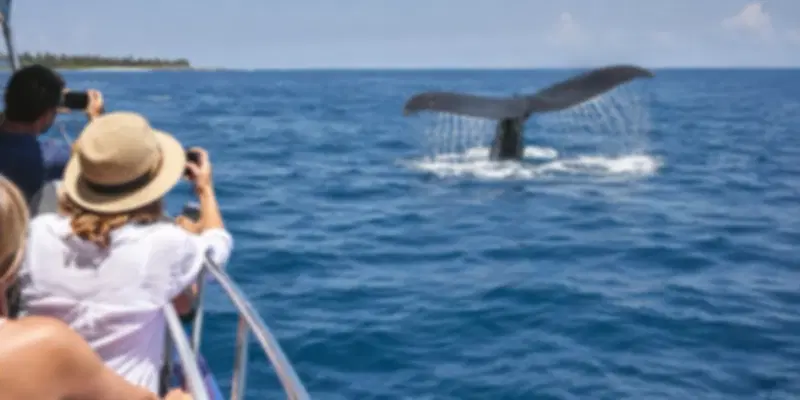
Whale watching in Mirissa is generally safe when you choose a licensed and experienced tour operator. Many operators are registered with Sri Lanka’s tourism and wildlife authorities, and most boats come with life jackets, trained crew, and basic safety gear. Sea conditions can still turn unpredictable outside peak season, so a few habits go a long way toward a smooth trip.
What Safety Precautions Should You Follow?
- Check weather and sea conditions before departure, especially if you’re planning a trip to Sri Lanka in November or April.
- Follow crew instructions at all times, particularly when a whale is sighted, and passengers move to one side of the boat.
- Avoid standing or moving around excessively while the boat is in open water.
Best Time for Whale Watching in Mirissa
The whale watching season in Mirissa runs from November to April, when the southwest monsoon eases, and the Indian Ocean turns calmer along the south coast. December to March is the peak stretch, when sea conditions are at their best, visibility is high, and whale density in the area peaks. Outside this window, from May to October, the sea gets rough enough that most operators pause trips entirely.
Month-by-Month Whale Sighting Chances in Mirissa
Sighting rates can change with sea conditions, the operator, and how far the boat travels. These figures help compare months, not guarantee a sighting. Dolphins, especially spinner dolphins, are easier to spot and can have sightings above 90% during the season.
| Month | Blue Whale Sighting Odds | Sea Condition | Dolphin Sighting Odds |
| November | High (75 to 85%) | Moderate, settling after monsoon | High |
| December | Very high (85 to 90%) | Calm, peak season begins | Very high |
| January | Peak (90 to 95%) | Calmest stretch of the season | Very high |
| February | Peak (90 to 95%) | Calm, excellent visibility | Very high |
| March | Peak (85 to 95%) | Calm | Very high |
| April | Moderate to high (75 to 85%) | Mostly calm, monsoon builds late month | High |
| May to October | Very low, mostly closed | Rough, monsoon-affected | Low |
What Is the Best Time of Day for Whale Watching in Mirissa?
The best time of day for whale watching in Mirissa is early morning, typically between 6:00 AM and 9:00 AM.
- The sea is calmer with fewer waves
- Visibility is better for spotting blows and dorsal fins at a distance
- Whale activity tends to be higher earlier in the day
- Weather conditions are generally more stable before midday winds pick up
Most boats depart around sunrise and return by mid-morning. Afternoon tours are uncommon in Mirissa and generally not recommended, since sea conditions get rougher as the day goes on.
Where Does Whale Watching Start in Mirissa?
Most whale-watching trips start early in the morning. Knowing where to board and how far you need to travel can make your morning much easier.
- Mirissa Fisheries Harbour: This is the main place to board whale-watching boats. Check-in usually starts around 6:00 AM. You’ll find shared boats, private charters and tour operators here. If you’re staying in Mirissa, you can reach the harbour by tuk-tuk or other transportation options in Sri Lanka.
- Dondra Point: Boats head towards Dondra Point to search for whales in deeper waters. It is an important area for marine life, including blue whales. The journey from Mirissa Harbour usually takes around 45–60 minutes.
- Weligama: Some operators offer whale-watching trips from Weligama, around 15–20 minutes from Mirissa by road. This is handy if you’re staying in Weligama. There are fewer options here, so check the schedule before booking.
- Hotel Pickup from Galle, Matara and Unawatuna: Some operators provide hotel pickup from nearby towns. Pickup can start around 5:00–5:30 AM to reach Mirissa Harbour on time. It’s a convenient choice if you’re staying outside Mirissa.
What Whales and Dolphins Can You See in Mirissa?
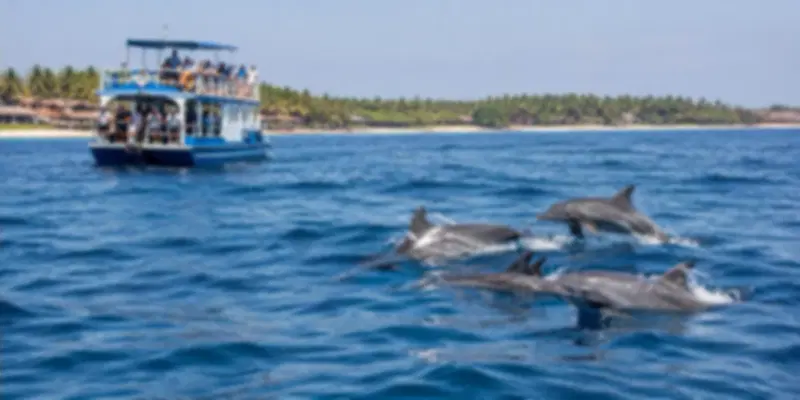
The waters off Mirissa host a wider range of marine life than most travellers expect, and blue whale watching in Mirissa is only part of the picture.
- Blue whale: The most commonly sighted species off Mirissa and the largest animal on earth. It’s frequently spotted surfacing to breathe and, on lucky days, a full breach or tail fluke as it dives
- Sperm whale: Recognisable by a distinctive boxy head and wrinkled dark skin, seen fairly regularly during peak months alongside blue whales.
- Bryde’s whale: A medium-sized baleen whale present in the area year-round, often seen lunging through the water to feed on fish shoals.
- Spinner dolphin: Among the most playful marine mammals here, seen in large pods jumping and spinning near the boat, especially close to the harbour mouth.
- Bottlenose and striped dolphins: Frequently seen bow-riding in front of whale-watching boats, offering close-up views even on days without a whale sighting.
Shared vs Private Whale Watching Tours in Mirissa
Choosing between a shared and private boat depends on your budget, group size and preferred level of comfort. Compare the options below to find the right whale-watching experience for your trip.
| Option | Best For | Group Size | Key Benefit |
| Shared Boat | Solo & budget travellers | 20–45 | More affordable |
| Private Boat | Families, couples & groups | 4–10 | More space & privacy |
Choose a shared boat for affordability or a private boat for comfort, privacy and flexibility. If you’re looking for a quieter experience with more room on deck, a private whale-watching trip in Mirissa is worth considering.
Where to Book Whale Watching Tours in Mirissa?
- Local agencies: Numerous agents along Mirissa Harbour allow last-minute bookings, though this is riskier during peak season when popular boats fill up fast.
- Hotel tours: Most hotels and guesthouses in Mirissa and nearby Weligama can arrange tours with operators they have already vetted.
Book your whale-watching trip 2–3 days ahead during December to March, as popular boats can fill up quickly. Before paying, check the departure time, inclusions and cancellation policy for bad weather.
Whale Watching Mirissa Price 2026: Tour Costs
Whale watching in Mirissa is relatively affordable compared with similar wildlife experiences, but the final price depends on the boat type, inclusions, and operator. Booking through an agency, hotel, or directly at the harbour can also affect the cost.
Approximate costs ( 2026):
- Shared boat tour: LKR 8,000–15,000 (₹2,500–₹4,700) per person. Standard packages may include hotel pickup and breakfast, while some listings can cost up to LKR 20,000 (₹6,300) depending on the inclusions.
- Direct harbour ticket: Around LKR 7,000–8,000 (₹2,200–₹2,500) per person for options with limited inclusions and no hotel pickup.
- Private boat charter: From around LKR 200,000 (₹63,000) per boat for small groups. Larger or premium charters can cost significantly more.
- Children: Prices vary by operator. Some offer discounted fares, while others charge the standard adult rate.
- Peak-season pricing: Rates can increase from December to April and may change based on demand and fuel costs.
Whale watching, Mirissa cost depends on the season and operator. Some prices include the wildlife fee, while others charge it separately. Before booking, check what’s included and ask about child discounts.
How to Choose an Ethical Whale Watching Tour in Mirissa
A good whale-watching trip should not disturb the animals you came to see. Some operators in Mirissa follow better practices than others. Before booking, check for these simple signs:
- No guaranteed sightings: Responsible operators explain that whales are wild animals and sightings are never promised.
- Safe distance: Boats give whales enough space and do not chase or surround them.
- Calm driving: The crew avoids sudden turns, loud engine noise and fast movements near whales.
- Clear briefing: Passengers are told how to behave around whales before the boat leaves.
- Supports conservation: Some operators share sighting information with researchers or conservation groups.
- Safe capacity: The boat should not be packed with more passengers than it is designed to carry.
Tips to Avoid Seasickness During Whale Watching in Mirissa
- Take seasickness medicine: Take it the night before or 30–60 minutes before the boat leaves, as directed.
- Sit in the middle: Choose a seat near the centre of the boat, where there is less movement.
- Look at the horizon: Keep your eyes on the horizon to help reduce nausea.
- Eat light: Have a light meal before the trip and avoid oily or heavy food.
- Drink water: Stay hydrated, but avoid alcohol before the tour.
- Carry simple remedies: Pack ginger candies and sunglasses. Fresh air can also help if you feel sick.
Conclusion: Plan Your Whale Watching Trip to Mirissa
Whale watching in Mirissa is a great way to see Sri Lanka’s marine life up close, especially during the November to April season. December to March usually offers the best conditions for a boat trip. Before booking, compare prices, check what your tour includes, and choose an operator that respects marine life. Sightings are never guaranteed, so go with realistic expectations. Plan your morning well and stay patient on the water, and you could end your Sri Lanka trip with an unforgettable whale encounter.
FAQs
1. Is whale watching in Mirissa worth it?
Yes, whale watching in Mirissa is worth considering if you want to see blue whales, dolphins and other marine life in their natural habitat. It is one of the popular wildlife experiences along Sri Lanka’s southern coast.
2. How long does a whale-watching trip in Mirissa take?
Most whale-watching trips take around 3–5 hours, including the journey offshore, time spent looking for marine life and the return to the harbour.
3. How early should I arrive for whale watching in Mirissa?
It is best to arrive at the harbour around 30 minutes before your scheduled departure. This gives you enough time for check-in, collecting safety equipment and attending the pre-trip briefing.
4. Can you book whale watching in Mirissa on the same day?
Yes, some local agencies and hotels accept same-day bookings, but availability can be limited during the busy December-to-March period. Booking a few days ahead is a safer option during peak season.
5. Are whale sightings guaranteed in Mirissa?
No, whale sightings are never guaranteed because whales are wild animals. Responsible tour operators should explain this before departure rather than promise a sighting.
6. What happens if you don’t see a whale in Mirissa?
If you do not see a whale, the outcome depends on the operator’s policy. Some companies may offer a repeat trip or another arrangement, while others do not provide compensation, so check the terms before booking.
7. How far offshore do whale-watching boats go in Mirissa?
Boats usually travel into deeper waters offshore to search for whales and other marine life. The journey from Mirissa Harbour to the main viewing area can take around 45–60 minutes, depending on sea conditions and where wildlife is spotted.
8. Can children go whale watching in Mirissa?
Yes, children can generally join whale-watching trips if they can follow the boat operator’s safety instructions. Families may find private boats more comfortable because they offer additional space.
9. Is whale watching in Mirissa suitable for first-time boat travellers?
Yes, first-time boat travellers can join these tours. However, the open sea can be bumpy, so anyone unfamiliar with boat trips should prepare for possible motion sickness.
10. What happens if a whale-watching trip is cancelled due to bad weather?
A tour may be postponed or cancelled if sea conditions are considered unsafe. Whether you receive a refund or can reschedule depends on the operator’s cancellation policy.
11. Do whale-watching tours in Mirissa include breakfast?
Some tours include breakfast, snacks or drinks, while others do not. Check the tour inclusions before booking so you know what you need to bring yourself.
12. Are whale-watching tours in Mirissa suitable for pregnant travellers?
Boat trips can involve significant movement and rough sea conditions, so pregnant travellers should consult their healthcare professional before booking. The operator should also be informed before departure.
13. Which is better for whale watching: Mirissa or Trincomalee?
Mirissa is a popular choice for whale watching on Sri Lanka’s southern coast, while Trincomalee is an alternative on the east coast with a different seasonal pattern. The better option depends largely on your travel dates and itinerary.
14. What marine animals can you see besides whales in Mirissa?
Besides whales, you may spot spinner dolphins, bottlenose dolphins and striped dolphins during a Mirissa whale-watching trip. The exact marine life you see depends on the day and sea conditions.
15. Can I take photos during a whale-watching tour in Mirissa?
Yes, you can take photos during most tours. Keep your camera or phone secure from sea spray and use a zoom lens where possible so you can photograph whales without approaching them too closely.

Recommended articles for you








Discover Packages



















Need help in planning?
Talk to our Travel Experts