
UK Visa for Indians 2026: Fees, Documents, Application Process and Processing Time
From spotting Big Ben and riding London's iconic red double-decker buses to exploring the Scottish Highlands, a UK holiday package has much more to offer. However, Indian passport holders cannot just fly in. They need a UK visa before packing their bags.
But figuring out the process for a UK Visa from India, choosing the correct visa category, completing an online application and attending a biometric appointment can leave you with more questions than answers. For most Indians, the Standard UK Visitor Visa costs £135 (~ ₹17,000) and allows a stay of up to 6 months. This UK visa guide covers the latest visa fees, eligibility, document checklist, application steps and processing times to help you prepare your application with confidence.
UK Visa for Indians: At a Glance
Key information | Details |
| Do Indians need a UK visa? | Yes, Indian passport holders need a visa before travelling to the UK. |
| Best visa for tourists | Standard Visitor Visa |
| Visa validity | 6 months for a standard visitor visa |
| Maximum stay | Up to 6 months per visit |
| Standard visitor visa fee | £135 (~ ₹17,000) |
| Application fee for children | £135 per child |
| Application method | Online through the official GOV.UK website |
| Biometric appointment | Mandatory at a VFS Global Visa Application Centre in India |
| Standard processing time | Around 15 working days after biometrics |
| When can you apply? | Up to 3 months before your intended travel date |
| Essential documents | Valid passport, bank statements, employment or income proof, travel details and accommodation details |
| Visa format | Digital eVisa |
| Visa on arrival | Not available for Indian passport holders |
| UK ETA eligibility | Indian passport holders cannot use the ETA instead of a visa |
What Is a UK Visa?
A UK visa is official permission that allows a foreign traveller to visit, study, work or stay in the United Kingdom. The type of visa you need depends on your reason for travelling. Each visa has its own rules, validity period and conditions.
The UK now uses a digital visa system called an eVisa. An eVisa is an online record of your identity and immigration status. It replaces the traditional visa sticker. You can view it through your UK Visas and Immigration (UKVI) online account.
Which UK Visa Should Indians Apply For?
The right UK visa for Indian travellers depends on the purpose and duration of their visit. Whether you are planning a holiday, visiting family, studying or travelling for business, here are the main UK visa types and their fees from 8 April 2026.
Visa type | Best for | Fee |
Standard Visitor (up to 6 months) | Holidays, family visits, short business trips | £135 (~ ₹17,000) |
| Long-term Visitor, 2 years | Many visits over 2 years | £506 (~ ₹63,538) |
| Long-term Visitor, 5 years | Many visits over 5 years | £903 (~ ₹113,389) |
| Long-term Visitor, 10 years | Many visits over 10 years | £1,128 (~ ₹141,642) |
| Student visa | Long courses | £558 (~ ₹70,068) |
Short-term study (English course, 6 to 11 months) | English language study | £228 (~ ₹28,629) |
How to Apply for a UK Visitor Visa from India: Step-by-Step Process
Applying for a UK visa from India is a simple process when you follow the correct steps. You must complete an online application, pay the visa fee, submit your documents and attend a biometrics appointment. Here are the steps on how to apply for a UK Tourist Visa from India.
1. Check which visa you need: Visit the GOV.UK visa checker to find out which visa suits your trip. Most Indian tourists need a Standard Visitor visa.
2. Start your online application: Visit the official UK visa application website and create an account. Select the correct visa category to begin your UK visa application.
3. Complete the application form: Fill in your personal details, travel dates, job information, income and trip expenses. You may also need to share your travel history and details of your accommodation. Make sure your answers match your supporting documents.
4. Pay the visa fee: Pay the application fee online to submit your form. The Standard Visitor visa currently costs £135 (~ ₹17,000).
5. Book your biometrics appointment: After submitting your application, follow the instructions to book an appointment at a VFS Global Visa Application Centre in India. Choose a convenient location and appointment time.
6. Visit the visa centre: Carry your passport and required supporting documents. Your fingerprints and photograph will be taken at the centre. You can upload your documents online or follow the document submission instructions provided during your application.
7. Wait for your visa decision. UK Visas and Immigration (UKVI) will email you once a decision has been made. It generally takes 3 weeks to approve your application. Once your application is approved, you will receive an eVisa linked to your UKVI online account.
UK Visit Visa Requirements: Documents You Need from India
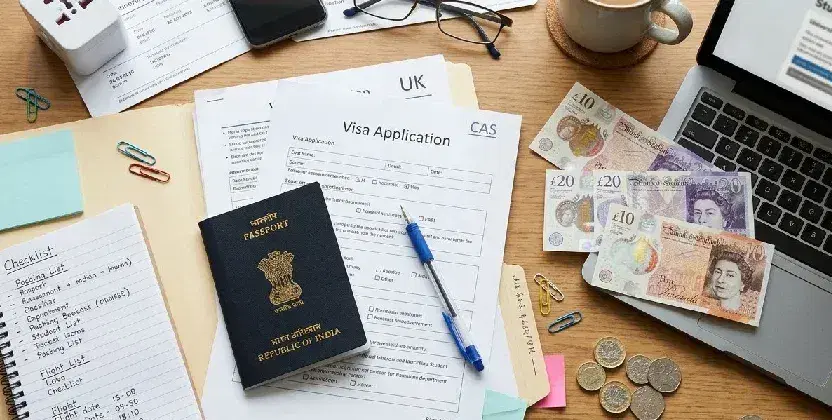
When applying for a UK visit visa from India, you must show that your visit is genuine, you can afford the trip, and you plan to follow the visa rules. Your documents should clearly explain your travel plans, financial situation and personal circumstances. Here are the important documents to prepare for a UK Standard Visitor visa:
Document | What you should provide |
| Valid passport | A passport that remains valid for your entire UK stay. |
| Previous passports | Old passports, if available, to show your travel history. |
| Bank statements | Recent bank statements showing your income, savings and access to money. |
| Proof of income | Salary slips, an employer letter or business income records. |
| Income Tax Returns (ITR) | Recent tax returns, if available, to support your financial details. |
| Employment proof | An employer letter stating your job role, salary and employment period. |
| Travel plan | Your planned travel dates, places to visit and estimated trip expenses. |
| Accommodation details | Hotel details or an invitation letter from your UK host, if staying with family or friends. |
| Leave approval | An approved leave letter from your employer, if you are employed. |
| Documents for children | Birth certificate, parents' or guardians' details and a signed consent letter, where required. |
Important Things to Remember
- No fixed document checklist: The documents you need depend on your personal situation. Submit relevant evidence that supports your application.
- Show a clear source of funds: Show your bank statements should make your income and savings easy to understand.
- Avoid unexplained financial claims: If you have received a large amount of money recently, provide proof of where it came from.
- Translate documents: Any document not written in English or Welsh must include a certified translation. The translation must include the translator's name, signature, contact details and date.
- Explain sponsorship: If a family member or friend is paying for your trip, provide details of your relationship, the financial support offered and evidence that they can afford it.
UK Visa Fees from India
The UK Standard Visitor visa fee for Indian applicants is £135 (~ ₹17,000) for a visit of up to 6 months. This fee increased from £127 to £135 on 8 April 2026. The revised fee remains unchanged as of November 2026.
UK Visitor Visa Fees for Indians: Complete Fee List
Fee type | Cost |
| Standard Visitor visa (up to 6 months) | £135 (~ ₹17,000) |
| 2-year visitor visa | £506 (~ ₹63,538) |
| 5-year visitor visa | £903 (~ ₹113,389) |
| 10-year visitor visa | £1,128 (~ ₹141,642) |
| Priority visa service | £500 extra (~ ₹62,785) |
| Super priority visa service | £1,000 extra (~ ₹1,25,570) |
NOTE: This is the main fee Indian travellers must pay when applying for a UK tourist visa. The final cost in Indian rupees may change with the exchange rate and payment conversion charges.
Additional Costs to Consider When Applying for a UK Visa
Apart from the visa fee, you may need to pay extra for optional services, such as priority processing, document scanning or other services at the Visa Application Centre. Keep some extra money for these expenses:
- VFS Global services: Standard appointment arrangements and optional paid services may have different charges. Check the amount shown when booking your appointment.
- Priority processing: This optional service costs extra and is subject to availability.
- Document translation: You may need to pay for certified English translations of documents.
- Travel expenses: Include transport to and from your nearest Visa Application Centre.
- Document preparation: Keep a small amount for printing and photocopying.
UK Tourist Visa Processing Time
A standard application for UK visitor visa usually takes about 3 weeks (15 working days). During busy travel periods, such as summer holidays, processing may take longer. Apply early to give yourself enough time before your planned trip.
UK Visa Processing Time: Standard and Faster Options
You can choose an optional faster service if it is available for your application.
Processing option | Expected decision time |
| Standard service | 3 weeks (15 working days) |
| Priority service | Usually 5 working days |
| Super Priority service | Usually by the end of the next working day |
What Can Delay Your UK Visa Application?
Your UK visa processing time may be longer than 3 weeks in some cases. Delays can happen when:
- Your application has missing or incorrect information.
- UKVI needs extra documents from you.
- Your application needs further checks.
- You are asked to attend an interview.
- There is a high number of visa applications during busy travel periods.
Apply early, especially if you plan to travel during summer or major holiday periods.
How to Track Your UK Visa Application Status Online?
You can check your UK visa status online after submitting your application. However, VFS Global and UK Visas and Immigration (UKVI) have different roles. VFS Global helps you track your application through the visa application centre, while your UKVI account lets you access your eVisa after approval.
Here is how to track your application and access your eVisa.
1. Track Your Application Through VFS Global
Visit the VFS Global UK visa tracking page for India to check your application or passport status.
You will generally need:
- Your application reference number from the VFS receipt.
- Your last name.
2. Check Your UK Visa Status and Access Your eVisa
Once UK Visas and Immigration (UKVI) makes a decision, you will receive an email or letter informing you about the outcome.
3. Log In to Your UKVI Account to View Your eVisa
If your application is approved, you can access your digital visa through your UKVI online account. Follow these steps:
- Visit the official GOV.UK eVisa service.
- Sign in using your UKVI account details.
- Check your visa status and personal information.
- View your eVisa and confirm that your passport details are correct.
Your eVisa may take up to 24 hours to appear after it has been linked to your UKVI account.
UK Student Visa for Indian Students: Fees, Requirements and Application Process
Indian students who want to study at a UK university or college usually need a UK Student visa. This visa allows you to live in the UK while completing an eligible course with a licensed education provider.
You can apply for a UK Student visa from India up to 6 months before your course starts. The application fee is £558 (~ ₹70,068). You must also pay the Immigration Health Surcharge (IHS), which gives you access to NHS healthcare during your stay. The IHS is charged separately, and the total depends on your visa duration.
Is There a United Kingdom Green Card?
The UK does not have a Green Card like the United States. However, the closest equivalent is called Indefinite Leave to Remain (ILR), also known as permanent settlement.
ILR allows you to live, work and study in the UK without a time limit. You do not need to renew your visa to continue living there. You may also become eligible to apply for British citizenship later.
7 Tips to Strengthen Your UK Tourist Visa Application
1. Apply through the official website: Submit your application through GOV.UK. Avoid unofficial websites that promise guaranteed approval.
2. Provide honest information: Give correct details about your identity, job, income, travel plans and previous visa history. False or misleading information can lead to refusal.
3. Show your ties to India: Provide relevant proof of your job, business, studies, family or other responsibilities in India. These details help show your personal and economic ties to your home country.
4. Keep your documents consistent: Check that your name, travel dates, income and bank details match across your application and supporting documents. Explain any differences clearly.
5. Prepare a clear travel plan: Explain why you want to visit the UK, where you plan to stay, how long you will remain and how much the trip will cost.
6. Choose a suitable visa duration: Apply for a visa that matches your travel needs. If you request a long-term visitor visa, remember that you can normally stay for only 6 months per visit.
7. Apply well before your travel date: You can apply up to 3 months before your planned visit. Allow enough time for your biometrics appointment and visa processing.
Plan Your UK Trip After Getting Your Visa
Getting a UK visa from India becomes easier when you know which visa to choose, how much to pay and which documents to prepare. For most Indian tourists, the Standard Visitor visa costs £135 (~ ₹17,000) and allows a stay of up to 6 months. Make sure your application details are accurate, your financial documents are clear and you apply well before your travel date. Once your visa application is sorted, you can plan your itinerary to explore London's famous landmarks, discover Scotland's scenic landscapes and experience the charm of British cities.
FAQs
1. How much bank balance is required for a UK tourist visa from India?
A: There is no fixed minimum bank balance required for a UK tourist visa. You must show enough money to cover your flights, accommodation, food, transport and other trip expenses. Your bank statements should support your income and explain the source of your funds.
2. Can I apply for a UK visa without confirmed flight tickets or hotel bookings?
A: Yes. You do not need to purchase confirmed flight tickets or hotel bookings before applying for a UK Visitor visa. However, you should provide a clear travel plan, including your intended travel dates, accommodation arrangements and estimated expenses.
3. Can I get a UK visa if someone else is sponsoring my trip?
A: Yes. You can apply for a UK Visitor visa with financial sponsorship from a family member, friend or another person. You must provide evidence of your relationship, details of the support offered and documents showing that your sponsor can afford the expenses.
4. How early can I apply for a UK tourist visa from India?
A: You can apply for a UK Standard Visitor visa up to 3 months before your intended travel date. Applying early gives you enough time to complete biometrics, submit documents and receive your visa decision.
5. Is a UK visa valid for Scotland, England, Wales and Northern Ireland?
A: Yes. A UK Standard Visitor visa generally allows you to visit England, Scotland, Wales and Northern Ireland. You do not need separate visas to travel between these four countries during your permitted stay.
6. Can I extend my UK visitor visa while staying in the UK?
A: In certain circumstances, you can apply to extend your UK Standard Visitor visa for up to 6 months in total. However, extensions are allowed only in specific situations and are not normally granted simply to continue a holiday.
7. What happens if my UK visa application is rejected?
A: If your UK visa application is rejected, you will receive a refusal letter explaining the reasons. You can address the issues and submit a fresh application with stronger supporting documents. You must pay the visa fee again when reapplying.
8. Can I reapply for a UK visa immediately after rejection?
A: Yes. There is generally no mandatory waiting period before reapplying for a UK visa after rejection. However, review your refusal reasons, correct any mistakes and provide stronger evidence before submitting another application.
9. Can I travel to Ireland with a UK tourist visa?
A: Not automatically. A UK Visitor visa does not generally allow Indian passport holders to enter the Republic of Ireland. However, eligible Indian nationals may use the British-Irish Visa Scheme (BIVS) with a qualifying visa and subject to its conditions.
10. Do I need to carry a printed copy of my UK eVisa while travelling from India?
A: A printed eVisa is not normally required because your immigration status is stored digitally. However, make sure your UKVI account is accessible, your passport is correctly linked to your eVisa and your details are accurate before travelling.