
- Home
- Attractions
- Italy
- Colosseum: A Fun Guide to Rome's Ancient Amphitheatre
Colosseum: A Fun Guide to Rome's Ancient Amphitheatre
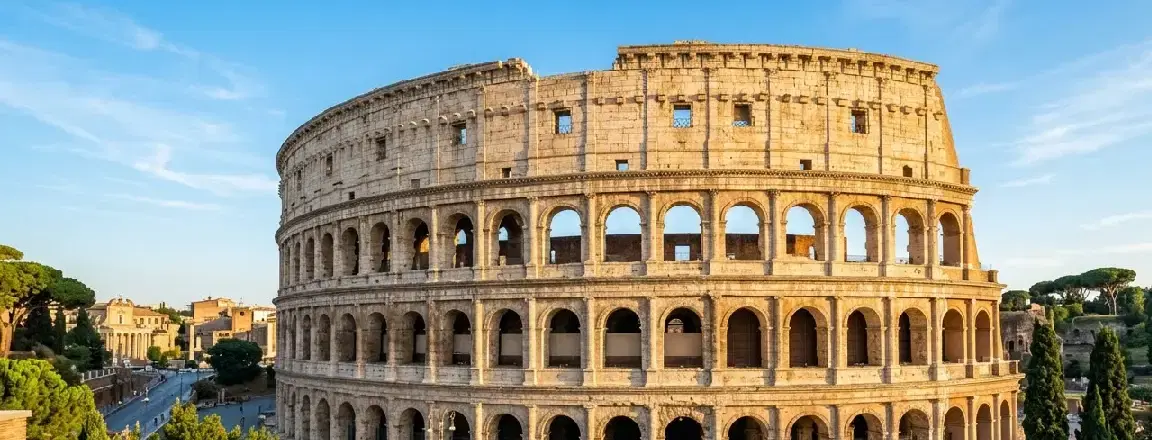
Have you ever seen a huge stone arena that looks like it belongs in a movie? That is the Colosseum, Rome’s famous ancient amphitheatre. Built almost 2,000 years ago, the Colosseum once hosted large public shows, including gladiator fights and animal hunts.
Today, the Colosseum is one of the most famous landmarks in Italy and a must-see for many travellers visiting Rome. Its huge arches, ancient stone walls and underground areas offer a glimpse into life in ancient Rome. If you are planning a trip to Rome, knowing what to expect before you visit can make your experience much easier. This guide covers the Colosseum's history, what you can see inside, ticket prices, the best time to visit and practical tips. This will help you plan your Italy package and make the most of this ancient Roman landmark.
Colosseum History
The Colosseum Italy is a huge ancient amphitheatre in the heart of Rome. It was built in the 1st century AD. The construction of this public space began in AD 72 under Emperor Vespasian. His son, Emperor Titus, completed the main building and opened it in AD 80. It was about 48 metres tall when it was built, making it roughly as high as a 15-storey building.
The Colosseum has a large oval shape and several levels of arches. It was built for large public shows. People came to watch gladiator fights, animal hunts and other spectacles. It could hold tens of thousands of spectators, although the exact number is debated.
Fun Facts About the Colosseum Rome
- 80 Entrances for Crowd Control: The Colosseum featured 80 numbered entrance arches. This advanced architectural design allowed large crowds to enter and exit the massive arena within just a few minutes.
- The Velarium Shade System: To protect spectators from the fierce Roman sun, the Colosseum utilised a giant, retractable cloth canopy called the velarium. A dedicated contingent of sailors from the Roman navy was stationed nearby to operate the complex ropes, rigging, and masts required to move it.
- Massive Spectator Capacity: Built to handle immense crowds, historical estimates place the amphitheatre's capacity at around 50,000 to 80,000 people, seated according to social status.
- The Hidden Underground World (Hypogeum): Beneath the arena floor lay the hypogeum, a complex, two-story network of tunnels, rooms, and cages. This busy backstage area was used to house gladiators, prisoners, and wild animals. It featured an intricate system of manual elevators, winches, and trapdoors to suddenly hoist spectacles up into the open arena.
- Exotic Wild Animals: Ancient shows relied heavily on exotic wildlife to thrill the public. Lions, bears, leopards, hippos, and elephants were captured from across the Roman Empire and kept in the underground hypogeum before being released into the arena for public hunts and battles.
- The Ongoing Arena Floor Project: While parts of the original wooden floor were removed by archaeologists in the 19th century to expose the tunnels below, a major modern project is underway to install a high-tech, retractable wooden stage over the hypogeum.
- Part of a Larger Archaeological Park: The Colosseum sits directly adjacent to the Roman Forum and Palatine Hill. The Roman Forum was the bustling political, religious, and social heart of the ancient empire where leaders gave historic speeches. Today, standard ticketing options safely bundle access to all three historic sites.
How Much Do Colosseum Tickets Cost?
The standard Colosseum in Italy tickets include entry to the Colosseum, Roman Forum and Palatine Hill. Other ticket options cost more if you want access to areas such as the arena floor.
Ticket Type | Price (EUR) | Approx. Price (INR) | What You Get |
| Standard Ticket (Adult) | €18 | ₹1,995 | Entry to Colosseum, Roman Forum, and Palatine Hill, valid for 24 hours |
| Full Experience (Arena Floor) | €22–24 | ₹2,440–2,660 | Standard access plus the Arena Floor and Attic levels |
| Visitors under 18 | Free (booking still required) | Free | Same access as the standard ticket |
| EU citizens aged 18–25 | €2 | ₹220 | Same access as the standard ticket |
These prices are approximate. They are based on rates checked in 2026. Prices can change, so confirm on the official Parco Archeologico del Colosseo website before you book.
Levels and Areas Inside the Colosseum
The Colosseum had different seating areas for different groups of people. Your place in the arena often depended on your social status. The most important people sat closest to the action, while lower social groups sat higher up.
Ground-Level Seating
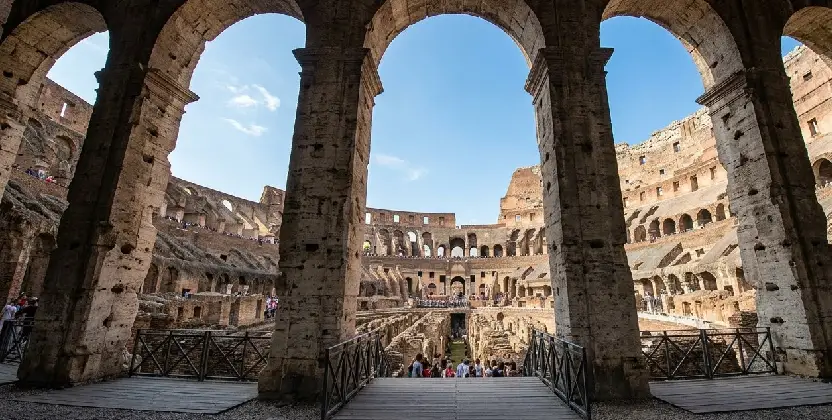
The seats closest to the arena were reserved for Roman senators, officials and other important people. These seats gave them some of the best views of the shows.
Middle Tiers
The middle seating areas were used by ordinary male Roman citizens and soldiers. The seats were higher than those of the elite but still offered a good view of the arena.
Upper Tiers
The highest sections were farther from the arena. Women and people from lower social groups generally sat in these areas. From here, visitors had a wider but more distant view of the shows.
The Hypogeum
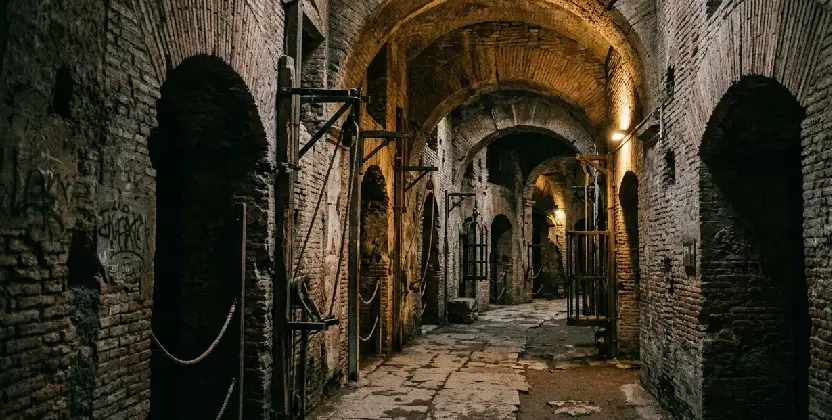
Below the arena floor sat a maze of tunnels and cages. This is where gladiators, animals, and stage props waited before a show. Trapdoors could lift fighters and animals straight up into the arena. This surprised the crowd above.
The Arena Floor
The arena floor was the main stage for public spectacles. Gladiator contests, animal hunts and other performances took place here. Much of the original floor no longer survives, allowing visitors to see parts of the hypogeum below.
Best Time to Visit Colosseum
The best time to visit the Colosseum is early in the morning, when it opens at 8:30 am. This can help you avoid some of the larger crowds and the stronger midday heat. The Colosseum requires a booked entry time, so choose an early slot when possible.
- Early morning: Visit soon after opening for a cooler and usually less busy experience.
- Spring and autumn: Spring and autumn are considered the best time to visit Italy. These seasons offer comfortable conditions for walking around the Colosseum, Roman Forum and Palatine Hill.
- Summer: June to August can be hot in Rome. Carry water, wear a hat and use sunscreen, especially when spending time outdoors.
- Weekdays: A weekday visit may be quieter than a weekend, although crowds can vary by season and special events.
- Christmas and New Year: The Colosseum is normally closed on December 25 and January 1. Always check the official opening calendar before planning your visit.
Tips for Visiting the Colosseum with Kids
- Book your tickets early: Colosseum visits require a timed entry. Booking ahead gives your family more choice of visit times, especially during busy travel periods.
- Arrive before your entry time: Give yourself enough time to reach the entrance and complete security checks. Late arrival may mean you cannot enter at your booked time.
- Carry only what you need: Large bags, backpacks and suitcases may not be allowed inside. Check the current baggage rules before your visit.
- Carry water and sun protection: Much of the visit takes place outdoors, and shade can be limited. Bring water, sunscreen and a hat, especially in summer.
- Choose a comfortable time for children: An early morning visit can be easier for kids because the weather is usually cooler and you may avoid some of the busiest periods.
- Wear comfortable shoes: You will walk through the Colosseum and nearby archaeological areas, so comfortable footwear can make the visit easier for the whole family.
Plan Your Colosseum Visit
The Colosseum is more than an ancient landmark. Its massive arches, underground tunnels and centuries-old stories give you a closer look at how life and entertainment worked in ancient Rome. For families, it is also an easy way to make history feel real and exciting for children.
Before you visit, book your timed entry, choose a comfortable time of day and plan enough time for the nearby Roman Forum and Palatine Hill. With a little planning, your visit to the Colosseum Rome can be one of the most memorable parts of your Italy trip.
FAQs
1. What is the Colosseum famous for?
The Colosseum is famous for its ancient gladiator contests, animal hunts and public spectacles. Built in the 1st century AD, it is one of Rome's most recognisable landmarks.
2. Where is the Colosseum located?
The Colosseum is located in Rome, Italy, near the Roman Forum and Palatine Hill. It is in central Rome and is easy to include in a sightseeing itinerary.
3. How old is the Colosseum?
The Colosseum is almost 2,000 years old. Construction began in AD 72 under Emperor Vespasian, and the amphitheatre opened in AD 80 under Emperor Titus.
4. How much do Colosseum tickets cost?
The standard Colosseum ticket costs €18 (₹1,995) for adults and includes entry to the Colosseum, Roman Forum and Palatine Hill. Other ticket options with access to special areas may cost more.
5. Do I need to book Colosseum tickets in advance?
Yes. Colosseum tickets require a timed entry reservation, so booking in advance is recommended, especially during busy travel periods. Official ticket sales generally open 30 days before the visit date.
6. What does a Colosseum ticket include?
The standard Colosseum, Roman Forum and Palatine Hill ticket includes access to the Colosseum's first and second levels, the Colosseum Museum, Roman Forum and Palatine Hill. Some special areas require an upgraded ticket.
7. How long does it take to visit the Colosseum?
A standard Colosseum visit takes about 75 minutes. If you also visit the Roman Forum and Palatine Hill, allow several hours for the complete archaeological park experience.
8. Can children visit the Colosseum?
Yes. Children can visit the Colosseum, and visitors under 18 may qualify for free admission with a reservation. Check the current ticket rules when booking.
9. What can you see inside the Colosseum?
Inside the Colosseum, you can see the ancient arena, seating levels, underground hypogeum and remains of the original structure. Some areas, such as the arena floor and upper levels, may require a specific ticket.
10. What is the best time to visit the Colosseum?
The best time to visit the Colosseum is early in the morning, when temperatures are usually cooler, and crowds may be smaller. Spring and autumn are also comfortable seasons for exploring the Colosseum and nearby archaeological sites.
11. Is the Colosseum worth visiting?
Yes. The Colosseum is worth visiting for its ancient architecture, gladiator history, underground hypogeum and connection to the Roman Forum and Palatine Hill.
12. How do I get to the Colosseum in Rome?
The Colosseum is easy to reach by Rome's public transport. The Colosseo Metro station on Line B is located directly near the amphitheatre, while several buses also stop nearby.
13. Can I visit the Colosseum without a guided tour?
Yes. You can visit the Colosseum independently with a standard entry ticket. Guided tours are optional and can provide more historical context about the arena and its ancient sites.
14. What should I wear to visit the Colosseum?
Wear comfortable walking shoes and light, breathable clothing, especially in summer. A hat, sunscreen and water are useful because parts of the archaeological area have limited shade.
15. Can I take photos inside the Colosseum?
Yes. Visitors can generally take photos for personal use inside the Colosseum. However, certain areas may have specific photography restrictions, so follow the site's current visitor rules.