
Grab or Gojek in Bali: Which Ride-Hailing App Should You Use?
Landing in Bali with the wrong ride-hailing app is an instant recipe for getting stuck, overcharged, or caught in the middle of local taxi drama. While Grab or Gojek in Bali is the ultimate battle of the apps, the rules of the road have completely changed. From hidden local transport bans in Ubud to unpredictable traffic surge pricing in Canggu, choosing the wrong platform will cost you both time and cold, hard cash. Both apps are perfect for quick dinner runs or short beach trips.
However, if your plans involve temple-hopping in Bedugul or chasing waterfalls in Bali, app drivers will often refuse the distance. For those long-distance adventures, skipping the apps and booking a dedicated Bali tour package or a private day driver is usually a much smoother, stress-free option. Navigating this quiet coastal paradise is very different from exploring the busy south. To help you get around seamlessly, let’s break down how Grab and Gojek in Bali actually works when you venture off the beaten path.
Grab vs Gojek in Bali: Which Ride-Hailing App Is Better?
If you are looking for the best taxi app in Bali, the short answer is ‘download both’. Both platforms are excellent ride-sharing apps in Bali, but they excel in different areas:
- Grab Bali is the superior choice for private cars, airport pickups, and hassle-free international credit card payments.
- Gojek Bali generally offers cheaper scooter rides and a more seamless local food delivery experience.
Grab Bali Guide: Features, Services & Benefits
Grab Bali operates in most of the popular tourist places in Bali, especially in the south and central parts. It functions similarly to Uber or Lyft, offering a highly polished interface that seamlessly links with international credit cards. If you choose Grab as your primary Bali ride-hailing app, here is exactly what you get:
- GrabBike: The fastest way to beat traffic. You hop on the back of a local driver’s scooter. They provide a helmet, and it is the cheapest transit option on the app.
- GrabCar (Standard): A private, air-conditioned 4-seater car (usually a Toyota Avanza or Suzuki Ertiga). Perfect for luggage and small groups.
- GrabCar XL: A larger 6-seater vehicle. Ideal for families, surfboards, or heavy luggage hauls.
- GrabCar Premium: Higher-end vehicles for a more comfortable, business-class ride experience.
- GrabFood: A massive food delivery network. It features excellent filters for Western dietary restrictions (vegan, gluten-free) and frequently runs promo codes for tourists.
- GrabMart: A grocery and convenience delivery service. You can use it to get snacks, sunscreen, bottled water, or pharmacy essentials delivered straight to your hotel or villa pool deck.
The two things Grab does noticeably better than Gojek are accepting international Visa and Mastercard without much friction and having an official pickup lounge at Ngurah Rai Airport (DPS). That lounge is air-conditioned, staffed, and clearly signed, which matters after a 20-hour flight when you don’t want to hunt for your driver in a parking lot.
Gojek Bali Guide: Features, Services & Benefits
Gojek is Indonesia’s homegrown super-app and the fiercest competitor in the Bali ride-hailing apps market. While Grab leans toward premium tourist convenience, Gojek Bali is deeply embedded in local culture, often offering the lowest everyday prices for savvy travellers.
If you use Gojek as your go-to ride-sharing app in Bali, here is exactly what you get:
- GoRide: The classic local scooter taxi. GoRide drivers are famous for their iconic green jackets and helmets. This is consistently the most budget-friendly way to move around South Bali.
- GoCar: Standard 4-seater private cars. While the fleet is massive, wait times can occasionally be slightly longer than Grab in remote northern villages.
- GoCar XL / Luxe: 6-seater options for larger groups and premium vehicles for maximum comfort during long island drives.
- GoFood: This is Gojek’s crown jewel. While Grab focuses heavily on high-end tourist cafes, GoFood gives you unrivalled access to authentic local warungs (local Indonesian diners). If you want real, affordable Nasi Goreng or Mie Goreng delivered to your villa door, GoFood wins hands down.
- GoMart: A rapid-delivery grocery service that partners with local supermarkets and mini-marts to fetch everyday essentials instantly.
The catch is that Gojek relies more on GoPay, its in-app wallet. Foreign cards are more likely to be declined than on Grab. If this happens, you can top up GoPay with cash at an Indomaret or Alfamart store, or simply pay your driver in cash. Grab usually offers a smoother payment experience for international travellers.
Grab vs Gojek Bali Comparison: Price, Airport, Payments & Features
| Feature / Metric | Grab Bali | Gojek Bali | Winner |
| Average Scooter Cost (1–5 km) | IDR 20,000–35,000 (~₹110–₹185) | IDR 15,000–25,000 (~₹80–₹130) | Gojek (cheaper baseline) |
| Average Car Cost (1–5 km) | IDR 50,000–120,000 (~₹260–₹630) | IDR 45,000–115,000 (~₹240–₹605) | Tie (Prices match closely) |
| International Credit Cards | Flawless (Visa, Mastercard, Amex) | Unreliable (Often rejects foreign cards) | Grab (Highly tourist-friendly) |
| Cash Payment Option | Yes (drivers carry standard change) | Yes (Requires exact change frequently) | Grab |
| In-App Messaging | Automated English/Indonesian translation | Manual or basic translation tools | Grab |
| Airport Pickup Experience | Dedicated air-conditioned lounge | Outdoor designated pickup zones | Grab (more comfortable) |
| Food Delivery Focus | Western cafés, health food, and vegan options | Local warungs and authentic Indonesian cuisine | Gojek (for local food variety) |
| Peak Hour Surge Pricing | Higher surge multipliers | Moderate surge multipliers | Gojek (Slightly more stable) |
Neither app is consistently cheaper. Prices change based on demand, location, and driver availability, so the better deal can vary from one ride to the next. The best way to save money is to compare fares on both Grab and Gojek before booking; it only takes about 20 seconds.
Grab or Gojek in Bali for Tourists: Which App Is Best?
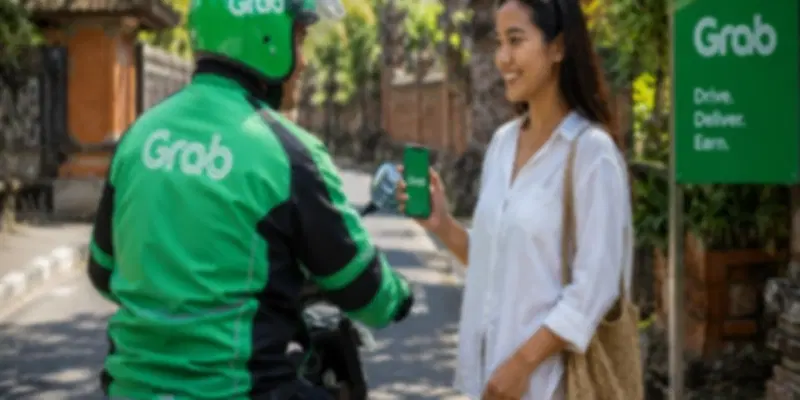
When it comes to picking the best taxi app in Bali for tourists, you should not choose just one. The smartest strategy is to download both Grab and Gojek before landing.
While locals use both interchangeably, tourists face specific hurdles, like foreign credit card rejections and language barriers, that make each app better suited for different situations.
Why Grab is the Best Choice for First-Time Tourists
If you want a stress-free travel experience that feels exactly like using Uber or Lyft back home, Grab Bali is your best bet.
- Hassle-Free Payments: Grab accepts international credit cards (Visa, Mastercard, and Amex) instantly. You can jump off a scooter or exit a car without fumbling for cash in a foreign currency.
- The Airport Winner: Grab’s official air-conditioned lounge at Ngurah Rai International Airport makes escaping the arrival terminal incredibly easy, safe, and comfortable.
- Flawless Communication: The in-app chat features instant auto-translation, allowing you to text your driver in English while they read it in Indonesian (and vice versa).
Why Budget Travellers and Foodies Prefer Gojek
If you are an experienced traveller looking to save every dollar or want to experience authentic Bali, Gojek Bali shines.
- Cheaper Scooter Rides: For solo travellers jumping on the back of scooters (GoRide) to zip through Canggu or Seminyak traffic, Gojek is consistently a few thousand rupiah cheaper than Grab.
- Authentic Food Options: Gojek’s food delivery service (GoFood) features far more local Indonesian warungs. It is the best way to get cheap, authentic Bali street food delivered straight to your villa.
- Better Surge Pricing: During heavy rain or peak sunset traffic hours, Gojek’s price spikes are occasionally less aggressive than Grab’s.
Neither app should be your only plan for every situation. For airport transfers with kids or heavy luggage or full-day trips to Ubud’s rice terraces and temples in Bali, a pre-booked private driver is usually worth the extra cost.
Grab vs Gojek in Bali Prices: Scooter, Car & Airport Taxi Costs
When navigating Grab vs Gojek pricing, rates fluctuate based on traffic and weather. However, baseline rates across these Bali taxi apps remain relatively consistent.
| Route / Ride Type | Distance | Typical Fare (IDR) | Approx. Cost (~₹) |
| Scooter Ride (GrabBike / GoRide) | 1–5 km | IDR 15,000–30,000 | ~₹80–₹160 |
| Premium Scooter (Comfort) | 1–5 km | IDR 25,000–45,000 | ~₹130–₹240 |
| Standard Car (GrabCar / GoCar) | 5–10 km | IDR 60,000–130,000 | ~₹320–₹680 |
| Ngurah Rai Airport → Kuta | ~3 km | IDR 120,000 | ~₹630 |
| Ngurah Rai Airport → Seminyak | ~10 km | IDR 100,000–150,000 | ~₹530–₹790 |
| Ngurah Rai Airport → Canggu | ~18 km | IDR 150,000–250,000 | ~₹790–₹1,320 |
| Ngurah Rai Airport → Ubud | ~38 km | IDR 200,000–450,000 | ~₹1,050–₹2,370 |
| Half-Day Private Driver (4–6 hrs) | Flexible | IDR 400,000–700,000 | ~₹2,100–₹3,700 |
| Full-Day Private Driver (8–10 hrs) | Flexible | IDR 700,000–1,200,000 | ~₹3,700–₹6,300 |
Note: Fares vary depending on traffic, weather, surge pricing, and the time of day. Comparing prices on both Grab and Gojek before booking is often the best way to get the lowest fare.
How to Use Grab & Gojek at Bali Airport (DPS)
Exiting Ngurah Rai International Airport used to be a nightmare of aggressive local taxi touts. Fortunately, the airport now officially recognises Bali transportation apps. Grab has an official, air-conditioned “Grab Lounge” located just outside the international arrivals terminal.
Here’s what actually happens:
- Clear immigration and customs as normal.
- Ignore anyone inside the terminal offering you a taxi; these are unofficial touts.
- Follow signage to the Grab Lounge or Gojek pickup point in the Pick Up Zone. Both have staffed, air-conditioned waiting areas.
- Book your ride through the app (or ask lounge staff to help if your data connection is patchy).
- Match the driver’s name, photo, and plate number to what the app shows before getting in.
Typical airport fares as of mid-2026: Kuta runs around IDR 120,000 (~₹630), Seminyak IDR 100,000–150,000 (~₹530–₹790), Canggu IDR 150,000–250,000 (~₹790–₹1,320), and Ubud IDR 200,000–450,000 (~₹1,050–₹2,370). These move with demand, weather, and time of day, so treat them as a range, not a quote.
Grab & Gojek Pickup Restrictions in Bali
Before booking, you must understand unique local Bali transport politics. Traditional local transport unions have banned transportation apps from picking up passengers in specific tourist areas in Bali.
- The Ban Zones: You will see physical signs prohibiting app pickups in central Ubud, Uluwatu (the Bukit Peninsula), and parts of Canggu.
- The Rules: Drivers can always drop you off in these zones without any issues. However, trying to pin a pickup will often result in instant driver cancellations or awkward confrontations with local taxi drivers.
- The Solution: Walk a few hundred metres outside the main restriction zone before ordering your ride, or use a local taxi/private driver for that specific leg of your trip.
Essential Tips for Using Grab And Gojek in Bali
- Download Before You Arrive: Install and set up both apps before landing, as airport Wi-Fi can be slow.
- Always Wear a Helmet: Wear the helmet provided on GrabBike or GoRide. Riding without one can lead to heavy fines.
- Carry Cash: Keep some Indonesian Rupiah with you in case card payments fail or aren’t accepted.
- Compare Prices: Check both apps before booking, especially during rain or peak hours, to find the best fare.
- Use Safety Features: Verify the driver’s name, photo, and number plate, and share your live trip with family or friends.
- Avoid Street Touts: Book only through the app. Ignore unofficial drivers approaching you at the airport or tourist attractions.
- Set Up Payment: Link your international card to Grab. For Gojek, keep cash handy or top up GoPay at any Alfamart if your card is declined.
Final Verdict: Should You Use Grab or Gojek in Bali?
Mastering Bali transportation apps is all about flexibility rather than choosing just one. When comparing Grab vs Gojek in Bali, the smartest approach is to download both apps before you land. Use Grab for convenient airport pickups and seamless international card payments, while Gojek is often the better choice for affordable scooter rides and authentic local food delivery. Before every trip, compare fares on both apps to find the best deal, especially during peak hours. For longer journeys across the island, hiring a private driver is often more convenient than relying on ride-hailing apps.
FAQs
Neither app is better in every situation. Grab is ideal for airport pickups, private cars, and international card payments, while Gojek is often cheaper for scooter rides and offers better local food delivery. Downloading both apps gives you the most flexibility.
For most tourists, Grab offers a smoother experience thanks to its airport lounge, reliable international card support, and English-friendly interface. However, Gojek is a great option for budget-conscious travellers looking for affordable scooter rides and local food delivery.
If you want convenience, Grab is the better taxi app for airport transfers and private cars. If you prioritise lower fares for short trips, Gojek is usually the better choice. Using both apps lets you compare prices before booking.
For short distances, GoRide and GrabBike are the cheapest transport options, with fares starting from IDR 15,000–30,000 (~₹80–₹160). For full-day sightseeing, hiring a private driver can be more economical than booking multiple rides.
No. Uber no longer operates in Bali. Grab and Gojek are the two main ride-hailing apps used by locals and tourists across the island.
Yes. Both apps operate at Ngurah Rai International Airport. Grab has an official air-conditioned lounge, while Gojek has designated pickup zones. Follow the airport signs and book your ride through the app.
Some tourist areas, including parts of Ubud, Uluwatu, and Canggu, have local transport restrictions. While app drivers can usually drop you off, pickups may be cancelled. Walking a short distance outside the restricted zone usually solves the problem.
Yes. Although Grab supports international cards, Gojek may reject foreign cards. Carrying some Indonesian Rupiah or topping up GoPay at Alfamart or Indomaret is recommended.
Yes. Both apps are generally safe and allow you to verify the driver’s name, photo, vehicle details, and share your trip in real time. If using a scooter, always wear the helmet provided by the driver.
In most cases, yes. Grab and Gojek usually offer lower, transparent fares than traditional taxis, although prices can increase during peak hours due to surge pricing.
Open either Grab or Gojek, enter your destination, and choose GrabBike or GoRide. Confirm the fare, book the ride, and match the driver’s name, photo, and vehicle number before starting your trip.
The difference is usually small. Gojek often charges IDR 15,000–25,000 (~₹80–₹130) for short scooter rides, while Grab typically charges IDR 20,000–35,000 (~₹110–₹185). Car fares are very similar, so comparing both apps before booking is the best way to find the lowest price.

Recommended articles for you








Discover Packages



















Bali City Packages
Packages By Departure City
Packages By Theme
Packages By Duration
Bali Combo Packages

Need help in planning?
Talk to our Travel Experts