
- Home
- Attractions
- Sri Lanka
- Adam's Peak: The Complete Guide to Climbing Sri Lanka's Sacred Mountain
Adam's Peak: The Complete Guide to Climbing Sri Lanka's Sacred Mountain
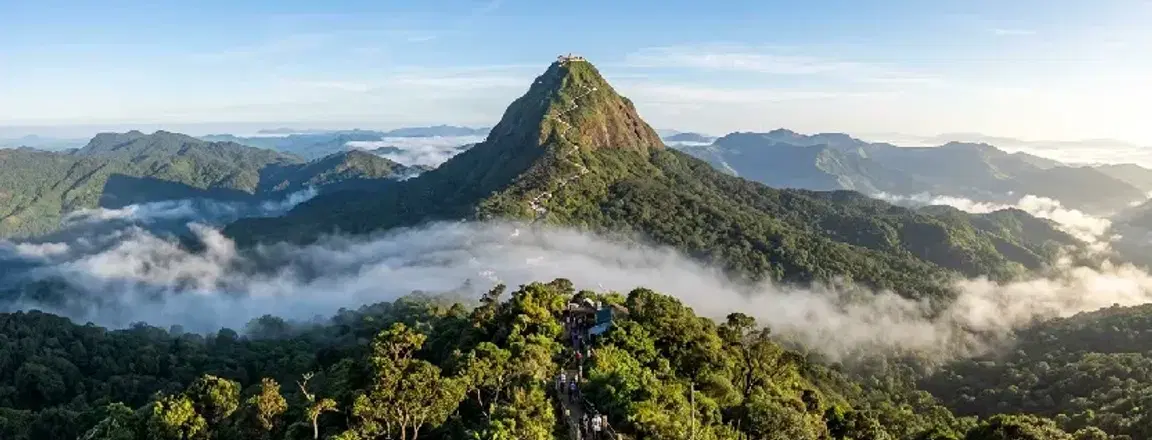
Imagine standing 2,243 metres above sea level, watching the morning sun cast a striking triangular shadow across a sea of misty clouds. For centuries, reaching the summit of Adam’s Peak (locally known as Sri Pada) has been a bucket-list pilgrimage. However, climbing its famous 5,500 stone steps at around 2:00 AM requires some preparation. Whether you’re visiting as a pilgrim seeking a spiritual experience or an adventurer chasing one of Sri Lanka’s most beautiful sunrises, planning ahead can make the climb much easier.
This Sri Pada Adam's Peak guide covers everything you need to know, from where the mountain is and which route to take to the official pilgrimage season, what the climb is really like, and how to include it in your Sri Lanka tour packages.
Adam's Peak at a Glance
Detail | Information |
| Local name | Sri Pada (also called Samanala Kanda, or "Butterfly Mountain") |
| Height | 2,243 metres (7,359 feet) |
| Location | Peak Wilderness Sanctuary, Ratnapura and Nuwara Eliya districts, central Sri Lanka |
| Base town | Nallathanniya (Dalhousie) |
| Number of steps | Approximately 5,500 |
| Climb duration | 3-4 hours up, 2-3 hours down |
| Official season | 23 December 2026, the Unduvap Full Moon Poya Day, and continuing until the Vesak full moon in May 2027. |
| Entry fee | Free; a voluntary donation is customary at the trailhead |
| Nearest railway station | Hatton, about 32 km from the base |
Where is Sri Pada Adam's Peak?
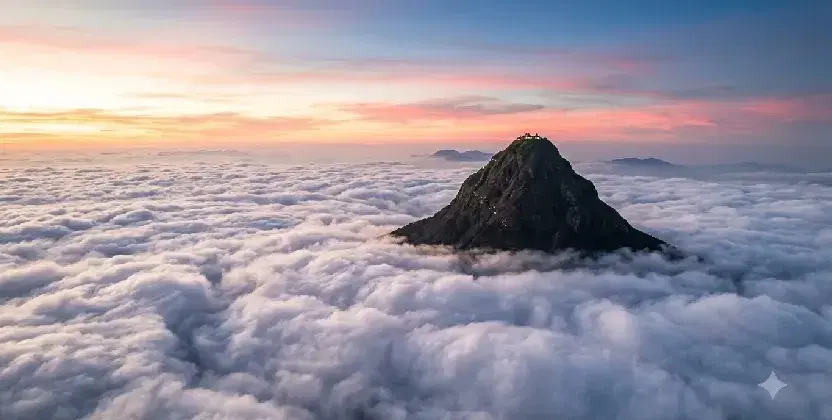
Sri Pada, also known as Adam’s Peak, is located in the central highlands of Sri Lanka, in the Ratnapura District of Sabaragamuwa Province. The mountain sits within a scenic forested area surrounded by tea plantations, hills, and valleys.
The most popular starting point for the climb is Nallathanniya (Dalhousie), which is well connected to nearby towns such as Hatton. From Hatton, Nallathanniya is about 32 km away and is usually reached by road. The location makes Adam’s Peak a convenient addition to a central Sri Lanka itinerary, particularly for travellers visiting Kandy, Nuwara Eliya, or Ella. If you're exploring the wider list of places to visit in Sri Lanka, Adam’s Peak stands out as an experience that often surprises first-time visitors, as photos rarely convey the physical challenge of the climb.
Why Do Four Religions Consider It Sacred?
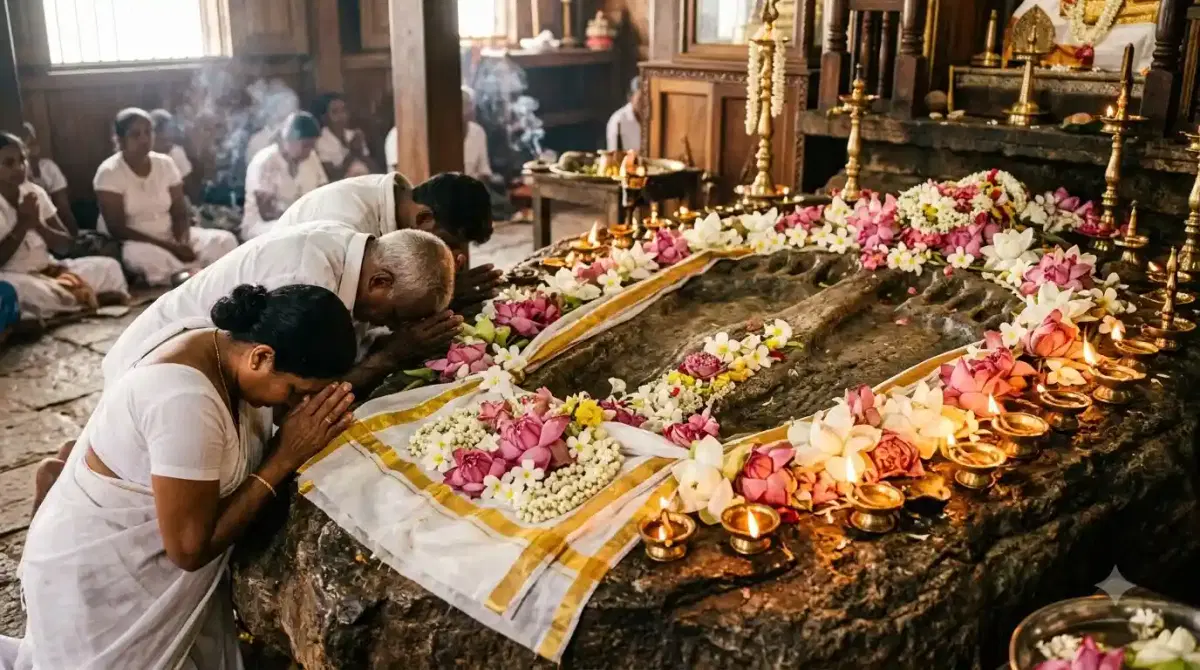
Adam’s Peak is considered sacred because its summit features a distinctive footprint-shaped rock depression, which different religious traditions associate with important spiritual figures. Buddhists believe it is the footprint of the Buddha, while Hindus associate it with Lord Shiva.
Christians and Muslims traditionally connect the footprint with Adam, who is believed to have stood on the mountain after being expelled from paradise. This shared religious significance has made Adam’s Peak an important pilgrimage destination for centuries, with devotees from different faiths climbing the mountain as an act of worship and devotion.
Adam's Peak Entrance Fee
Entry to Adam’s Peak (Sri Pada) is generally free, with no separate entrance ticket required to access the pilgrimage trail. However, you may need to budget for transport, food, accommodation, and other expenses during the climb. During the main pilgrimage season, facilities along the route may also be busier than usual.
Best Time to Climb Adam's Peak
The best time to climb Adam’s Peak (Sri Pada) is during the pilgrimage season from December to May, when the weather is generally cooler and drier. For the most comfortable experience, start your climb around 2–3 AM so you can reach the summit before sunrise and enjoy the famous views.
- Best months to visit Adam’s Peak: December to May
- Best time of day: Around 2–3 AM
- For sunrise: Reach the summit before 6 AM
- Avoid: The monsoon months, when heavy rain can make the trail slippery and visibility poor
- Peak pilgrimage period: December to January can be particularly busy, so expect larger crowds and longer waits near the summit.
Weekends and Poya days bring the heaviest crowds, since many Sri Lankans specifically climb on full moon nights. If you want a quieter ascent, aim for a weekday in March or April, which also lines up with the wider window when Sri Lanka's west and south coasts are at their driest.
Is Adam’s Peak Hike Difficult?
Yes, the Adam’s Peak hike is moderately to highly challenging, mainly because of its steep ascent and 5,500 steps to the summit. The mountain stands at approximately 2,243 metres (7,359 feet) above sea level. Additionally, the popular Nallathanniya (Hatton) route is roughly 6 km to the summit and involves about 5,500 steps. Most climbers take around 4–6 hours to reach the top, depending on fitness, crowds, weather and rest breaks. No technical climbing skills are required, but good fitness is recommended. For sunrise, start around 2:00–2:30 AM.
Top Things To Do At Adam’s Peak
Adam’s Peak is more than a challenging hike; it is a spiritual and scenic experience surrounded by Sri Lanka’s beautiful hill country. Here are some of the best things to do in Adam’s Peak:
- Climb to the Summit – Take on the famous pilgrimage trail and climb the thousands of steps to the top of Sri Pada.
- Watch the Sunrise – Reach the summit before dawn to see the sun rise over the surrounding mountains and valleys.
- Visit the Sacred Footprint – Pay your respects at the footprint shrine, which holds religious significance for Buddhists, Hindus, Christians and Muslims.
- See the Adam’s Peak Shadow – On clear mornings, look for the distinctive triangular shadow of the mountain cast across the misty landscape after sunrise.
- Experience the Pilgrimage Atmosphere – During pilgrimage season, walk alongside devotees, hear temple bells, and experience the unique spiritual atmosphere along the trail.
- Enjoy the Mountain Scenery – Take in views of Sri Lanka’s lush forests, valleys, tea-growing areas, and surrounding peaks as you climb.
- Explore Nallathanniya – Spend some time in the small town at the foot of the mountain, which serves as the main starting point for the popular climbing route.
How to Reach Sri Pada?
The easiest way to reach Sri Pada (Adam’s Peak) depends on your starting point and the route you choose. Most travellers use the Nallathanniya (Dalhousie) route, which is the most popular and convenient route for first-time visitors.
- From Colombo: Take a train or bus to Hatton, then continue by bus or taxi to Nallathanniya. The journey usually takes around 5–7 hours, depending on the connection.
- From Kandy: Travel by train or bus to Hatton and then take a local bus or taxi to Nallathanniya. Allow roughly 4–6 hours.
- From Nuwara Eliya: Travel towards Hatton and continue to Nallathanniya by bus or taxi. The journey takes approximately 3–4 hours.
- By private taxi: A private car or taxi is the most comfortable option, especially if you are travelling with luggage or a group. You can usually be dropped off directly at Nallathanniya, where the climb begins.
Which Route Should You Take?
Adam’s Peak can be reached through several trails, but the Nallathanniya (Hatton) route is the most popular choice for first-time visitors. Each route offers a different experience in terms of distance, difficulty, scenery, and facilities.
Route | Best For | Key Details |
| Nallathanniya (Hatton) Route | First-time visitors | The shortest and most popular route, with around 5 km of steep steps. It has the best facilities and is ideal for reaching the summit in time for sunrise. |
| Ratnapura Route | Experienced hikers | A longer and more challenging trail with beautiful forest scenery. It is less crowded but requires greater stamina. |
| Rajamale Route | Nature and quiet walks | A scenic approach through the Peak Wilderness area, offering a more peaceful trekking experience. |
| Kuruwita Route | Experienced trekkers | A longer route known for its natural surroundings and waterfalls, making it suitable for travellers looking for a less conventional climb. |
Best choice for most travellers: Choose the Nallathanniya route if it is your first visit or if you want the easiest access to the summit and the classic sunrise experience.
What to Pack for Adam's Peak
Packing wisely can make the Adam’s Peak climb much more comfortable, especially since the hike involves thousands of steps and can begin in the middle of the night. Keep your backpack light and carry only the essentials.
- Comfortable trekking shoes with good grip for the steep steps
- Light, breathable clothing for the climb
- A warm layer or jacket for the cold summit, especially before sunrise
- Rain jacket or poncho in case of sudden rain
- Water bottle to stay hydrated throughout the climb
- Energy snacks such as bananas, nuts or energy bars
- Headlamp or torch for the dark sections of the early-morning climb
- Small backpack to carry your essentials without adding unnecessary weight
- Cash for snacks, drinks and small purchases along the route
- Basic first-aid items, including blister plasters and any personal medicines
- Sun protection, such as sunscreen, sunglasses and a cap, for the descent after sunrise
- Power bank if you plan to use your phone for navigation or photography
Adam’s Peak vs Little Adam’s Peak: Which One Should You Climb?
Adam’s Peak and Little Adam’s Peak are two popular mountain hikes in Sri Lanka, but they offer very different experiences. Adam’s Peak (Sri Pada) is a challenging pilgrimage climb known for its sacred footprint and sunrise views, while Little Adam’s Peak near Ella is a shorter, easier hike with panoramic views of the surrounding hills and valleys.
Feature | Adam’s Peak (Sri Pada) | Little Adam’s Peak |
| Location | Nallathanniya, Central Sri Lanka | Ella, Uva Province |
| Height | 2,243 m (7,359 ft) | Around 1,141 m (3,743 ft) |
| Difficulty | Moderate to challenging | Easy to moderate |
| Climb time | Around 3–5 hours one way | Around 30–45 minutes one way |
| Steps | Around 5,500 steps | Around 300–400 steps |
| Best known for | Sacred footprint and pilgrimage | Scenic valley and mountain views |
| Best time | Pilgrimage season, December–May | Year-round, preferably early morning or late afternoon |
| Ideal for | Pilgrims, hikers and adventure seekers | First-time hikers, families and casual travellers |
Choose Adam’s Peak if you want a demanding hike, sunrise experience and one of Sri Lanka’s most important pilgrimage sites. Choose Little Adam’s Peak if you prefer a short, scenic and beginner-friendly walk.
How to Fit Adam's Peak Into a 7-day Sri Lanka Itinerary
Adam’s Peak works best as an overnight stop between Sri Lanka’s hill country and the southern coast. Since the climb starts before sunrise and takes several hours, avoid treating it as a day trip from Colombo or another distant city. A practical 7-day Sri Lanka itinerary is:
Day | Destination | Plan |
| Day 1 | Colombo | Arrive in Colombo, explore the city and relax after your journey. |
| Day 2 | Kandy | Travel to Kandy and visit the Temple of the Sacred Tooth Relic and Kandy Lake. |
| Day 3 | Nuwara Eliya | Travel through the scenic hill country, stopping at tea plantations and waterfalls along the way. |
| Day 4 | Nallathanniya | Travel from Nuwara Eliya to Nallathanniya and check into your accommodation. Rest early for the climb. |
| Day 5 | Adam’s Peak → Ella | Start the climb around 2–3 AM, reach the summit for sunrise, descend and rest before travelling towards Ella. |
| Day 6 | Ella | Explore Ella’s highlights, such as Nine Arch Bridge, Little Adam’s Peak and tea plantations. |
| Day 7 | Galle / Colombo | Travel towards the south coast, visit Galle Fort, and continue to Colombo for your departure or onward journey. |
Tip: If Adam’s Peak is a major highlight of your trip, keep Day 4 relatively relaxed. The climb is physically demanding, and having a good night’s rest before the early-morning start will make the experience much more enjoyable.
Where to Stay near Adam's Peak
The best places to stay for climbing Adam's Peak (Sri Pada) are in the base village of Nallathanniya (Delhouse), which allows you to start your sunrise trek directly from your doorstep around 2:30 AM.
Budget Guesthouses & Homestays
- Pure Land Villa: Basic budget lodging, free Wi-Fi, on-site restaurant, 24-hour service. A stay here starts around ~LKR 2,750 (~INR 765) per night
- Singh Bro's: Budget-friendly accommodation close to the trail stairs, with free Wi-Fi, pet-friendly facilities and highly rated local vegetarian food. A stay here starts around LKR 3,600 (~INR 1,000) per night.
- White House Adam's Peak: modest riverside hotel with free breakfast, scenic views and a host who can share useful trekking tips. A stay here starts around LKR 3,800 (~INR 1,060) per night.
- Dilani Adamspeak RiverStay: Peaceful bed-and-breakfast with a garden setting, a riverside spot and warm hospitality. A stay here starts around LKR 4,500 (~INR 1,245) per night.
Mid-Range & Standard Hotels
- River View Wathsala Inn: 3-star hotel with private balconies overlooking Adam’s Peak, air-conditioned rooms and scenic mountain views. A stay here starts around LKR 6,500 (~INR 1,800) per night.
- Queens Ark Hotel and Restaurant: Comfortable 3-star stay about a 10-minute walk from the trailhead, with mountain views and popular Sri Lankan cuisine. A stay here starts around LKR 6,800 (~INR 1,890) per night.
- Pine Trees Homestay: Peaceful homestay in Maskeliya with hot showers and complimentary transport to the trailhead for the sunrise hike. A stay here starts around LKR 8,500 (~INR 2,360) per night.
Luxury Tea Bungalows & Resorts (Hatton/Dickoya Area)
If you prefer high-end luxury amidst tea estates before or after your strenuous hike.
- Tea Hills Lake: Premium stay surrounded by tea fields, featuring an infinity pool overlooking the hills and upscale room amenities. A stay here starts around LKR 48,300 (~INR 13,420) per night.
- The Farm Resorts: Luxury lakeside chalets overlooking Castlereigh Reservoir, with bathtubs and personalised service. A stay here starts around LKR 112,500 (~INR 31,230) per night.
Practical Tips for Visiting Adam’s Peak
A little planning can make the Adam’s Peak climb much easier, particularly if you’re aiming to reach the summit for sunrise. Keep these practical tips in mind before setting out:
- Start early: Begin around 2–3 AM if you want to reach the summit before sunrise.
- Choose the right route: The Nallathanniya (Hatton) route is the most convenient option for first-time visitors.
- Wear proper footwear: Choose comfortable shoes with good grip, as the trail has thousands of steep steps.
- Carry enough water: Bring a reusable water bottle and drink regularly during the climb.
- Pack light: Carry only essentials, as a heavy backpack will make the ascent more tiring.
- Dress in layers: It can be cold and windy at the summit before sunrise, even when the lower sections feel warm.
- Check the weather: Avoid climbing during heavy rain, when the steps can become slippery and visibility may be poor.
- Allow plenty of time: The climb can take 4–6 hours, so don't rush the ascent.
- Carry cash: Small shops and stalls along the route may be useful for buying water, snacks and refreshments.
- Respect the religious significance: Dress modestly, follow local customs and be respectful around the sacred footprint and pilgrimage areas.
- Plan your descent: The journey down can also be tiring, so allow time to rest before continuing to your next destination.
- Avoid peak crowds if possible: Weekdays outside major pilgrimage dates generally offer a more relaxed experience.
Final Verdict: Is Climbing Adam’s Peak Worth It?
Ultimately, whether you should climb Adam’s Peak depends on the kind of Sri Lankan experience you’re looking for. If you prefer a relaxed holiday with easy walks, the demanding 5,500-step ascent, cold night temperatures, and early start may feel too strenuous. But if you enjoy physical challenges and want to experience Sri Lanka’s rich pilgrimage traditions while watching a spectacular sunrise from the summit, Adam’s Peak is well worth adding to your itinerary.
FAQs
1. Is Adam’s Peak worth visiting?
A: Yes. Adam’s Peak is worth visiting if you enjoy challenging hikes, sunrise views, and cultural experiences. The climb combines a physically demanding ascent with the chance to visit one of Sri Lanka’s most important pilgrimage sites.
2. How long does it take to climb Adam’s Peak?
A: The climb usually takes around 3–5 hours one way, depending on your fitness, pace, breaks, crowds, and weather. Most visitors allow around 6–8 hours for the complete climb and descent.
3. Is it hard to climb Adam’s Peak?
A: Yes. Adam’s Peak is considered a moderate-to-challenging hike because of its steep ascent and thousands of steps. The climb does not require technical mountaineering skills, but good fitness and comfortable footwear are recommended.
4. What is Adam’s Peak famous for?
A: Adam’s Peak is famous for its sacred footprint, religious importance, thousands of steps, and spectacular sunrise views. It is an important pilgrimage destination for Buddhists, Hindus, Christians, and Muslims.
5. How many steps are there to Adam’s Peak?
A: The popular Nallathanniya route has approximately 5,500 steps leading to the summit. The exact number can vary depending on how sections of the trail are counted.
6. Is there an entrance fee for Adam’s Peak?
A: No. There is generally no entrance fee for climbing Adam’s Peak. However, you should carry cash for food, drinks, transport, accommodation, and voluntary donations along the pilgrimage route.
7. What time should I start climbing to catch the sunrise?
A: Start the climb around 2:00–2:30 AM if you want to reach the summit before sunrise. Allow extra time during weekends, Poya days, and busy pilgrimage periods because queues can significantly slow the ascent.
8. Is Adam’s Peak the same as Little Adam’s Peak in Ella?
A: No. They are two different mountains. Adam’s Peak, or Sri Pada, is a major pilgrimage site standing at 2,243 metres, while Little Adam’s Peak is a much shorter and easier hike near Ella, standing at around 1,141 metres.
9. Do I need a guide to climb Adam’s Peak?
A: No. A guide is generally not necessary on the popular Nallathanniya route, particularly during pilgrimage season when the trail is busy and well used. However, a local guide can be useful if you want additional information about the mountain, religious traditions, or less-used routes.
10. What is the height of Adam’s Peak?
A: Adam’s Peak is approximately 2,243 metres (7,359 feet) above sea level. The mountain is also known as Sri Pada and Samanala Kanda.
11. What does the Adam’s Peak footprint mean in Islam?
A: In Islamic tradition, the footprint-shaped impression at the summit is traditionally associated with Prophet Adam. According to the tradition, Adam stood on the mountain after being expelled from paradise, giving the mountain its widely used name, Adam’s Peak.
12. Which district is Adam’s Peak located in?
A: Adam’s Peak is located in Sri Lanka’s central highlands, primarily associated with the Ratnapura District of Sabaragamuwa Province, with the Peak Wilderness area extending toward the Nuwara Eliya District.
13. What is the best time to climb Adam’s Peak?
A: The best time to climb is generally during the December-to-May pilgrimage season, when conditions are usually more suitable. For sunrise, begin the ascent around 2:00–2:30 AM and aim to reach the summit before approximately 6 AM.
14. Which route is best for climbing Adam’s Peak?
A: The Nallathanniya (Hatton) route is the best choice for most first-time visitors. It is the most popular route, has better facilities, and provides the classic approach to the summit. Experienced hikers may prefer the longer Ratnapura or other alternative routes.
15. What should you pack for an Adam’s Peak hike?
A: Pack comfortable trekking shoes, a warm jacket, rain protection, water, energy snacks, a headlamp or torch, a small backpack, cash, basic first-aid supplies, sunscreen, and a power bank. Dressing in layers is especially useful because temperatures can be cold at the summit before sunrise.