
Bali vs Sri Lanka: Which Should Indian Travellers Choose in 2026?

Planning your international trip but not sure where to begin? Bali vs Sri Lanka is a common comparison, but there is no single answer that suits every traveller. The best choice is not about which destination is better. It is about which one suits your budget, travel style and the kind of holiday you want. Bali and Sri Lanka offer stunning beaches, lush landscapes, rich cultural heritage and memorable experiences at a reasonable cost for Indian travellers.
For Indian travellers, this comparison has become even more interesting in 2026. Sri Lanka now offers visa-free entry for Indian passport holders, while Bali continues to attract travellers with its luxury villas, vibrant cafés, temples, and adventure-filled experiences. If you are still unsure which destination deserves your time and money, this guide is for you. Here, we have compared Bali vs Sri Lanka across visas, travel costs, flights, beaches, food, weather and overall experience, thereby helping you decide which island suits your next international trip.
Bali vs Sri Lanka: Which One Is Better in 2026?
| Destination | Best For |
| Sri Lanka | First international trip, Budget holidays, Wildlife safaris, Short getaways from India, Family vacations |
| Bali | HoneymoonsLuxury holidaysNightlifeAdventure & beachesDigital nomad stays |
Bali vs Sri Lanka: Complete Comparison at a Glance (2026)
| Factors | Bali | Sri Lanka |
| Entry requirements for Indians | Visa on Arrival, IDR 500,000 (~₹2,800–3,000) | Visa-free entry by acquiring a free Electronic Travel Authorisation (ETA) online before departure. |
| Flight time from India | 7–8 hours for direct flights and 10-18 hours with a layover. | 1–4 hrs; Chennai to Colombo is around 1 hr 20 min |
| Flight cost (one-way) | IDR 2,456,214 – 4,912,427+ (₹13,000–26,000+) | IDR 1,020,437 – 3,401,456 (₹5,400–18,000) |
| Currency | Indonesian Rupiah (IDR), 1 IDR = ~₹0.0053 | Sri Lankan Rupee (LKR), 1 LKR = ~₹0.28 |
| Time zone | +2 hr 30 min ahead of IST | Same as IST |
| Best months | April–October | West & South: December–AprilEast Coast: May–September |
| 7-day couple budget (mid-range) | IDR 11,336,952 – 28,342,380 (₹60,000–1,50,000) | IDR 10,399,229 – 16,071,536 (₹55,000–85,000) |
| Nightlife | Extensive (Seminyak, Canggu, Kuta) | Limited, mainly Colombo and Galle |
| Best for | Beach clubs, longer international holidays, honeymoons | Budget-friendly trips, wildlife, culture, first international holiday |
Entry Requirements, Flights and Accessibility

Visa Requirements for Indians: Bali vs Sri Lanka
Both Bali and Sri Lanka are easy international destinations for Indian travellers, but the entry process is different. Bali offers a visa on arrival, while Sri Lanka currently provides free Electronic Travel Authorisation (ETA) for Indian passport holders.
- Bali (Indonesia): Indian citizens can obtain a Bali Visa on Arrival (VOA) for IDR 500,000 (₹2,646), which is valid for 30 days and extendable once for another 30 days. Travellers must also pay the Bali Tourist Levy of IDR 150,000 (₹793) and complete the All Indonesia Digital Arrival Card before arrival.
- Sri Lanka: Indian passport holders can enter Sri Lanka visa-free. However, they must apply for a free 30-day ETA before travelling.
Flight Duration and Connectivity from India: Which Destination Is Easier to Reach?
Both destinations have good air connectivity from major Indian cities, but Sri Lanka is generally faster to reach. Bali has fewer direct flight options, while Colombo enjoys more frequent connections from India.
Bali (Indonesia):
- Arrival Airport: I Gusti Ngurah Rai International Airport (DPS), Denpasar
- Flight Duration: Around 7–9 hours on direct flights and 9–13 hours with one stop
- Connectivity: Direct flights are available from Delhi, while travellers from cities like Mumbai, Bengaluru, Chennai, Hyderabad and Kolkata usually include a layover.
Sri Lanka:
- Arrival Airport: Bandaranaike International Airport (CMB), Colombo
- Flight Duration: Approximately 3.5–5 hours on direct flights from India
- Connectivity: Direct flights operate from major cities.
Bali vs Sri Lanka Cost Comparison: Which Destination Offers Better Value?
| Category | Bali (Indonesia) | Sri Lanka |
| Visa & Entry Cost | Visa on Arrival: IDR 500,000 (around ₹2,700–3,000) + Bali Tourist Levy: IDR 150,000 (around ₹800–900) | 30-day ETA: Free for Indian citizens (effective from 25 May 2026). |
| Flights (Round Trip from India) | IDR 4,155,879 – 8,500,662+ (₹22,000–45,000+) per person depending on departure city, season, and booking time | IDR 3,024,882 – 6,616,929+ (₹16,000–35,000+) per person depending on city, airline, and travel season |
| Average 6-Day Couple Budget | IDR 17,960,234 – 35,920,469+ (₹95,000–1,90,000+) including flights, hotels, transport, food, and sightseeing | 16,061,192 – 29,288,056+ (₹85,000–1,55,000+) including flights, accommodation, transport, meals, and attractions |
| Local Transport | Rental scooters, ride-hailing apps, taxis, and private drivers are widely available and reasonably priced | Tuk-tuks, trains, buses, rental scooters, taxis, and private cabs offer affordable ways to travel around the island |
| Getting Around | Most popular attractions are within a few hours’ drive, making a single-island itinerary convenient. | Travelling between destinations like Colombo, Kandy, Ella, Yala, and Mirissa often involves scenic train journeys or long road transfers, which should be factored into your itinerary. |
| Food Cost | Local warung meals: ₹180–350; cafés and international restaurants cost more. | Local rice and curry meals cost ₹200–450; seafood and tourist restaurants generally cost ₹500–1,200 per person depending on the location. |
Best Experiences Comparison
Both Bali and Sri Lanka are famous for their tropical scenery, but they offer very different travel experiences. Bali combines beaches with volcanoes, waterfalls and centuries-old temples, while Sri Lanka offers long stretches of golden coastline, lush tea plantations, and UNESCO World Heritage Sites, all within a relatively compact island.
Bali Beaches and Natural Landscapes
Best for: Travellers looking for a mix of beaches, culture, adventure, wellness, and island hopping.
- The island offers a beach for every traveller. You can relax on white-sand beaches in the south, explore black volcanic beaches in the north and east, or surf at famous spots like Uluwatu and Canggu.
- The island is known for its diverse natural beauty. From the Tegalalang Rice Terraces and Mount Batur to lush jungles, hidden waterfalls, and dramatic cliffs at Uluwatu and Nusa Penida, Bali offers some of Southeast Asia’s most beautiful natural landscapes.
- The famous cultural attractions in Bali are more than places of worship. The island is home to famous temples like Tanah Lot, Uluwatu Temple, and Ulun Danu Beratan, which are also some of the best sunset spots in Bali.
Sri Lanka Beaches and Scenic Highlands
Best for: Nature lovers, wildlife enthusiasts, beach holidays, road trips, and first-time international travellers.
- More than 1,300 km of coastline with beautiful beach destinations such as Mirissa, Bentota, Unawatuna, Arugam Bay, Nilaveli, and Pasikudah, offering surfing, whale watching, snorkelling, and relaxed beach holidays.
- Home to 15 national parks, including Yala, Udawalawe, and Minneriya, where visitors can spot Sri Lankan leopards, Asian elephants, sloth bears, crocodiles, and hundreds of bird species.
- Sri Lanka’s scenic hill town areas such as Ella, Nuwara Eliya, and Kandy are famous for their tea plantations, waterfalls, breathtaking viewpoints, and a spectacular train ride through the mountains.
- The country is also home to 8 UNESCO World Heritage Sites, including Sigiriya Rock Fortress, Dambulla Cave Temple, Galle Fort, and the Sacred City of Kandy.
Culture and Food Comparison
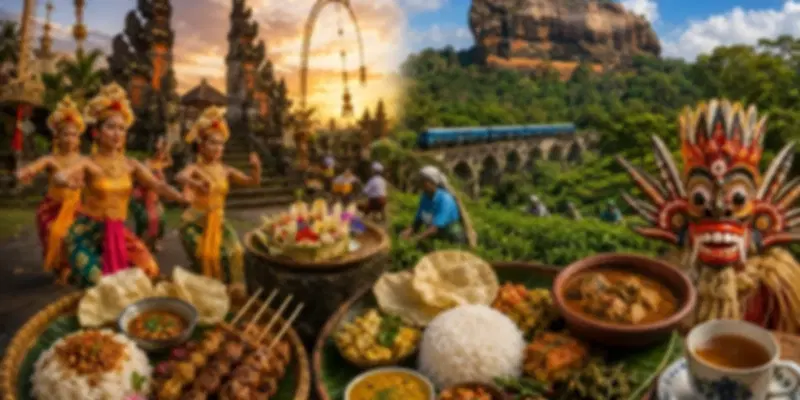
Learn about food and culture of Bali vs Sri Lanka
Both Bali and Sri Lanka are welcoming to Indian travellers. However, the day-to-day experience is noticeably different. Bali blends spirituality with a vibrant cafe and wellness culture, whereas Sri Lanka feels more traditional, offering warm hospitality, historic cities, and flavours that are familiar to most Indian visitors.
Bali: Temples, Wellness and Global Café Culture
Best for: Couples, solo travellers, wellness seekers, vegetarians, and café lovers.
- Bali is the only Hindu-majority island in Indonesia, with thousands of temples and colourful ceremonies woven into everyday life. Bali has a unique culture, but its Hindu heritage and many traditions often feel familiar to Indian travellers.
- Bali is one of Southeast Asia’s top wellness destinations. Ubud is especially popular for its yoga retreats, meditation centres, traditional Balinese spas, and holistic healing experiences.
- Food is one of Bali’s highlights. From local favourites like Nasi Goreng, Mie Goreng, Babi Guling, and Satay to cafes and restaurants serving international cuisine, there is something for every traveller.
NOTE: If you are a vegetarian, you will find plenty of vegan restaurants in Bali, especially in Ubud, Canggu, and Seminyak.
Sri Lanka: Heritage, Local Hospitality and Comfort Food
Best for: Families, culture enthusiasts, history lovers and travellers seeking authentic local experiences.
- Sri Lanka’s rich heritage is shaped by Buddhist, Hindu, colonial, and indigenous influences. You can experience this rich heritage at Sigiriya, Kandy, and Galle Fort.
- Sri Lankan food shares many flavours with Indian cuisine, making it a comfortable choice for Indian travellers. Popular dishes include rice and curry, hoppers (appa), kottu roti, string hoppers, lamprais and fresh seafood.
- Sri Lanka’s attractions go beyond its beaches and national parks. The country offers a rich cultural journey through Ramayana sites, sacred Buddhist temples, scenic tea plantations, and traditional festivals celebrated across the island.
Nightlife and Digital Nomad Comparison
Nightlife and internet connectivity can make a big difference, especially if you plan to work remotely during your trip. Bali is the better choice for travellers who prefer nightlife, remote work, and digital nomads, while Sri Lanka is more suited to travellers who prefer peaceful evenings and a slower pace for their holiday itinerary.
Bali: Southeast Asia’s Lifestyle and Digital Nomad Hub
Best for: Nightlife lovers, remote workers, solo travellers and long-stay visitors.
- Popular areas like Seminyak, Canggu, Kuta, and Uluwatu offer vibrant nightlife with beach clubs, rooftop bars, live music venues and parties that continue well after midnight.
- Bali is one of Asia’s leading destinations for digital nomads. Popular hubs like Canggu and Ubud provide coworking spaces, cafes with reliable Wi-Fi, networking events and a strong remote work community.
Sri Lanka: Relaxed Evenings and a Growing Remote Work Scene
Best for: Slow travellers, couples, surfers, and travellers looking for peaceful evenings.
- Sri Lanka is better known for relaxed evenings than late-night parties. The best nightlife destinations in Sri Lanka are concentrated in Colombo, Galle, Hikkaduwa, Mirissa and Arugam Bay.
- Sri Lanka is becoming a popular destination for remote workers. Colombo, Galle, and Ella are among the top cities in Sri Lanka for digital nomads to find coworking spaces.
- Internet connectivity is good across major cities and tourist hubs. However, travellers may experience slower or less reliable speeds in remote parts of the country.
Bali vs Sri Lanka: Safety and Ease of Travel Compared
Both Bali and Sri Lanka are popular with Indian travellers and are generally considered safe for couples, families, solo travellers, and first-time international visitors. Both these destinations welcome millions of international visitors every year, and the main tourist regions are well-equipped for hassle-free travel.
Bali: Easy to Explore with Well-Developed Tourist Infrastructure
- Well-developed tourist infrastructure with English widely spoken in major destinations.
- Ride-hailing apps like Grab and Gojek are widely available and are the best ways to commute in Bali.
- The best tourist places in Bali are well patrolled by police.
- Card payments are accepted at most hotels, restaurants, cafés and attractions.
- Bali is generally safe for tourists. But it is still advisable to follow basic precautions to prevent the common Bali scams.
Sri Lanka: Safe, Friendly and Easy to Navigate
- The best places in Sri Lanka, such as Colombo, Kandy, Ella, Galle, Mirissa, Bentota and Sigiriya, are considered safe and well-prepared for international visitors.
- PickMe and Uber operate in Colombo and several major cities. For long-distance travel, pre-booked taxis or private drivers are the most convenient option for transportation in Bali.
- Sri Lankans are known for their warm hospitality, and English is widely spoken in hotels, restaurants, and major tourist attractions.
- Like any destination, Sri Lanka is best enjoyed by following a few simple safety tips. Avoid deserted areas after dark, keep your passport and valuables secure, and use licensed transport.
Travel Tip: Regardless of whether you book a Bali package or a Sri Lanka package, it is advisable to buy comprehensive travel insurance, carry digital and printed copies of important documents and save emergency contact numbers before your trip.
Payments and Currency: Bali vs Sri Lanka
Paying for everyday expenses is straightforward in both destinations, but there are a few differences Indian travellers should know before they go.
Bali (Indonesia)
- Currency: Indonesian Rupiah (IDR), 1 IDR = ~₹0.0053
- Credit and debit cards are widely accepted at hotels, restaurants, cafés, shopping malls, and major attractions.
- Carry some cash for local markets, small warungs, beach vendors, parking fees, and rural areas.
- Indian UPI apps are not accepted. Online and mobile payments in Bali are supported by QRIS (Quick Response Code Indonesian Standard), local e-wallets like GoPay and OVO, and app-based platforms like Grab or Gojek.
Sri Lanka
- Currency: Sri Lankan Rupee (LKR), 1 LKR= ~₹0.28
- Cards are accepted at most hotels, supermarkets, restaurants and larger businesses.
- Since March 2026, Indian travellers can make payments using supported UPI apps by scanning LankaQR codes for quick and convenient cashless payments.
- Carry a forex card or some cash as a backup.
Tip: UPI is a useful bonus in Sri Lanka but should not be your only payment method. A forex-friendly credit or debit card, along with some local cash, is the most reliable way to pay in both Bali and Sri Lanka.
Getting Around: Bali vs Sri Lanka
The way you travel around each destination can shape your overall experience. Bali is best for flexible road travel, while Sri Lanka offers a wider range of public transport options. So, choosing the right way to get around can save time, reduce costs and make your trip more enjoyable.
Sri Lanka: Faster to Reach and Easier to Explore
- Scenic railway network: Sri Lanka has an extensive passenger rail network connecting major destinations. The Kandy–Ella train journey is considered one of the world’s most scenic rail routes, passing through tea plantations, forests, waterfalls, and mountain villages. Advance seat reservations are highly recommended during peak season.
- Easy local transport: Travellers can choose from trains, intercity buses, tuk-tuks, private cars with drivers, and ride-hailing apps like PickMe and Uber in major cities.
- Ideal for road trips: Most popular destinations can be connected through well-planned road or rail routes, making it easy to combine beaches, hill country, wildlife safaris and cultural sites in one itinerary.
Bali: Compact Island, But Expect Traffic
- No railway network: Bali does not have passenger trains, and public transport is limited for tourists. Most visitors rely on private drivers, Grab, Gojek, or scooter rentals for daily travel.
- Traffic can be unpredictable: Roads around Seminyak, Canggu, Kuta, Ubud and Uluwatu often experience heavy traffic, particularly during weekends and the dry season.
- Private drivers are the most convenient option: It is the most convenient way for visiting multiple attractions in a day without worrying about traffic, parking, or directions.
Bali vs Sri Lanka: Which Destination Is Right for You?
The answer to Bali vs Sri Lanka depends entirely on what you’re looking for in a holiday. If you wish to enjoy a shorter, budget-friendly international holiday packed with wildlife and cultural experiences, Sri Lanka is an excellent choice. However, if you dream of luxury villas, beach clubs, water sports and vibrant nightlife, Bali is well worth your time. So, whichever destination you choose, both offer unforgettable experiences, welcoming locals, stunning landscapes and excellent value for Indian travellers. Before booking, compare your budget, travel duration, experiences and the best season to visit so that your itinerary matches your expectations.
FAQs
If it is your first international trip, Sri Lanka is usually the better choice. It is closer to India, has shorter flight times, no time difference, familiar food, and a simple entry process for Indian travellers. Bali is better suited for travellers looking for a longer holiday with beaches, nightlife, luxury stays, and wellness experiences.
Bali is generally the better honeymoon destination because of its private pool villas, luxury resorts, beach clubs, spa experiences, and romantic dining options. Sri Lanka is ideal for couples who prefer scenic road trips, wildlife safaris, tea plantations, and cultural sightseeing over a resort-focused holiday.
For Bali, plan at least 6–8 days to explore areas like Ubud, Seminyak, Nusa Penida, and Uluwatu without rushing. Sri Lanka can be comfortably explored in 5–7 days, covering destinations such as Colombo, Kandy, Ella, and the southern beaches. Travellers with more time can extend either itinerary to 10–12 days.
Sri Lanka is the clear winner for wildlife. National parks like Yala, Udawalawe, and Minneriya are known for leopard safaris, elephant sightings, birdwatching, and seasonal whale watching. Bali offers beautiful nature and marine life but cannot match Sri Lanka’s wildlife diversity.
Both Bali and Sri Lanka are generally safe for Indian tourists, including couples, solo travellers, and families. As with any international destination, avoid isolated areas late at night, use licensed transport, keep valuables secure, and buy comprehensive travel insurance before your trip.
Bali offers better value for luxury holidays. It is famous for affordable private villas, luxury resorts, wellness retreats, fine dining, and beach clubs that often cost less than similar experiences in many other international destinations. Sri Lanka also has luxury resorts but is better known for boutique hotels, heritage stays, and wildlife lodges.
Indian UPI payments are supported at participating LankaQR merchants in Sri Lanka, making cashless payments more convenient for Indian travellers. In Bali, Indian UPI apps are generally not accepted, so travellers should carry an international debit or credit card, a forex card, and some local currency for smaller purchases.
Indian citizens do not need to pay a visa fee to visit Sri Lanka for tourism in 2026. However, they must apply online for a free Electronic Travel Authorisation (ETA) before travelling. The tourist ETA allows a stay of up to 30 days and permits entry as per Sri Lanka’s current immigration rules.
It depends on your travel style. Sri Lanka usually has the advantage for short trips due to lower travel and entry costs, while Bali offers more budget accommodation choices that help backpackers control expenses.
Both destinations offer beautiful beaches, but the experience is different. Bali is known for its black volcanic beaches and world-class surf spots, while Sri Lanka’s south coast, including Mirissa and Unawatuna, offers calmer waters, relaxing beaches, and seasonal turtle nesting experiences.
For families, Sri Lanka often has the advantage with shorter flights, no time difference for Indian travellers, and exciting wildlife safaris that children enjoy. Bali is also a great choice, especially for families looking for comfortable resort stays in areas like Nusa Dua and Sanur.
Recommended articles for you












Discover Packages



















Bali City Packages
Packages By Departure City
Packages By Theme
Packages By Duration
Bali Combo Packages

Need help in planning?
Talk to our Travel Experts