
- Home
- Attractions
- Sri Lanka
- Dambulla Cave Temple Guide: Entrance Fee, Timings & Ticket Price 2026
Dambulla Cave Temple Guide: Entrance Fee, Timings & Ticket Price 2026

Want to explore one of Sri Lanka’s oldest and most fascinating Buddhist sites? Dambulla Cave Temple is one of the best places to visit in Sri Lanka. It is also known as the Golden Temple of Dambulla and is a UNESCO World Heritage Site. The Dambulla Temple is famous for its ancient Buddha statues, colourful murals, and five sacred caves. Located near Dambulla in Sri Lanka’s Cultural Triangle, it is a popular stop on trips to Sigiriya, Kandy, and Polonnaruwa.
As you plan your Sri Lanka tour packages, make sure to include a visit to this remarkable UNESCO World Heritage Site to immerse yourself in its rich heritage and awe-inspiring beauty. To help you get the most out of your visit, this Dambulla Cave Temple guide covers everything from opening hours and dress codes to the historical secrets carved into these sacred rocks.
Dambulla Cave Temple at a Glance
Planning your visit to Dambulla Cave Temple? Here’s a quick overview of the key details you’ll want before adding this UNESCO-listed site to your 7-day Sri Lanka itinerary.
Detail | Information |
| Location | Dambulla, Central Province, Sri Lanka |
| Also known as | Golden Temple of Dambulla |
| UNESCO status | UNESCO World Heritage Site |
| Number of caves | 5 main caves |
| Famous for | Buddha statues, ancient murals and cave shrines |
| Entrance Fee (Foreign Adults) | Approx. LKR 2,000 (₹585) per person |
| Best time to visit | Early morning or late afternoon |
| Opening hours | 7:00 AM–7:00 PM daily |
| Recommended duration | 1.5–2 hours |
| Ideal for | History lovers, culture enthusiasts, photographers and first-time visitors |
| Dress code | Modest clothing covering shoulders and knees |
| Footwear | Shoes must be removed before entering the temple |
| Nearby attractions | Dambulla Golden Temple, Sigiriya Rock Fortress, Minneriya National Park |
Why visit Dambulla Cave Temple?
Wondering whether Dambulla Cave Temple is worth adding to your 6-day Sri Lanka itinerary? This ancient temple complex combines Buddhist art, history and architecture, offering a memorable cultural experience beyond the island’s beaches and wildlife.
- Explore five historic caves: Discover beautifully preserved cave shrines filled with Buddha statues and religious artwork.
- See ancient murals: Admire colourful paintings covering the cave walls and ceilings, depicting Buddhist stories and traditions.
- Experience Sri Lankan heritage: Learn more about the country’s Buddhist culture and centuries-old religious traditions.
- Enjoy panoramic views: The elevated location offers beautiful views over Dambulla and the surrounding countryside.
- Combine it with Sigiriya: Dambulla is close to Sigiriya, making both attractions easy to include in the same Cultural Triangle itinerary.
- See one of Sri Lanka’s UNESCO sites: The temple complex is recognised for its cultural and historical significance.
- Enjoy a peaceful atmosphere: Away from busy city attractions, the caves offer a quieter setting for reflection and exploration.
Where is Dambulla Cave Temple?
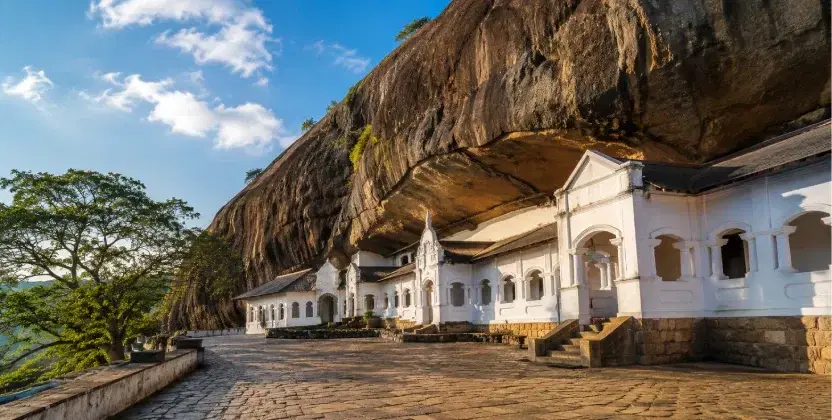
Dambulla Cave Temple is located in Dambulla, in Sri Lanka’s Central Province, within the island’s Cultural Triangle. The temple sits on a rocky hill overlooking the surrounding countryside and is a convenient stop when travelling between Kandy and Sigiriya. It is one of the must-visit temples in Sri Lanka, offering a memorable glimpse into the country’s Buddhist heritage, ancient art and spiritual traditions.
- From Sigiriya: Around 20–30 km, roughly 30–45 minutes by road
- From Kandy: Around 70–75 km, roughly 2–2.5 hours by road
- From Colombo: Around 150–165 km, roughly 3.5–4.5 hours by road
- Nearest major airport: Bandaranaike International Airport, Colombo
- Best paired with: Sigiriya, Kandy and other cultural triangle attractions
Dambulla Cave Temple Entrance Fee & Timings (2026)
Planning a visit to Dambulla Cave Temple? Here’s a quick breakdown of the 2026 Dambulla Cave entrance fees, timings, and additional charges to help you budget your visit.
Category | Fee (LKR) | Approx. INR |
| Foreign adult | 2,000 | ₹585 |
| Foreign child (5–12 years) | 1,000 | ₹290 |
| Indian / SAARC national (adult) | 1,000 | ₹290 |
| Indian / SAARC national (child) | 500 | ₹145 |
| Children under 5 | Free | Free |
| Museum entry (optional, separate ticket) | 292 | ₹170 |
| Shoe storage | 20–50 | ₹6–15 |
Timings: 7:00 AM–7:00 PM daily. The ticket counter closes at 5:00 PM, so arrive before then.
Payment: Cash in Sri Lankan Rupees (LKR) is recommended, as cards may not be accepted at the counter.
Note: Entry fees can change based on local authority revisions. Treat the above prices as indicative and confirm the latest rates closer to your visit.
Best Time to Visit Dambulla Cave
The best time to visit Dambulla Cave Temple is during Sri Lanka’s dry season, from December to April, when you’re more likely to have sunny weather and comfortable conditions for exploring the temple and climbing the steps. For a quieter and cooler experience, visit early in the morning, around 7:00–9:00 AM, before the crowds and midday heat build up.
Best Time of Day: Visit early morning (7:00 AM – 9:00 AM) or late afternoon (4:00 PM – 6:00 PM) to avoid the midday heat and crowds.
If you want to learn best time to visit Sri Lanka for a memorable vacation experience visit from January to April. During this time, the weather is dry, sunny, and comfortable for climbing the rock and exploring the caves. Clear skies also offer beautiful panoramic views of the surrounding countryside.
Dambulla Cave Temple Opening Hours
The Dambulla Cave Temple is generally open daily from 7:00 AM to 7:00 PM, making it easy to fit into a Sri Lanka sightseeing itinerary. For a more comfortable visit, arrive in the morning when temperatures are cooler, and the temple is less crowded.
Detail | Information |
| Opening hours | 7:00 AM – 7:00 PM, daily |
| Recommended arrival | Before 10:00 AM |
| Best time to visit | Early morning or late afternoon |
| Ticket counter | Closes around 5:00 PM |
| Time needed | 1.5–2 hours |
| Tip | Check the timings locally before visiting, as hours may change during religious events or holidays. |
History of Dambulla Cave Temple
The Dambulla Cave Temple is also known as the Golden Temple of Dambulla. It dates back to the 1st century BCE and is one of the most important Buddhist heritage sites in Sri Lanka. Its history is closely linked to King Valagamba, who took refuge in these caves during his 14-year exile after losing his throne to South Indian invaders. During his exile, the king took refuge in these caves with the help of Buddhist monks. After regaining his throne, he converted the caves into a temple complex. Later rulers, including King Nissanka Malla, expanded and decorated the site.
Today, the temple features over 150 Buddha statues and beautiful murals and became a UNESCO World Heritage Site in 1991. If you are a history buff or an architecture enthusiast, this is one of the worthwhile places to visit in Sri Lanka.
Things to do in Dambulla Cave Temple
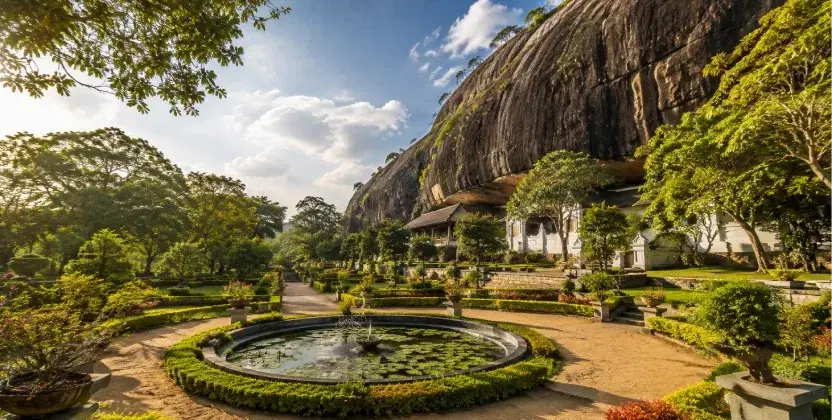
A visit to Dambulla Cave Temple is about more than seeing an ancient religious site. Take your time exploring the caves, studying the murals and statues, and enjoying the views from the hilltop.
1) Marvel at the Buddha statues:
The cave temples house over 150 Buddha statues in different postures, including the magnificent 14-meter-long reclining Buddha, the largest of its kind in Asia. These statues, dating from various periods of Sri Lanka's history, are not only a testament to the country's artistic brilliance but also serve as a symbol of peace and enlightenment.
2) Admire the intricate frescoes:
The cave walls and ceilings are adorned with vibrant frescoes that narrate stories from the life of Buddha and important events from Sri Lanka's past. The intricate details and well-preserved artwork provide a glimpse into the ancient artistic and cultural heritage.
3) Explore the royal gardens:
Surrounding the cave temple complex, you'll find beautifully landscaped gardens that exude serenity and offer an excellent spot for a stroll. The lush greenery and colourful blossoms create a picturesque setting, perfect for capturing cherished memories.
4) Climb Sigiriya Rock Fortress:
While visiting Dambulla, you can also plan a trip to the nearby Sigiriya Rock Fortress, another UNESCO World Heritage Site in Sri Lanka. The fortress offers breathtaking panoramic views of the surrounding countryside and provides insight into Sri Lanka's ancient engineering marvels.
5) Experience local culture:
Engage with the friendly locals and get a taste of the vibrant Sri Lankan culture by visiting nearby villages and markets. Sample delicious local cuisine, purchase intricate handicrafts, and witness traditional dance performances to round off your cultural immersion.
How to Reach Dambulla Cave Temple
Dambulla Cave Temple is easy to reach from several popular destinations in Sri Lanka. You can travel by car, taxi, bus, or tuk-tuk, depending on your budget and itinerary. The temple is located on a hill, so the final approach involves a climb.
- By Air: The nearest airport is Bandaranaike International Airport in Colombo, about 130 km away. From the airport, you can hire a taxi or take a bus to Dambulla.
- By Train: The closest railway station is in Habarana, around 25 km from Dambulla. From there, taxis and buses are available to reach the temple.
- By Bus: Regular buses connect Dambulla with major cities such as Colombo, Kandy, and Anuradhapura. The temple is about 2 km from the Dambulla bus stand.
- By Taxi or Tuk-Tuk: The easiest way to reach the temple from the town centre is by taxi or tuk-tuk, followed by a 10–15 minute climb up the rock to the cave complex.
Dambulla Cave Temple Dress Code
Since Dambulla Cave Temple is an active Buddhist religious site, modest and respectful clothing is required. Cover your shoulders and knees, and be prepared to remove your shoes and headwear before entering the sacred cave areas.
- Cover your shoulders: Wear tops that cover the shoulders; avoid sleeveless or revealing clothing.
- Cover your knees: Choose trousers, long skirts or dresses that fall below the knees.
- Remove footwear: Shoes and slippers must be removed before entering the sacred cave areas.
- Remove hats and caps: Headwear should be removed inside the temple.
- Choose comfortable clothing: Lightweight, breathable clothes are ideal because you’ll be walking and climbing steps.
- Carry a shawl: A scarf or shawl can be useful for covering your shoulders if your outfit is not sufficiently modest.
- Dress respectfully: Avoid shorts, mini skirts and other revealing clothing, as Dambulla is an active Buddhist religious site.
Dambulla Cave Temple Itinerary
Dambulla Cave Temple is easy to combine with Sigiriya and other Cultural Triangle attractions. Here are practical itinerary options depending on how much time you have:
1-Day Dambulla–Sigiriya Itinerary
- 7:00 AM: Start with Dambulla Cave Temple before the heat and crowds build up.
- 9:00 AM: Have breakfast in Dambulla and take a short break.
- 10:00 AM: Travel towards Sigiriya.
- 11:00 AM–2:00 PM: Explore Sigiriya Rock Fortress and enjoy lunch nearby.
- 3:00 PM: Visit a local village or take a relaxed countryside experience.
- 5:00 PM: Return to Dambulla or Sigiriya for the evening.
2-Day Dambulla–Sigiriya Itinerary
Day 1
- Morning: Visit Dambulla Cave Temple.
- Late morning: Explore Dambulla town and enjoy lunch.
- Afternoon: Travel to Sigiriya and check into your hotel.
- Evening: Relax or enjoy a village experience.
Day 2
- Early morning: Climb Sigiriya Rock Fortress.
- Afternoon: Have lunch and relax at your hotel.
- Evening: Visit a nearby attraction or continue towards your next Sri Lanka destination.
Dambulla + Kandy Itinerary
If you're travelling from Kandy, visit Dambulla Cave Temple in the morning, explore the surrounding Cultural Triangle, and continue towards Kandy later in the day. This works particularly well if Dambulla is a stop between Kandy and Sigiriya.
Travel Tips for Visiting Dambulla Cave Temple
- Wear modest clothing – As it is a Buddhist temple, visitors should cover their shoulders and knees.
- Remove shoes before entering the cave shrines as a sign of respect.
- Visit early morning or late afternoon to avoid heat while climbing the rock.
- Carry water and sunscreen because the climb to the temple can be hot and exposed.
- Watch out for monkeys around the temple area and keep food secure.
- Photography is allowed, but avoid using flash near murals and statues.
- Be prepared for a short climb of about 10–15 minutes to reach the caves.
- Maintain silence and respect as the temple is an active place of worship.
Conclusion: Is Dambulla Cave Temple Worth Visiting?
Dambulla Cave Temple is worth adding to your Sri Lanka family packages if you enjoy history, Buddhist culture, ancient art, and scenic viewpoints. Allow around 1.5–2 hours for the temple, and combine it with Sigiriya if you want to make the most of your time in the Cultural Triangle. For travellers with limited time, visiting Dambulla early in the morning before heading to Sigiriya is the most practical option. If beaches and nightlife are your priority, you may prefer to spend more time elsewhere in Sri Lanka.
FAQs
1. What is the speciality of Dambulla Cave Temple?
Dambulla Cave Temple is famous for its five cave shrines, more than 150 Buddha statues and extensive Buddhist murals. Its ancient religious art, rock-cut setting and long history make it one of Sri Lanka’s most significant cultural sites.
2. What is the dress code for Dambulla Cave Temple?
Visitors should wear modest clothing covering their shoulders and knees. Shoes and hats must be removed before entering the sacred cave areas. Carrying a shawl is useful if your clothing does not provide enough coverage.
3. How long does it take to see Dambulla Cave Temple?
Allow around 1.5–2 hours for a comfortable visit. This gives you enough time to climb to the caves, explore the five shrines, admire the murals and Buddha statues, and enjoy the views.
4. What is the entrance fee to Dambulla Cave Temple?
The Dambulla Cave Temple entrance fee is LKR 2,000 (₹585) for foreign adults, LKR 1,000 (₹290) for foreign children aged 5–12, LKR 1,000 (₹290) for Indian/SAARC adults, LKR 500 (₹145) for Indian/SAARC children, and free for children under 5. Optional museum entry costs LKR 292 (₹170), while shoe storage costs around LKR 20–50 (₹6–15).
5. Is Dambulla Cave Temple worth visiting?
Yes, especially if you enjoy history, Buddhist culture, ancient art and architecture. It is also easy to combine with Sigiriya, making it a practical stop on a Cultural Triangle itinerary.
6. What is the history of Dambulla Cave Temple?
The temple dates back to the 1st century BCE and is traditionally associated with King Valagamba, who sought refuge in the caves during his exile. Later rulers expanded and decorated the complex, which became a UNESCO World Heritage Site in 1991.
7. How many steps are there at Dambulla Cave Temple?
There is no consistently published official count of the steps. The approach involves a short but uphill climb of around 10–15 minutes, so comfortable footwear and water are recommended.
8. Where is Dambulla Cave Temple located?
Dambulla Cave Temple is in Dambulla, Central Province, Sri Lanka, within the Cultural Triangle. It is conveniently located between popular destinations such as Kandy and Sigiriya.
9. How far is Dambulla Cave Temple from Colombo?
Dambulla is approximately 150–165 km from Colombo, with the journey generally taking around 3.5–4.5 hours by road, depending on traffic and transport.
10. How high is Dambulla Cave Temple?
The cave complex is situated on a rocky hill roughly 160 metres above the surrounding plain. The elevated position also provides views across the countryside.
11. What can you see inside Dambulla Cave Temple?
Inside, you can see Buddha statues, reclining Buddha figures, colourful murals, cave shrines and religious artwork spread across five main caves.
12. What is the best time to visit Dambulla Cave Temple?
The best time of day is early morning or late afternoon, when temperatures are more comfortable. For generally drier weather, January to April is a favourable period to visit.
13. How difficult is the climb to Dambulla Cave Temple?
The climb is generally moderate rather than strenuous, but the steps can feel tiring in hot weather. Take your time, carry water and avoid rushing, particularly during midday.
14. Can children and older travellers visit Dambulla Cave Temple?
Yes, children and older travellers can visit, provided they are comfortable with the uphill climb and steps. Take regular breaks and visit during the cooler morning or late-afternoon hours for a more comfortable experience.