
Train Routes in Italy: The Complete Guide for 2026
You can cross half of Italy by train before you would even finish an airport check-in. A high-speed train can take you from Rome to Florence in just 90 minutes, making city-hopping surprisingly simple. For travellers planning train routes in Italy, choosing the right connections can save hours, reduce travel stress, and leave more time for exploring. The main high-speed lines connect Rome, Florence, Bologna, Milan, Venice and Naples, while regional trains open up smaller towns and scenic coastal routes. This makes trains one of the easiest ways to build a multi-city Italy trip, whether you are travelling independently or comparing Italy tour packages. This guide covers the fastest routes, scenic journeys, train operators, ticket rules, prices, and practical itinerary ideas to help you plan your journey.
Best Train Routes in Italy: Quick Overview
| Route | Fastest Time | Best For |
| Rome → Florence | 1 hr 30 min | First-timers, easy day trip |
| Milan → Rome | 2 hr 55 min | The main north–south run |
| Naples → Venice | 5 hr 30 min | Coast-to-coast in one sitting |
| Chur → Tirano (Bernina Express) | 4 hr | Switzerland–Italy scenic crossing |
| Naples → Pompeii → Sorrento | Under 1 hr per leg | Amalfi Coast day trips |
Italy Train Routes Map: Main Lines and Regional Connections
Italy’s train network is easy to understand once you look at the main lines. Most long-distance journeys follow a north-to-south route, while another major line connects Milan with Venice.
Main High-Speed Train Lines in Italy
- Turin → Milan → Bologna → Florence → Rome → Naples → Salerno: This is Italy’s main high-speed corridor. It connects many of the country’s biggest cities and is ideal for multi-city trips.
- Milan → Venice: This east-to-west route links northern Italy without taking you through Rome.
These two lines cover many of the cities travellers usually include in an Italy itinerary.
Regional Train Routes in Italy
Regional trains take you beyond the main high-speed network. They are useful for:
- Cinque Terre: Connecting the five coastal villages.
- Naples and the Amalfi Coast: Reaching places such as Pompeii and Sorrento.
- Smaller towns: Connecting destinations that are not served by high-speed trains.
Train Routes to Sicily and Sardinia
- Sicily is connected to mainland Italy by rail. Some trains are loaded onto ferries to cross the Strait of Messina, so the journey works differently from a normal train ride.
- Sardinia has its own rail network and is not connected to mainland Italy by train. You’ll need a ferry or flight to reach the island.
In short: Stick to the main high-speed lines for quick city-to-city travel. Use regional trains for smaller destinations, and plan extra time for Sicily and Sardinia.
Best Train Routes in Italy for Speed and Scenery
Italy’s train network works well for both quick city transfers and slower scenic journeys. Some routes are designed to get you from one major city to another, while others are worth taking for the views alone.
1. Fast Train Routes in Italy: Frecciarossa vs Italo
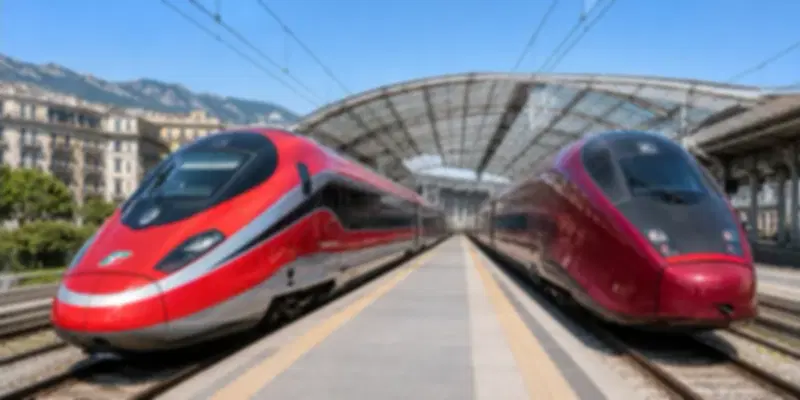
Two main operators run Italy’s high-speed trains: Trenitalia’s Frecciarossa and Italo. Both connect major cities, so knowing the difference can help you choose the right train for your trip.
Frecciarossa: Italy’s Main High-Speed Train
Frecciarossa is Trenitalia’s flagship high-speed service. It reaches speeds of up to 300 km/h and runs along major routes such as Turin–Milan–Bologna–Florence–Rome–Naples.
You can choose from four classes: Standard, Premium, Business and Executive. For most travellers, Standard offers everything needed for a comfortable journey.
Italo: A Private Alternative
Italo is operated by NTV and competes with Frecciarossa on several major routes. Its classes include Smart, Comfort, Prima, Club and Executive.
Fares can be cheaper when booked early, especially on busy routes such as Rome–Florence and Milan–Rome. It is worth checking both operators before booking.
Frecciarossa vs Italo: Journey Times
| Route | Frecciarossa | Italo |
| Milan → Rome | 2 hr 55 min | ~3 hr |
| Rome → Florence | 1 hr 30 min | Similar timing |
| Turin → Milan | Under 1 hr | Under 1 hr |
| Milan → Venice | ~2 hr 30 min | ~2 hr 30 min |
Booking tip: Fares usually rise as the travel date gets closer. Booking early can help you find lower fares on both operators.
2. Best Scenic Train Routes in Italy
Not every train journey in Italy is about getting somewhere quickly. Some routes are worth taking for the views, especially if you want to see the coast, countryside or mountains along the way.
Cinque Terre Coastal Train
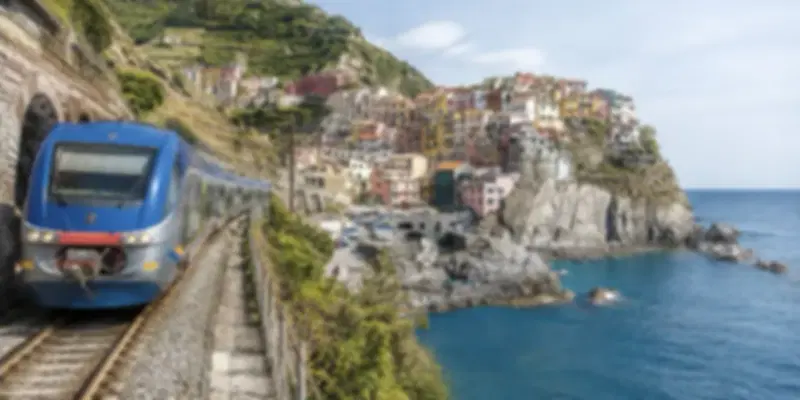
The regional train between La Spezia and Levanto connects all five Cinque Terre villages. The ride is short, but you get glimpses of the sea, cliffs and colourful villages along the way. It’s one of the best scenic train rides in Europe for a quick coastal journey without a long travel time.
- Best for: Coastal views and village-hopping
- Route: La Spezia → Cinque Terre → Levanto
Naples to Sorrento
The Circumvesuviana connects Naples with Sorrento and stops near Pompeii. It is a useful option if you want to combine Pompeii with a Sorrento or Amalfi Coast trip without renting a car.
- Best for: Day trips and southern Italy
- Route: Naples → Pompeii → Sorrento
Milan to Venice
This high-speed route crosses the Po Valley before reaching Venice. Along the way, you’ll see the landscape change as you travel between the northern cities in Italy, from busy urban areas to quieter countryside and, finally, the Venetian lagoon.
- Best for: A quick northern Italy connection
- Journey time: Around 2.5 hours
Florence to Venice
The train from Florence to Venice takes you through the Apennines and northern Italian countryside before arriving at Venice Santa Lucia.
- Best for: Combining two major Italian cities
- Journey time: Around 2 hours
3. Train Routes from Rome, Italy
Rome is one of the easiest places in Italy to start with scenic train journeys. Roma Termini is the city’s main railway station and has direct connections to several major destinations.
Popular Train Routes from Rome
- Rome → Florence: Around 1 hr 30 min
- Rome → Naples: Under 2 hours
- Rome → Bologna: Around 2 hours
- Rome → Milan: Around 3 hours
- Rome → Venice: Around 3 hr 45 min
- Rome → Turin: Around 4 hours
High-speed trains run frequently on the busiest routes, making several of these cities possible as day trips if your schedule is tight.
Rome Airport to City Centre by Train
Flying into Rome? The Leonardo Express connects Fiumicino Airport with Roma Termini in around 32 minutes. It is a direct service, so there is no need to change trains along the way.
Best Day Trips from Rome by Train
- Naples: Reach Naples in under two hours on a high-speed train. From there, you can continue to Pompeii or explore the city before returning to Rome.
- Florence: At around 90 minutes by high-speed train, Florence is one of the easiest day trips from Rome. It works well if you want to see the main sights without changing hotels.
Italy Train Tickets: Types, Classes and Booking Rules
Italian train tickets are easy to manage once you know the difference between high-speed, Intercity and regional services. The biggest thing to remember is that regional tickets may need validation, while most long-distance tickets are already linked to your booking.
1. High-Speed and Intercity Train Tickets
Frecciarossa, Frecciargento and Italo use digital tickets. You can show the QR code or booking reference on your phone during the journey.
- Seat: Reserved when you book
- Ticket: Digital
- Boarding: No separate validation needed
- Best for: Long-distance journeys between major cities
2. Regional Train Tickets
Regional trains work differently. If you buy a paper ticket at the station, you need to validate it before boarding.
Look for the validation machines on the platform. Depending on the station, these may be yellow or green.
- Seat: Usually not reserved
- Ticket: Paper or digital, depending on where you book
- Validation: Required for paper tickets
- Best for: Short trips, smaller towns and local routes
3. Italian Train Booking Tips
A little planning can help you get better fares and avoid last-minute problems.
- Book early: Try booking high-speed trains 2–3 weeks ahead, especially for busy routes.
- Compare operators: Check both Trenitalia and Italo before booking the same route.
- Choose Standard: For journeys under three hours, Standard class is usually comfortable enough.
- Save your QR code: Download your ticket before leaving. A printed copy can also help if you have poor phone signal.
- Check your train: Make sure the station and departure time match your booking, especially in large cities such as Rome and Milan.
Trenitalia vs Italo: Which Train Should You Book?
| Factor | Trenitalia (Frecciarossa) | Italo |
| Top speed | 300 km/h | Similar; marketed up to 360 km/h |
| Network reach | Wider — includes smaller cities and regional trains | Focused on major city corridors |
| Rail pass acceptance | Accepts Eurail/Interrail with a reservation | Requires a separate supplement for pass holders |
| Pricing style | Slightly higher standard fares | Often cheaper with advance bookings |
Bottom line: Eurail/Interrail pass holders will find Trenitalia simpler. For point-to-point tickets without a pass, compare both operators for the same route before booking — it almost always saves money.
See this full breakdown of the Eurail pass system for how passes work across both operators.
Italy Train Itinerary: Rome, Florence, Venice and Milan
A good train itinerary should keep travel time low and leave enough room to enjoy each city. This route follows a simple northbound journey, so you spend less time retracing your steps.
- Rome – 2 nights: Explore Rome’s main sights, then take a high-speed train to Naples for a day trip to Pompeii.
- Florence – 2 nights: Take the train from Rome in around 90 minutes. Use Florence as a base for exploring Tuscany.
- Venice – 2 nights: Travel from Florence to Venice in around 2 hours. The direct train makes this an easy next stop.
- Milan – 2 nights: Reach Milan from Venice in around 2.5 hours. From here, you can continue into Switzerland by taking the Bernina Express or a Zurich–Milan EuroCity train.
This route keeps the journey moving in one direction and avoids unnecessary backtracking. It also keeps most train rides short, which is useful when travelling with luggage or family.
Italy Train Travel Cost: Ticket Prices
| Route | Price Range (EUR) | Approx. INR |
| Rome → Florence (Regionale) | From €9 | ~₹990 |
| Rome → Florence (Frecciarossa) | €19–€58 | ~₹2,090–₹6,380 |
| Milan → Rome (advance fare) | From €9.90 (Italo) | ~₹1,089 |
| Milan → Venice | €25–€45 | ~₹2,750–₹4,950 |
These figures are indicative and change with booking windows and season — treat them as planning estimates rather than fixed pricing.
Also check current India to Europe flight options to plan your full trip budget in one place.
Conclusion: Planning Your Train Journey in Italy
Italy becomes much easier to explore once your train plan is sorted. Take high-speed trains between major cities, use regional services for smaller stops, and save the scenic journeys for when you want to enjoy the ride itself. Compare Trenitalia and Italo, book popular routes early, and avoid unnecessary backtracking. With the right train routes in Italy, you can see more without making travel feel rushed. Now, choose your cities, book your connections, and let the Italian rail network take you from one unforgettable stop to the next.
FAQs
1. What is the most scenic train route in Italy?
The Cinque Terre coastal train is one of the most scenic train routes in Italy, with views of colourful villages, cliffs and the sea. For dramatic mountain landscapes, the Bernina Express is another popular choice.
2. Is it easy to travel around Italy by train?
Yes, it is easy to travel around Italy by train, especially between major cities. High-speed services connect Rome, Florence, Milan, Venice, Bologna and Naples, while regional trains reach smaller destinations.
3. Which train routes in Italy are best for a first-time visitor?
Rome → Florence → Venice → Milan is a simple choice for a first Italy trip. The routes are well connected, and most journeys take between 1.5 and 3 hours.
4. Can you take a train all around Italy?
You can reach most major parts of Italy by train, but not every destination has a direct connection. Sicily is linked to the mainland by rail and ferry, while Sardinia requires a ferry or flight from mainland Italy.
5. What are the fastest train routes in Italy?
Rome → Florence is one of the fastest major routes, taking around 90 minutes. Rome → Naples takes under two hours, while Milan → Rome takes roughly three hours on high-speed services.
6. How far in advance should I book Italy train tickets?
For high-speed trains, booking 2–3 weeks ahead is a good starting point for better fares. Popular routes can sell at higher prices closer to the travel date, especially during peak seasons.
7. Do I need to validate an Italy train ticket before boarding?
Paper tickets for regional trains usually need to be validated before boarding. Digital tickets and reserved high-speed tickets generally do not need separate validation, but always check the conditions on your booking.
8. Is there an Italy train app for checking schedules and tickets?
Yes, Trenitalia and Italo both have official apps for checking train schedules, fares and bookings. Using both can help you compare prices when travelling between major Italian cities.
9. Should I choose Trenitalia or Italo?
Trenitalia has a wider rail network, while Italo focuses mainly on major high-speed routes. For point-to-point travel, compare both for your route, departure time and fare before booking.
10. Is an Italy train pass worth buying?
An Italy train pass can make sense if you are taking several long-distance journeys. For a shorter trip covering cities such as Rome, Florence, Venice and Milan, individual tickets may offer better value.

Recommended articles for you












Discover Packages

















Europe City Packages
Packages By Departure City
Packages By Theme
Packages By Duration
Europe Combo Packages
Europe Nearby Destinations

Need help in planning?
Talk to our Travel Experts