
Castles in Italy: The Best Fortresses, Palaces, and Fairytale Castles to Visit
If you are planning a dream trip to Europe, exploring the most breathtaking castles in Italy is likely at the very top of your bucket list. From the sun-drenched fortresses of Sicily to the mist-shrouded towers overlooking northern lakes, these ancient strongholds offer a captivating journey back in time.
Navigating the sheer volume of historic sites can be overwhelming, but selecting the right Italy tour packages makes it effortless. This guide covers the most famous castles in Italy, the best ones by region, and practical tips on when to visit. Whether you’re building a Rome itinerary or planning a longer loop through the north, there’s a castle worth adding to your list.
Quick Facts About Castles in Italy
| Castle Feature | Details |
| Most visited castle | Castel Sant’Angelo, Rome |
| Only UNESCO-listed castle | Castel del Monte, Apulia |
| Oldest fully intact castle | Fénis Castle, Aosta Valley (14th century) |
| Largest royal palace in Italy | Royal Palace of Caserta, Campania |
| Best region for castle-hopping | Aosta Valley, with over 100 castles and towers |
| Best lakeside castle | Rocca Scaligero, Sirmione, Lake Garda |
| Typical entry ticket cost | Roughly €8 to €20, depending on the site |
Why Does Italy Have So Many Castles?
Italy wasn’t a single unified country until 1861. Before that, it was a patchwork of city-states, kingdoms, and papal territories, each of which needed its own fortifications. That history explains why Italian castles look so different by region. Southern castles often show Norman influence, while Tuscany reflects the Medici. Northern castles feature Savoy influences, while those near Austria show Habsburg influence.
Most Famous Castles in Italy
If you only have time for a handful of sites, these are the castles that come up again and again, and for good reason.
1. Castel Sant’Angelo, Rome
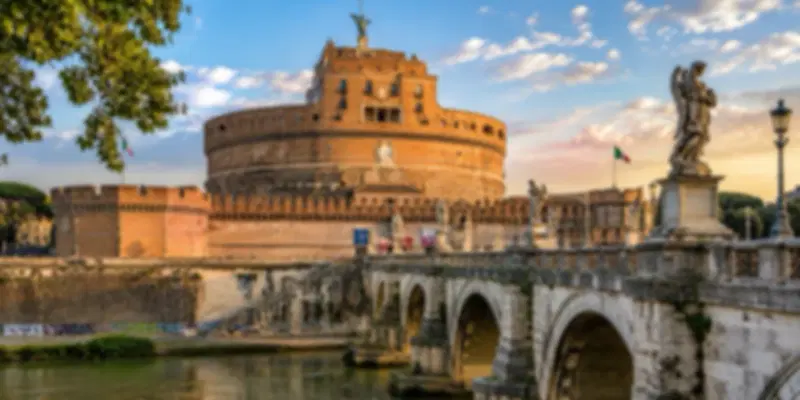
Castel Sant'Angelo, is one of the easiest castles in italy to add to a Rome sightseeing day.
Originally built as Emperor Hadrian’s mausoleum in 139 AD, this cylindrical fortress on the Tiber later became a papal refuge, prison, and military stronghold. A secret passage, the Passetto di Borgo, connects it directly to the Vatican. Today it’s a museum with sweeping views over Rome, and it’s one of the easiest castles to add to a Rome sightseeing day.
- Entry Fee: €18 (₹1,750) for adults
- Timings: Usually 9:00 AM–7:30 PM; timings can vary
- Duration: 1.5–2 hours
- Best For: History, architecture, Vatican views, and first-time visitors
2. Sforza Castle, Milan
Castello Sforzesco started as a Visconti fortress and was later rebuilt by the Sforza family, once the largest citadel in Europe. It now houses several museums, including one holding Michelangelo’s final, unfinished sculpture, the Pietà Rondanini. The castle sits right in the city centre, making it simple to visit alongside Milan’s cathedral and shopping streets.
- Entry Fee: Around €5–€10 (₹490–₹970), depending on the museum access
- Timings: Generally 7:00 AM–7:30 PM for the castle grounds; museums have separate hours
- Duration: 1.5–3 hours
- Best For: Art, museums, Renaissance history, and city sightseeing
3. Castelvecchio, Verona
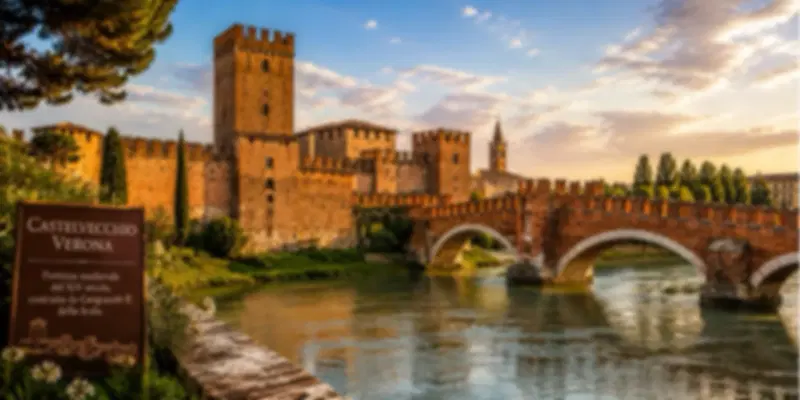
Castelvecchio, Verona is one of the beautiful castles in Italy
Built by the Scaliger family in the 14th century, this red-brick fortress guards the Adige River and connects to the fortified Scaligero Bridge. It’s now an art museum, and its battlement walkway gives one of the best views over Verona’s old town.
- Entry Fee: Around €7 (₹680)
- Timings: Usually 11:00 AM–5:00 PM; closed on Mondays
- Duration: 1–2 hours
- Best For: Art lovers, medieval architecture, and Verona sightseeing
4. Castel del Monte, Apulia
This octagonal castle, built by Holy Roman Emperor Frederick II in the 13th century, has no moat, no defensive walls, and no obvious military purpose, which is part of why historians still debate exactly what it was for. Its precise geometry earned it UNESCO World Heritage status, and it remains one of the most photographed castles in southern Italy.
- Entry Fee: Around €10 (₹970)
- Timings: Usually 10:00 AM–6:30 PM, with seasonal variations
- Duration: 1–1.5 hours
- Best For: Architecture, photography, UNESCO sites, and history
5. Rocca Scaligero, Sirmione (Lake Garda)
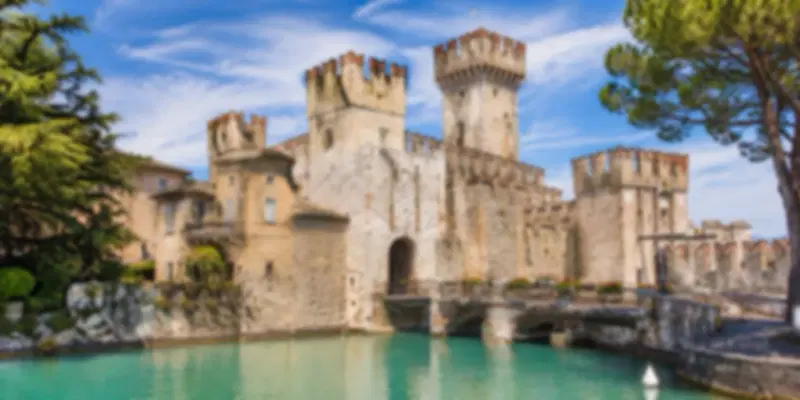
Rocca Scaligero, is among the must-visited castles in Italy
This moated castle sits at the entrance to the Sirmione peninsula on Lake Garda, surrounded on all sides by water. Climb the central tower for a full view of the lake, then walk into the old town for lunch. It’s an easy stop if you’re basing yourself around Verona or northern Italy’s lake district.
- Entry Fee: Around €8 (₹780)
- Timings: Usually 8:30 AM–7:30 PM, with seasonal variations
- Duration: 1–1.5 hours
- Best For: Lake views, photography, couples, and day trips
6. Miramare Castle, Trieste
Built in the 1850s for Archduke Maximilian of Habsburg, this white castle sits directly on a rocky point over the Adriatic Sea, surrounded by a large park. It’s more of a 19th-century royal residence than a medieval fortress, but it’s one of the most scenic castles on Italy’s northeastern coast.
- Entry Fee: Around €14 (₹1,360)
- Timings: Usually 9:00 AM–7:00 PM, depending on the season
- Duration: 1.5–2 hours
- Best For: Couples, photography, royal history, and coastal views
7. Buonconsiglio Castle, Trento
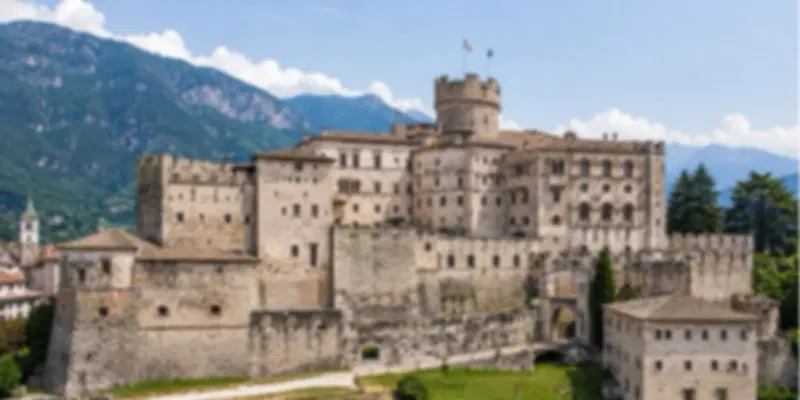
Witness the grandeur of Buonconsiglio Castle, Trento
This castle in the Dolomites foothills houses the Cycle of the Months, a rare and vividly preserved set of frescoes from the late 1300s depicting seasonal life in the Alps. It’s one of the best-preserved fresco cycles from the medieval period anywhere in Europe.
- Entry Fee: €10 (₹970)
- Timings: 10:00 AM–6:00 PM from May to November; 9:30 AM–5:00 PM in winter
- Duration: 1.5–2 hours
- Best For: Medieval art, frescoes, history, and Alpine trips
8. Castello Estense, Ferrara
Right in the centre of Ferrara, this moated castle was built by the ruling Este family and still has water in its moat today. You can walk straight from the city’s main square onto the drawbridge, which makes it one of the most accessible castles in northern Italy.
- Entry Fee: €12 (₹1,170)
- Timings: 9:30 AM–1:30 PM and 3:30 PM–7:30 PM; last admission 45 minutes before closing
- Duration: 1–3 hours
- Best For: Medieval history, photography, families, and city walks
9. Fénis Castle, Aosta Valley
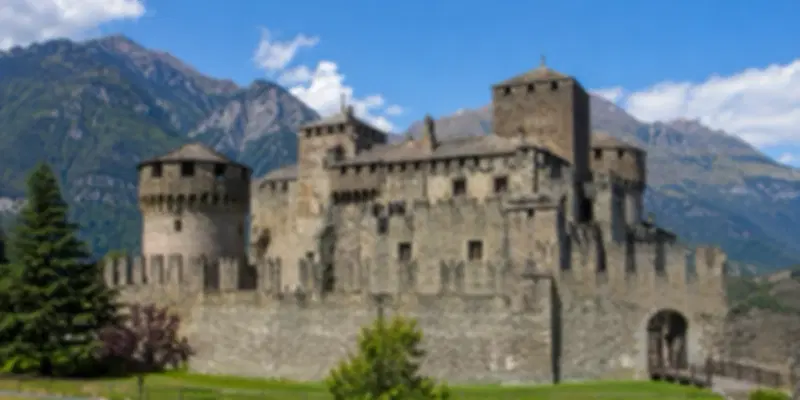
Visit this medieval castle in Aosta Valley
With its stacked towers, curtain walls, and covered walkways, Fénis is often called the most complete medieval castle in Italy. It was never involved in a real siege, which is largely why its 14th-century structure survived so well.
- Entry Fee: Around €9 (₹875)
- Timings: Usually 9:00 AM–7:00 PM in the summer season; seasonal variations apply
- Duration: 1–1.5 hours
- Best For: Medieval architecture, photography, families, and Alpine scenery
Building a longer Italy trip around these regions? A multi-city Italy itinerary can help you fit castles, cities, and countryside into one trip without excess travel time.
Best Castles in Italy by Region
Castles cluster differently depending on which part of the country you’re in. Here’s where to focus if you want more than one or two stops.
Aosta Valley: Italy’s Castle Country
This small Alpine region in the northwest has more than 100 castles and fortified towers, more per square kilometre than anywhere else in Italy. Along with Fénis, look out for Sarre Castle and Verrès Castle, both easy stops if you’re exploring the offbeat corners of Italy beyond the usual city circuit.
Lake Garda and the Veneto
Beyond Rocca Scaligero in Sirmione, the Veneto region has Castelvecchio in Verona and smaller fortified towns around the lake. This region pairs well with a stop in Venice, since both are reachable on the same northern Italy loop.
Apulia and the South
Castel del Monte anchors this region, but Apulia also has coastal watchtowers and the Swabian Castle in Bari. The south sees fewer Indian travellers than Rome or Florence, which makes it one of the better offbeat places to visit in Italy if you want castles without the crowds.
Tuscany and Umbria
Tuscany’s castles tend to be smaller hilltop forts built by feuding medieval towns, many now converted into wine estates and countryside stays. They fit naturally into a Florence-based trip, especially if you’re already planning day trips into the surrounding countryside.
Campania
Just outside Naples, the Royal Palace of Caserta is technically a palace rather than a fortress, but its scale (over 1,200 rooms) and gardens make it one of the largest royal residences in Europe. Naples itself also has Castel dell’Ovo, built directly on a small island in the bay.
Castles in Florence, Italy
Florence itself doesn’t have a classic hilltop fortress in the city centre, but the wider Florence area is dense with Medici-era castles and fortified villas, many tucked into the Chianti countryside just outside the city.
- Palazzo Vecchio – technically a fortified town hall rather than a castle, but its battlements and tower make it feel like one, right in the heart of Piazza della Signoria.
- Pitti Palace – originally built for a rival banking family before the Medici took it over, is now home to several museums and the Boboli Gardens.
- Castello di Vincigliata – a dramatic 19th-century rebuild of a medieval ruin, set among olive groves about 20 minutes from the city.
- Castello del Trebbio – a fortified villa built for Cosimo de’ Medici, now part of a working vineyard offering tastings alongside the visit.
Basing yourself in Florence also makes it easy to explore Northern Italy’s other major cities, several of which have their own notable castles.
Castle in Naples, Italy
Naples has one of the densest clusters of castles in the country, largely because it was a capital city fought over by Normans, Angevins, Aragonese, and Spanish rulers over the centuries.
- Castel dell’Ovo (Egg Castle) – the oldest castle in Naples, built on a former island now connected to the mainland, with legends tied to the Roman poet Virgil.
- Castel Nuovo (Maschio Angioino) – instantly recognisable for its five cylindrical towers and a marble Renaissance arch wedged between two of them.
- Castel Sant’Elmo – a star-shaped fortress on a hill above the city, offering one of the best panoramic views over the Bay of Naples and Mount Vesuvius.
Naples also works well as a base for coastal day trips, since it sits close to the Amalfi Coast and Italy’s best beach towns.
Which Are the Most Beautiful Fairy-Tale Castles in Italy?
If you’re chasing the postcard version of an Italian castle, these are the ones to prioritise:
- Fénis Castle – stacked towers and covered walkways that look almost too neat to be 700 years old
- Miramare Castle – a white palace on a cliff, framed entirely by sea
- Rocca Scaligero – a moated fortress that appears to float on Lake Garda
- Castello Estense – a working moat right in the middle of a city square
- Castel del Monte – a striking, symmetrical silhouette on an otherwise empty hilltop
Best Time to Visit Castles in Italy
- Spring (April–June) and autumn (September–October) are the best months. Mild weather, thinner crowds, and comfortable conditions for walking castle grounds.
- Summer (July–August) brings the biggest crowds and the highest heat, especially at exposed sites like Castel del Monte, which has little shade.
- Winter (November–March) works well for indoor-heavy castles like Sforza Castle and Castelvecchio, though some smaller countryside castles reduce their opening hours.
For a broader view of seasonal planning across the country, our best time to visit Italy guide breaks it down month by month.
Tips for Visiting Castles in Italy
- Book skip-the-line tickets in advance for major sites like Castel Sant’Angelo and Sforza Castle, especially in peak season.
- Wear comfortable, closed shoes. Most castles involve uneven stone steps, narrow spiral staircases, and cobbled courtyards.
- Check opening days before you go. Many smaller castles close on Mondays or Tuesdays, and hours often shrink outside peak season.
- Carry water and sun protection for hilltop and coastal castles with little shade, particularly Castel del Monte and Miramare.
- Combine castles with nearby towns. Most castle towns, from Sirmione to Fénis, are small enough to explore fully in half a day, so pair the visit with lunch or a short walk rather than rushing back to the next stop.
Conclusion: How to Explore the Most Beautiful Castles in Italy?
From medieval fortresses and royal residences to lakeside castles and fairytale towers, the castles in Italy tell a different story in every region. Whether you want history in Rome, Renaissance charm in Tuscany, Alpine castles in the Aosta Valley, or coastal views in Trieste, there is a castle for every kind of traveller.
Ready to turn these castle stops into an unforgettable Italian adventure? Explore Italy adventure tour packages and build a route that takes you beyond the usual sights. Your Italian fairytale is waiting.
FAQs: Castles in Italy
Fénis Castle, Miramare Castle, and Rocca Scaligero are among the most beautiful. Fénis is known for its medieval towers, Miramare for its sea views, and Rocca Scaligero for its lakeside setting.
Italy has many ancient fortresses, so there is no single universally accepted “oldest castle.” Castel Sant’Angelo in Rome dates back to 139 AD, but it was originally built as Emperor Hadrian’s mausoleum.
Some of the best include Castel Sant’Angelo in Rome, Sforza Castle in Milan, Castel del Monte in Apulia, Rocca Scaligero in Sirmione, and Fénis Castle in the Aosta Valley.
Castles such as Rocca Scaligero, Fénis Castle, and Castello Estense are good options for families. Their towers, courtyards, bridges, and medieval architecture can make history more engaging for children.
Italy has thousands of castles, fortresses, towers, and fortified structures. The Aosta Valley alone has more than 100 castles and fortified towers.
Italian castles and fortified villas in Tuscany are popular for weddings. The countryside around Florence and Chianti offers historic settings, vineyards, and scenic landscapes.
Castel Sant’Angelo, Sforza Castle, Castel del Monte, Castelvecchio, Rocca Scaligero, and Miramare Castle are among the country’s most famous castles.
Yes. Some historic castles and fortified estates have been converted into hotels, luxury stays, and countryside properties. Tuscany and northern Italy are particularly known for castle stays.
Fénis Castle, Castello Estense, and Rocca Scaligero are good family-friendly choices. They offer interesting architecture, open spaces, towers, and nearby towns to explore.
Fénis Castle, Castelvecchio, Castello Estense, Rocca Scaligero, and Castel del Monte are excellent choices for medieval architecture and history.
Naples has one of the highest concentrations of notable castles. Castel dell’Ovo, Castel Nuovo, and Castel Sant’Elmo offer different styles and views across the city.

Recommended articles for you










Discover Packages


















Europe City Packages
Packages By Departure City
Packages By Theme
Packages By Duration
Europe Combo Packages
Europe Nearby Destinations

Need help in planning?
Talk to our Travel Experts