
Northern Lights 2026: Best Places, Best Time, Tours & Aurora Forecast
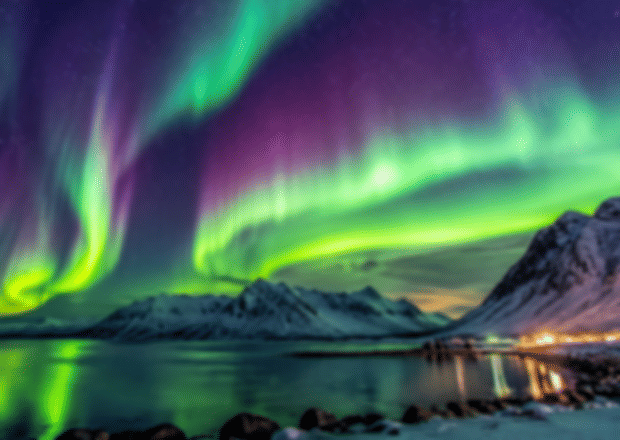
Few natural phenomena are as mesmerising as the Northern Lights. Also called the aurora borealis, this natural spectacle happens when charged particles from the Sun interact with gases in Earth’s upper atmosphere, creating waves of green, pink, purple, and red light across the night sky.
However, seeing the Northern Lights is not just about travelling to the Arctic regions. The aurora needs darkness, clear skies, and enough solar activity for its best version, and getting all three at the same time takes more planning than most travellers expect. So, if you are planning a Northern Lights package from India, you need to choose the right destination and travel at the right time. This guide covers the best places to see the Northern Lights, the ideal viewing months, tours and accommodation, costs, and practical tips to plan a trip around them rather than just hoping for luck.
Northern Lights at a Glance: Best Time, Places & Cost
| Facts | Details |
| Overall viewing season | Late August to mid-April (dark skies required) |
| Peak months | September–October and February–March, around the equinoxes |
| Best time of night | 10 pm–2 am local time |
| 2026 solar activity | Near the peak of Solar Cycle 25 — one of the strongest windows until the mid-2030s |
| Top viewing countries | Norway, Finland, Iceland, Sweden, Canada, Alaska (USA), Greenland, Russia |
| Typical glass igloo price | From roughly €250–€425 (~₹27,518-46,780) per night |
| Typical multi-day tour package | Roughly €1,385 to €5,625 (~₹1,52,447-6,19,144) depending on length, country, and accommodation |
What Are the Northern Lights?
The Northern Lights, or aurora borealis, are a natural light display caused by charged particles interacting with gases in Earth’s upper atmosphere. They are most commonly seen in the night sky near the North Pole, where Earth’s magnetic field guides these particles towards the polar regions.
The meaning of the Northern Lights has been shaped by myths and traditions across different cultures. In Norse mythology, the lights were sometimes linked to the Valkyries and their armour. Some Indigenous Arctic traditions have also associated the aurora with spirits or ancestors, although beliefs vary between communities.
How are the Northern Lights formed?
The science behind the Northern Lights may sound complicated, but the process is easier to understand when broken into a few simple steps. It starts with activity from the Sun, followed by interactions with Earth’s magnetic field and atmosphere that produce the glowing colours seen in the sky.
Northern Lights Colours: Explained
Northern Lights colours mainly depend on the type of gas that charged particles collide with and the altitude where the interaction occurs. Oxygen and nitrogen produce the colours most commonly seen in an aurora, with green being the most frequent.
- Green: The most common colour. It is produced when charged part
- Red: Produced by oxygen at higher altitudes, generally above 200 km. Red auroras are less common than green ones.
- Blue: Usually produced by nitrogen at lower altitudes, around 100–200 ke.
- Purple and violet: These colours are linked mainly to nitrogen and often appear around the lower edges of an aurora.
- Pink: Often appears when different aurora colours overlap, particularly during strong geomagnetic storms.
NOTE: Stronger solar activity can make the Northern Lights brighter and more colourful. During periods of high geomagnetic activity, several colours may appear in the same display.
Best Places to See the Northern Lights in 2026
The best places to see the Northern Lights are usually found within or near the auroral oval, where geomagnetic activity makes aurora sightings more frequent. So, if you are deciding where to see the Northern Lights, use the country-by-country guide below to match each destination with your travel style.
Norway: Best for Accessibility and Scenery
Northern Lights in Norway are especially popular around Tromsø, which sits at about 69.6°N within the auroral zone. The city combines relatively easy access with Arctic scenery, guided aurora tours, and activities such as sledding and whale watching.
- Best Time: The best time to see the Northern Lights in Norway runs from late September to late March.
- Best for: First-time aurora travellers, scenery, guided tours, and combining the Northern Lights with other Arctic experiences.
- Recommended Accommodations: Aera – Panorama Glass Lodge (Tromsø), Lyngen North (Lyngen), Sorrisniva Igloo Hotel (Alta)
Finland: Best Value and Glass Igloo Stays
Finland is one of Europe’s most popular aurora destinations. Northern Lights in Finland are concentrated around Rovaniemi, Levi, Ivalo, Inari, and Saariselkä. These destinations combine dark Arctic skies with a wide range of winter accommodation and activities.
- Best Time: The best time to see the Northern Lights in Finland is generally from late August or September through early April. Late February and March can be particularly appealing if you want aurora viewing alongside longer daylight hours
- Best for: Families, winter activities, glass-roofed accommodation, and travellers who want a relaxed Arctic holiday.
- Recommended Accommodations: Kakslauttanen Arctic Resort (Saariselkä), Northern Lights Village (Saariselkä), Wilderness Hotel & Igloos Muotka
Iceland: Best for Northern Lights & Road Trips
Northern Lights in Iceland are ideal for travellers who want to combine aurora hunting with other natural attractions. Travellers can pair the experience with waterfalls, glaciers, geothermal pools, black-sand beaches, and volcanic landscapes.
- Best Time: The best time to see the Northern Lights in Iceland is generally from late September to early April.
- Best for: Road trips, photography, sightseeing, and travellers who want more than an aurora-focused holiday.
- Recommended Accommodations: Hotel Rangá (South Iceland), The Retreat at Blue Lagoon
Sweden: Best for a Quieter Arctic Experience
Northern Lights in Sweden are best experienced in Swedish Lapland, particularly around Kiruna and Abisko. These destinations offer dark skies, Arctic landscapes and fewer visitors than some of Scandinavia’s better-known aurora hubs.
Abisko is particularly popular with aurora photographers because of its local weather conditions and location in the mountains. Kiruna is another practical base, and it offers easy access to Arctic wilderness, winter activities, and the Aurora Sky Station in Abisko National Park.
- Best Time: The viewing season generally runs from September through early April.
- Best for: Dark skies, photography, fewer crowd,s and dedicated aurora viewing.
- Recommended Accommodations: STF Abisko Turiststation (Abisko), ICEHOTEL (Kiruna)
Alaska: Best for Fairbanks Aurora Viewing
Northern Lights in Alaska are particularly popular around Fairbanks, which lies beneath the auroral oval. The area has dedicated aurora lodges, viewing tours and heated shelters where travellers can wait comfortably for the lights.
- Best Time: The viewing season generally runs from late August or September through April.
- Best for: US travellers, winter activities, hot spring,s and dedicated aurora tours.
- Recommended Accommodations: Chena Hot Springs Resort (Fairbanks)
Canada: Best for Remote Dark-Sky Aurora Viewing
Northern Canada offers some of the world’s strongest opportunities for aurora viewing. Yellowknife in the Northwest Territories and Whitehorse in Yukon are among the most popular bases because of their northern locations, dark skies, and established tourism infrastructure.
- Best Time: Late autumn through early spring (October to April).
- Best for: Dark skies, wilderness experiences, and travellers based in North America.
- Recommended Accommodations: Aurora Village (Yellowknife)
Greenland: Best for Remote Northern Lights & Dark Skies
Greenland’s Northern Lights trips appeal to travellers looking for a more remote Arctic experience. The country offers a more remote Northern Lights experience, with very low levels of light pollution in many areas. Destinations such as Ilulissat combine aurora viewing with dramatic Arctic scenery, including icebergs and the Ilulissat Icefjord.
- Best Time: From mid-September to mid-April.
- Best for: Remote travel, photography and dramatic Arctic landscapes.
- Recommended Accommodations: Ilimanaq Lodge
Russia: A Remote Northern Lights Option
The Kola Peninsula, particularly around Murmansk, lies within the auroral zone and has historically been promoted as an affordable Northern Lights destination. However, Russia currently presents significant practical and travel-planning considerations for international visitors.
- Best Time: September to March
- Best for: Budget-conscious travellers, simple visa access and crowd-free Arctic exploration
- Recommended Accommodations: Aurora Village (Murmansk)
Which Country Is Best for Seeing the Northern Lights?
If you are wondering which is the best country to see the Northern Lights, there is no single winner. The best destination depends on how you balance aurora visibility, clear skies, accessibility, scenery, cost, and other things to do during your trip.
- Norway: Best for dramatic Arctic scenery, easy access, and guided aurora tours. Tromsø is one of the most popular bases.
- Finland: Best for Lapland experiences, glass-roofed cabins, and a wide choice of winter activities. Inari and Saariselkä are strong options farther north.
- Canada: Best for travellers focused primarily on aurora viewing. Yellowknife is particularly well known for its dark skies and favourable location beneath the auroral zone.
- Iceland: Best for combining the Northern Lights with waterfalls and glaciers
Best Time to See the Northern Lights: The Full Picture
The best time to see the Northern Lights is generally from late August or September through early April in the Northern Hemisphere, when nights are dark enough for aurora viewing. However, the best viewing night depends on a combination of darkness, clear skies, your location, and solar activity.
- Best season: Late August or September through early April, depending on the destination. The aurora can occur year-round, but summer daylight makes it difficult or impossible to see from many northern locations.
- Best months: September–October and February–March can offer favourable aurora conditions around the equinoxes, when geomagnetic storms tend to occur more often.
- Best time of night: Around 10 pm to 2 am local time is generally the strongest viewing window, although displays can appear earlier or later.
- Best moon phase: A new moon gives you darker skies and better contrast, especially when the aurora is faint. However, the Moon does not determine whether the aurora occurs.
2026 Solar Maximum and Northern Lights Forecast
Solar Cycle 25 reached its maximum around 2024–2025, but elevated solar activity can continue for several years after the peak. So, in 2026, it remains a promising year for Northern Lights viewing, as Solar Cycle 25 is still in its active phase. However, the strength of the aurora activity can vary from one night to the next, depending on short-term solar wind and geomagnetic conditions.
Where to Check the Northern Lights Forecast
For the most useful real-time information, monitor:
- NOAA Space Weather Prediction Centre: Provides aurora forecasts, geomagnetic forecasts, the Kp index, and space-weather alerts.
- Aurora forecast apps: Location-based apps can send notifications when auroral activity is likely to increase.
- Local aurora services: Regional services can be useful for country-specific alerts and viewing conditions.
Northern Lights Tour Cost
A Northern Lights tour package can make an aurora trip easier by combining accommodation, transfers, guided aurora excursions, and winter activities. Depending on the destination and package, you may also get flights, meals, airport transfers, or activities such as husky sledging and snowmobiling.
| Trip type | Typical duration | Approx. price per person | What you can expect |
| Budget Northern Lights trip | 5–7 days | ₹1–1.5 lakh (€900–1,365) | Basic hotels, selected transfers and limited aurora activities |
| Mid-range Northern Lights package | 6–9 days | ₹1.8–3 lakh (€1,635–2,730) | Better hotels, flights/transfers and multiple activities such as aurora hunts and Arctic experiences |
| Premium Northern Lights holiday | 7–10 days | ₹3–5 lakh+ (€2,730–4,545+) | Higher-category hotels, several Arctic activities and premium accommodation |
| Luxury / multi-country Arctic trip | 8–14+ days | ₹4–6 lakh+ (€3,635–5,455+) | Norway + Finland/Sweden/Iceland combinations, premium stays, cruises or glass-igloo accommodation |
NOTE: Prices are approximate and may vary based on the country, travel dates, accommodation, and what’s included.
Northern Lights vs. Southern Lights: What’s the Difference?
The Northern Lights and Southern Lights are not two different natural phenomena. They are the same aurora, caused by energetic particles in Earth’s upper atmosphere. The main difference is where they occur: the aurora borealis appears in the Northern Hemisphere, while the aurora australis appears in the Southern Hemisphere.
| Feature | Northern Lights | Southern Lights |
| Scientific name | Aurora Borealis | Aurora Australis |
| Also called | Northern Lights | Southern Lights |
| Where they occur | Northern Hemisphere | Southern Hemisphere |
| Main viewing region | Arctic and sub-Arctic regions | Antarctic and sub-Antarctic regions |
| Popular viewing destinations | Norway, Finland, Sweden, Iceland, Canada and Alaska | Antarctica, Tasmania, southern Australia, New Zealand and southern Argentina |
| Best known for | Easier access and more established tourism infrastructure | More remote and less accessible viewing |
Northern Lights Travel Tips: How to Plan Your Aurora Trip
Seeing the Northern Lights is never guaranteed, but good planning can improve your chances. Stay for several nights, choose dark skies, check the weather and aurora forecast together, and dress for long periods outdoors.
1. Stay for at Least 3 Nights
Avoid planning your entire trip around one night. Cloud cover and aurora activity can change quickly, so staying for at least 3 nights gives you more opportunities to see the lights.
2. Choose Dark Skies
Light pollution can make faint auroras harder to see. Stay outside busy city centres or book a Northern Lights tour that takes you to darker areas.
3. Check the Weather and Aurora Forecast
A strong aurora forecast does not guarantee a sighting. Clear skies are just as important as solar activity. Before heading out, check aurora activity, cloud cover, and weather forecast.
4. Consider a Guided Northern Lights Tour
A guided tour can be useful if you are planning your first aurora trip. Local guides monitor weather and Northern Lights forecasts for the best viewing spots.
5. Dress for the Arctic Cold
Aurora watching often means standing outside late at night. So layering is important in Arctic destinations, where winter temperatures and wind chill can make outdoor waiting uncomfortable.
- Thermal base layers
- Warm jacket
- Insulated trousers
- Wool or thermal socks
- Waterproof winter boots
- Gloves or mittens
- Hat and neck warmer
- Hand warmers
6. Plan Backup Activities
Cloudy weather can prevent you from seeing the Northern Lights. So, it is recommended to choose a destination where you can also enjoy activities such as dog sledding, snowmobiling, reindeer experiences, fjord cruises, saunas, or winter sightseeing.
7. Give Your Camera Time to Capture the Lights
A camera can capture the Northern Lights in more detail than the naked eye. For better photos, use a tripod, manual focus, and a stable camera setup. If you are using a smartphone, switch on Night Mode and keep the phone steady.
How to See the Northern Lights: Plan for the Best Chance
The Northern Lights are one of the most spectacular natural experiences you can add to a holiday, but seeing them is never guaranteed. The best approach is to give yourself more than one chance by choosing the right destination, travelling during the dark season, and staying for several nights.
For most travellers from India, Norway, and Finland are among the easiest places to start. Tromsø offers dramatic Arctic scenery, guided aurora tours, and easy access to other winter experiences. Finnish Lapland combines Northern Lights viewing with glass cabins, reindeer experiences, and snow activities. If seeing the lights is your main priority, check the weather and aurora forecast before heading out and plan for at least 3 days.
FAQs
The Northern Lights (aurora borealis) are a natural light display caused by charged particles from the sun colliding with gases in Earth’s upper atmosphere near the magnetic poles, releasing energy in the form of colored light.
The most reliable destinations are Norway (Tromsø), Finland (Lapland), Iceland, Sweden (Abisko), Canada (Yellowknife), and Alaska (Fairbanks). Greenland and Russia’s Kola Peninsula offer more remote options, and rare sightings occasionally reach the UK, Ireland, and continental Europe during major geomagnetic storms.
Late August through mid-April is the general season, with September–October and February–March, around the equinoxes, typically offering the strongest activity. Late-night hours between 10 pm and 2 am see the highest odds.
Not the Northern Lights specifically — New Zealand is in the Southern Hemisphere, so what’s visible there during strong solar activity is the aurora australis (southern lights), best seen from Stewart Island or the southern South Island.
Budget independent trips start around €1,384 – 2,162 (₹1,52,422 – 2,38,160) for 4–5 days. Mid-range glass igloo packages run roughly €750 – 2,900 (₹82,628 – 3,19,493), and premium multi-country tours can run €3,459 – 5,621 (₹3,81,055 – 6,19,215) for 7–11 days.
The Northern Lights become brighter and more widespread when solar activity increases. However, solar activity is only one part of the equation. Cloud cover, darkness and your location also determine whether you can actually see the Northern Lights.
There is no single answer to whether time or location is more important for seeing the Northern Lights. You need the right combination of both. The best Northern Lights trip combines a good location, dark skies, clear weather and active space weather.
Yes, 2026 remains a promising year for Northern Lights trips. Solar Cycle 25 is in its active phase following the solar maximum period. Higher solar activity can create more opportunities for strong geomagnetic storms and widespread aurora displays. However, solar maximum does not mean the Northern Lights will appear every night.
No, Northern Lights sightings cannot be guaranteed every night. The aurora depends on solar activity, geomagnetic conditions, darkness and clear skies. For better chances, stay for at least 3 nights, choose a location with dark skies and check the latest aurora and weather forecasts before heading out.
Plan for at least 3–5 nights if seeing the Northern Lights is a main priority. A longer stay gives you more opportunities to experience clear skies and favourable aurora activity on the same night. If you are travelling from India, a 6–9 day Northern Lights holiday is practical because it also leaves time for Arctic activities, sightseeing and travel between your accommodation and viewing locations.

Recommended articles for you




Discover Packages




















Need help in planning?
Talk to our Travel Experts