
- Home
- Attractions
- Bangkok
- Wat Arun Bangkok: Complete 2026 Visitor Guide for Tickets, Timings & Sunset Views
Wat Arun Bangkok: Complete 2026 Visitor Guide for Tickets, Timings & Sunset Views
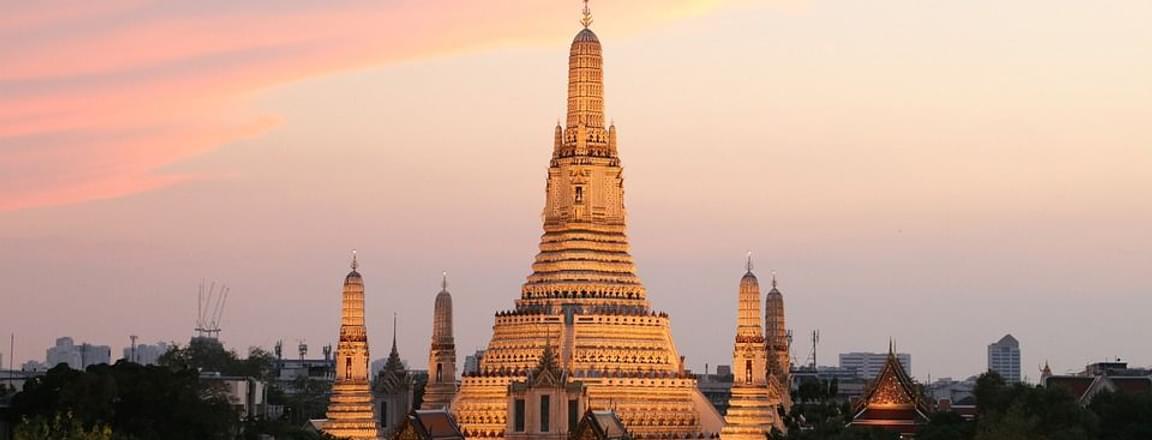
Wat Arun, Bangkok, is one of the most famous temples in Thailand. Known as the Temple of Dawn, it stands beside the Chao Phraya River and is famous for its tall spires, colourful porcelain details, and stunning sunset views. Wat Arun Bangkok is a must-visit attraction for travellers who want to explore Thai culture, beautiful architecture, and panoramic views of the Bangkok skyline in 2026.
Whether you are planning your first Thailand trip with friends, a honeymoon escape, or exploring the city through curated Bangkok tour packages, this iconic temple deserves a place on your itinerary. From climbing the central prang to taking river ferries and finding hidden photo spots, this guide covers everything you need to know before visiting.
Quick Facts About Wat Arun Bangkok
Detail | Information |
| Location | Bangkok Old Town |
| Entry Fee | Around ฿200 |
| Timings | 8:00 AM – 6:00 PM |
| Best Time to Visit | Sunset or early morning |
| Ideal Visit Duration | 1–2 hours |
| Dress Code | Covered shoulders and knees |
| Famous For | Riverside sunset views & porcelain towers |
Why Wat Arun, Bangkok, Is One of Bangkok’s Most Beautiful Temples
Most temples in Bangkok are beautiful, but Wat Arun feels completely different the moment you see it from the river. Known as the “Temple of Dawn", Wat Arun sits on the western bank of the Chao Phraya River in Bangkok’s old city area. The porcelain-covered towers sparkle in sunlight, and during sunset, the entire temple turns golden.
Here is why many travellers prefer Wat Arun over larger temple complexes:
- Riverside Location: Wat Arun’s riverside setting makes the entire experience feel calmer and more scenic than most Bangkok temples.
- Stunning Porcelain Architecture: The temple’s colourful porcelain mosaics and handcrafted details make it visually different from traditional gold-covered temples.
- One of Bangkok’s Best Sunset Views: During sunset, the temple glows beautifully against the Chao Phraya River and the Bangkok skyline.
- More Photogenic Than Most Temples: From ferry viewpoints to riverside cafés, Wat Arun offers some of the best photography spots in Bangkok.
- Less Overwhelming Than the Grand Palace: Unlike the busy Grand Palace, Wat Arun feels easier to explore at a slower and more relaxed pace.
- Beautiful Day and Night Experience: The temple looks stunning in daylight and becomes even more magical once illuminated at night.
- Combines Culture With Scenic Views: The mix of Thai architecture, river views, and cultural history makes Wat Arun feel more immersive than a typical sightseeing stop.
History of Wat Arun Bangkok: The Story Behind the Temple of Dawn
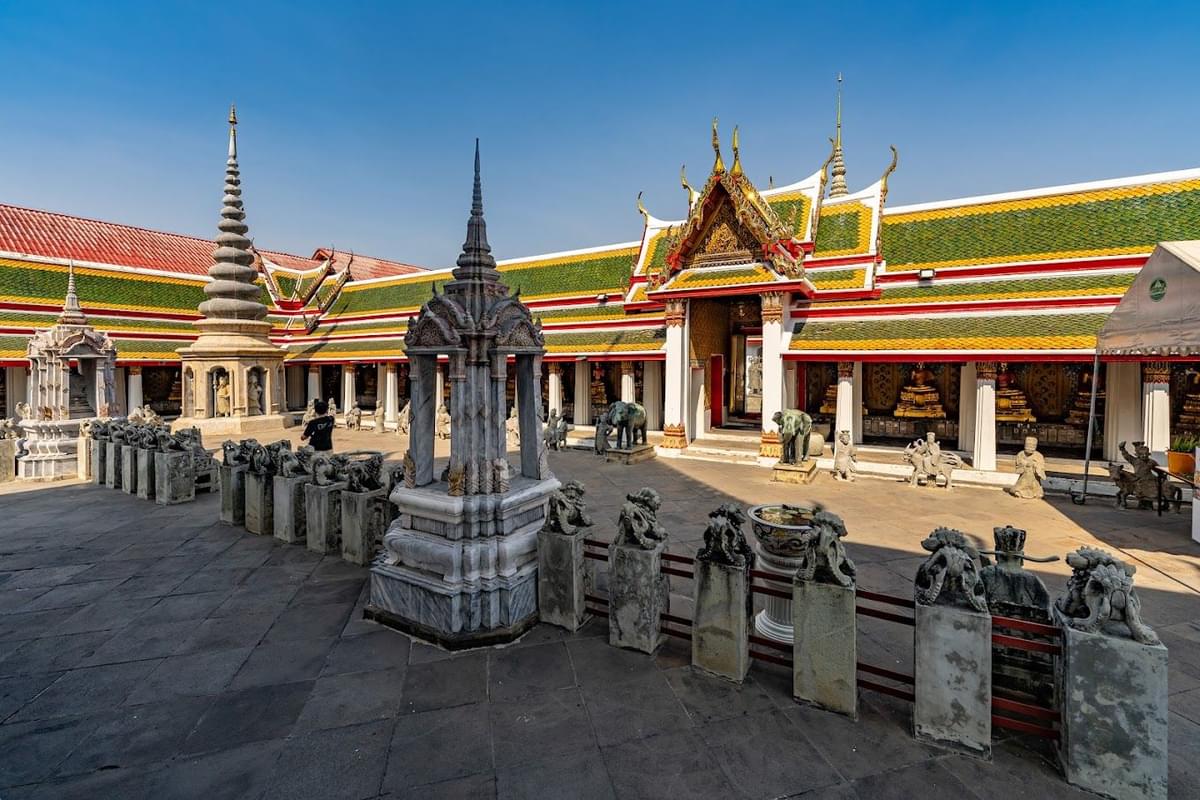
Before becoming one of the most famous temples in Thailand, Wat Arun was originally a small local shrine during the Ayutthaya period. It later gained royal importance after King Taksin arrived in Bangkok at dawn following the fall of Ayutthaya. The temple’s iconic central prang was expanded during the reign of King Rama II and King Rama III. Today, it stands as one of Bangkok’s most recognised cultural landmarks.
Unlike modern temples with heavy gold decoration, Wat Arun’s ceramic detailing gives it a more artistic and elegant appearance. The temple underwent a major restoration between 2013 and 2017 to preserve its original ceramic decorations and intricate details.
Wat Arun Bangkok Entry Fee, Timings & Visitor Information
Detail | Info |
| Opening Hours | 8:00 AM – 6:00 PM, daily |
| Entry Fee | 100 THB (₹250 / $3 USD) |
| Prang Climb | Included in entry fee |
| Best Arrival Time | 8:00–9:00 AM or 4:00–5:30 PM |
What You'll See Inside
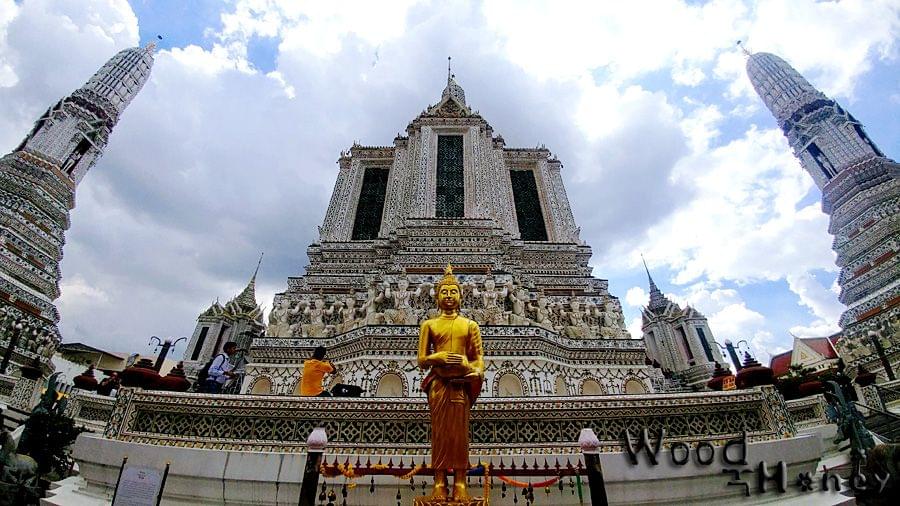
Most people see the prang from the ferry and think that's the whole temple. It isn't. Here's what's actually worth your time once you're inside:
The Central Prang
The main tower of Wat Arun stands about 82 metres tall and is decorated with colourful Chinese porcelain and ceramic pieces. If you look closely, you will notice floral patterns, guardian statues, and mythological figures covering the structure. The four smaller towers around it are dedicated to the Hindu wind god, Phra Phai.
Climbing the Prang
Wat Arun is one of the few temples in Bangkok where visitors can climb the central tower. The stairs are extremely steep because they symbolise the challenging path toward spiritual enlightenment. From the top, you get beautiful views of the Chao Phraya River, the Grand Palace, and Wat Pho across the river.
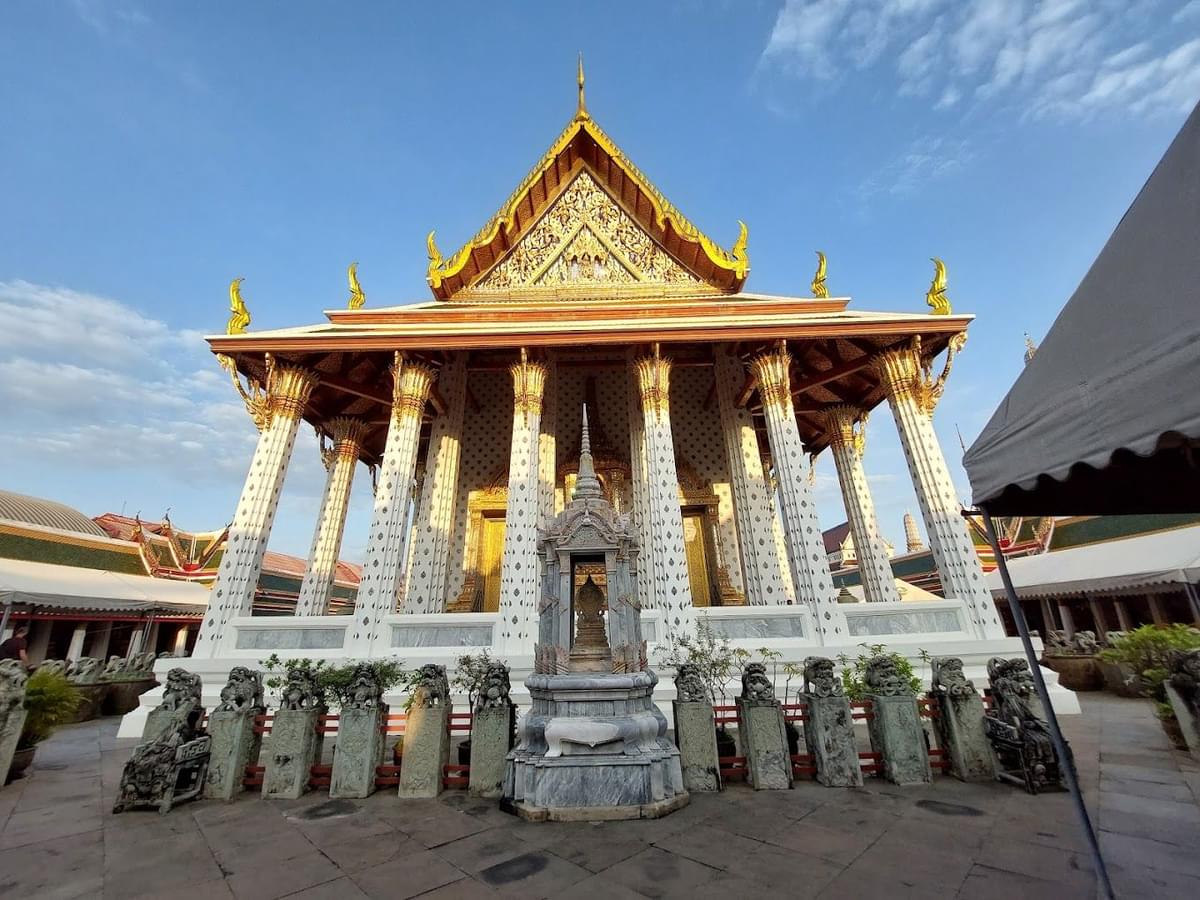
The Ordination Hall (Ubosot)
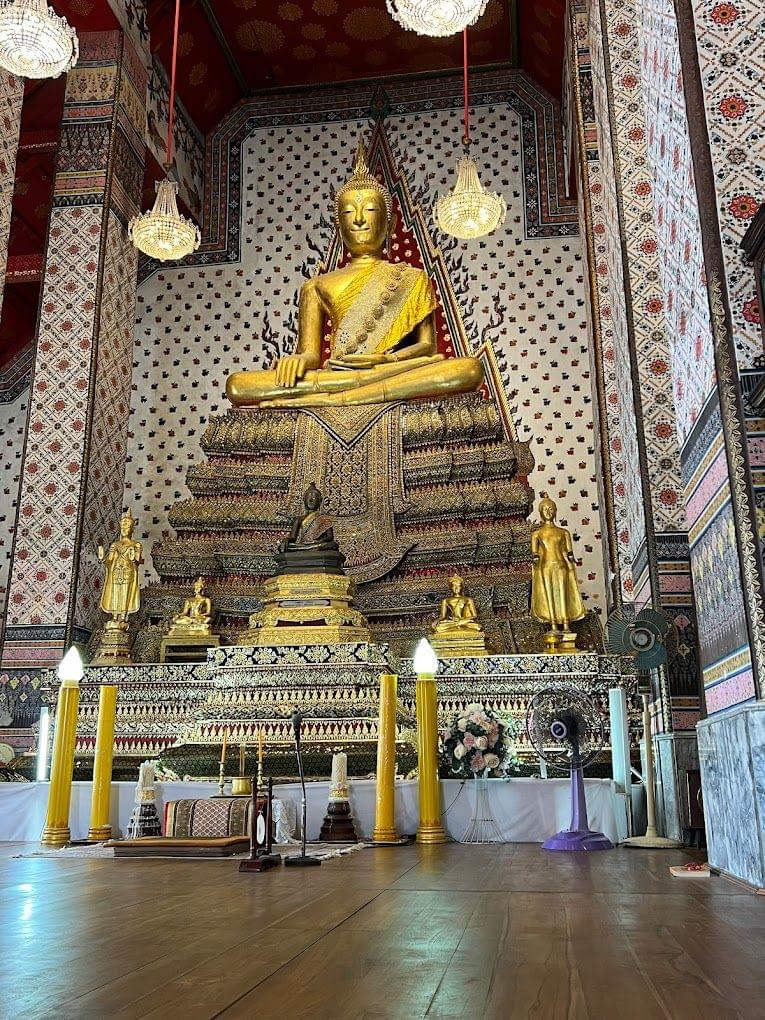
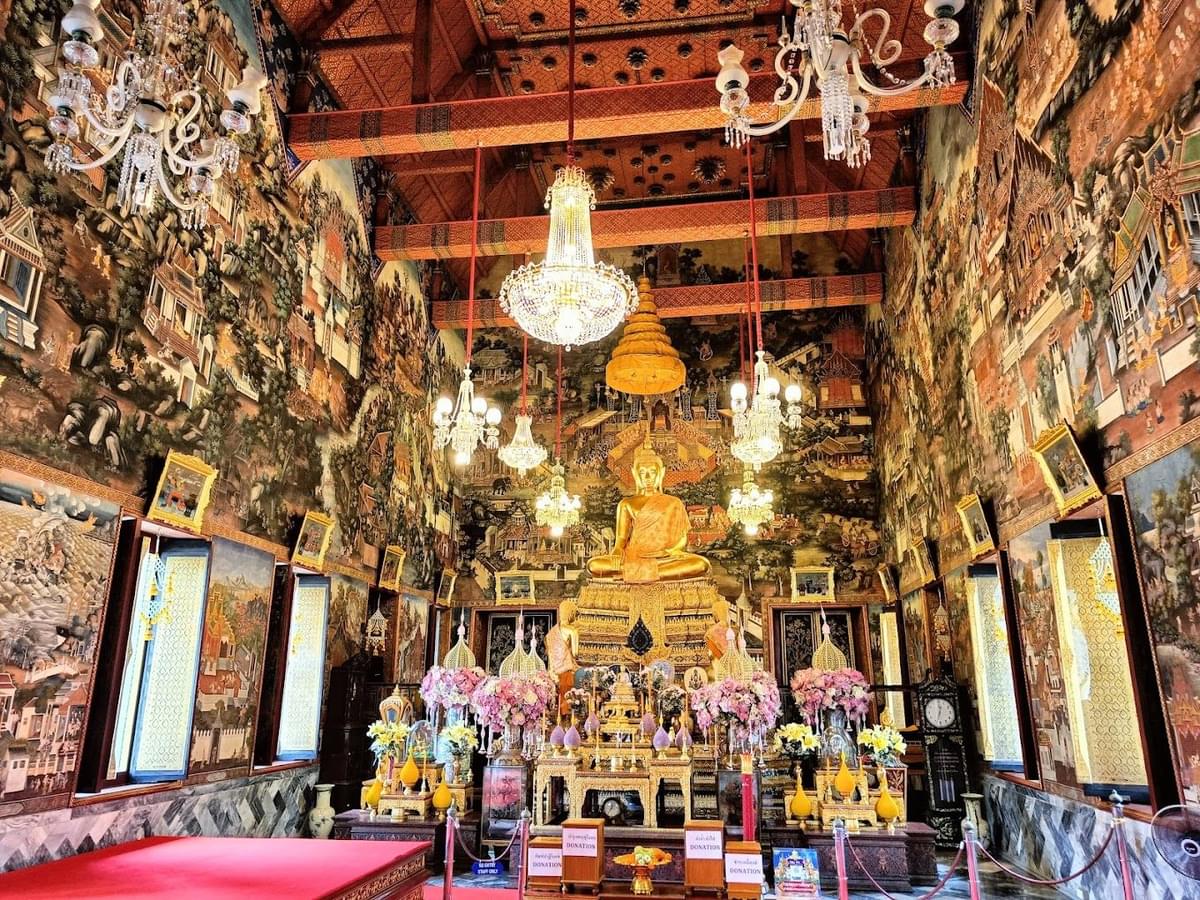
Inside the main prayer hall is a Buddha statue believed to have been designed with facial features inspired by King Rama II. The walls are decorated with murals showing scenes from the life of Buddha, and the ashes of King Rama II are kept beneath the main altar.
The Shrine of King Taksin (Viharn Kien)
This smaller shrine is dedicated to King Taksin, the ruler closely connected to Wat Arun’s history. Inside, you can see his statue and original bedstead, although many tourists often miss this quieter part of the temple.
The Riverside Terrace
The riverside walkway is one of the most peaceful areas inside Wat Arun. From here, you can enjoy views of the Chao Phraya River along with landmarks like Wat Pho and the Grand Palace on the opposite bank.
How to Get to Wat Arun, Bangkok
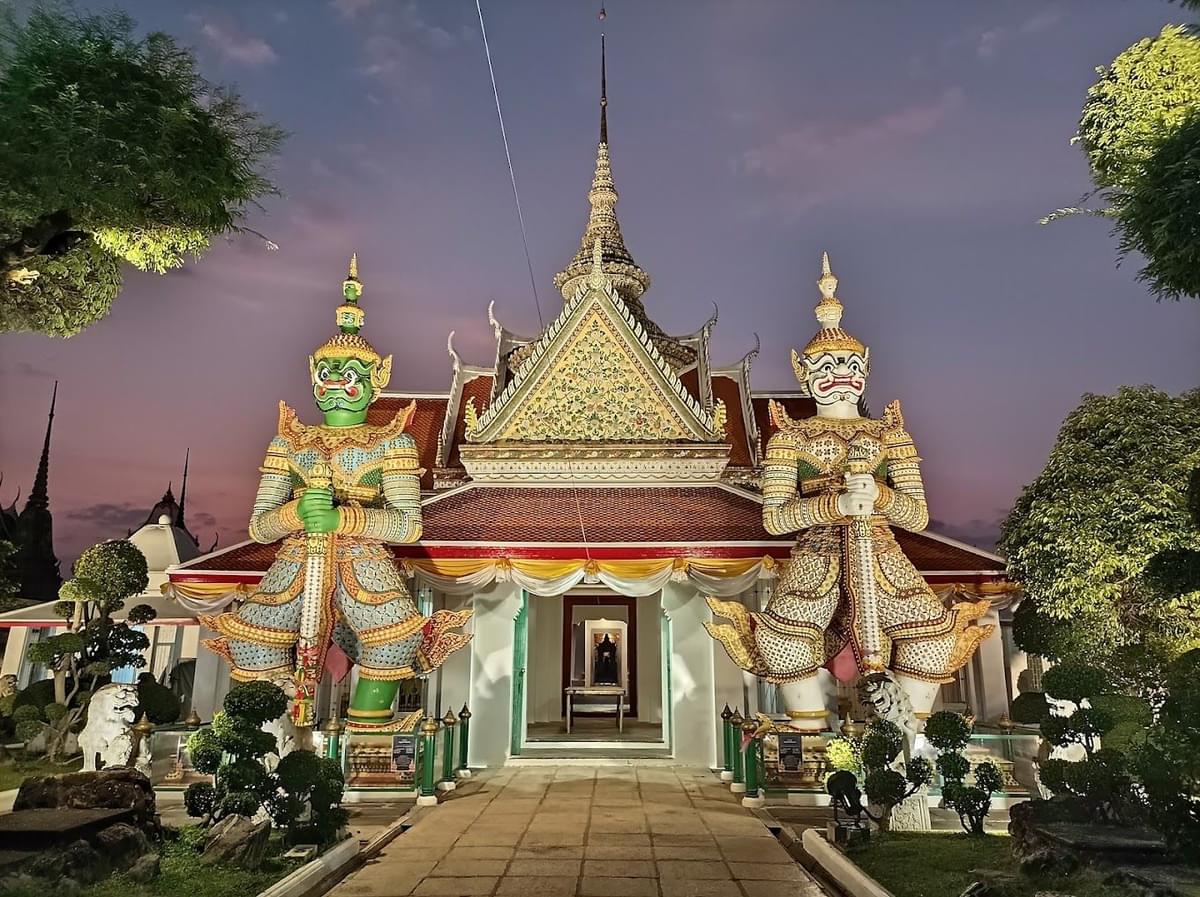
Getting to Wat Arun is surprisingly easy, especially if you use Bangkok’s river transport system.
- By Ferry: The most scenic option is taking the ferry from Tha Tien Pier near Wat Pho. Additionally, the crossing only takes a few minutes, but the river views make the journey memorable.
- By MRT: Take the MRT to Sanam Chai Station and walk toward Tha Tien Pier. This route usually avoids Bangkok’s heavy traffic and works well during evenings.
- By Taxi or Grab: Convenient for families or groups, but traffic around Bangkok Old Town becomes extremely slow during peak hours.
If you are planning a longer cultural route, this temple fits perfectly into a 6-day Bangkok itinerary.
Best Time to Visit Wat Arun
By time of day:
- Sunrise (8:00–9:00 AM): The porcelain catches the morning light from the east and glows. This is when the temple earns its name. Arrive as it opens.
- Sunset (4:30–6:00 PM): The prang is backlit against the sky. Atmospheric, but different — more dramatic, less gentle.
- Night (from outside only): After dark, the temple is illuminated in golden light. The best view is from a rooftop bar or riverside café on the east bank — you don't need to pay entry for this.
By season:
If you're planning a broader Bangkok trip, November through February is the window when the entire city is at its most comfortable, and it lines up well with a Bangkok trip itinerary that covers the historic temples and the city's modern side.
Season | Months | Notes |
| Best | Nov – Feb | Cool, dry, low humidity. Ideal for walking and climbing |
| Good | Mar – Apr | Hot but clear skies. Arrive early |
| Manageable | May – Oct | Monsoon season. Afternoon rain is common. Morning visits work fine |
Wat Arun Bangkok Dress Code & What to Wear
Wat Arun is an active religious site. The rules are strictly enforced at the entrance:
- Shoulders must be covered (no sleeveless tops, tank tops, or off-shoulder clothing)
- Knees must be covered (no shorts above the knee, no short skirts)
- Shoes must be removed before entering certain areas — wear something easy to slip off.
- Sarongs are sometimes available to borrow at the entrance, but availability varies.
Best Photography Spots at Wat Arun, Bangkok
The best photos of Wat Arun are taken from across the river, not from inside the temple. From inside, you're too close to capture the full prang. The shots worth having come from the east bank.
Best Photography Spots
- Tha Tien waterfront (near N8 pier): Free, no crowds early in the morning, direct sightline to the prang
- Sala Arun hotel terrace: Popular at golden hour for sunset framing
- Tha Maharaj riverside walkway: Good for wide shots with boats in the foreground
Hidden Gems at Wat Arun Most Tourists Miss
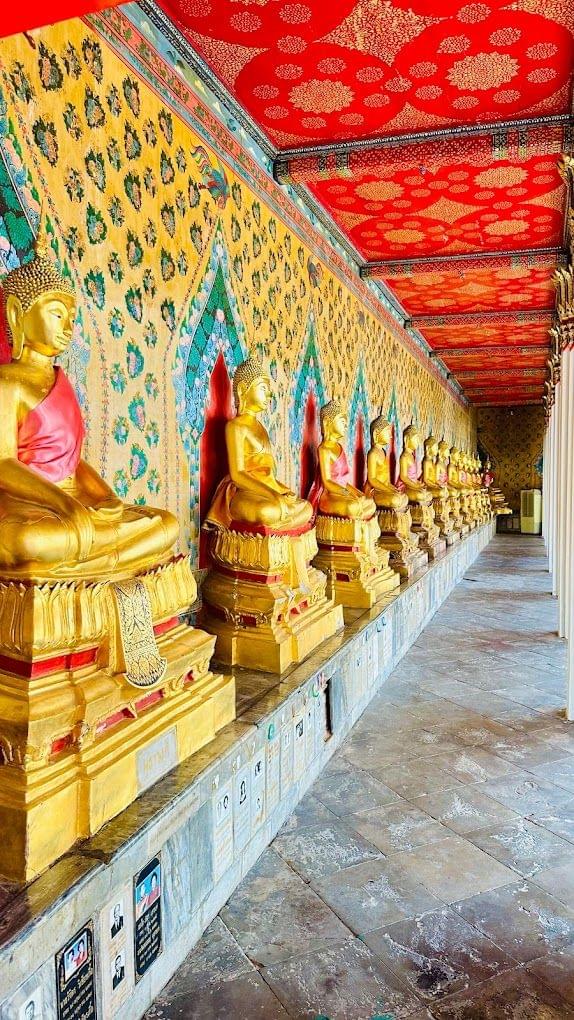
- The smaller chapels behind the main prang. Bronze Buddha images from the Rattanakosin era are housed in intimate spaces that most tour groups walk straight past. The atmosphere is quieter and candlelit and gives you a sense of how the temple functions as an active place of worship rather than just a landmark.
- The view from the riverside terrace facing east. Before you leave, stand on the promenade and look across the water. You’ll see Wat Pho's roofline, the Grand Palace spires, and the river traffic – a view that looks almost identical to how it looked 200 years ago. That's rare in any city.
- Visiting at night from across the river. You get the full illuminated temple reflected in the water, no entry fee required, and a drink in hand if you choose the right spot.
Best Nearby Attractions Around Wat Arun Bangkok
Wat Arun sits at the centre of Bangkok's historic temple circuit. Within 30 minutes of the temple, you can reach the following:
- Wat Pho — The reclining Buddha, a 10-minute ferry ride away. Easily paired with Wat Arun in the same half-day
- Grand Palace & Wat Phra Kaew — Bangkok's most visited complex, directly across the river. Plan 2–3 hours separately
- Tha Maharaj — A riverside marketplace with cafés and local food. Good for post-temple lunch
- ICONSIAM — A 20-minute Grab ride upriver; the rooftop offers views back toward Wat Arun at night
Important Travel Tips Before Visiting Wat Arun, Bangkok
- Bring cash. Entry is 100 THB. Some vendors near the temple accept cards, but the ticket counter is cash only
- Skip midday (11 AM – 2 PM). The prang faces west; the light is harsh, and the heat is brutal. Crowds peak here, too
- Carry water. There are no fountains inside. The climb is short but steep, and the heat adds up
- Allow 1.5–2 hours for the full temple, including the climb and the riverside terrace
- If you're combining with the Grand Palace, do Wat Arun first (opens at 8 AM), cross to Wat Pho, then walk to the Grand Palace. This order avoids the worst of the crowds.
- Groups travelling together — a Bangkok group itinerary can sequence the temple circuit efficiently with other priorities across a longer trip.
Conclusion: Is Wat Arun, Bangkok, Worth Visiting in 2026?
With its riverside setting, towering spires, and colourful porcelain details, Wat Arun remains one of the most breathtaking landmarks in Bangkok. The temple offers a perfect mix of Thai history, culture, architecture, and scenic sunset views. Whether you visit for photography, sightseeing, or spiritual experiences, this iconic attraction deserves a place on every Bangkok itinerary in 2026.
FAQs About Wat Arun Bangkok
How do I reach Wat Arun using public transport?
You can reach Wat Arun by taking the BTS Skytrain to Saphan Taksin Station, followed by a Chao Phraya River boat to Tha Tien Pier. From there, a short ferry ride takes you directly to the temple.
What is the best time to visit Wat Arun to avoid crowds?
Early morning, right after opening hours, is the best time to visit for cooler weather, softer lighting, and fewer crowds. Sunset hours are beautiful but usually much busier.
Can I buy Wat Arun tickets online in 2026?
Yes, some travel platforms and tour websites offer online tickets and guided tour bookings for Wat Arun in 2026. However, tickets are also easily available at the entrance.
Is photography allowed inside Wat Arun?
Yes, photography is allowed in most outdoor areas of Wat Arun. Visitors can capture the temple architecture, river views, and sunset scenery, but respectful behaviour is expected inside prayer areas.
How much is the entrance fee for Wat Arun?
The entry fee for Wat Arun Bangkok is 100 THB (approximately ₹250 or $3 USD). The ticket also includes access to the central prang climb and the main temple complex.