
- Home
- Attractions
- Chiang Mai
- Wat Suan Dok Chiang Mai: Complete Temple Guide, Monk Chat & Travel Tips
Wat Suan Dok Chiang Mai: Complete Temple Guide, Monk Chat & Travel Tips
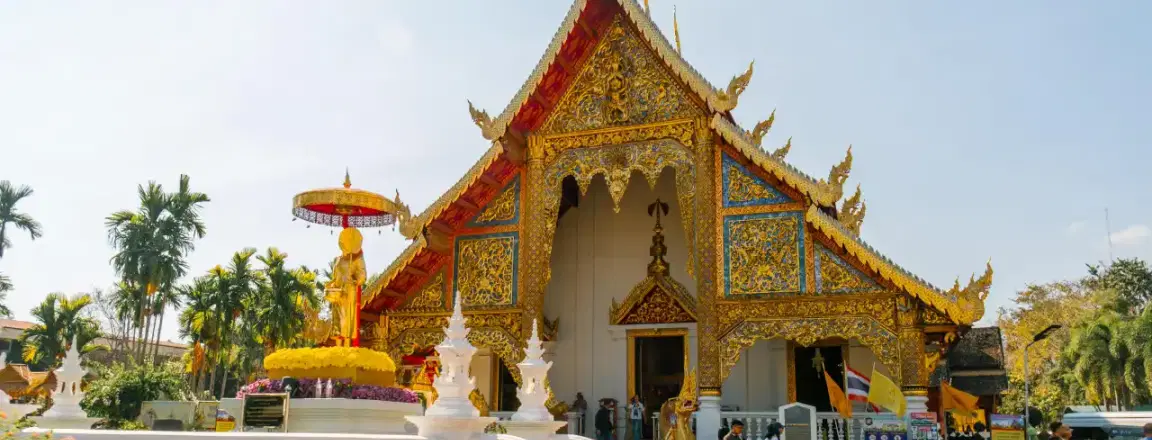
Looking to explore one of northern Thailand’s most peaceful and historic temples? Wat Suan Dok, Chiang Mai, is famous for its stunning white chedis, golden Lanna-style architecture, and rich Buddhist heritage. Located just outside Chiang Mai’s Old City, this sacred temple offers a calm spiritual atmosphere while showcasing the cultural history of the former Lanna Kingdom. Whether you’re interested in temple hopping, photography, or learning about Thai culture, Wat Suan Dok is a worthwhile addition to your Chiang Mai tour packages.
Why Visit Wat Suan Dok Chiang Mai?
Wat Suan Dok is one of the most culturally important temples in northern Thailand, offering a peaceful escape from Chiang Mai’s busy streets. From sacred Buddhist traditions to stunning architecture, the temple provides a memorable cultural experience for travellers.
- Beautiful White Chedis – The temple is famous for its striking white stupas that create one of Chiang Mai’s most photogenic temple scenes.
- Rich Lanna History – Wat Suan Dok dates back to the 14th century and reflects the heritage of the ancient Lanna Kingdom.
- Peaceful Atmosphere – Compared to crowded temples in Thailand, this site offers a calm and spiritual environment for visitors.
- Golden Main Hall – The impressive golden viharn showcases classic northern Thai architectural style.
- Monk Chat Experience – Visitors can interact with Buddhist monks and learn about Thai culture and Buddhism.
- Great Sunset Spot – The temple grounds become especially beautiful during sunset with glowing golden and white structures.
- Easy Location – Located near Chiang Mai Old City, Wat Suan Dok is easy to include in a temple-hopping itinerary.
About Wat Suan Dok Chiang Mai & Its Buddhist History
Wat Suan Dok was established in 1371 during the reign of King Kue Na and originally stood on a royal flower garden, which inspired its name, “Flower Garden Temple". The temple became an important spiritual site after a monk from the Sukhothai Kingdom brought a sacred Buddha relic to Chiang Mai. According to local legend, the relic split into two pieces; one was enshrined at Wat Suan Dok, while the other was placed on a white elephant that climbed Doi Suthep mountain, leading to the creation of Wat Phra That Doi Suthep.
Among the most fascinating Chiang Mai attractions, visiting both temples offers more than sightseeing. It connects travellers to one of the city’s most important Buddhist legends and cultural stories.
What to See Inside Wat Suan Dok, Chiang Mai
The Main Viharn (Prayer Hall)
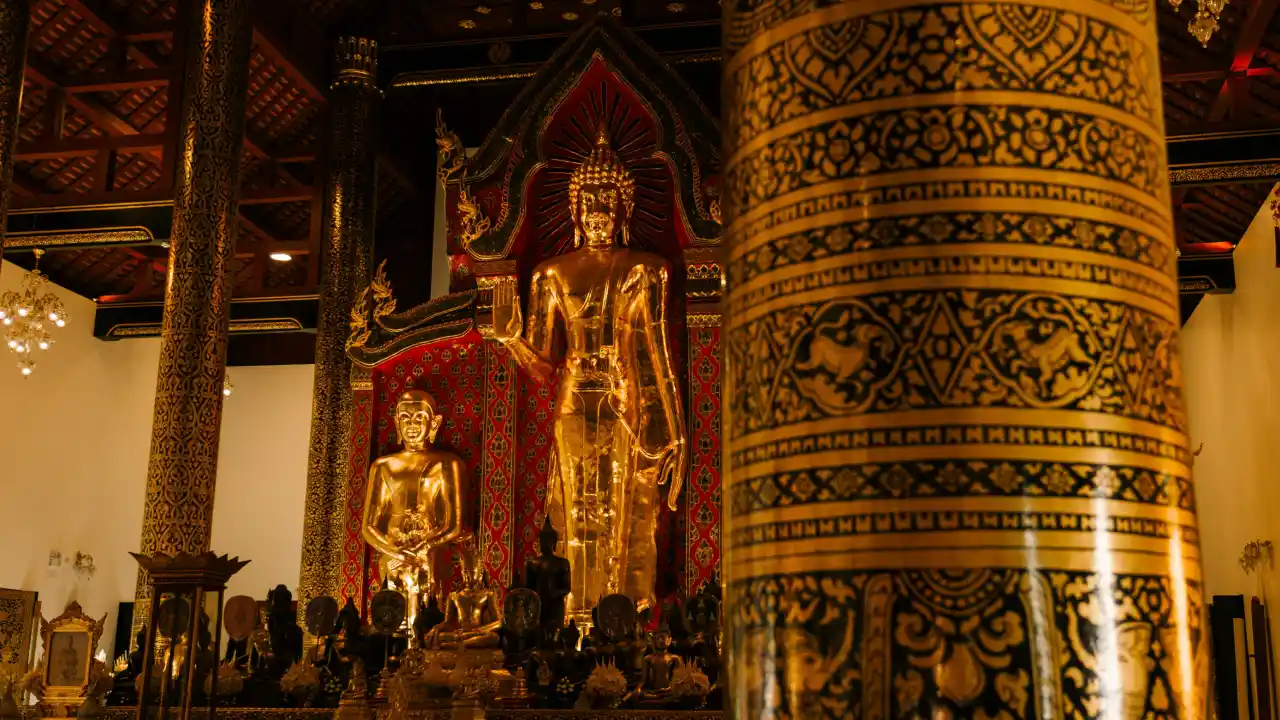
The large, open-sided prayer hall at the front of the complex houses one of the largest bronze Buddha statues in Thailand. The statue is covered in gold leaf, and the hall has high ceilings and excellent natural light, unlike the darker interiors typical of many Thai temples. The murals on the interior walls depict scenes from the Jataka tales (stories of the Buddha's past lives) in the northern Thai Lanna style.
The Golden Chedi
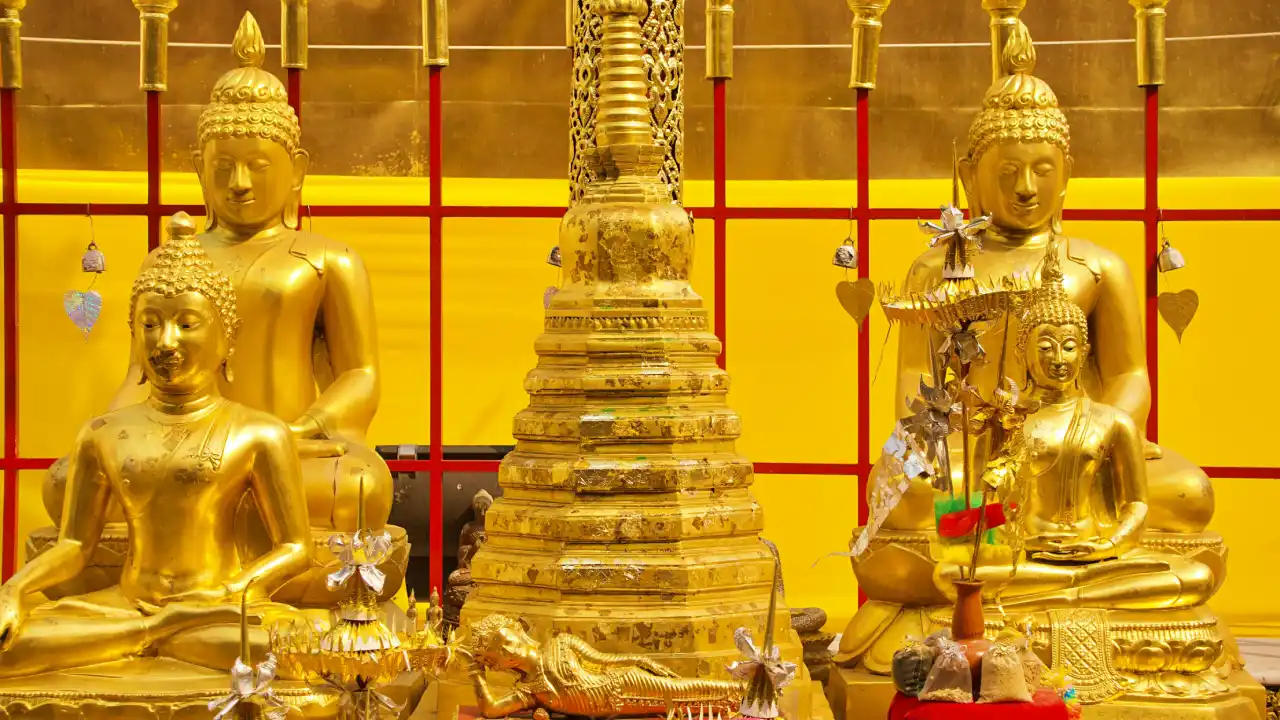
The giant golden chedi at Wat Suan Dok is the temple’s most eye-catching landmark. Built in Sri Lankan style, it houses a sacred Buddha relic and becomes especially beautiful during sunset when the gold reflects the warm light. The spacious courtyard also makes it one of the best photography spots among Chiang Mai attractions.
The Royal Chedis (White Stupas)
Behind the main chedi, travellers will find rows of elegant white stupas containing the ashes of Chiang Mai’s former royal family. Their symmetrical design creates a peaceful and visually striking setting that feels very different from other temples in the city. Some chedis are currently being restored with colourful tile work, adding new details to the historic site.
Note: Some stupas are visible undergoing restoration work.
The Buddhist University
Unlike many tourist-focused temples, Wat Suan Dok remains an active centre of Buddhist education. The temple complex houses a campus of Thailand’s leading Buddhist university, so visitors often see monks studying, attending classes, or walking through the grounds. This gives the temple a more authentic and spiritual atmosphere that many travellers genuinely appreciate.
Best Things to Experience at Wat Suan Dok, Chiang Mai
Monk Chat: How It Works
One of the most meaningful experiences at Wat Suan Dok is the Monk Chat programme, where travellers can have genuine conversations with student monks. Instead of a scripted tour, the discussions feel natural and personal, covering Buddhism, Thai culture, daily life, and different worldviews. The temple also hosts meditation sessions every Wednesday and the last Friday of each month, making it a great cultural experience for visitors looking to connect more deeply with Chiang Mai beyond regular sightseeing.
- Schedule: Monday, Wednesday, and Friday, 5:00 PM to 7:00 PM
- Cost: Free (donations appreciated)
- Location: Designated seating area inside the temple grounds — look for the tables and chairs set up near the entrance after 4:30 PM
Tips: Arrive by 5 PM to get a good seat.
Evening Chanting — the Underrated Visit
One of the most underrated experiences at Wat Suan Dok is the evening chanting ceremony, usually held around 6 PM inside the main viharn. After attending Monk Chat, travellers can stay to witness monks gathering for collective prayer as the chanting echoes across the temple courtyard. It’s a peaceful and authentic cultural moment that many visitors miss and one of the most memorable free things to do in Chiang Mai.
Things You Should Know Before Visiting Wat Suan Dok
Detail | Information |
| Address | Suthep Road, Si Phum, Mueang Chiang Mai (just west of the Old City moat) |
| Opening Hours | Daily 6:00 AM – 6:00 PM (some sources note until 9 PM; temple grounds accessible longer) |
| Entry Fee | Free (donations welcome) |
| Monk Chat | Mon, Wed, Fri — 5:00 PM to 7:00 PM |
| Dress Code | Shoulders and knees covered; sarongs available at entrance if needed |
| Photography | Allowed in most areas; be discreet inside the viharn |
| Time Needed | 1 to 1.5 hours for temple only; 2 to 2.5 hours if staying for Monk Chat |
How to reach it from Chiang Mai Old City
Wat Suan Dok is located around 3–4 km from Chiang Mai Old City, making it easy to reach by local transport, scooter, or even bicycle. Here are the most convenient options for travellers with approximate costs
- By Tuk-Tuk or Taxi – Takes around 10–15 minutes and usually costs 80–150 THB (₹180–₹340) depending on negotiation and traffic.
- By Songthaew (Red Truck) – The cheapest local option, costing around 30–50 THB (₹70–₹115) per person from the Old City area.
- By Scooter Rental – Daily scooter rentals in Chiang Mai start from 200–350 THB (₹450–₹800) plus fuel, ideal if you plan to visit nearby Chiang Mai attractions too.
- By Bicycle – Bicycle rentals cost roughly 50–100 THB (₹115–₹230) per day and are great for slow city exploration.
- By Walking – If staying near the western side of the Old City, you can walk to the temple in about 25–30 minutes for free.
Best Time to Visit Wat Suan Dok
- Early morning (6–8 AM): Monks completing their alms round, grounds nearly empty, soft light on the golden chedi.
- Late afternoon (3–5 PM): Better light for photography than midday. Transitions naturally into the Monk Chat at 5 PM.
- Avoid 10 AM–2 PM: Midday heat combined with tour groups makes the experience significantly less pleasant.
Best months: November to February (Chiang Mai's cool season). If you visit during Yi Peng (the floating lantern festival in November), Wat Suan Dok is one of the temples that participates in lantern release ceremonies.
How to Pair This With Other Chiang Mai Sites
Wat Suan Dok's location on Suthep Road makes it a logical first stop before driving up to Doi Suthep. The narrative connection between the two temples (split relic, two mountains) makes the pairing genuinely satisfying rather than arbitrary. A practical half-day sequence:
- 9 AM: Wat Suan Dok — temple grounds, royal chedis, main viharn
- 11 AM: Drive or songthaew 15 km up to Wat Phra That Doi Suthep
- 1 PM: Lunch near Nimman Road (10 minutes from Wat Suan Dok) — the Nimman area has Chiang Mai's best cafes and modern Thai restaurants
Essential Tips for Visiting Wat Suan Dok, Chiang Mai
- Visit During Sunset – The golden chedi looks especially beautiful in the late afternoon light, making it the best time for photography.
- Dress Respectfully – Like most Thai temples, visitors should wear clothing that covers shoulders and knees.
- Combine it with Doi Suthep – Many travellers visit Wat Suan Dok before heading to Wat Phra That Doi Suthep because both temples share the same legendary history.
- Attend Monk Chat – The temple’s Monk Chat sessions offer a meaningful way to learn about Buddhism and Thai culture directly from student monks.
- Stay for Evening Chanting – If possible, visit around 6 PM to experience the peaceful chanting ceremony inside the main viharn.
- Carry Small Cash – Donations, snacks, and local transport around Chiang Mai are easier with small Thai Baht notes.
- Visit on Weekdays for Fewer Crowds – Early mornings and weekdays usually feel quieter and more relaxing for exploring the temple grounds.
Conclusion: Is Wat Suan Dok Worth Visiting in Chiang Mai?
Wat Suan Dok is far more than a quick temple stop in Chiang Mai. With its golden chedi, royal white stupas, fascinating Buddhist legends, monk chat sessions, and peaceful evening chanting, the temple offers travellers a deeper cultural experience beyond regular sightseeing. Whether you are interested in photography, local culture, or quiet spiritual spaces, Wat Suan Dok remains one of the most rewarding attractions to include in your Chiang Mai itinerary.
FAQs
Is Wat Suan Dok free to enter?
Yes, Wat Suan Dok is free to enter for visitors. Donations are welcome and help support temple maintenance and monk activities. Some experiences, like Monk Chat and evening chanting, are also free to attend.
Is there a dress code for Wat Suan Dok?
Yes, visitors should dress respectfully when visiting the temple. Clothing should cover the shoulders and knees, similar to other temples in Thailand. Sarongs are sometimes available near the entrance if needed.
What is the Monk Chat at Wat Suan Dok?
Monk Chat is a cultural experience where travellers can speak directly with student monks about Buddhism, Thai culture, daily life, and spirituality. The sessions are relaxed, conversational, and held every Monday, Wednesday, and Friday from 5 PM to 7 PM.
Is Wat Suan Dok worth visiting over Wat Phra That Doi Suthep?
Both temples offer very different experiences. Doi Suthep is famous for mountain views and iconic status, while Wat Suan Dok feels quieter, more local, and culturally immersive with monk chat sessions, royal chedis, and evening chanting. Many travellers visit both on the same day.
Can I visit Wat Suan Dok without a tour?
Absolutely. Wat Suan Dok is easy to reach from Chiang Mai Old City by tuk-tuk, songthaew, scooter, bicycle, or even on foot. Most travellers explore the temple independently without needing a guided tour.