
- Home
- Attractions
- Dubai
- Al Marmoom Conservation Reserve, Dubai
Al Marmoom Conservation Reserve, Dubai
Beyond Dubai’s glittering skyline and futuristic glamour lies a side of the city few truly know: raw, untouched, and deeply connected to nature. Welcome to Al Marmoom Conservation Reserve, the first unfenced nature reserve in the UAE. Spanning approximately 10% of Dubai’s total land area (over 40,000 hectares), this sanctuary is the largest project of its kind in the country.
What truly sets Al Marmoom apart is its serenity, where shimmering lakes meet rolling dunes, and the only sounds are rustling winds and birdsong. It’s also where you’ll find the famous Al Qudra Lakes, Love Lake Dubai, scenic cycling tracks, stargazing spots, and natural wildlife habitats. This Al Marmoom Conservation Reserve Travel Guide covers everything you need to plan your visit, from what to see and when to go to how to get there and the best things to do nearby.
About Al Marmoom Conservation Reserve, Dubai
Nestled in the Al Qudra region, Al Marmoom is home to an incredible diversity of wildlife. Al Marmoom Conservation Reserve is home to over 200 species of birds, including both resident and migratory species such as flamingos, herons, swans, and raptors. It also hosts the highest concentration of large flamingos in any desert environment in the UAE. Being created as a part of the Dubai effort to conserve nature, Al Marmoom Conservation Reserve occupies almost ten per cent of the total size of the emirate.
The reserve hosts an array of ecological environments, which include desert dunes, oases, lakes, and wetlands, all designed to secure the wildlife and natural habitat. The reserve includes the Mohammed Bin Rashid Al Maktoum Solar Park, the world’s largest single-site solar park, which supports Dubai’s clean energy goals and is planned to reach 5,000 MW capacity by 2030. Al Qudra Lakes attract flamingos, herons, ducks, and other waterbirds, with occasional sightings of swans. The adjacent Love Lake has turned into a symbol of ideal romance with intermingled heart shapes, walking paths and shaded picnic areas.
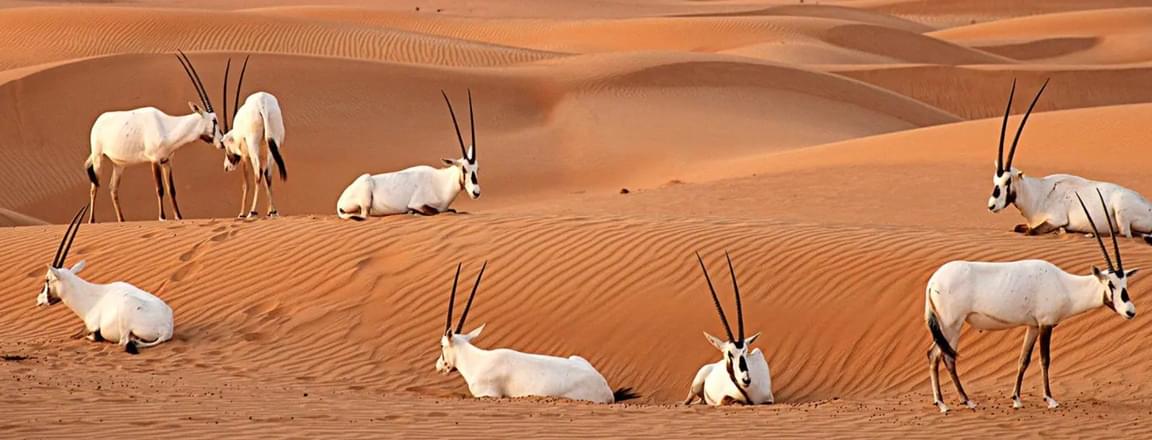
Fun Fact: Arabian oryx can be spotted within the reserve, a conservation success story for a species once extinct in the wild.
Highlights of Al Marmoom Conservation Reserve, Dubai
1. Al Qudra Lakes: A picturesque collection of lakes surrounded by dunes, perfect for birdwatching, cycling, and relaxing picnics.
2. Love Lake Dubai: A romantic destination shaped like two hearts, ideal for sunset walks, drone photography, and peaceful moments in nature.
3. Wildlife Spotting: Spot Arabian gazelles, desert foxes, oryx, and more than 200 bird species, including flamingos and eagles.
4. Camel Racing: Experience the thrill at the Dubai Camel Race Track, located at the Al Marmoom Heritage Village within the reserve’s eastern boundary.
Note that races primarily take place on weekend mornings from October to April.
5. Stargazing: Enjoy breathtaking night skies. Al Marmoom is one of Dubai’s best spots for stargazing, away from city lights.
6. Eco-Friendly Cycling: Ride along the Al Qudra Cycling Track, which stretches over 80 kilometres through desert landscapes.
7. Saruq Al-Hadid Archaeological Site: Discover a 3,000-year-old Iron Age metallurgical centre located within the reserve. It was discovered by HH Sheikh Mohammed bin Rashid Al Maktoum and provided the inspiration for the Expo 2020 logo.
Each corner of Al Marmoom captures the true spirit of the Arabian wilderness: calm, vast, and beautifully alive.
Al Marmoom Conservation Reserve Details and Nearby Attractions
- Location: Al Qudra area, Dubai, United Arab Emirates
- Operating Hours: Open daily, 24 hours (public access, best visited during daylight)
- Entry Fee: Free (no ticket required)
- Best Visiting Duration: Half-day to full-day trip
Nearby Attractions:
- Al Qudra Lakes: Ideal for picnics, cycling, and birdwatching.
- Love Lake Dubai: Love Lake features walking paths, viewing platforms, and landscaped areas suitable for light picnics, though facilities remain minimal to protect the environment.
- Al Marmoom Camel Race Track: cultural attraction featuring traditional camel races.
- Expo City Dubai: About 30 minutes away, perfect for a combined cultural visit.
- The Last Exit Al Qudra: A themed food truck stop offering refreshments and local bites.
Day-Trip Tip: Combine Al Marmoom Reserve with Al Qudra Lakes and Love Lake for a complete eco-desert experience.
Best Time to Visit Al Marmoom Conservation Reserve
- Ideal Season: November – April (cool and dry months)
- Avoid: May – September (extreme desert heat)
- Best Hours: Early morning (6:00–9:00 AM) and late afternoon (4:00–6:30 PM) for wildlife activity and photography.
- Photography Tip: Sunrise over the dunes and sunset by the lakes offer the most magical light conditions for landscape shots.
Season: Birds are most active from November to April when the weather is cooler. The best time to take up photography and to view wildlife is during sunrise and sunset.
How to Reach Al Marmoom Conservation Reserve
- By Car: The reserve is located about 45 minutes from Downtown Dubai. Take the E77 (Al Qudra Road) and follow signs for Al Qudra Lakes. The reserve is accessible via regular vehicles, though SUVs are recommended for deeper desert access.
- By Taxi or Ride Service: Taxis from Dubai are available, but may have limited return options. Arrange a round-trip or driver wait time in advance.
- By Tour Package: Join a guided eco-tour or photography safari for curated experiences, including transportation, birdwatching, and guided nature walks.
Pro Tip: Start your trip early morning to catch sunrise wildlife movement and avoid the afternoon heat
Al Marmoom Insider Tips
- Bring binoculars for bird and animal viewing.
- Carry water, snacks, and sunscreen; no shops inside the reserve.
- Respect wildlife; keep a safe distance from all animals.
- Use designated picnic and viewing areas.
- Avoid littering, as Al Marmoom is a protected ecosystem.
- For cyclists, rent gear near the Al Qudra Cycling Track.
Al Marmoom Dining Options & Local Experiences
Nearby Dining Options: While there are no restaurants inside the reserve, nearby stops include:
- The Last Exit Al Qudra: A desert-themed food truck park serving international dishes and coffee.
- Al Qudra Café: Cosy spot for quick refreshments before or after your desert visit.
- Bab Al Shams Desert Resort: Just 20 minutes away, ideal for luxurious dining or an authentic desert-style meal.
Local Experiences: Explore the local experiences that include:
- Attend camel races at the Al Marmoom Camel Racetrack.
- Join a guided nature photography workshop or birdwatching tour.
- Try stargazing events hosted by Dubai Astronomy Group.
Suggested Al Marmoom Itinerary
Morning:
- Depart from Dubai early (around 6:00 AM).
- Visit Al Qudra Lakes for sunrise and birdwatching.
- Cycle along the Al Qudra track or explore Love Lake.
Afternoon:
- Enjoy a picnic by the lakes.
- Spot gazelles or oryx in the dunes.
- Visit the Al Marmoom Camel Race Track if races are scheduled.
Evening:
- Stay for sunset photography or stargazing.
- Dine at Bab Al Shams or The Last Exit Al Qudra.
Why Visit Al Marmoom Conservation Reserve, Dubai
- Dubai’s largest unfenced conservation reserve and one of its most significant protected desert ecosystems.
- Free and easily accessible from the city
- Rich wildlife and bird diversity
- Stunning desert scenery and eco-friendly attractions
- Ideal for photography, nature walks, and peaceful getaways
Al Marmoom blends Dubai’s ancient desert charm with modern conservation values, creating a destination that inspires both awe and awareness.
Top Five Things to Do at Al Marmoom Conservation Reserve
- Watch the sunrise at Al Qudra Lakes.
- Cycle through the Al Qudra desert track.
- Spot Arabian oryx, gazelles, and native birds.
- Visit Love Lake for scenic walks and photography.
- Experience a traditional camel race at the racetrack.
Conclusion: Why Al Marmoom Conservation Reserve Is Worth Visiting
Al Marmoom Conservation Reserve is the natural haven of Dubai as the city becomes a global innovation capital, which will be a token of the emirate's sustainability and legacy. It is a home to three elements, namely nature, culture, and conservation, providing the travellers with a true sense of belonging to the eternal beauty of the desert. Whether it is the flamingos flying in the air, cycling through gold dunes, or just having a chance to enjoy the silence of wild nature, Al Marmoom offers you a different side of Dubai that few people ever see, which is pure, peaceful, and extremely beautiful. While you book your Dubai tour package, make sure you ask your agent to add Al Maroom to your itinerary!
FAQs: Al Marmoom Conservation Reserve Dubai
Is entry to Al Marmoom free?
The reserve is free and open to the people.
Can I visit Al Marmoom Conservation with a regular car?
Yes, the main roads to Al Qudra Lakes and Love Lake are fully paved. However, an SUV is essential if you intend to follow the sand tracks to the bird hides or deep desert viewing platforms.
Are there restaurants located near Al Marmoom Conservation?
There are no permanent restaurants inside the deep reserve. However, The Last Exit Al Qudra (a food truck park) and Al Qudra Avenue are located at the entrance. Note: These are not within walking distance of the lakes; a car is required to transition between the dining area and the wildlife spots.
Is Al Marmoom a family-friendly place?
Surely, it is family-friendly, and there are open areas where one can have picnics and explore.
What’s the best time to visit Al Marmoom Conservation?
During the cooler months of the year, between November and April, it is quite comfortable outside.