
- Home
- Attractions
- Krabi
- Monkey Beach Krabi Guide 2026: How to Visit, Things to Do & Travel Tips
Monkey Beach Krabi Guide 2026: How to Visit, Things to Do & Travel Tips
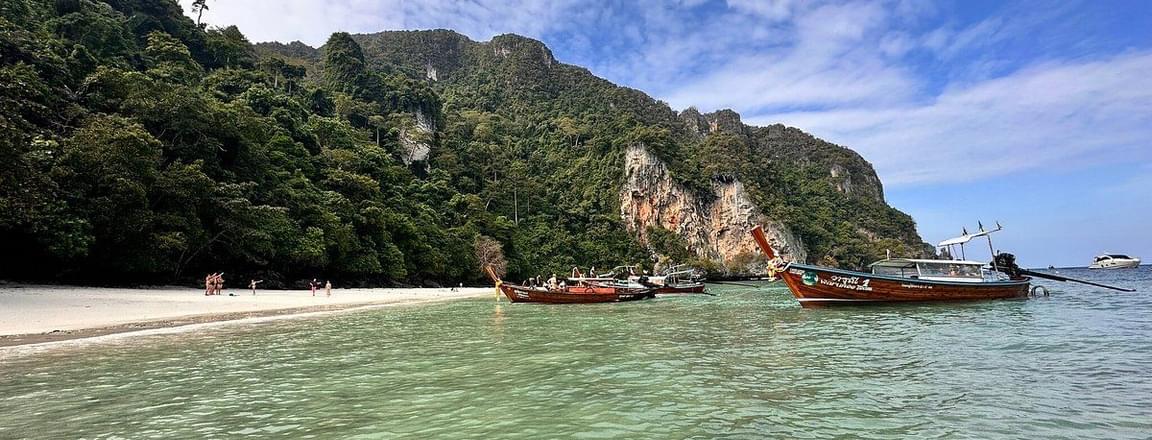
Located on Phi Phi Don Island, Monkey Beach Krabi stands out as one of the most memorable and truly wild spots in all of Thailand. The beach is famous for its playful crab-eating macaques, soft white sand, turquoise water, and dramatic limestone cliffs. Visitors love the rare chance to see wild monkeys, snorkel in clear waters, and enjoy stunning tropical scenery. It’s ideal for nature lovers, photographers, and adventure travellers exploring Krabi or Phuket. In this guide, discover how to reach Monkey Beach, the best things to do, travel tips, costs, and safety advice for a smooth visit.
About Monkey Beach
Tucked along the southwestern side of Tonsai Bay, Monkey Beach is about 15 to 20 minutes by boat from Tonsai Pier. This small tropical beach is famous for its wild monkeys, crystal-clear turquoise water, and beautiful limestone cliffs. It is one of the most unique places to visit in Thailand. This beach offers a mix of wildlife encounters and tropical beauty. Visitors can experience something very different from typical beaches in Thailand.
On this beach, you’ll encounter a colony of crab-eating macaques that live in the forest around the beach. These monkeys often come down to the sand, making it one of the few places where visitors can see them up close in the wild. You can combine this place with your Thailand tour packages when visiting Krabi.
Why Are There Monkeys at Monkey Beach?
The short-tailed macaques are wild animals that have inhabited the limestone forests and coastal cliffs of Phi Phi Don for generations. The jungle-covered cliffs behind the beach provide shelter, food, and fresh water (there is a natural freshwater seepage point on the eastern rock wall, where monkeys can often be observed drinking).
Tour boats began stopping here regularly, and the macaques became highly accustomed to human presence. Today:
- The monkeys roam freely along the shoreline, in the trees, and occasionally in the water — they are known to swim
- They are protected within the national park boundaries
- You are not allowed to feed the monkeys. If you violate these rules, you may face fines.
- You are advised to keep a safe distance, secure all bags (the monkeys are known to open zippers), and avoid making direct eye contact or displaying food.
What to See and Do at Monkey Beach
Although Monkey Beach is small, it offers several memorable experiences. Here are the main highlights:
1. Watching the Wild Macaques
The monkeys are the undisputed stars of the beach. Arriving in the morning gives the best chance of seeing active groups on the sand and in the trees. Some individuals are remarkably bold and will approach if they detect food. Watching them interact, swim, and scramble along the cliffs is one of the best things to do in Thailand’s Monkey Beach for visitors of all ages.
2. Snorkelling
The waters just off Monkey Beach are among the finest snorkelling spots in the Phi Phi archipelago. At low tide, shallow coral reefs are easily accessible from the shore. The visibility is excellent, and the reef is home to colourful fish, giant clams, and diverse coral formations. Beginners and experienced snorkellers alike will find this rewarding.
3. Sea Kayaking
Renting a kayak from nearby Loh Dalum Bay or Tonsai is one of the most popular ways to reach Monkey Beach independently. The paddle takes approximately 20 minutes each way and allows visitors to explore the coastline at their own pace, stopping at sea caves and quieter coves along the route.
4. Swimming and Sunbathing
The water is clear and calm enough for comfortable swimming, especially during the dry season. The sand is soft and white. Be aware that the beach shrinks significantly at high tide — the available shoreline can vary dramatically depending on when you visit.
5. Photography
The combination of white sand, emerald water, steep forested cliffs, and resident wildlife makes Monkey Beach one of the most photogenic places in Thailand. Early morning light produces softer tones and fewer boat wakes on the water.
Monkey Beach Visitors Information
- Address: Monkey Beach (Ao Ling), Koh Phi Phi Don, Amphoe Mueang Krabi, Krabi 81000, Thailand
- Entry Fee: Free
- Timings: Open 24 Hours (Accessible daylight hours)
- Hat Noppharat Thara–Mu Ko Phi Phi National Park fee: Approximately ฿400 for international visitors (around ₹1,000)
- Long-tail boat hire from Tonsai: Approximately ฿400–฿600 (₹900–₹1,420) per boat
- Guided island-hopping tours from Krabi or Phuket: ฿1,200–฿2,500 per person (approximately ₹3,000–₹6,000), often including snorkel gear, lunch, and other island stops
How to Reach Monkey Beach
Monkey Beach is located on the southwestern side of Tonsai Bay. Since the beach is surrounded by limestone cliffs and dense jungle, it can only be reached by sea.
By Longtail Boat: The easiest way to reach Monkey Beach is by taking a longtail boat from Tonsai Pier, which takes around 10–15 minutes and costs ฿400–฿600 (₹900–₹1,420 approx.)
By Island-Hopping Tour: Many Phi Phi island-hopping tours from Krabi or Phuket include Monkey Beach as one of the stops. These tours usually visit several attractions, such as snorkelling spots and nearby bays.
By Kayak: If you’re staying near Tonsai Bay, you can rent a kayak and paddle to Monkey Beach, which takes around 20–30 minutes depending on sea conditions.
Best Time to Visit Monkey Beach
Best Seasons to visit
November to April (Dry Season): This is the best season to visit Monkey Beach. During this time, the Andaman Sea is calm, the skies are clear, visibility underwater is superb, and boat travel is smooth and reliable. November and December are particularly excellent, combining good weather with fewer crowds than January and February.
May to October (Wet Season): The monsoon brings rougher seas and some days when boat trips are cancelled altogether. However, early May and late October can still offer good windows. The landscape is greener, and the beach is noticeably quieter.
Best Time of Day
- Early morning (before 9:30 AM): Best for seeing monkeys on the shore before tour groups arrive, and for calmer water photography
- Late afternoon (after 3:00 PM): Day-trip crowds thin out, the limestone cliffs cast shade over the bay, and the light turns golden
- Avoid midday: Peak crowd times when dozens of tour boats arrive simultaneously
Also check: Best Time to Visit Krabi
Food & Local Experiences Near Monkey Beach
Monkey Beach has no food vendors or facilities on the beach itself. Bring water and snacks in a secure, zipper-protected bag and keep them hidden from the monkeys at all times.
For dining, the main village of Phi Phi Don (near Tonsai Pier) has a lively restaurant scene catering to all budgets:
Recommended Restaurants Near Tonsai, Phi Phi Don:
- Papaya Restaurant: A reliable favourite among long-term visitors to Phi Phi. Known for excellent Thai green curry, pad thai, and fresh seafood at fair prices.
- Le Grand Bleu: A beachfront restaurant offering both Thai and Western dishes with pleasant sea views. Good spot for a leisurely post-tour dinner.
- Unni's Restaurant: A longstanding institution on Phi Phi, well regarded for generous portions of Thai classics and cold drinks after a hot day out.
- Banana Rock Bar & Restaurant: Ideal for sunset views and casual beachside meals. Popular with backpackers and couples alike.
Check out: Best restaurants in Krabi
Things to Know Before Visiting
- Use a hard-shell or clamshell backpack; monkeys can and will unzip regular bags
- Do not feed or taunt the monkeys; it is prohibited within the national park and increases the risk of bites
- Bring reef-safe sunscreen to protect the coral ecosystem
- Tide times significantly affect the beach; check tides before planning your visit
- Stay with your group if you have young children; the monkeys, while fascinating, are wild and can behave unpredictably
- There are no toilet facilities at Monkey Beach itself
Conclusion: Why Add Monkey Beach to Your Krabi Itinerary?
Monkey Beach is one of the most unique stops in the Phi Phi Islands, offering a perfect mix of tropical scenery and wildlife encounters. From watching playful macaques along the shore to enjoying the crystal-clear waters and dramatic limestone cliffs, this small beach delivers a memorable island experience. Whether you visit during a Phi Phi island-hopping tour or arrive by longtail boat from Phi Phi Don, this beach is a quick but exciting stop that adds adventure to your Krabi itinerary. Just remember to respect the wildlife and enjoy the beauty of one of Thailand’s most fascinating beaches.
Frequently Asked Questions about Monkey Beach
1. Where is Monkey Beach located?
Monkey Beach (Ao Ling) is located on Koh Phi Phi Don, part of Krabi Province in southern Thailand. It sits on the southwestern side of Tonsai Bay and is accessible only by boat or kayak.
2. Is Monkey Beach entry free?
The beach has no direct entry charge, but visitors are required to pay the Hat Noppharat Thara–Mu Ko Phi Phi National Park fee, which is approximately ฿400 (₹920) for international visitors.
3. Are the monkeys dangerous at Monkey Beach, Krabi?
The macaques are wild animals. While they are accustomed to humans, they can be unpredictable — especially if they detect food. Keep a safe distance, secure all belongings, and do not feed them.
4. What is the best time to visit Monkey Beach?
November to April offers the best weather and sea conditions. Early morning visits are best for seeing the monkeys and avoiding tour group crowds.
5. Can I snorkel at Monkey Beach?
Yes. The shallow waters off Monkey Beach contain accessible coral reefs with diverse marine life. Snorkelling gear is usually provided on guided tours or available for rent on Phi Phi Don.
6. Is Monkey Beach worth visiting?
Yes, especially if you enjoy wildlife, snorkelling, and natural scenery. It offers a genuinely memorable experience that combines all three in a compact, beautiful setting.