
- Home
- Attractions
- Phuket
- Tourism/thailand/places To Visit In Phuket
- Jui Tui Shrine, Phuket: Complete Culture, History & Travel Guide
Jui Tui Shrine, Phuket: Complete Culture, History & Travel Guide

Located right in the middle of the busy Phuket Town, the Jui Tui Shrine is one of the island's oldest and most respected Chinese-Taoist temples. It is a vivid example of the island's rich Sino-Thai heritage and the living community spirit. The striking red and gold colours of the shrine's architecture, the incense-filled altars with the various offerings, and the strong ties with the legendary annual Phuket Vegetarian Festival.
The shrine is a place where one can not only witness but also experience local spirituality, tradition, and cultural identity. Whether the intent is to observe the religious practices, receive blessings, or participate in the ancient practice of fortune-stick drawing, the Jui Tui Shrine will provide a stop that is meaningful and culturally immersive right in the middle of the old town of Phuket.
About Jui Tui Shrine, Phuket
Jui Tui Shrine (or "Jui Tui" in some cases) ranks among the most significant Chinese-Taoist shrines on Phuket Island. It is situated on Soi Phuthorn, which is a side road off Ranong Road, and not far away from the central fresh market. In the past, it was also the most important place for the local Chinese-Thai community in the spiritual aspect of their lives. An earlier shrine near 19th-century water wheels for rice grinding burnt down; the current site was established in 1911 on donated land and later renovated . Over time, the shrine came to its present site on Soi Phuthorn and underwent, in turn, complete renovations and additions and thus became the multi-hall complex we see today.
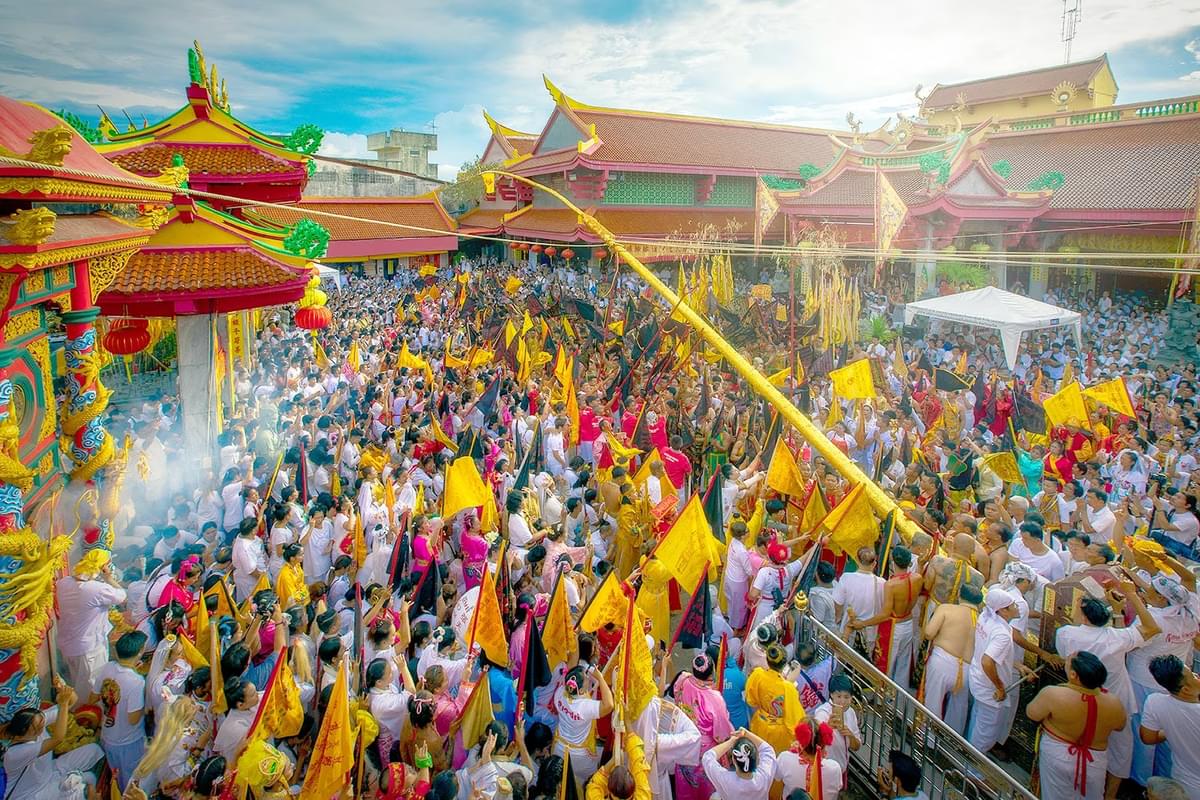
The main hall of the shrine contains large altars where multiple deities’ statues are established, including Tean Hu Huan Soy (also called Kew Ong), patron of good health and protection, flanked by guardian statues of a dog and a chicken. Above all, the incense, candles, and lanterns with their soft glow create a spiritually charged environment. The shrine always remains active with daily prayers and offerings, though its activity during the Vegetarian Festival is peaking as it, again, becomes the spiritual heart of Phuket for the most intense and widely observed religious celebration.
Fun Fact: The name “Jui Tui” refers to traditional water-powered rice milling equipment once used by early Chinese settlers in Phuket, reflecting the shrine’s deep connection to the island’s immigrant heritage.
Seasonal Tip: The best time to catch the shrine buzzing with activity is during the Vegetarian Festival (usually September-October, according to the lunar calendar), when Jui Tui turns into a place with processions, ceremonies, and the dazzling cultural display. For a peaceful and contemplative visit, the early hours of the morning or the afternoons of weekdays are the best.
Highlights of Jui Tui Shrine, Phuket

- Chinese-Taoist Architecture & Design of Historic Times — The vibrant red and gold decoration, the usual altars with carvings, and the picturesque roof tiles not only reflected but also represented the culture and spirituality of Phuket’s Chinese-Thai community.
- Altar of Main devoted to Tean Hu Huan Soy — The major deity was surrounded by (a dog and a hen. The protective power of guardian animals was considered by people that protection, good health, and blessings would be granted not only to artists and travellers but also to the local people.
- Fortune-Stick Ritual & Prayer Experience — The tourists have a chance to burn incense, pray, and draw fortune sticks, or “kau chim", as a way of getting the guidance of the divine — this is a very precious cultural practice that is still observed by a lot of people who worship the gods.
- Cultural Centre During the Vegetarian Festival, Jui Tui is always the first place for devotees in white, spirit-medium processions, firecracker ceremonies, and very traditional rituals — a very rare, immersive cultural experience is offered every year.
- Community Importance & Ancestral Worship — Many local families visit the shrine to pray for blessings, health, protection, and success in important life events.
- Location in Phuket Town That Is Not Hard to Find—Close to Ranong Road and the main markets, it is very easy to get there on foot, by tuk-tuk, or by taxi from anywhere else in town, making it a suitable place for culture-seeking tourists to stop over.
How to Reach Jui Tui Shrine, Phuket

- The shrine is located on Soi Phuthorn, Ranong Road, which runs through the heart of Phuket Town near the main fresh market.
- From most areas in Phuket Town, it's an easy tuk-tuk or taxi ride (5–15 mins). Many visitors also reach it on foot if staying nearby.
- From Patong, Karon, or Kata: approximately 30–45 minutes by taxi or scooter, depending on traffic.
Best Time to Visit Jui Tui Shrine
- Morning (08:00–10:00): Quiet, calm, ideal for photography and peaceful reflection.
- Evening (around 5:00–7:00 PM): Beautiful temple lighting, incense smoke, local worshippers — immersive atmosphere.
- During the Vegetarian Festival (Sept–Oct, lunar calendar): Most vibrant, cultural and spiritual — but extremely crowded.
- Weekdays over Weekends: Fewer tourists and easier access.
Tickets, Entry Fee & Visitor Information

- Entry: Free — Jui Tui Shrine does not charge a formal entry fee.
- Donations / Offerings: Visitors may make a small donation or offering (incense, candles) if they wish.
- Dress Code & Respect: As a sacred shrine, modest attire is appreciated (covered shoulders/legs), and respectful behaviour is expected — especially if locals are praying or during festivals.
What to See & Do at Jui Tui Shrine

- Observe the Main Altar & Pray: Light incense, bow, and enjoy the work of artists who made the altar where Tean Hu Huan Soy and the gods are kept very beautiful and detailed.
- Draw Fortune Sticks (“Kau Chim”): Be a part of the age-old custom – jolt the bamboo pot, pull a stick, and then associate the digit with a fortune slip for direction.
- Walk Around the Courtyard & Firecracker House: Enter the tiny red firecracker house (for controlled firecracker ceremonies) and look at the carvings, decorations, and style of the building.
- Experience Local Devotion / Offerings: The locals pay their respects for health, wealth, exams and safe travels — you might be able to see the rituals and offerings quietly being made, thus gaining a cultural insight.
- Visit During the Vegetarian Festival: If your schedule is correct, then you can see the parades, the spirit-medium ceremonies, and the traditional worship, such as the festival’s electrifying atmosphere of spirituality.
- Pair Visit with Old Town Walk: Wander through the streets lined with Sino-Portuguese style buildings, and local market, and cafés to have a full day of cultural heritage in Phuket Town.
Suggested Half-Day Itinerary: Jui Tui Shrine & Phuket Old Town
09:00 AM – Visit the main altar, light incense, and draw a fortune stick
09:45 AM – Explore the courtyard, side halls, and ceremonial pavilion
10:15 AM – Walk to Phuket Old Town to explore Sino-Portuguese architecture
12:00 PM – Lunch at local eatery or vegetarian restaurant (especially during festival)
Afternoon – Visit nearby museums or follow a local walking tour for Sino-Portuguese architecture and street art
Nearby Attractions to Combine with Jui Tui Shrine
- Phuket Old Town — Explore Sino-Portuguese heritage streets, colourful buildings, cafés & murals just 5–10 mins walk from the shrine.
- Local Fresh Market (on Ranong Road) — Witness daily local life; great for food, produce, souvenirs.
- Other Historic Shrines — Shrines such as nearby local temples make for a cultural heritage walking route.
- Local Eateries & Vegetarian Restaurants — Especially active during the Vegetarian Festival; good for trying local vegetarian Thai-Chinese dishes.
Why Jui Tui Shrine Is Worth Visiting
- It is a living cultural and spiritual centre, offering authentic local religious practices, not just a tourist shrine.
- Represents centuries-old Chinese community heritage in Phuket — architecture, traditions, and stories.
- Provides a unique spiritual experience — incense, prayers, fortune-stick rituals, and ancestral worship.
- Perfect for travellers looking for culture, history, and calm — an alternative to beaches and nightlife.
- Easily accessible, centrally located in Phuket Town — ideal for half-day, flexible itineraries, and budget-friendly exploration.
Top 5 Things to Do at Jui Tui Shrine
- Light incense and make prayers at the main altar
- Draw a fortune stick and get a fortune slip
- Walk around the shrine courtyard and appreciate the architecture
- Visit during the Vegetarian Festival and witness traditional ceremonies
- Combine a shrine visit with a stroll through Phuket Old Town’s heritage streets
Conclusion: Jui Tui Shrine, Phuket – A Living Cultural & Spiritual Landmark
Jui Tui Shrine is much more than a tourist stop — it is a vibrant cultural landmark, a spiritual heart of Phuket’s Chinese-Thai community, and a window into centuries-old traditions that still live on today. The moment you step through its ornate gates, you enter a world shaped by incense smoke, reverent chants, red-gold hues, and the faithful hopes of generations. Whether you visit for blessings, cultural insight, photography, or simple reflection, the peaceful altars, fortune-stick rituals, and neighbouring old-town charm combine to create a meaningful, memorable, and deeply human experience. In a place where temples meet living tradition, Jui Tui Shrine exemplifies the soul of Phuket — rich, spiritual, and rooted in history. Start planning your next trip with Pickyourtrail by discovering top Phuket tour packages for a seamless travel experience in 2026.
FAQs: Jui Tui Shrine Phuket
1. Is Jui Tui Shrine free to enter?
Yes — there is no formal entry fee. Visitors may make optional donations or offerings.
2. When is the Vegetarian Festival at Jui Tui Shrine?
It is held annually in the nine-day Vegetarian Festival, based on the Chinese lunar calendar (often around September–October). Dates vary each year.
3. What should I wear to visit the shrine?
Modest clothing is recommended — cover shoulders and knees. Respectful behaviour inside the shrine is expected.
4. Can tourists draw fortune sticks and get a reading?
Yes — the “kau chim” (fortune-stick) ritual is open to visitors. The slips are in Thai/Chinese; you may ask a local or monk for translation.
5. Is photography allowed inside?
Yes — photography is generally allowed inside the hall and courtyard. But during religious rituals or special ceremonies, it’s respectful to ask permission or avoid using flash.
6. Is it safe to visit during festivals, given the intense firecrackers and medium processions?
Yes — but expect heavy crowds, loud sounds, and intense ceremonies (body-piercing, trance). Watch your surroundings, stay alert, and maintain a respectful distance.