
Most Beautiful Beaches in Normandy: A Complete Guide to France’s Stunning Coastline
The beaches in Normandy offer a rare mix of raw natural beauty, cultural depth, and coastal calm. Stretching from the striking white cliffs of the Alabaster Coast to wide sandy shores shaped by centuries of tides and history, Normandy’s coastline feels both untouched and deeply storied. Some beaches are quiet and pebble-lined, perfect for long walks and sea views, while others are broad, sandy, and ideal for relaxed seaside days. This guide explores the most beautiful beaches in Normandy, helping you understand what makes each stretch of coast distinct and why Normandy remains one of France’s most underrated seaside regions.
Etretat Beach: Iconic White Cliffs and Natural Arches
Etretat ranks among the most beautiful beaches in Normandy, where nature has sculpted white chalk into breathtaking, dramatic formations. The Falaise d’Aval arch resembles an elephant dipping its trunk into the sea, while L’Aiguille (The Needle) pierces the sky like a limestone spire.
The pebble beach stretches between two towering cliffsides, offering multiple vantage points for exploration. The Jardins d’Étretat, perched on the cliffside, blend contemporary sculpture with manicured gardens, creating an artistic experience that complements the natural beauty.
Deauville Beach & Trouville-sur-Mer: Elegant Twin Seaside Resorts
The Deauville beach in France embodies seaside sophistication. The iconic boardwalk, lined with Belle Epoque architecture, connects luxury hotels, designer boutiques and the famous casino.
Trouville-sur-Mer offers Deauville’s more relaxed counterpart. This authentic fishing village maintains traditional charm with its bustling Saturday market. The beach offers similar golden sands but with a more accessible, family-friendly atmosphere.
Cabourg Beach: The Romantic Beach of Normandy
Cabourg earned its nickname as the “La Plage des Romantiques” (The Romantic Beach). The four-kilometre crescent of fine sand curves gracefully around the bay, backed by immaculate Belle Epoque villas.
The beach’s eastern end reveals remarkable sand dunes at the Dives River mouth, thereby creating an almost exotic landscape within Normandy. Sunset transforms the beach into a canvas of vibrant colours reflecting across the English Channel. Seafood restaurants line the waterfront, serving freshly caught langoustines, scallops and the regional speciality, marmite dieppoise.
Omaha Beach: Historic D-Day Landing Beach in Normandy
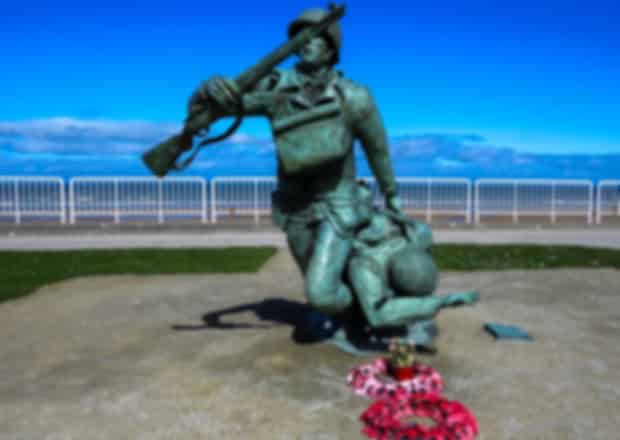
Omaha Beach stands as one of the most beautiful beaches in Normandy. This D-Day landing beach appears peaceful, backed by dunes and limestone cliffs.
The Normandy American Cemetery overlooks Omaha, where 9,388 white crosses and Stars of David honour fallen soldiers. The Overlord Museum and D-Day Omaha Museum present extensive collections of military equipment, personal items, and detailed accounts of the invasion.
Juno Beach: Canada’s D-Day Legacy on the Normandy Coast
Juno Beach stretches wide and sandy, suitable for swimming and leisure activities. The Juno Beach Centre illustrates comprehensive stories of Canadian contributions to D-Day and the Battle of Normandy through immersive exhibits.
Original German fortifications, including pillboxes and bunkers, remain visible along the shoreline. Memorials honour the 14,000 Canadians and 5,000 French soldiers who participated in the liberation.
Utah Beach: Scenic and Historic D-Day Landing Site
Utah Beach is also among the D-Day landing beaches. The Utah Beach Museum, built around an original German bunker, houses an impressive collection including B-26 bomber aircraft, tanks and landing craft.
The beach itself stretches for miles, backed by sand dunes and offering excellent conditions for swimming and water sports. The landscape feels remote and peaceful, with few developments interrupting the natural environment.
Urville-Nacqueville Beach: A Hidden Gem in Normandy
Urville-Nacqueville beach has earned recognition as one of the most beautiful beaches in Normandy. The beach’s isolation and natural beauty create an almost Mediterranean atmosphere, with fewer crowds than popular resorts.
The wild coastline surrounding Urville-Nacqueville invites exploration through coastal paths offering spectacular views. The beach lacks extensive facilities, preserving its untouched character.
Barneville-Carteret Beach: Sandy Shores with Island Views
Barneville-Carteret offers breathtaking views of Cap Carteret. The wide sandy beach extends for several kilometres, bordered by grassy dunes. Warm waters and gentle waves characterise this beach, popular with swimmers and families.
Plage de la Potiniere, adjacent to the main beach, features quaint blue and white beach huts reminiscent of traditional French seaside architecture. Seafood restaurants serve cocktails and fresh catches throughout the summer.
Granville Beaches: Maritime Heritage and Tidal Wonders
Granville perches on a rocky outcrop overlooking multiple beaches. Plat Gousset features a natural seawater swimming pool, public showers and a boardwalk lined with local shops. The beach creates safe swimming conditions for children.
The Haute-Ville (upper town) showcases 19th-century homes within preserved ramparts, offering picturesque wandering opportunities. Granville’s position within Mont-Saint-Michel Bay creates dramatic tidal variations, among Europe’s highest.
Siouville-Hague Beach: Best Surfing Beach in Normandy
Siouville-Hague beach nestles within Vauville cove, thereby creating protected waters ideal for surfing and kitesurfing. The spot attracts water sports enthusiasts year-round, with several schools offering equipment rental and instruction.
The surrounding landscape features a wild, rugged coastline typical of the Cotentin’s western shores. The beach remains relatively quiet outside peak summer months, appealing to those seeking authentic coastal experiences.
Planning Your Normandy Beach Vacation
The best beaches in Normandy offer year-round appeal, though experiences vary by season.
Best Time to Visit Normandy Beaches:
- June through August delivers the warmest weather (average 20-22°C) and fullest activity schedules, but also peak crowds.
- Early June, aroundthe D-Day anniversary, brings special commemorations, ceremonies, and reenactors throughout the landing beaches.
- Spring (April-May) and autumn (September-October) provide ideal conditions: fewer visitors, pleasant temperatures, and beautiful light perfect for photography.
- Winter visits offer dramatic coastal scenery.
Getting to the Normandy Coast from Paris:
- Paris serves as the primary gateway, with Charles de Gaulle Airport offering international connections.
- Transportation options include rental cars (recommended for flexibility), trains to major towns, and regional NOMAD buses.
- Train service reaches Caen, Bayeux, Deauville, and other coastal towns within 2-3 hours from Paris.
Where to Stay: Beachfront Hotels and Resorts in Normandy
Accommodation ranges from luxury beach resorts (Rs. 17,000-34,000 per night) to budget hotels (Rs. 5,100-8,500).
Conclusion: Discover the Most Beautiful Beaches in Normandy
The most beautiful beaches in Normandy weave together natural splendour, artistic inspiration and profound history into an ultimate seaside experience. From the golden sands and dramatic cliffs of Ecalgrain Bay and Les Vaches Noires to the historic shores of Arromanches and the glamorous expanse of Deauville, the best beaches in Normandy offer timeless inspiration for travellers, artists and adventurers. Plan your Normandy beach vacation with Pickyourtrail’s France Tour Packages and experience our exclusive services of personalised itineraries, hassle-free visa guidance and 24*7 customer support.
Frequently Asked Questions About Normandy Beaches
What is the best time to visit the Normandy beaches?
June through August offers the warmest weather and most activities, though crowds peak during this period. Spring (April-May) and early autumn (September-October) provide ideal conditions with fewer tourists, pleasant temperatures around 15-18°C, and excellent photography light. Winter visits showcase dramatic coastal scenery, while early June, around the D-Day anniversary, features special commemorations at the landing beaches.
Can you swim at the D-Day landing beaches?
Yes, swimming is permitted and common at D-Day beaches. These beaches function as regular seaside destinations while maintaining their historical significance through memorials and museums.
How far are the Normandy beaches from Paris?
Normandy’s coastline sits 150-250 kilometres from Paris, accessible within 2-3 hours. Deauville and Trouville can be reached by train in approximately 2 hours from Paris. Dieppe, the closest beach to Paris, lies 170 kilometres away.
What should I wear when visiting the Normandy beaches?
Layer clothing regardless of season due to unpredictable coastal weather. Summer requires light clothes, swimwear, sunscreen and a windbreaker for breezy conditions. Spring and autumn demand warmer layers. Comfortable walking shoes prove essential for clifftop trails and pebble beaches.
Are the Normandy beaches suitable for families with children?
Absolutely. Many beaches hold Family Plus designations, guaranteeing child-friendly facilities and activities. Cabourg, Barneville-Carteret and beaches around Saint-Vaast-la-Hougue offer supervised beach clubs, swimming lessons, playgrounds and organised activities.
Do I need to rent a car to explore the Normandy beaches?
While not absolutely necessary, rental cars provide significant advantages for exploring multiple beaches and accessing remote locations. Train service reaches major coastal towns (Deauville, Caen, Bayeux, Dieppe), and NOMAD regional buses connect some beaches. However, D-Day beaches spread across 80 kilometres, making car rental nearly essential for comprehensive historical tours.
What are the must-try foods in Normandy?
Sample fresh oysters, scallops and seafood platters at beachside restaurants. Marmite dieppoise (seafood stew with cream) represents Normandy’s signature dish. Four regional cheeses (Camembert, Livarot, Pont l’Évêque, Neufchâtel) pair with apple cider. Buckwheat galettes and sweet crêpes with salted caramel provide satisfying casual meals.
Is Etretat worth visiting despite the crowds?
Absolutely. Etretat’s dramatic white cliffs, natural arches and artistic heritage justify its popularity. Visit early morning (before 10 AM) or late afternoon (after 5 PM) to avoid peak crowds, especially during July-August. Weekdays prove quieter than weekends. Spring and autumn offer the best balance of favourable weather and manageable crowds.
Are there beachfront accommodations in Normandy?
Yes, numerous beachfront hotels and resorts line Normandy’s coast, particularly in established destinations like Deauville, Cabourg and Granville. Options range from luxury establishments like Le Grand Hotel Cabourg (Rs. 16,000-34,000 nightly) to modest seaside hotels (Rs. 6,800-11,900).

Recommended articles for you







Discover Packages

















Need help in planning?
Talk to our Travel Experts