
Norway vs Iceland: Which Is Better for Your Trip?
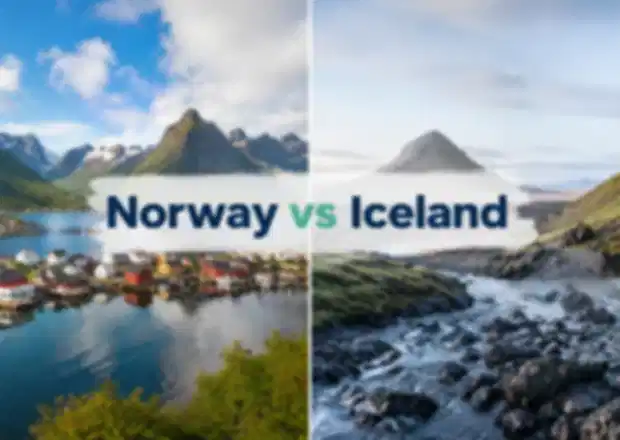
Imagine waking up beside a Norwegian fjord cruise one morning and driving past a glacier in Iceland the next. Both countries offer that kind of scenery, yet they create very different travel experiences. That is where the Norway vs Iceland debate gets interesting. Norway is made for travellers who enjoy slow scenic journeys, dramatic fjords, mountain villages and time in cities like Oslo and Bergen. Iceland feels more concentrated, with volcanoes, waterfalls, black-sand beaches and hot springs packed into a road-trip adventure. If you are deciding between Norway tour packages and an Iceland trip, the right choice depends on your days, budget and travel style. This guide breaks down the biggest differences, from scenery and seasons to costs, transport, food and Northern Lights, so you can choose without second-guessing your trip.
Norway vs Iceland at a Glance
| Factor | Norway | Iceland |
| Currency | Norwegian Krone (NOK) | Icelandic Króna (ISK) |
| Approx. exchange rate | 1 NOK ≈ ₹10 | 1 ISK ≈ ₹0.78 |
| Size | ~385,000 sq km | ~103,000 sq km |
| Capital | Oslo | Reykjavik |
| Language | Norwegian (English widely spoken) | Icelandic (English widely spoken) |
| Best suited for | Longer trips, coastal drives, cities | Compact loops, road trips, nature-focused breaks |
| Ideal trip length | 8–12 days | 6–8 days |
Both countries are part of the Schengen Area, so the visa process for Indian travellers works the same way for either destination.
Norway vs Iceland: Quick Comparison
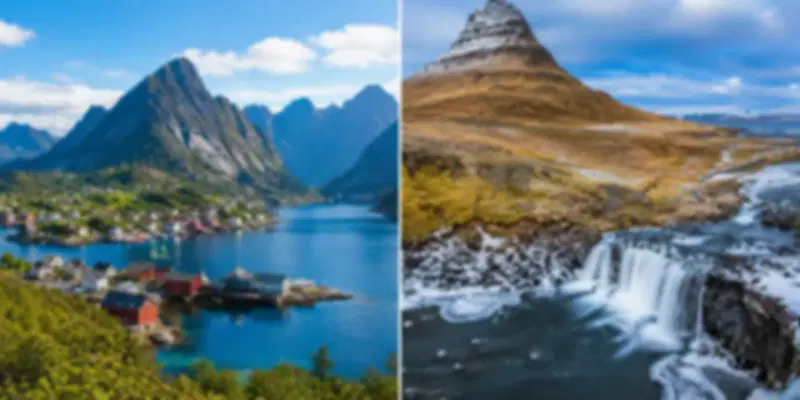
| Choose Norway if you want | Choose Iceland if you want |
| Fjords, mountains and coastal towns | Volcanoes, glaciers and hot springs in one small area |
| A longer trip with cities like Oslo and Bergen | A shorter, tightly packed 6- to 8-day loop |
| Trains, ferries and the famous Coastal Express | A self-drive Ring Road adventure |
| A slightly gentler budget outside peak season | The highest odds of catching the Northern Lights |
| Family-friendly cities and easy public transport | Dramatic, otherworldly landscapes for photography |
Neither country is the wrong choice. It genuinely comes down to how much time you have and what kind of scenery pulls you in more: coastline and cities or raw volcanic terrain.
Norway vs Iceland: Landscape and Scenery
The biggest difference between Norway and Iceland is how you experience the landscape. Norway spreads its scenery across a larger country, while Iceland packs dramatic sights into a much smaller area.
Norway: Fjords, Mountains and Coastal Towns
Norway is all about its coastline. Deep fjords such as Geirangerfjord and Nærøyfjord cut through towering cliffs. You can also explore mountain villages, the Lofoten Islands and scenic train routes through valleys.
The scenery is only part of the experience. Norway gives you more time in cities too. Oslo has museums, restaurants and a lively city feel. Bergen adds colourful wooden houses, a harbour and easy access to the fjords.
Iceland: Dramatic Nature at Every Turn
Iceland feels more compact. You can see black-sand beaches, geysers, waterfalls, glacier lagoons and volcanic craters without spending days travelling between them.
The Ring Road connects many of the country’s major sights, making Iceland a great choice for a road trip. Reykjavik is small enough to explore in about a day, so most of your time can be spent outdoors.
So, which is better depends on your travel style: Norway for fjords, cities and slower, varied journeys; Iceland for volcanoes, glaciers and concentrated nature road trips.
Best Time to Visit Norway vs Iceland
The weather can change your experience in both countries. Your travel month affects road conditions, daylight hours, crowds and your chances of seeing the Northern Lights.
| Season | Norway | Iceland |
| Summer (June–August) | Mild days, midnight sun in Norway, ideal for fjord cruises | Mild days, long daylight, best for the Ring Road |
| Shoulder (April, May, September) | Fewer crowds, cooler weather, good for budget travel | Fewer tourists, waterfalls still full, decent aurora chances by September |
| Winter (October–March) | Cold, snowy, prime Northern Lights season in Norway (north). | Cold, icy roads, strong aurora season, ice cave access |
NOTE: Summer suits first-timers who want easier road conditions and longer daylight. Winter suits travellers chasing the aurora, though it demands more planning around road closures and shorter days.
Norway vs Iceland for Northern Lights
Seeing the Northern Lights is a big reason travellers compare these two countries. Both can deliver an incredible show, but where you go within each country matters.
Iceland: Best for Short Northern Lights Trips
Iceland has an advantage if you have only a few days. Much of the country lies within the aurora zone, so you do not need to travel far from Reykjavik to find dark skies on a clear night.
Winter tours run from the capital, making it easy to fit an aurora chase into a short holiday. Even with a 6-night Iceland itinerary, you can plan two or three nights for the best chance of seeing the lights.
Norway: Best for Northern Lights in the Arctic
Norway can offer stronger aurora displays, but location is key. Tromsø and the Lofoten Islands, both above the Arctic Circle, are among the country’s best places to see the Northern Lights.
The catch is that you need to travel north. Cities such as Oslo are much less reliable for strong displays, so an aurora-focused trip needs more planning.
Norway or Iceland: Which Is Better for Northern Lights?
Pick Iceland if you want:
- An easier aurora trip
- A shorter itinerary
- Less internal travel
- Easy access from Reykjavik
Pick northern Norway if you want:
- Stronger aurora experiences
- More time in the Arctic
- Tromsø and Lofoten
- A dedicated Northern Lights holiday
Whichever you choose, clear skies are just as important as the destination. Staying for at least three or four nights gives you more chances to catch the lights. If the Northern Lights are your main reason for travelling, you can also consider dedicated Northern Lights tour packages built around the aurora season.
Norway vs Iceland: Trip Cost Comparison
Both Norway and Iceland are among the more expensive Nordic countries to visit. Your final budget depends heavily on where you stay, how you travel and when you visit. A quick comparison can help you see which destination fits your spending plan better.
| Expense | Norway (NOK and INR) | Iceland (ISK and INR) |
| Budget meal | 150–200 NOK (~₹1,500–₹2,000) | 2,200–3,000 ISK (~₹1,716–₹2,340) |
| Mid-range hotel per night | 1,800–2,800 NOK (~₹18,000–₹28,000) | 25,000–40,000 ISK (~₹19,500–₹31,200) |
| Local transport per day | 100–150 NOK (~₹1,000–₹1,500) | 1,500–2,000 ISK (~₹1,170–₹1,560) |
| Car rental per day | 700–1,000 NOK (~₹7,000–₹10,000) | 9,000–14,000 ISK (~₹7,020–₹10,920) |
Figures are per person, per day. Exchange rates fluctuate, so check the latest rates before budgeting your full trip.
Things to Do in Norway vs Iceland
Both countries are made for outdoor adventures, but the experiences are different. Iceland is great for volcanic landscapes and glacier adventures, while Norway is better for fjord trips, hiking and Arctic activities.
Winter Activities in Norway vs Iceland
Iceland: Chase the Northern Lights and Explore Ice
- Chase the Northern Lights: Join a guided night tour and head away from city lights to watch the aurora.
- Walk on a Glacier: Strap on crampons and hike across Iceland’s frozen landscapes with a guide.
- Explore an Ice Cave: Walk through naturally formed blue ice tunnels during the winter season.
- Soak in Geothermal Water: Relax in a warm geothermal pool while cold air surrounds you.
Norway: Hunt for the Aurora and Explore the Arctic
- Go Northern Lights Hunting: Take a guided evening trip to chase clear skies and stronger aurora displays.
- Cruise Through Fjords: Sail past snowy peaks and quiet coastal villages on a scenic fjord cruise.
- Go Whale Watching: Join a boat safari in northern Norway to look for whales in Arctic waters.
- Try Dog Sledging: Ride through snowy forests and frozen landscapes behind a team of huskies.
Summer Activities in Norway vs Iceland
Iceland: Explore the Wild Outdoors
- Take a Ring Road Road Trip: Drive between waterfalls, glaciers, volcanic landscapes and black-sand beaches, stopping whenever the scenery catches your eye.
- Go Glacier Hiking: Join a guided trek across the ice and learn how Iceland’s glaciers are formed.
- Hike Volcanic Trails: Walk across lava fields, valleys and rugged mountain paths.
- Go Horse Riding: Ride Icelandic horses across open fields and volcanic landscapes.
Norway: Hike, Cruise and Drive
- Hike to a Fjord Viewpoint: Trek along mountain trails for wide views over Norway’s famous fjords.
- Take a Scenic Train Ride: Travel through valleys and mountains while enjoying some of Europe’s most dramatic rail scenery.
- Kayak Through Fjords: Paddle across calm waters with steep mountains rising around you.
- Drive Scenic Routes: Take a road trip through winding mountain roads, tunnels and coastal stretches.
Verdict: Pick Iceland for glaciers, volcanoes and road-trip adventures. Choose Norway for fjord cruises, hiking, kayaking and Arctic experiences.
Getting Around Norway vs Iceland
Once you arrive, getting around feels quite different in both countries. Iceland is ideal for road trips, while Norway transportation gives you more options, from trains and ferries to scenic drives.
Getting Around Iceland
- Primary Options: Rental cars, campervans, buses and guided tours
- Navigation Style: The Ring Road is easy to follow, but weather can affect driving conditions
- Best For: Travellers who want to explore waterfalls, glaciers and small towns at their own pace
Getting Around Norway
- Primary Options: Rental cars, trains, ferries and domestic flights
- Navigation Style: Fjords, tunnels and ferry crossings can make journeys longer than they look on a map
- Best For: Travellers who enjoy scenic train rides, fjord cruises and flexible road trips
Winner: Iceland for a classic road trip. Norway is better if you prefer more transport choices and a mix of trains, ferries and driving.
Food and Vegetarian Options: Norway vs. Iceland

Food should not be a major worry in either country. Norway has more variety, especially for Indian and vegetarian travellers. Iceland is simpler, but Reykjavik has plenty of choices.
Norway: More Choice, More Variety
Norwegian food is built around fresh seafood, salmon and dairy. You will also find plenty of international food in the bigger cities.
What to try:
- Salmon: Fresh, smoked or grilled.
- Brunost: A sweet, caramel-like brown cheese.
- Waffles: Often served with brunost or jam.
- Seafood: Cod, crab and other local catches.
Vegetarian and Indian food: Oslo and Bergen have many vegetarian cafes and Indian restaurants. In smaller towns and fjord areas, choices are fewer, so keep some snacks with you.
Iceland: Fresh, Simple and Seafood-Led
Icelandic food focuses on seafood, lamb and dairy. Reykjavik has the widest choice, while smaller towns have fewer vegetarian and Indian options.
What to try:
- Skyr: Thick Icelandic dairy, often served with fruit.
- Fresh seafood: Cod and salmon are common favourites.
- Icelandic lamb: A popular traditional choice.
Vegetarian and Jain food: Vegetarian meals are easy to find in Reykjavik. Outside the capital, planning helps. Jain travellers should ask about onion and garlic before ordering.
Our pick: Norway is the easier choice if food variety matters to you.
How to Get to Norway and Iceland From India
Getting to Norway is usually easier from India because Oslo has more flight connections. Iceland also requires a stop, but it works well if Iceland is your main destination.
Flights
There are no regular direct flights from India to Oslo or Reykjavik. Most routes connect through Doha, Istanbul, Frankfurt or Amsterdam, with total travel time usually around 12–16 hours, depending on the layover. If you’re comparing routes and fares, this India to Europe flight guide can help you find the most convenient connection.
Visa
Both Norway and Iceland are part of the Schengen Area, so Indian travellers need a Schengen visa. The application process and documents are broadly similar for both.
Iceland vs Finland vs Norway: Which Is Better?
Each country has a different travel style. Iceland is great for dramatic landscapes and road trips, while Finland feels more relaxed and family-friendly. Norway stands out for fjords, scenic drives and longer trips. The right choice depends on what you want to see and how you like to travel.
| Factor | Iceland | Finland | Norway |
| Signature experience | Volcanoes, glaciers, geysers | Lapland, Santa Claus Village, husky sledging | Fjords, coastal cruises, mountain villages |
| Northern Lights reliability | High, especially near Reykjavik | High in Lapland | High only in the far north |
| Best for | Road trip lovers | Families with young kids | Longer, varied itineraries |
| Trip pace | Fast-paced, dense sightseeing | Relaxed, activity-based | Slower, scenic |
Finland tends to win with families because of Lapland’s snow activities and the strong pull of Santa Claus Village, something Iceland and Norway do not really offer. If your trip is purely about landscapes and adventure, Iceland and Norway stay ahead.
Norway or Iceland: Which Is Better for Different Travellers?
Not sure whether Iceland or Norway suits your trip? Your travel style, trip length and budget can make the choice much easier.
- First-timers with 7–8 days: Choose Iceland. You can cover many highlights on a road trip without spending too much time on internal travel.
- Travellers with 10+ days: Choose Norway. You have more time to combine Oslo and Bergen with fjord cruises, mountain towns and scenic train journeys.
- Honeymooners: Both work well. Pick Iceland for quiet landscapes and private hot-spring experiences. Choose Norway for scenic train rides, fjord views and luxury stays. You can also plan your trip around a Europe honeymoon package.
- Families with kids: Norway gets the edge. Trains, ferries and shorter city breaks can be easier with children than long drives through remote parts of Iceland. Families planning both countries can also explore family tour packages for Europe.
- Budget-conscious travellers: Iceland may be easier. Its smaller size can reduce internal travel costs, although accommodation prices can still be high.
- Aurora hunters: Choose Iceland for a short trip. It is easy to combine northern lights hunting with other sights. With more time, northern Norway offers excellent aurora opportunities.
Quick pick: Choose Iceland for a shorter, road-trip-focused adventure. Pick Norway for longer trips, fjords, cities and more varied experiences.
Tips for Choosing Between Norway and Iceland
- Trip length: Choose Iceland for 6–8 days. Pick Norway if you have 8–12 days.
- Travel style: Pick Iceland for road trips and nature. Choose Norway for fjords, cities and scenic journeys.
- Best season: Visit in summer for easier driving. Choose winter for Northern Lights and snow activities.
- Budget: Compare flights, hotels, car rentals and activities before booking.
- Aurora: Iceland works well for short trips. Choose northern Norway for longer Northern Lights holidays.
- Booking: Reserve cars, cruises and popular activities early.
Conclusion: Norway vs Iceland: Which One Should You Choose?
The Norway vs Iceland choice comes down to your travel style. Pick Iceland for a compact road trip filled with glaciers, volcanoes, waterfalls and hot springs. Choose Norway for fjords, scenic train rides, coastal journeys and longer adventures. Both offer incredible landscapes, but your trip length, budget and interests should decide the winner. Compare your dates, plan around the experiences you want most, and choose the destination that feels right for your next Nordic adventure.
FAQs
1. Which is better, Norway or Iceland?
Norway vs Iceland depends on your travel style. Choose Norway for fjords, cities and longer scenic journeys, while Iceland is better for compact road trips, glaciers and volcanic landscapes.
2. Is Iceland more expensive than Norway?
Iceland can be slightly more expensive for accommodation and food, while Norway can cost more for longer transport. Your total Norway vs Iceland budget depends mainly on the season, trip length and travel style.
3. What’s the difference between Iceland and Norway?
The biggest difference is the landscape and pace. Norway offers fjords, mountains and scenic transport, while Iceland packs glaciers, volcanoes, waterfalls and hot springs into a smaller area.
4. Is it better to see the Northern Lights in Iceland or Norway?
Iceland vs Norway for Northern Lights depends on your trip length. Iceland is easier for a short visit, while northern Norway is a stronger choice if you have more time for an Arctic aurora experience.
5. Is Iceland or Norway better for a road trip?
Iceland is usually better for a straightforward road trip because its Ring Road connects many major landscapes. Norway is better if you want to combine driving with scenic trains, ferries and fjord journeys.
6. Which is better for a 7-day trip, Norway or Iceland?
For a 7-day Norway vs Iceland trip, Iceland is usually easier to manage. Its compact size lets you combine several major landscapes without spending too much time travelling between regions.
7. Is Norway or Iceland better for families?
Norway can be the better choice for families because trains, ferries and city transport make moving around easier. Iceland suits families who are comfortable with longer drives and a more nature-focused itinerary.
8. Is Iceland or Norway better in winter?
Norway vs Iceland in winter depends on what you want to do. Choose Iceland for ice caves, geothermal pools and road-trip scenery, or northern Norway for snow activities and Northern Lights.
9. Is Iceland or Norway better for first-time travellers?
For first-time travellers, Iceland is easier if you have 6–8 days and want a simple nature-focused trip. Norway is better if you have more time and want cities, fjords and varied transport.
10. Is Iceland or Norway better for a honeymoon?
Both are great honeymoon choices. Iceland suits couples who want private hot springs, dramatic landscapes and road trips, while Norway is better for fjord cruises, scenic train rides and luxury stays.

Recommended articles for you










Discover Packages














Europe City Packages
Packages By Departure City
Packages By Theme
Packages By Duration
Europe Combo Packages
Europe Nearby Destinations

Need help in planning?
Talk to our Travel Experts