
Singapore Currency: SGD to INR, Notes, Coins & Exchange Rate
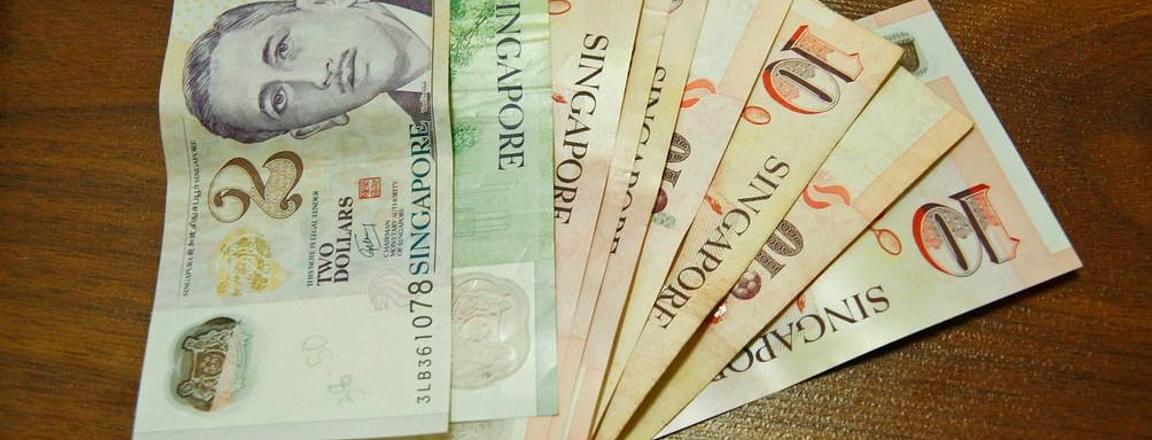
Singapore Dollar (SGD) Overview
The official currency of Singapore is the Singapore Dollar (SGD). It is represented by the symbol S$. For Indian travellers, knowing the Singapore currency, current exchange rate, available denominations and payment options can make budgeting easier. Singapore accepts cards and contactless payments widely, but carrying some cash is useful for smaller purchases and local markets. This Singapore currency guide covers everything you need to know about using Singapore Dollars, exchanging money, withdrawing cash and paying by card or digital methods during your trip.
Key Takeaways
- Singapore currency is the Singapore Dollar (SGD), represented by the symbol S$.
- Carry around S$50-S$100 per person per day as cash for small purchases, local markets and cash-only vendors.
- Keep S$5, S$10 and S$20 notes handy for everyday travel expenses.
- Cards and contactless payments are widely accepted, so you do not need to carry your entire travel budget in cash.
- Compare INR to SGD exchange rates and fees before exchanging money, especially when converting a larger amount.
- Use authorised money changers and check the final SGD amount before completing an exchange.
- For Indian travellers, carrying some SGD cash plus an international debit or credit card offers flexibility for most travel expenses.
What Is the Singapore Currency?
The official currency of Singapore is the Singapore Dollar (SGD), represented by the symbol S$. The symbol helps distinguish it from other dollar currencies, such as the US Dollar (USD) and Australian Dollar (AUD). The currency is issued and managed by the Monetary Authority of Singapore (MAS), Singapore’s central bank and financial regulator.
For travellers, Singapore Dollars are used for everyday expenses such as transport, dining, shopping and entry tickets to Singapore attractions. Cards and digital payments are also widely accepted, although carrying some cash is useful for smaller purchases and local markets in Singapore.
Here’s what you need to know about Singapore currency:
Currency Details | Information |
| Currency Name | Singapore Dollar |
| ISO Code | SGD |
| Symbol | S$ |
| Central Bank | Monetary Authority of Singapore (MAS) |
| Banknotes | S$2, S$5, S$10, S$50 and S$100 |
| Coins | 5¢, 10¢, 20¢, 50¢ and S$1 |
| Decimal System | 100 cents = 1 SGD |
| Currency Type | Paper and polymer banknotes, along with metal coins |
Note: S$ 1,000 and S$ 10,000 notes are no longer issued, while existing notes remain legal tender. For everyday travel expenses, smaller denominations are generally more practical.
Singapore Dollar to INR: Current Exchange Rate
Singapore Dollar | Approx. INR |
| S$1 | ₹75.04 |
| S$5 | ₹375.20 |
| S$10 | ₹750.40 |
| S$20 | ₹1,500.80 |
| S$50 | ₹3,752.00 |
| S$100 | ₹7,504.00 |
Singapore Dollar Denominations
The Singapore Dollar (SGD) is the official currency of Singapore and is divided into 100 cents. It is issued by the Monetary Authority of Singapore (MAS).
Singapore Dollar Banknotes
- Commonly Used: S$2, S$5, S$10, S$50, S$100
- Rarely Used / Discontinued: S$ 20, S$25, S$500, S$1,000 and S$ 10,000 (older high-value notes remain legal tender but are phased out to prevent money laundering)
Singapore Coins
- Commonly Used: 5¢, 10¢, 20¢, 50¢, and S$1
- Less Common: 1¢ (discontinued from active circulation) and S$5 (rare commemorative issues)
Where to Exchange Singapore Dollars?
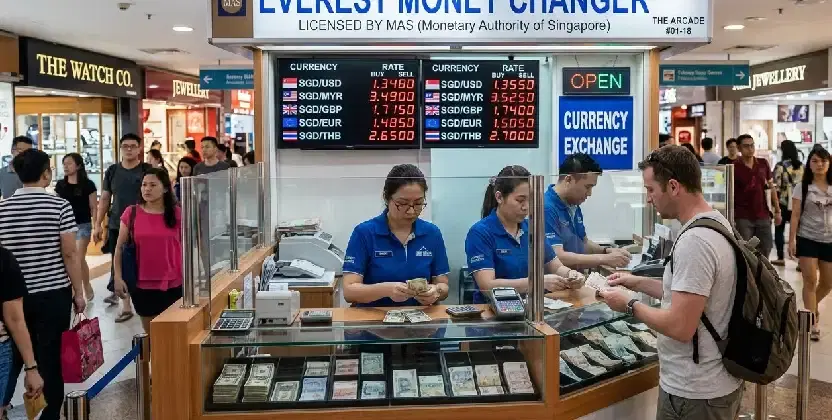
- Licensed Money Changers: The best rates are always available at licensed money changers in terms of Singapore Dollar exchange rates. Look for the MAS license displayed prominently – it's your guarantee of legitimacy.
- Banks (Convenient but Pricier): Local banks like DBS, OCBC, and UOB provide currency exchange during business hours. International banks such as HSBC and Citibank also serve account holders, though rates may be less favourable.
- ATMs (Good for Small Amounts): ATMs are everywhere in Singapore and offer decent exchange rates for international cards. Just watch out for your home bank's foreign transaction fees.
- Airport Exchange (Emergency Only): Changi Airport has multiple currency counters, perfect for immediate needs, but expect to pay premium rates for the convenience.
Can You Use Indian Rupees in Singapore?
Indian Rupees (INR) are generally not accepted for everyday payments in Singapore. Most shops, restaurants, attractions and transport services charge in Singapore Dollars (SGD). Some currency exchange counters may accept INR and convert it into SGD, but the exchange rate and fees can vary.
For a smoother trip, travellers from India should carry some Singapore Dollars or use an international debit/credit card. It is also useful to keep a small amount of cash for smaller purchases, although cashless payments are widely available in Singapore.
Digital Payments: Singapore's Tech-Savvy Side
Online payments are widely accepted in Singapore. The city-state has embraced cashless transactions like few other places in the world. Some of the popular digital payment options are PayNow, GrabPay, PayLah, Google Pay & Apple Pay.
Can You Use Credit and Debit Cards in Singapore?
Yes, credit and debit cards are widely accepted in Singapore, especially at hotels, shopping malls, restaurants, attractions and major retailers. Visa and Mastercard are commonly accepted, while contactless payments are convenient for many everyday purchases.
For travellers from India, an international debit or credit card can reduce the need to carry large amounts of cash. However, check with your bank for foreign transaction fees, currency conversion charges and international usage settings before your trip.
Traveller tip: Carry some Singapore Dollars (SGD) as a backup for small shops, markets and places that may prefer cash.
Cash vs Card in Singapore

Singapore tourism widely accepts digital payment methods in shopping malls and restaurants. However, some places like Hawker centres, traditional markets and small retailers prefer cash.
Factor | Cash | Card |
| Best for | Small purchases, local markets and cash-only vendors | Hotels, malls, restaurants and larger purchases |
| Convenience | Requires carrying and managing physical money | Quick and easy, especially with contactless payments |
| Acceptance | Useful where cards are not accepted | Widely accepted across Singapore |
| Transport | Useful as a backup | Convenient for many transport and travel payments |
| Small expenses | S$2, S$5 and S$10 notes are practical. | Convenient for contactless payments |
| Fees | Currency exchange rates and possible exchange fees apply. | Your bank may charge foreign transaction or currency conversion fees. |
| Security | Lost cash cannot usually be recovered. | Cards can generally be blocked if lost or stolen. |
| Traveller tip | Keep a small amount of SGD handy. | Use a card with low foreign transaction fees |
Best approach: Carry a small amount of Singapore Dollars for backup and everyday cash expenses, while using a credit or debit card for most larger purchases.
How Much Cash Should You Carry in Singapore?
You do not need to carry a large amount of cash in Singapore, as cards and contactless payments are widely accepted. For most travellers, keeping around S$50-S$100 per person per day in cash is a practical backup for small purchases, local markets and places that may not accept cards.
Travel Style | Suggested Cash | Approx. INR* |
| Budget traveller | S$30-S$50/day | ₹2,251–₹3,752 |
| Mid-range traveller | S$50-S$100/day | ₹3,752–₹7,504 |
| Family/group travel | S$100-S$150/day | ₹7,504–₹11,256 |
Traveller tip: Carry smaller denominations such as S$5, S$10 and S$20 for easier payments. Keep the rest of your travel budget on a card rather than carrying large amounts of cash.
Smart Currency Exchange Tips for Travellers
Getting the right Singapore currency exchange rate can help you make the most of your travel budget. Whether you are converting Indian Rupees (INR) to Singapore Dollars (SGD) before your trip or exchanging money after arrival, compare exchange rates and fees before making a transaction.
Where to Exchange Currency
- Chinatown: Money changers around People's Park Complex are popular for competitive rates.
- Little India: Serangoon Road has several currency exchange options.
- Orchard Road: Convenient for travellers staying nearby, although rates can vary.
- Raffles Place: Several options are available in this business district.
Before Exchanging Money
- Check the current INR to SGD exchange rate to understand the approximate value of your money.
- Compare the rates offered by more than one authorised money changer.
- Ask about fees or commissions before confirming the transaction.
- Check the final SGD amount you will receive before handing over your money.
- Avoid exchanging a large amount at the airport unless you need cash immediately.
While Exchanging Money
- Count the cash carefully before leaving the counter.
- Keep the exchange receipt until you have confirmed the amount received.
- Use authorised and reputable money changers.
- Check the notes for damage or unusual markings before accepting them.
Singapore Currency Tips for Indian Travellers
- Know the exchange rate: Use the current INR-to-SGD rate as a reference before exchanging money. Rates offered by banks and money changers may differ.
- Carry some SGD: Keep a small amount of cash for markets, small purchases and places that may not accept cards.
- Use smaller denominations: S$5, S$10 and S$20 notes are convenient for everyday spending.
- Use an international card: Credit and debit cards are widely accepted in Singapore. Check your bank's foreign transaction and currency conversion fees before travelling.
- Compare exchange rates: Check more than one authorised money changer before exchanging a large amount of INR.
- Avoid exchanging too much at the airport: Airport counters are convenient but may not offer the most competitive rates.
- Keep a backup payment option: Carry a second card or some emergency cash in case your primary payment method does not work.
- Check your card settings: Enable international transactions before leaving India and confirm your bank's applicable charges.
- Keep exchange receipts: They can help you track your spending and verify the amount exchanged.
- Don't rely entirely on cash: Singapore has widespread cashless payment options, so carrying your entire travel budget in SGD is usually unnecessary.
Conclusion: Singapore Currency Guide for Indian Travellers
Understanding Singapore currency makes it easier to plan your budget before and during your trip. If you are considering Singapore tour packages, carrying around S$50-S$100 in cash per person per day is a practical option. Keep smaller denominations for everyday expenses and use an international debit or credit card for larger payments.
Before exchanging INR, compare the SGD exchange rate and applicable fees, and check the final amount you will receive. With a mix of cash and card payments, you can manage expenses for transport, dining, shopping and Singapore attractions without carrying your entire travel budget in cash.
FAQs
1. Which currency is used in Singapore?
A: Singapore uses the Singapore Dollar (SGD). Its symbol is S$, and 1 Singapore Dollar is divided into 100 cents.
2. What is the Singapore Dollar to INR exchange rate?
A: The SGD to INR exchange rate changes daily. Check the latest rate before exchanging money, as the amount you receive can vary depending on the provider and applicable fees.
3. Is INR accepted in Singapore?
A: Indian Rupees are generally not used for everyday payments in Singapore. Travellers should exchange INR for Singapore Dollars or use an international card.
4. Is cash needed in Singapore?
A: Cards and digital payments are widely used, but carrying some Singapore dollars is useful for smaller purchases and places where cash is preferred.
5. Can I use my Indian debit or credit card in Singapore?
A: Yes, international Visa and Mastercard cards are widely accepted. Check your bank's foreign transaction and currency conversion fees before travelling.
6. Where can I exchange INR for SGD in Singapore?
A: You can exchange INR at licensed money changers, banks and other authorised currency-exchange providers. Compare the exchange rate and fees before completing the transaction.
7. What is 1 SGD in Indian rupees?
A: The value of 1 SGD in Indian rupees changes with the exchange rate. Check the latest INR-to-SGD rate before exchanging money or planning your travel budget.
8. Is it better to exchange INR for SGD in India or Singapore?
A: Compare the exchange rates and fees offered by authorised providers in both India and Singapore. Consider the final SGD amount you will receive rather than the displayed rate alone.
9. How much cash should I carry to Singapore?
A: Carrying around S50–S100 per person per day is a practical cash backup for small purchases, local markets and places that may prefer cash. Use a card for larger payments.
10. Should I carry cash or use a card in Singapore?
A: A combination of both is practical. Keep some Singapore dollars for smaller expenses and use an international debit or credit card for larger purchases.
11. What payment methods are commonly used in Singapore?11. What payment methods are commonly used in Singapore?
A: Singapore commonly accepts cash, credit and debit cards, contactless payments and digital payment options such as PayNow, GrabPay, PayLah, Google Pay and Apple Pay.
12. Can I use UPI in Singapore?
A: Some Singapore merchants may accept UPI through supported payment arrangements, but acceptance can vary. Keep a Singapore dollar cash backup and an international card for wider payment flexibility.