
- Home
- Attraction
- Bali
- Ubud
- Tourism/bali/places To Visit In Ubud
- Taman Saraswati Temple Ubud: Complete Travel Guide (2026)
Taman Saraswati Temple Ubud: Complete Travel Guide (2026)
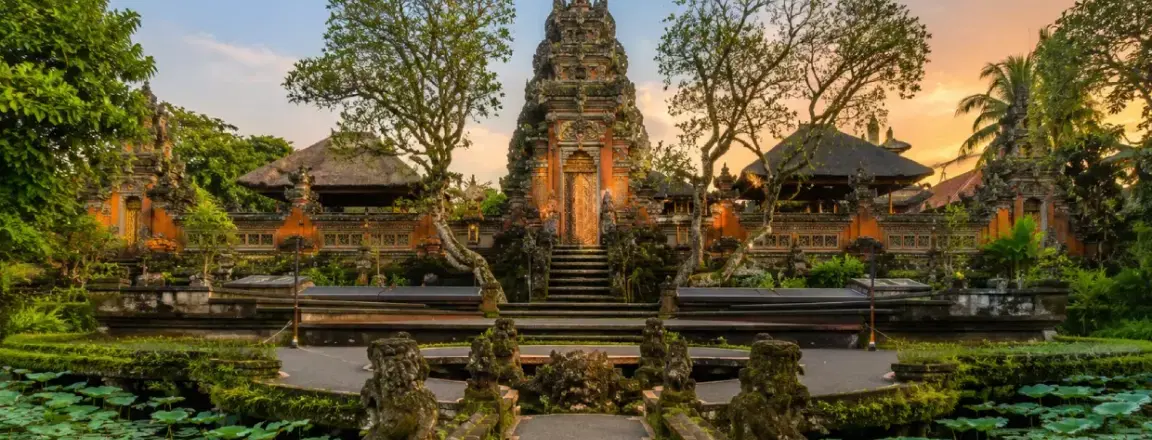
Ubud is the cultural heart of Bali, where temples, art, and daily life blend into one living experience. Right in the middle of its busy streets, cafés, and markets stands Taman Saraswati Temple, one of the most beautiful and calming spots in the town. At first glance, it feels like a hidden garden placed in the centre of chaos. If Ubud is already on your radar, it is worth knowing that most travellers explore it as part of broader Ubud tour packages that combine cultural stops like this one with beach time in Seminyak or Nusa Dua.
What makes this temple special is its lotus-pond entrance, detailed Balinese carvings, and peaceful, spiritual atmosphere. It is not a grand pilgrimage site, but a quiet cultural escape that surprises most travellers. In this guide, you'll discover its history, what to see inside, opening times, entry fees, nearby food spots, places to stay, and everything you need to plan your visit properly.
History of Taman Saraswati Temple
Taman Saraswati Temple was built between 1951 and 1952 under the patronage of the Ubud royal family, led by Prince Cokorda Gede Agung Sukawati.
The temple was designed by the renowned Balinese artist and architect I Gusti Nyoman Lempad, who played a significant role in shaping traditional Balinese art, sculpture, and architecture.
Cultural Importance
- Dedicated to the goddess Saraswati of knowledge and arts, it holds a natural place among the best temples to visit in Bali for those drawn to Bali's spiritual side.
- Represents Ubud’s identity as Bali’s cultural and artistic centre
- Built during Bali's post-World War II cultural revival period, at a time when Bali tourism was beginning to take shape around its rich cultural identity
- Reflects the Balinese philosophy of Tri Hita Karana, which emphasises harmony between humans, nature, and spirituality
Symbolism
The lotus pond at the entrance represents purity and enlightenment. The symbolism is deeply rooted in Hindu philosophy, where the lotus flower represents spiritual awakening and rising above material struggles.
What to See Inside Taman Saraswati Temple
1. Lotus Pond Walkway
The most iconic feature of Taman Saraswati Temple is the long stone pathway that runs across a lotus-filled pond. This is the first thing that captures your attention and also the most photographed part of the temple.
The setting is designed in perfect symmetry, with lotus flowers on both sides and traditional Balinese gateways in the background. The experience is not just visual but symbolic as well.
You’ll notice:
- A straight stone bridge-like walkway across water
- Fully bloomed lotus flowers during peak hours
- Reflections of temple structures in the pond
- A calm, slow-moving atmosphere despite being in central Ubud
The lotus here represents purity, spiritual awakening, and rising above worldly distractions. The symmetry of water, stone, and architecture creates a strong sense of balance.
2. Shrine of Goddess Saraswati
This is the spiritual core of the temple and reflects Ubud's identity as Bali's artistic centre. Ubud's depth as a cultural destination is also why many travellers choose to dedicate extra time here through dedicated Bali tour packages rather than passing through for just a day.
Inside and around the shrine, you will notice:
- Traditional Balinese-style shrine architecture
- Offerings placed by devotees (canang sari)
- Carved details symbolising learning and creativity
- A quiet, respectful atmosphere throughout the area
Unlike large pilgrimage temples, this space feels intimate and focused on reflection rather than rituals on a grand scale.
3. Balinese Stone Carvings
Throughout the temple complex, detailed stone carvings cover walls, pillars, and gateways. These are not decorative elements alone—they are storytelling surfaces carved in stone.
You will see:
- Scenes from Hindu mythology
- Protective guardian figures placed at key points
- Floral and geometric Balinese patterns
- Traditional motifs passed down through generations
Each carving is handmade and often takes weeks or months to complete. They reflect the deep connection between Balinese art, spirituality, and daily life that can still be seen in many places to visit in Ubud, from temples and art markets to traditional villages and galleries.
4. Split Gate Entrances (Candi Bentar)
The entrance and internal gateways are built in the traditional Balinese split style known as Candi Bentar. These gates are more than architectural features. They mark a transition in experience.
Inside the temple area, you’ll observe:
- Perfectly split symmetrical stone gates
- Intricate carvings on both sides of the structure
- A visual shift from busy Ubud streets to a calmer temple space
- A gradual sense of entering a sacred zone
Symbolically, these gates represent the journey from the outer physical world to a more spiritual and reflective space.
5. Cultural Performance Area
One of the most unique aspects of Taman Saraswati Temple is how it transforms in the evening. The open space near the lotus pond becomes a cultural performance stage.
You may experience:
- Traditional Legong dance performances
- Rotating Balinese dance forms depending on the day
- Live gamelan music accompanying performances
- A well-lit lotus pond backdrop during shows
The same space that feels quiet and reflective in the morning turns into a vibrant cultural stage at night, offering two completely different experiences in one location. Couples who plan their trips around experiences like this often find that Bali honeymoon tour packages built around Ubud evenings make for some of the most memorable nights of their trip.
Timings, Entry Fee & Prices (2026)
Opening Hours
- Temple grounds: 7:00 AM to 5:00 PM (sometimes extended until 6:30 PM depending on activities)
- Worship access: allowed for devotees beyond visiting hours in restricted areas
- Cultural performances: 7:30 PM to 8:30 PM (daily, with occasional variations depending on schedule)
Entry Fee Structure
Temple Entry
- Locals and worshippers: Free
- Foreign tourists: 35,000 to 60,000 IDR (Approximately ₹190 to ₹325 INR)
- Sarong rental (if required): 10,000 to 20,000 IDR (₹55 to ₹110 INR)
Cultural Performances
- Ticket price: 80,000 to 100,000 IDR (Approximately ₹430 to ₹540 INR)
- Tickets available at the entrance or nearby venues such as Café Lotus (sometimes with minimum dining requirements)
Best Time to Visit Taman Saraswati Temple
Morning (7:00 AM to 9:00 AM)
Morning is the best time to visit. The temple is calm with very few visitors. You can explore at your own pace and enjoy the lotus pond in soft natural light.
Evening (6:30 PM to 8:30 PM)
Evening is ideal for cultural performances. Traditional dance, music, and lights make the temple look more vibrant and magical.
Midday (To Avoid)
Midday is not recommended due to strong heat, crowds, and harsh lighting, which reduces the overall experience.
How to Reach Taman Saraswati Temple
Taman Saraswati Temple is located right in central Ubud, so you do not need any special transport to reach it once you are in town.
By Walking (Best Option in Ubud)
- 2 minutes' walk from Ubud Palace
- 3 to 5 minutes' walk from Ubud Market
- Easily reachable from cafés, shops, and hotels in central Ubud
If you are staying in central Ubud, you can simply walk here as part of a relaxed sightseeing route.
From Nearby Areas (By Taxi or Scooter)
- Around 1.5 hours from Seminyak (approximately 30 to 45 km depending on traffic)
- Around 1.5 hours from Ngurah Rai International Airport
Note: Traffic in Bali can be slow, especially during peak hours, so travel time may vary.
Travel Tip: The temple is best experienced as part of a walking tour in Ubud. You can easily combine it with Ubud Palace, Ubud Market, and nearby cafés for a smooth and enjoyable half-day itinerary.
Food Experiences Near Taman Saraswati Temple
The area around Taman Saraswati Temple is one of the most active food and café zones in central Ubud. Since it is located near Ubud Palace and the main market, you can easily find everything from traditional Balinese meals to modern cafés. It is a great place to take a break before or after exploring the temple.
What You Can Expect Nearby
- Traditional Balinese warungs serving local dishes like nasi campur, satay, and fried rice
- Vegan and vegetarian cafés offering smoothie bowls, salads, and plant-based meals
- Artisan coffee shops serving freshly brewed Balinese coffee and espresso drinks
- Organic wellness cafés focused on healthy, light, and fresh ingredients
Recommended Restaurants Near Taman Saraswati Temple
- Café Lotus – Located right beside the temple with direct views of the lotus pond and cultural performances.
- Watercress Ubud – A popular café known for healthy breakfasts, smoothie bowls, and fresh salads.
- Seniman Coffee Studio – Speciality coffee shop serving high-quality Balinese coffee in a modern, creative space.
- Ibu Rai Restaurant – Traditional Indonesian restaurant with garden seating and authentic Balinese dishes.
- Suka Espresso – Trendy café offering Western breakfasts, burgers, and strong coffee in a casual setting.
Cultural Etiquette at Taman Saraswati Temple, Ubud: Rules, Dress Code & Visitor Guidelines
- Wear a sarong when entering the temple premises
- Cover your shoulders and knees as a sign of respect
- Maintain silence inside sacred areas
- Do not enter restricted or prayer-only zones
- Respect ongoing rituals and local customs
Conclusion
Taman Saraswati Temple is one of those places in Ubud tourism that stays with you even after you leave. It is calm, beautiful, and full of meaning without feeling overwhelming. The lotus pond, history, and evening performances together create a simple but memorable cultural experience. If you are walking through central Ubud, this is a stop that adds real depth to your trip in just a short visit.
FAQs
1. Is the Taman Saraswati Temple in Ubud free to enter?
Yes, temple entry is usually free or donation-based for locals, while foreign visitors may pay around 35,000–60,000 IDR (₹190–₹325 approx.), including a sarong if required.
2. What is the Taman Saraswati Temple in Ubud famous for?
It is famous for its lotus pond walkway, beautiful Balinese architecture, and evening traditional dance performances.
3. What is the best time to visit Taman Saraswati Temple, Ubud?
Morning (7:00–9:00 AM) is best for peace and photography, while evening (6:30–8:30 PM) is best for cultural performances.
4. How much time is needed at Taman Saraswati Temple, Ubud?
Most visitors spend around 30 to 60 minutes exploring the temple and enjoying the lotus pond area.
5. Are there cultural performances at Taman Saraswati Temple every day?
Yes, traditional Balinese dance performances are usually held daily in the evening, but the type of dance may vary by day.