
- Home
- Attractions
- Japan
- Jigokudani Monkey Park Nagano: Snow Monkeys, History, Timings & Complete Visitor Guide
Jigokudani Monkey Park Nagano: Snow Monkeys, History, Timings & Complete Visitor Guide
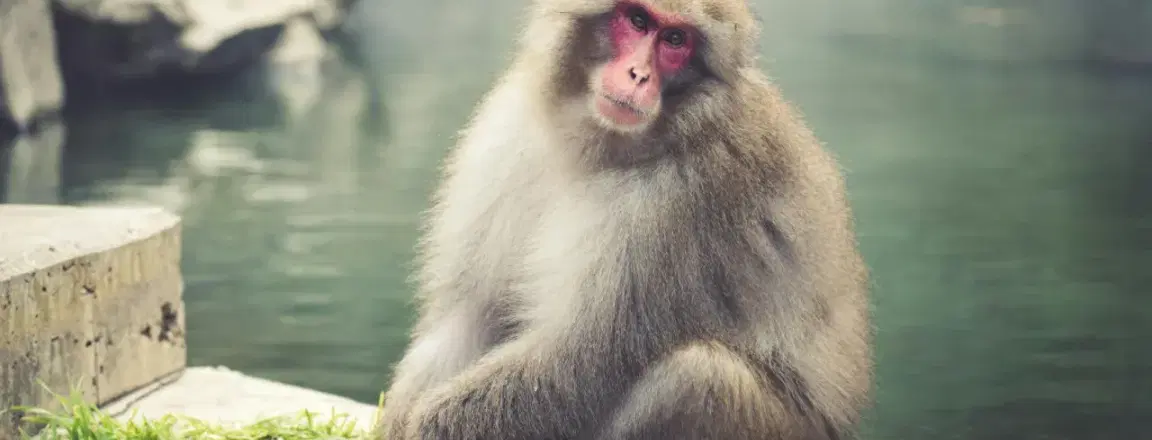
Nagano’s mountains in Japan are known for deep snow, steaming hot springs, and dramatic alpine scenery. But nothing captures Japan’s wild beauty quite like the snow monkeys of Jigokudani Monkey Park.
Located in the forested valley of Yamanouchi, this unique wildlife park is famous for Japanese macaques that soak in natural hot springs during winter. Unlike temples or shrines, this experience is raw, natural, and immersive. You are stepping into the monkeys’ habitat, not the other way around. If you are planning a Nagano itinerary during your trip to Japan or adding unique experiences to your Japan travel guide, Jigokudani Monkey Park is an unforgettable stop.
Jigokudani Monkey Park History
The park officially opened in 1964 to protect local Japanese macaques (also known as snow monkeys) and reduce conflicts between monkeys and nearby farming communities.
The name “Jigokudani” translates to “Hell Valley,” inspired by the steaming vents and harsh winter landscape. Despite the dramatic name, the valley is peaceful and beautiful. The monkeys began using the hot springs decades ago, and today they are the only wild monkeys in the world known to bathe regularly in natural onsen.
Interesting Fact: The species found here is the Japanese macaque, the northernmost-living non-human primate in the world.
Read more: Affordable Ryokans in Japan
Jigokudani Monkey Park Location
- Address: 6845 Hirao, Yamanouchi, Shimotakai District, Nagano 381-0401, Japan
The park is located in Yamanouchi town, near the popular onsen area of Shibu Onsen.
It pairs well with:
- Shibu Onsen stay (traditional ryokan experience)
- Zenko-ji Temple in Nagano
- Snow activities in the Japanese Alps
Read more: Skiing in Japan
What to See at Jigokudani Monkey Park
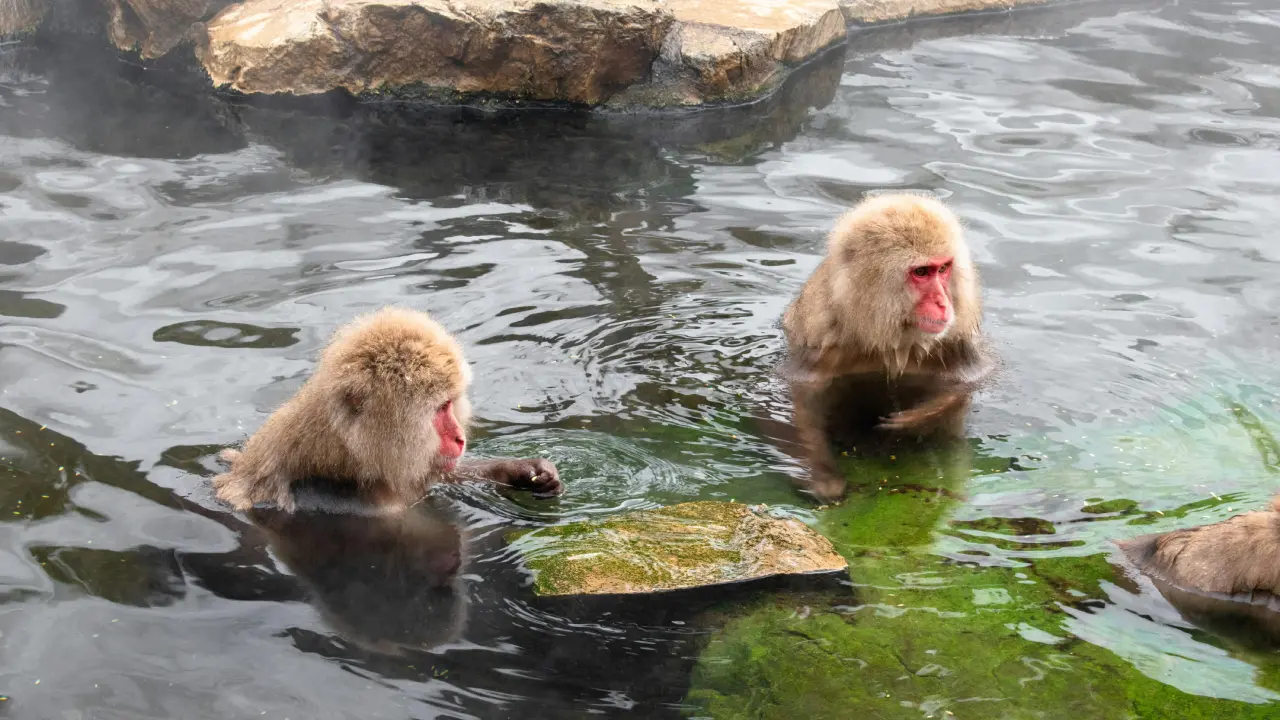
1. Snow Monkeys in the Hot Spring
The main attraction at Jigokudani Monkey Park is watching macaques relax in the steaming onsen. In winter, when temperatures drop below freezing, the contrast between snow-covered trees and warm rising steam creates iconic photo moments.
The monkeys are completely wild. They are not caged, and there are no barriers between visitors and animals, though touching or feeding them is strictly prohibited.
2. Forest Walking Trail
To reach the park, visitors walk approximately 1.6 km (30–40 minutes) through a scenic forest trail. In winter, the snow-covered path feels magical. In autumn, the foliage adds vibrant colours.
3. Baby Monkeys (Spring Highlight)
Spring is a wonderful time to visit if you want to see newborn macaques playing and interacting with their families.
4. Jigokudani Valley Scenery
Even outside peak winter, the valley itself is stunning. Steam vents, rocky cliffs, and river streams give the area a dramatic alpine atmosphere.
Jigokudani Monkey Park Entrance Fee & Opening Hours
Jigokudani Monkey Park Ticket Price:
- Adults: ¥800 (approx. ₹460–₹480)
- Children: ¥400 (approx. ₹230–₹250)
Opening Hours:
- Summer (approx. April–October): 8:30 AM – 5:00 PM
- Winter (approx. November–March): 9:00 AM – 4:00 PM
Note: Hours may vary slightly depending on weather conditions.
Best Time to Visit Jigokudani Monkey Park
Best Season
Winter (December–February) - This is the most iconic time. Snow-covered landscapes and steaming monkeys create postcard-perfect scenes.
Spring (April–May) - Fewer crowds and baby monkeys.
Autumn (October–November) - Beautiful foliage and cooler weather.
Summer is lush and green, but monkeys may not spend as much time in the hot spring.
Best Time of Day
- Early morning: Fewer crowds
- Late afternoon: Softer light for photography
Midday can get busy, especially during the peak winter season.
Crowd Expectations
Winter attracts international visitors, especially from Tokyo and ski resorts in Nagano. However, because the park is spacious and outdoors, it rarely feels overwhelmingly crowded.
Weekends and January–February are the busiest.
How to Reach Jigokudani Monkey Park
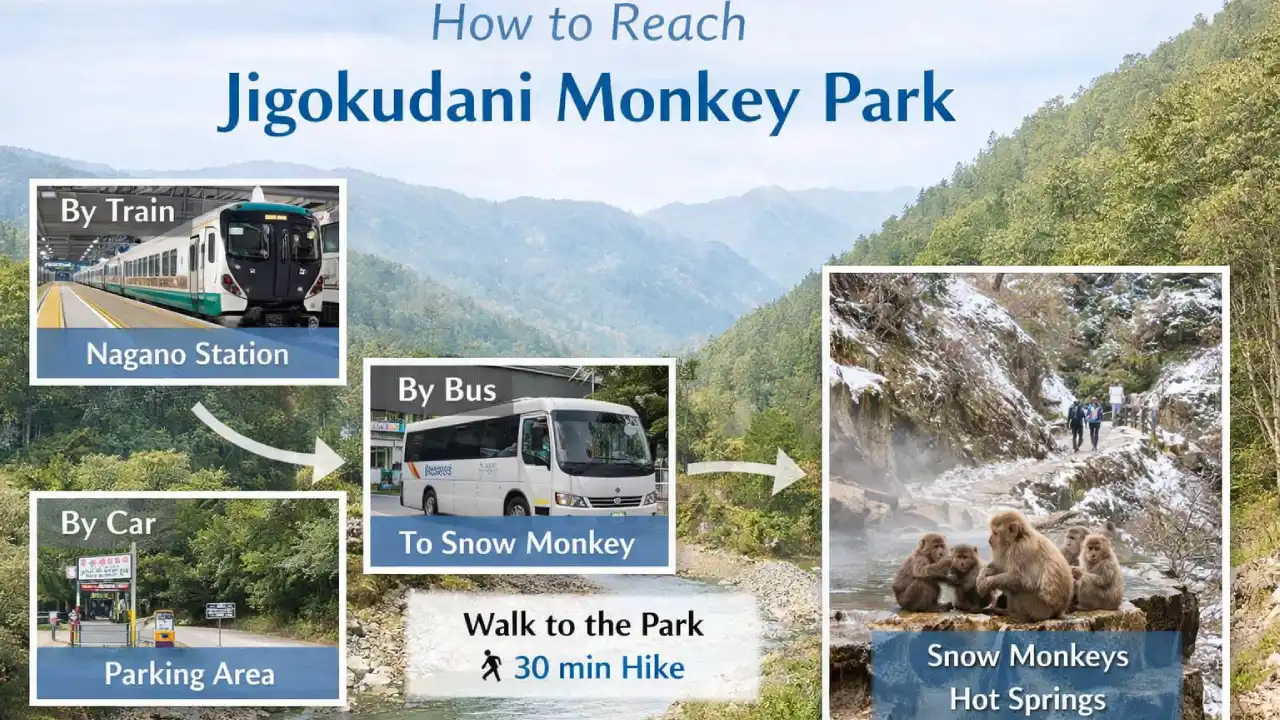
From Tokyo
Take the Hokuriku Shinkansen to Nagano Station (~1.5 hours), then:
- Nagano Dentetsu Line to Yudanaka Station
- Local bus to Kanbayashi Onsen
- 30–40 minute forest walk to the park
Total travel time: Approximately 3–3.5 hours.
From Nagano City
- Train to Yudanaka Station (~45 minutes)
- Bus + walking trail
Driving is possible, but winter roads may be snowy.
Where to Stay Near Jigokudani Monkey Park
Traditional Ryokan Experience
Stay in Shibu Onsen for authentic Japanese hospitality and onsen baths.
Nearby Areas
- Yudanaka Onsen
- Nagano City (larger hotel options)
Many travellers combine the monkey park with a one-night onsen stay for a complete alpine experience.
What to Know Before Visiting
- Wear waterproof boots in winter (snow can be deep).
- The trail may be slippery; walk carefully.
- Do not touch or feed the monkeys.
- Keep a safe distance, especially from mothers with babies.
- Bring cash for tickets.
- Allow at least 2–3 hours, including travel from nearby towns.
Important: This is a wildlife park, not a zoo. Monkeys may leave the hot spring area occasionally.
Why Jigokudani Monkey Park Is Worth Visiting
Jigokudani Monkey Park offers something rare: a chance to observe wildlife in a natural setting against a dramatic winter backdrop. Watching snowflakes fall as macaques soak peacefully in steaming water feels almost surreal.
It is not just about photography. It is about witnessing adaptation, resilience, and the quiet beauty of Japan’s alpine countryside. For travellers seeking unique experiences beyond Tokyo and Kyoto, this park adds depth and contrast to any Japan tour package.
FAQs
1. Where exactly is Jigokudani Monkey Park located in Japan?
Jigokudani Monkey Park is located in Yamanouchi town in Nagano Prefecture, central Japan. It sits inside the Jigokudani Valley near Shibu Onsen, about 3–3.5 hours from Tokyo by train.
2. How do you get to Jigokudani Monkey Park from Tokyo?
From Tokyo:
- Take the Hokuriku Shinkansen to Nagano Station (~1.5 hours).
- Take the Nagano Dentetsu Line to Yudanaka Station (~45 minutes).
- Board a local bus to Kanbayashi Onsen.
- Walk 30–40 minutes along the forest trail to the park.
Total travel time: Approximately 3–3.5 hours.
3. How much is the entrance fee to Jigokudani Monkey Park (in INR)?
- Adults: ¥800 (approx. ₹460–₹480)
- Children: ¥400 (approx. ₹230–₹250)
Prices may vary slightly depending on exchange rates.
4. Why are the snow monkeys bathing in hot springs?
The Japanese macaques use the hot spring primarily in winter to stay warm when temperatures drop below freezing. This adaptive behaviour has made them famous as the only wild monkeys in the world known to bathe regularly in natural onsen.
5. What is the best time to see snow monkeys in Japan?
The best time to see monkeys soaking in hot springs is December to February, when snow covers the valley.
For fewer crowds and baby monkeys, visit in April or May. In summer, monkeys are still present but may spend less time in the hot spring.
6. How long should I plan for Jigokudani Monkey Park?
- 30–40 minutes forest walk (one way)
- 1–2 hours inside the park
Total visit time: 2–3 hours minimum. If travelling from Tokyo as a day trip, plan for a full-day excursion.
7. Is Jigokudani Monkey Park worth visiting in summer?
Yes, but the experience is different. Summer offers lush greenery and fewer crowds, though you may not see monkeys bathing as frequently. Winter provides the iconic snowy hot spring scenes.
8. Can visitors touch or feed the snow monkeys?
No. The monkeys are wild animals. Visitors are strictly prohibited from touching, feeding, or approaching them too closely. Photography is allowed, but flash should be avoided.
9. Is the walk to Jigokudani Monkey Park difficult?
The 1.6 km forest trail is moderately easy but can be slippery in winter. Waterproof boots with a good grip are strongly recommended during snowy months.
10. Can you visit Jigokudani Monkey Park as a day trip from Tokyo?
Yes, it is possible as a long day trip (around 7–8 hours total travel + visit time). However, many travellers prefer staying overnight in Shibu Onsen or Nagano to make the experience more relaxed.
11. Are the snow monkeys there all year round?
Yes. The monkeys live in the valley year-round. However, their hot spring activity is most frequent during colder months.
12. Is Jigokudani Monkey Park suitable for children and elderly travellers?
Yes, but winter conditions (snow and ice) can make the trail challenging for very young children or elderly visitors. In non-winter months, the walk is manageable for most fitness levels.
13. When is the least crowded time to visit?
- Early morning (right after opening)
- Weekdays outside January–February peak
- Spring and autumn shoulder seasons
Avoid mid-day visits in peak winter.
14. Is Jigokudani Monkey Park ethical and safe?
Yes. The monkeys are not caged and live freely in their natural habitat. The park follows wildlife-friendly practices and does not allow direct human interaction.