
- Home
- Palace of Versailles: Complete Visitor Guide 2026
Palace of Versailles: Complete Visitor Guide 2026

Imagine walking through grand royal halls, standing beneath glittering chandeliers, and stepping into gardens that seem to stretch endlessly. That is the experience waiting for you at the Palace of Versailles. Just outside Paris, this former royal residence lets you see how French kings once lived in extraordinary luxury. With 10 million visitors every year, it is one of the most visited monuments in France.
From the iconic Hall of Mirrors to the vast formal gardens, every corner has a story to tell. Before planning a visit, you must go through this guide. If you’re exploring France tour packages, Versailles is an easy addition to your itinerary. In this guide, we’ve covered all about the Palace of Versailles, including tickets, timings, how to get there, must-see attractions, and tips for a smooth day trip from Paris.
Key Takeaways
- The Palace of Versailles is a 20-kilometre train ride from central Paris and can be done as a half-day or full-day trip.
- 2026 brought new ticket pricing: the Passport ticket (covering the whole estate) costs €25 in low season and €35 in high season.
- Timed entry is now mandatory for every ticket type, including free admission, so booking ahead is not optional anymore.
- The Palace, Gardens, and Estate of Trianon run on three different schedules, and missing this trips up most first-time visitors.
- A full visit covering the Palace, Gardens, and Trianon Estate needs 6 to 7 hours, so plan it as a dedicated day rather than a quick stop.
Why the Palace of Versailles Is a Must-Visit in France
Wondering why Versailles deserves a spot on your France itinerary? Here’s what makes it so popular:
- Royal grandeur: Explore lavish rooms, royal apartments, and ornate interiors.
- Hall of Mirrors: See the palace’s most iconic room, famous for its chandeliers and grand mirrors.
- Magnificent gardens: Wander through vast formal gardens, fountains, and landscaped pathways.
- Rich history: Discover the world of Louis XIV and major moments in French history.
What Is the Palace of Versailles?

The Palace of Versailles is a former royal residence just outside Paris and one of the most famous landmarks in France. Originally a hunting lodge, Louis XIV transformed it into a magnificent palace and the centre of French royal power. Today, it stands as a museum and UNESCO World Heritage Site. Additionally, it is widely considered one of the finest examples of French Baroque architecture in the world.
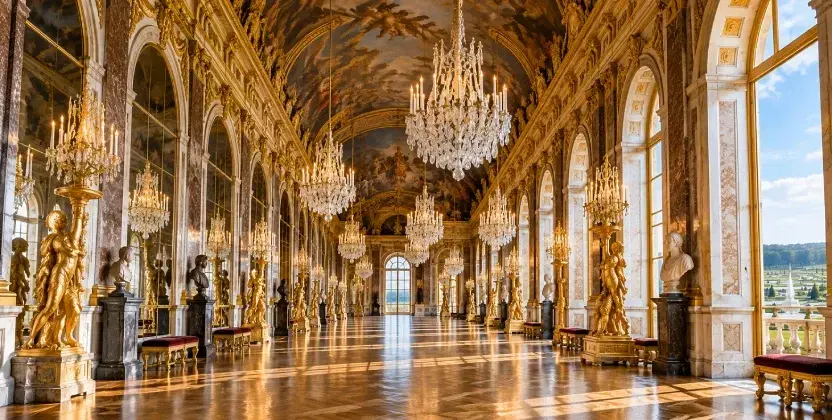
The estate covers 63,154 square metres of palace interior alone, with over 2,300 rooms. The most famous highlight is the Hall of Mirrors. It is a 73-metre gallery lined with 357 mirrors, originally built to reflect the gardens outside and project the wealth of the French monarchy to visiting dignitaries.
Where Is the Palace of Versailles?
The Palace of Versailles is located in the town of Versailles, roughly 20 km southwest of central Paris, France. It takes about 40 minutes to an hour to reach by train from central Paris.
Most visitors treat Versailles as a half-day or full-day trip from Paris rather than a standalone destination, since it sits close enough for a same-day return.
Palace of Versailles Ticket Price 2026
The standard passport ticket to the Palace of Versailles costs €35 (≈₹3,500) during the high season and €25 (≈₹2,500) during the low season in 2026. Prices can vary based on the season, ticket type, and visitor eligibility. If you’re travelling from India, check the ticket category that applies to you before booking.
2026 Versailles Ticket Pricing Overview
Ticket Type | High Season (Apr 1–Oct 31) | Low Season (Nov 1–Mar 31) | Best For |
| Passport Ticket (Standard) | €35 (≈₹3,500) | €25 (≈₹2,500) | Palace, Trianon Estate and Gardens |
| Passport Ticket (EEA Reduced) | €32 (≈₹3,200) | €22 (≈₹2,200) | Eligible EEA nationals or residents |
| Late Admission Passport | €28 (≈₹2,800) after 4 PM | €18 (≈₹1,800) after 3 PM | Travellers looking for a shorter, budget-friendly visit |
| Estate of Trianon Only | €15 (≈₹1,500) | €15 (≈₹1,500) | Trianon Estate and Marie-Antoinette’s domain |
| Musical Gardens / Fountains | €15 (≈₹1,500) | Free | Visitors focusing mainly on the gardens |
Tip: If it’s your first visit, the Passport Ticket is usually the most comprehensive option, as it covers the main highlights of the Versailles estate.
Palace of Versailles Opening Hours
The Palace of Versailles is open Tuesday through Sunday and closed every Monday. Opening hours vary between the main Palace, the Estate of Trianon, and the Gardens.
Section | Hours |
| Palace (April-October) | 9 AM - 6:30 PM, last entry 6 PM |
| Palace (November-March) | 9 AM - 5:30 PM |
| Gardens | 8 AM daily, including Mondays when the Palace is closed |
| Estate of Trianon (weekdays) | 12 PM - 6:30 PM |
| Estate of Trianon (weekends) | 9 AM - 6:30 PM |
The Palace is closed every Monday, plus January 1, May 1, and December 25. The Gardens stay open on Mondays even when the Palace does not, which makes Monday a good day for a garden-only visit if your schedule is tight.
Things to do in the Palace of Versailles, France
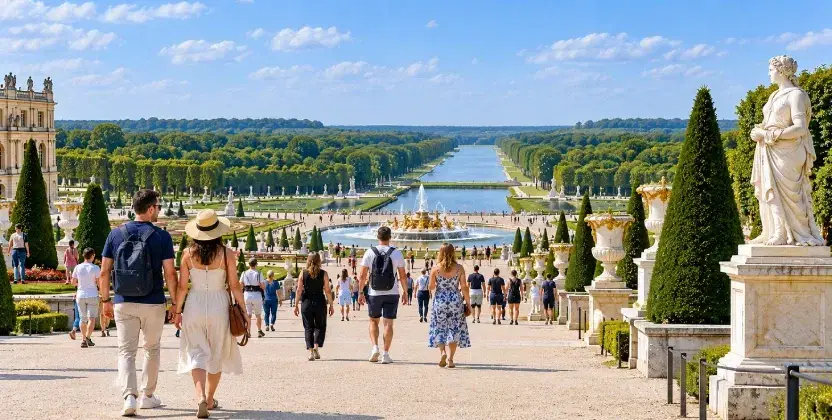
The Palace of Versailles spans over 800 hectares, offering far more to see than just the main castle walls. To help you maximise your time, here are the absolute best things to do during your visit, broken down by section.
Walk Through the Hall of Mirrors
This is the undisputed crown jewel of the palace. Walk the 73-metre gallery to admire 357 mirrors facing 17 arched windows overlooking the gardens. Look up to see Charles Le Brun's massive ceiling paintings depicting the military victories of Louis XIV.
Tour the King’s State Apartments
Explore the seven prestigious rooms used by the King to host official evening gatherings. Each room is dedicated to a Roman god and features heavy marble, velvet draperies, and intricately carved gold moulding.
Step Into the Queen’s Bedchamber
See where Marie Antoinette and other French queens lived and slept. The room has been meticulously restored to show the exact floral silk textiles and golden canopy bed used right before the French Revolution.
Admire the Gallery of Great Battles
This massive hall is the largest room in the entire palace. It covers nearly an entire floor of the South Wing and displays 33 monumental paintings showcasing 1,500 years of French military victories.
Explore the Palace of Versailles Gardens
Walk through the perfectly manicured, geometric hedges designed by André Le Nôtre. Look closely for the hidden bosquets (groves), miniature open-air labyrinth rooms tucked behind the trees, which used to host secret royal parties.
Watch the Musical Fountains Show
If you visit between April and October, book a ticket for the Musical Fountains Show. The estate turns on hundreds of historic water fountains, timed perfectly to the rhythm of Baroque classical music. Do not miss the spectacular Latona Fountain or the Apollo Fountain.
Row a Boat on the Grand Canal
Rent a rowboat on the cross-shaped Grand Canal, located at the edge of the gardens. It offers a relaxing break from walking and provides an incredible, unobstructed perspective look back at the main palace.
Visit the Grand Trianon
Walk 25 minutes into the park to find this elegant palace made of pink Languedoc marble. Louis XIV built it to escape the strict etiquette of court life and spend time with his mistress.
Wander Marie Antoinette’s, Fairytale Hamlet
This is a must-see rustic mock-village built for Mmock Villagette to escape her royal duties. Walk around the quiet lake to see thatched-roof cottages, a working windmill, a dairy, and an active farmhouse with animals.
How to Get Around Versailles: Transport Options & Tips
Because the estate is massive, you can choose how to get between the Château and the Hamlet:
- The Little Train (Petit Train): A hop-on, hop-off shuttle tram connecting the palace, Grand Trianon, and the Grand Canal.
- Golf Cart Rental: Electric vehicles are available for rent right beside the water parapets.
- Bike Rental: Rent a bicycle near the Grand Canal to explore the wider, forested park trail
How Much Time Do You Need at Versailles?
Wondering how long to spend at the Palace of Versailles? Plan for at least 4–5 hours to see the main highlights without rushing.
- 2–3 hours: Enough for the Palace and the famous Hall of Mirrors.
- 4–5 hours: Ideal for the Palace, Gardens, and a quick visit to the Trianon Estate.
- Full day: Best if you want to explore the gardens, Trianon Estate, fountains, and Park at a relaxed pace.
- Best tip: Start early and wear comfortable shoes, as the estate is vast and involves plenty of walking.
How to Reach the Palace of Versailles
The Palace of Versailles is around 20 km from central Paris, making it an easy day trip. You can reach the palace by train, bus, car, or taxi, depending on your budget and convenience.
- By RER C: Take the RER C from central Paris to Versailles Château–Rive Gauche, then walk around 10 minutes to the palace.
- By SNCF train: Trains from Paris Montparnasse stop at Versailles-Chantiers, about a 20-minute walk from the palace.
- By bus: Take Bus 171 from Pont de Sèvres directly towards Versailles.
- By taxi: A taxi or ride-hailing service takes around 30–45 minutes, depending on traffic.
- By car: Drive from central Paris via the A13; parking is available near the palace and throughout the estate.
- Best option for most travellers: The RER C is generally the easiest and most affordable way to reach Versailles from Paris.
Essential Tips For Visiting the Palace of Versailles
A little planning can make your Versailles visit much easier. The estate is enormous, so these practical tips can help you save time, avoid crowds, and explore comfortably.
- Book online: Reserve your timed-entry ticket in advance, especially during peak season.
- Choose the right ticket: Pick a Passport Ticket if you want to explore the Palace, Gardens, and Trianon Estate.
- Check free-entry rules: Some visitors may qualify for free admission but still need a timed-entry reservation.
- Check garden charges: Musical Fountain and Musical Gardens events may require a separate ticket on selected days.
- Arrive early: Reach before the main crowds build up for a more relaxed Palace visit.
- Avoid peak hours: Late morning is generally the busiest period.
- Consider a late visit: Arriving later in the afternoon can help you avoid some tour-group crowds.
- Wear comfortable footwear: Expect plenty of walking across gravel paths, paved areas, and large gardens.
- Use the official app: Download the Château de Versailles app before your visit for maps, information, and audio-guide features.
Conclusion: Why Versailles Belongs on Every France Itinerary
The Palace of Versailles is regularly listed among the top reasons to visit France, alongside the Eiffel Tower, the Louvre, and Notre-Dame Cathedral. It gives you a chance to step into French royal history while exploring the magnificent Hall of Mirrors, royal apartments, vast gardens, Grand Trianon, and Marie Antoinette’s Hamlet.
With convenient train connections from Paris and enough attractions to fill half a day or even a full day, Versailles fits easily into most France itineraries. Whether you’re travelling as a couple, with family, or exploring France as part of a longer European trip, adding Versailles lets you experience the grandeur, history, and architecture that make France so unforgettable.
Frequently Asked Questions
What is famous about the Palace of Versailles?
The Palace of Versailles is famous for its royal history, grand Baroque architecture, Hall of Mirrors, lavish royal apartments, and expansive formal gardens. It was transformed by Louis XIV from a hunting lodge into a centre of French royal power.
Where is the Palace of Versailles located?
The Palace of Versailles is in the town of Versailles, around 20 km southwest of central Paris. It takes roughly 40 minutes to an hour by train from central Paris.
Which is bigger, Versailles or the Louvre?
The provided content does not give a direct size comparison between the Palace of Versailles and the Louvre.
How much do Palace of Versailles tickets cost in 2026?
The standard Passport Ticket costs €35 (≈₹3,500) during the high season and €25 (≈₹2,500) during the low season. It covers the Palace, Gardens, and Trianon Estate.
How can I book Palace of Versailles tickets online?
You should book a timed-entry ticket online in advance, particularly during peak season. Timed entry is mandatory, including for visitors eligible for free admission.
Can I visit Marie Antoinette’s estate at Versailles?
Yes. The Estate of Trianon includes Marie Antoinette’s Hamlet, a rustic village with thatched cottages, a windmill, a dairy, and a working farmhouse.
What can I see at the Palace of Versailles Gardens?
You can explore geometric gardens, landscaped pathways, fountains, hidden bosquets, the Grand Canal, and seasonal Musical Fountain Shows.
How long do I need to spend at the Palace of Versailles?
Allow 4–5 hours to see the main highlights. A full day is better if you want to explore the Palace, Gardens, Trianon Estate, fountains, and Park at a relaxed pace.
What is the best time to visit the Palace of Versailles?
Arriving early helps you avoid the biggest crowds. You can also consider a later afternoon visit when some tour groups have left. For the Musical Fountains Show, visit between April and October and check the event schedule.
How do I get to the Palace of Versailles from Paris?
The easiest and most affordable option for most travellers is the RER C train to Versailles Château–Rive Gauche, followed by a short walk to the Palace. You can also use SNCF trains, buses, taxis, or drive.
Is the Palace of Versailles worth visiting on a trip to France?
Yes, especially if you enjoy history, architecture, royal heritage, and gardens. Since Versailles is only around 20 km from Paris, it works well as a half-day or full-day addition to a France itinerary.
Can I visit the Palace of Versailles and the Louvre on the same day?
It is possible, but not recommended. Versailles can take at least half a day, while exploring the Louvre properly also requires considerable time. Visiting them on separate days allows you to experience both without rushing.