
- Home
- Attractions
- Bali
- Besakih Temple Bali: Complete Visitor Guide to the Mother Temple of Bali
Besakih Temple Bali: Complete Visitor Guide to the Mother Temple of Bali
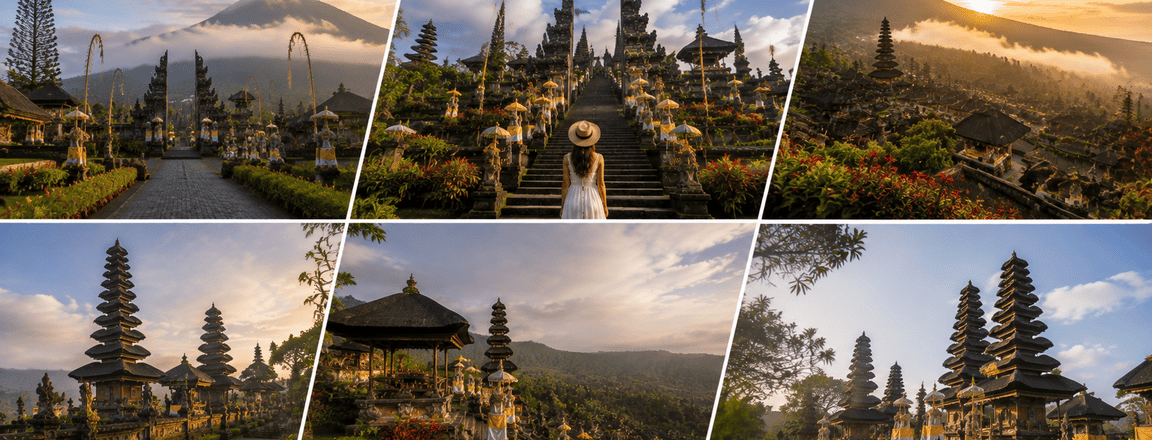
Besakih Temple, also known as Pura Besakih is the largest and most important Hindu temple complex in Bali, located on the slopes of Mount Agung in Karangasem Regency. Often referred to as the Mother Temple of Bali, it serves as a major religious centre for Balinese Hindu communities and hosts significant ceremonies throughout the year. The complex consists of 23 main temples along with numerous shrines and ceremonial structures spread across the mountainside. Due to its cultural, historical, and spiritual significance, it is one of the island’s most visited landmarks and is frequently included in a Bali tour package. This guide covers its history, attractions, timings, entrance fees, travel information, and visitor guidelines.
Quick Overview – Besakih Temple
| Category | Details |
| Location | Besakih Village, Karangasem Regency, East Bali (~1,000 m above sea level) |
| Opening Hours | 7:00 AM – 6:00 PM daily |
| Entrance Fee (2026) | Foreign adult: 150,000 IDR (≈ 825 INR) Foreign child: 80,000 IDR (≈ 440 INR) Indonesian adult: 80,000 IDR (≈ 440 INR) Indonesian child: 40,000 IDR (≈ 220 INR) |
| What's Included | Temple entry, sarong & sash rental, access to designated visitor areas |
| Parking Fees | Scooter: 5,000 IDR (≈ 28 INR) Car: 10,000 IDR (≈ 55 INR) Return shuttle: 20,000 IDR (≈ 110 INR) per person |
| Best Time to Visit | 8:00–10:00 AM (dry season: April–October) |
| Travel Time from Ubud | ~1.5–2 hours by car |
| Travel Time from Denpasar Airport | ~3–4 hours by car |
| Dress Code | Sarong + sash required (included), modest clothing covering shoulders & knees |
| Key Restriction | Women during menstruation traditionally not permitted to enter |
| Nearby Attractions | Lempuyang Temple, Tirta Gangga, Goa Lawah, Sidemen Valley |
Note: Prices and timings are based on 2026 updates and may change during major ceremonies or local government revisions.
Besakih Temple History: Origin of Pura Besakih, the Mother Temple of Bali
- Ancient Beginnings: A Javanese priest named Rsi Markandeya started the temple in the 8th century. However, local people already considered the area around Mount Agung sacred long before that.
- Growth Over Time: As Hinduism grew in Bali, leaders and followers built more structures, turning it into the island's most important religious centre.
- The Complex Today: Today, this massive site on the mountainside features 23 main temples, along with many smaller shrines and pavilions.
Unlike many historical landmarks, Besakih remains an active place of worship. Religious ceremonies are held regularly, and thousands of devotees visit throughout the year to pray and participate in important festivals. Its enduring spiritual significance and remarkable setting have also earned it recognition as one of the best temples in Bali for travellers seeking a deeper understanding of the island's culture and traditions.
Why Besakih Temple Is the Spiritual Heart of Bali
Besakih is regarded as the spiritual heart of Bali and holds a central place in Balinese Hindu life.
Its importance comes from several reasons:
- It is the largest Hindu temple complex on the island
- Major religious ceremonies take place here throughout the year
- It represents the connection between people, nature, and the divine
- It continues to function as an active place of worship
- It plays a key role in preserving Bali's religious and cultural heritage
For many Balinese Hindus, visiting Besakih is a deeply meaningful spiritual experience. The temple has also become an important cultural landmark, helping visitors understand the traditions that continue to shape modern Bali tourism, which is closely connected to the island's unique spiritual identity.
Mount Agung & Besakih Temple: Sacred Meaning of Its Location
- Sacred Mountain: The temple is on Mount Agung because Balinese Hindus believe mountains are the homes of gods and spirits. Mount Agung is the holiest mountain in Bali.
- Spiritual Journey: As you walk up the hillside, the climbing levels represent a journey from the everyday world to a higher spiritual place. This shows the Balinese goal of harmony between people, nature, and God.
Things to Do at Besakih Temple: Experiences, Rituals & Highlights
Exploring Besakih Temple is one of the must-try experiences in Bali for travellers who want to discover the island’s spiritual side. Besakih Temple offers much more than beautiful architecture, with cultural activities and unique experiences around every corner. Instead of simply looking at temples, visitors can enjoy meaningful moments that reveal the traditions and history of the island.
Attend Traditional Religious Ceremonies
Step into the heart of local traditions by watching religious ceremonies and community gatherings around Pura Penataran Agung. The large courtyards often become lively spaces filled with prayers, rituals, and cultural celebrations that showcase Balinese Hindu life.
Appreciate Traditional Balinese Architecture
Admire the craftsmanship of sacred towers while observing the famous Meru structures with their layered roofs. These iconic towers offer a chance to appreciate traditional Balinese architecture and understand their importance in local religious beliefs.
Explore Ancient Temple Pathways and Courtyards
Walk through centuries of heritage as you explore ancient pathways, stone gateways, and ceremonial courtyards. This escapade provides a closer look at one of the most fascinating historical sites in Bali, where every carving and structure tells a story from the past.
Photograph Mount Agung and Scenic Landscapes
Capture breathtaking mountain scenery while enjoying panoramic views of Mount Agung from different parts of the complex. The elevated setting creates some of the most impressive viewpoints in Bali, making it a perfect treasure for photography lovers.
Observe Traditional Offerings and Rituals
Experience authentic Balinese spirituality by observing traditional offerings, prayer rituals, and cultural processions when ceremonies take place. Watching these living traditions unfold offers a deeper understanding of the customs that continue to shape daily life in Bali.
Besakih Temple Entrance Fee 2026: Timings, Prices & Visitor Info
Opening Hours
Besakih Temple is generally open every day. Arriving early is the best way to enjoy a quieter visit.
- Opening hours: 7:00 AM to 6:00 PM
- Certain areas may have restricted access during ceremonies
- Timings can vary during major religious events
Entrance Fee
- Foreign adult: 150,000 IDR (≈ 825 INR)
- Foreign child: 80,000 IDR (≈ 440 INR)
- Indonesian adult: 80,000 IDR (≈ 440 INR)
- Indonesian child: 40,000 IDR (≈ 220 INR)
Includes: Temple entry, Sarong and sash rental (required), Entry access
Parking Fees
- Scooter parking: 5,000 IDR (≈ 28 INR)
- Car parking: 10,000 IDR (≈ 55 INR)
- Optional return shuttle: 20,000 IDR (≈ 110 INR) per person
Best Time to Visit Besakih Temple
Choosing the right time can make your visit much better. The temple feels more peaceful, the weather is nicer, and the views are clearer.
Morning (8:00 AM – 10:00 AM)
Morning is often considered the best time to visit Besakih Temple. The best times to visit are early morning before 9:00 AM or late afternoon after 4:00 PM. The calm atmosphere also helps you enjoy the temple's spiritual beauty.
Why visit in the morning?
- Cooler weather
- Fewer crowds
- Clearer views of Mount Agung
- Better lighting for photos
Late Afternoon (3:00 PM – 5:00 PM)
Late afternoon is another great time to visit. It is also a wonderful time for photography.
You can enjoy:
- Pleasant temperatures
- Beautiful golden-hour light
- Scenic mountain views
- A more relaxed atmosphere
Midday (Best Avoided)
Midday is usually the busiest and hottest part of the day at Besakih Temple. During these hours, the sun can be quite intense, especially when walking through the open courtyards and temple pathways.
You may experience:
- Strong sunlight
- Higher temperatures
- Larger tour groups
Season to Visit
Dry Season (April to October)
The dry season is generally considered the best time to visit Besakih Temple and is the most popular period among travellers.
This is the most popular time to visit because of:
- Clear skies
- Better visibility of Mount Agung
- Comfortable weather
Wet Season (November to March)
The rainy season has its own charm. The clouds and mist around Mount Agung often create a dramatic atmosphere, making the temple feel even more mystical and serene.
You can expect:
- Occasional rain showers
- Lush green landscapes
- Misty and magical views
Tip: For the best overall experience, visit before 9:00 AM or after 4:00 PM, regardless of the season. These times usually offer the most comfortable weather, fewer crowds, and the best views of both the temple complex and Mount Agung.
How to Reach Besakih Temple from Ubud, Kuta & Airport
Besakih Temple is located in Karangasem Regency, East Bali, on the sacred slopes of Mount Agung. While it is a little farther from Bali’s main tourist hubs, the journey is rewarding, taking you through scenic countryside, traditional villages, rice terraces, and mountain landscapes.
By Private Car or Taxi
The easiest and most comfortable way to reach Besakih Temple is by hiring a private car with a driver or taking a taxi.
Approximate travel times:
- Ubud: 1.5 to 2 hours
- Denpasar: Around 2 hours
- Seminyak: 2.5 to 3 hours
- Kuta: 2.5 to 3 hours
- Ngurah Rai International Airport (Denpasar): 3 to 4 hours
Travelling by private vehicle gives you the flexibility to stop at viewpoints along the way or combine your visit with nearby Bali attractions such as Tirta Gangga, Lempuyang Temple, Sidemen Valley, or Goa Lawah Temple.
By Guided Tour
Many East Bali sightseeing tours include Besakih Temple as part of a Bali 2 nights 3 days family itinerary. Guided tours are particularly useful for first-time visitors who want a deeper understanding of the temple’s history, architecture, and religious significance.
This option is ideal for travellers who prefer:
- Organised transportation
- Local guides and cultural insights
- Visits to multiple attractions in one day
- A convenient, hassle-free experience
By Scooter
For adventurous travellers, reaching Besakih Temple by scooter is also possible. However, this option is best suited to experienced riders, as some roads leading to the temple are steep, winding, and mountainous. Road conditions can become more challenging during the rainy season.
Before travelling by scooter:
- Carry a valid driving licence
- Wear a helmet and appropriate safety gear
- Check weather conditions before departure
- Drive carefully on mountain roads and sharp bends
Tip: The journey to Besakih is part of the experience. Along the way, you'll pass traditional villages, rice fields, and scenic mountain landscapes that showcase a quieter side of Bali.
Places to Visit Near Besakih Temple
- Lempuyang Temple: Famous for its iconic Gate of Heaven, this temple offers stunning views of Mount Agung and is one of Bali's most photographed locations.
- Tirta Gangga Water Palace: A beautiful royal water garden featuring ponds, fountains, stepping stones, and landscaped grounds.
- Goa Lawah Temple: Also known as Bat Cave Temple, this sacred site is built around a cave inhabited by thousands of bats.
- Sidemen Valley: A peaceful region known for rice terraces, traditional villages, and breathtaking countryside scenery.
Food Experiences Near Besakih Temple
After exploring Besakih Temple, you can enjoy a relaxing meal at one of the local eateries nearby. The area is quieter than places like Ubud or Seminyak, but it offers beautiful mountain views and authentic Balinese food.
Popular Dishes to Try
- Nasi Campur – Rice served with a mix of vegetables, meat, and traditional side dishes.
- Mie Goreng – Indonesia's famous stir-fried noodles.
- Chicken Satay – Grilled chicken skewers served with peanut sauce.
- Beef Satay or Veg Satay – Popular local options prepared with rich Indonesian spices.
- Fresh Coconut Water – Perfect for cooling down after sightseeing.
- Balinese Coffee – Strong, aromatic coffee grown in Bali's highlands.
Cultural Etiquette at Besakih Temple: Rules, Dress Code & Visitor Guidelines
Dress Code
- Cover your shoulders and knees.
- Wear a sarong and sash (included in your ticket).
- Avoid sleeveless tops and short skirts.
- Do not wear revealing clothing.
- Women during menstruation are traditionally not permitted to enter.
Visitor Guidelines
- Speak quietly within the temple grounds.
- Respect worshippers during ceremonies.
- Remain silent during religious rituals.
- Do not climb on temple structures.
- Follow instructions from temple staff.
- Listen to guidance from local custodians.
- Stay out of restricted prayer areas.
- Be mindful of ongoing ceremonies.
- Enter only designated visitor zones.
Conclusion
A visit to Besakih Temple is more than just seeing another landmark in Bali. It is a chance to experience the island’s spiritual heart, rich traditions, and stunning mountain scenery all in one place. Take time to explore the temple, enjoy local food, and respect the customs that make this site so special. If you're planning a trip to Bali, add Besakih Temple to your itinerary and experience a side of Bali that many travellers never truly discover.
FAQs
Is Besakih Temple worth visiting?
Yes. It is the most important Hindu temple in Bali, has beautiful mountain views, and is a great place to learn about local culture.
Can tourists enter Besakih Temple?
Yes, you can explore the areas meant for visitors. You just need to follow the rules and wear a sarong and sash.
How much time should I spend at Besakih Temple?
Most people stay for 1.5 to 2 hours. If you want to take your time or watch a ceremony, plan for up to 3 hours.
Do I need a guide at Besakih Temple?
No, you don't need one. However, a guide can help you understand the history and meaning of the temple.
Can I take photos inside Besakih Temple?
Yes, photos are allowed in most visitor areas. Just be respectful and do not disturb people who are praying.
What should I wear to Besakih Temple?
Wear modest clothes that cover your shoulders and knees. Your entry ticket includes a sarong and sash to wear.
Is Besakih Temple suitable for families with children?
Yes, Besakih Temple is suitable for families with children. The temple grounds are spacious, and children can learn about Bali’s culture and history while exploring the complex.
Can I visit Besakih Temple and other attractions on the same day?
Yes. You can easily visit nearby attractions like Lempuyang Temple, Tirta Gangga, Goa Lawah, or Sidemen Valley on the same trip.