
- Home
- Attractions
- Japan
- Fushimi Inari Taisha Kyoto: Torii Gates, History, Timings & Visitor Guide
Fushimi Inari Taisha Kyoto: Torii Gates, History, Timings & Visitor Guide
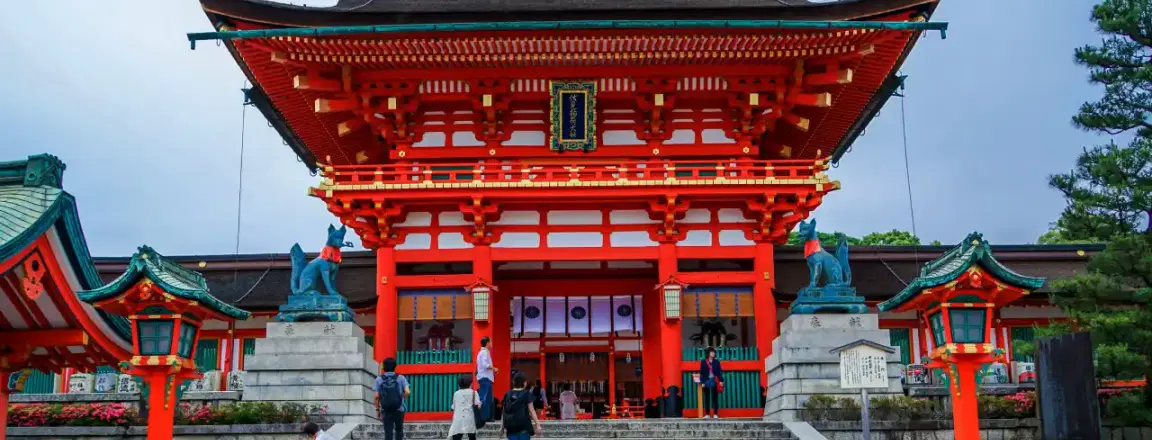
Kyoto is a city where spirituality blends seamlessly with everyday life. While golden pavilions and Zen gardens define its classical beauty, nothing is quite as visually striking as the endless vermilion torii gates of Fushimi Inari Taisha Kyoto. Located at the base of Mount Inari, this iconic Shinto shrine is one of the most photographed attractions in Japan.
Unlike tranquil Zen temples such as Ginkaku-ji or the shimmering elegance of Kinkaku-ji, Fushimi Inari is dynamic and immersive. Thousands of torii gates create a tunnel-like pathway that winds up the sacred mountain. If you are exploring Kyoto through a detailed Kyoto travel guide, this shrine is an absolute must-visit.
Fushimi Inari Taisha History
Fushimi Inari Taisha was founded in 711 AD, making it one of Kyoto’s oldest and most significant Shinto shrines. It is dedicated to Inari, the Shinto deity of rice, agriculture, prosperity, and business success. During the Edo period, merchants and businesses began donating torii gates to the shrine as a gesture of gratitude or prayer for prosperity. Over time, this tradition created the thousands of vermilion gates that now line the mountain trails.
Fox statues (kitsune) found throughout the shrine grounds are believed to be messengers of Inari. Many hold symbolic objects in their mouths, such as keys (to rice granaries) or scrolls.
Did you know? Over 10,000 torii gates form the famous Senbon Torii (Thousand Torii Gates) pathway.
Must read: Shrines vs Temples in Japan
Fushimi Inari Taisha Location
- Address: 68 Fukakusa Yabunouchicho, Fushimi Ward, Kyoto 612-0882, Japan
Located in southern Kyoto, the shrine is easily accessible and often combined with eastern Kyoto attractions.
It pairs well with:
- To-ji
- Kiyomizu-dera
- Nishiki Market
What to See Inside Fushimi Inari Taisha
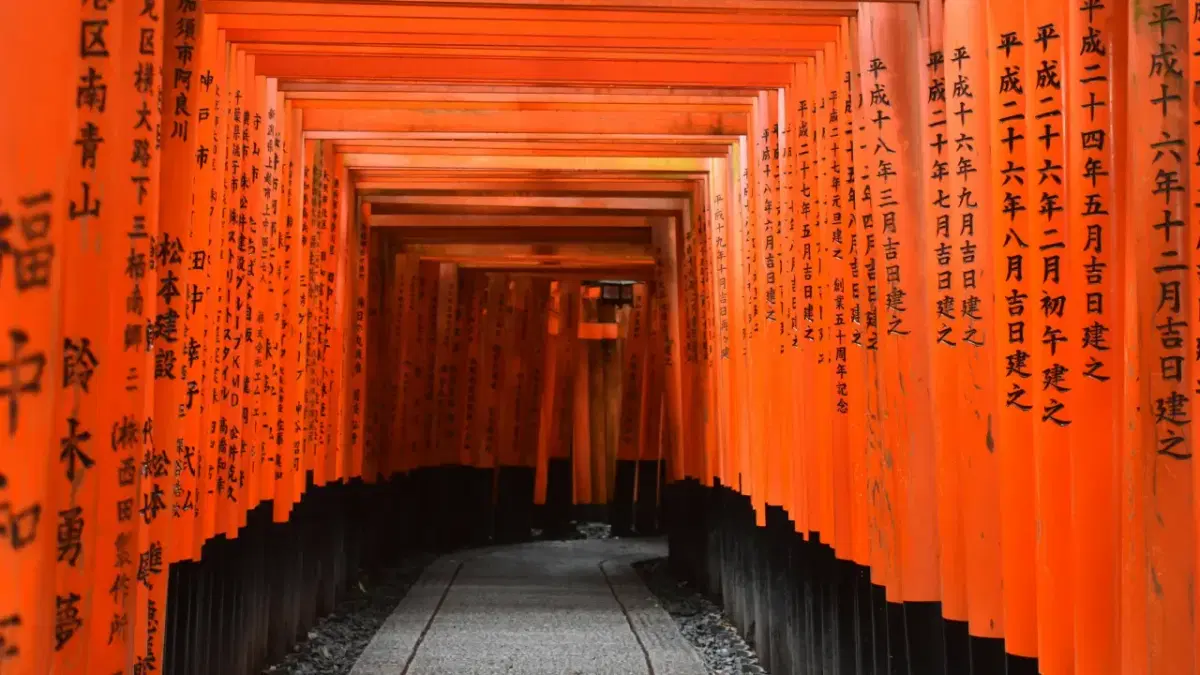
1. Senbon Torii (Thousand Torii Gates)
The most iconic section of the shrine is the pathway lined with densely placed vermilion torii gates. Each gate is inscribed with the name of the donor and the date of donation. Walking through this corridor feels immersive and symbolic, representing transition and spiritual passage.
2. The Main Shrine Complex (Honden)
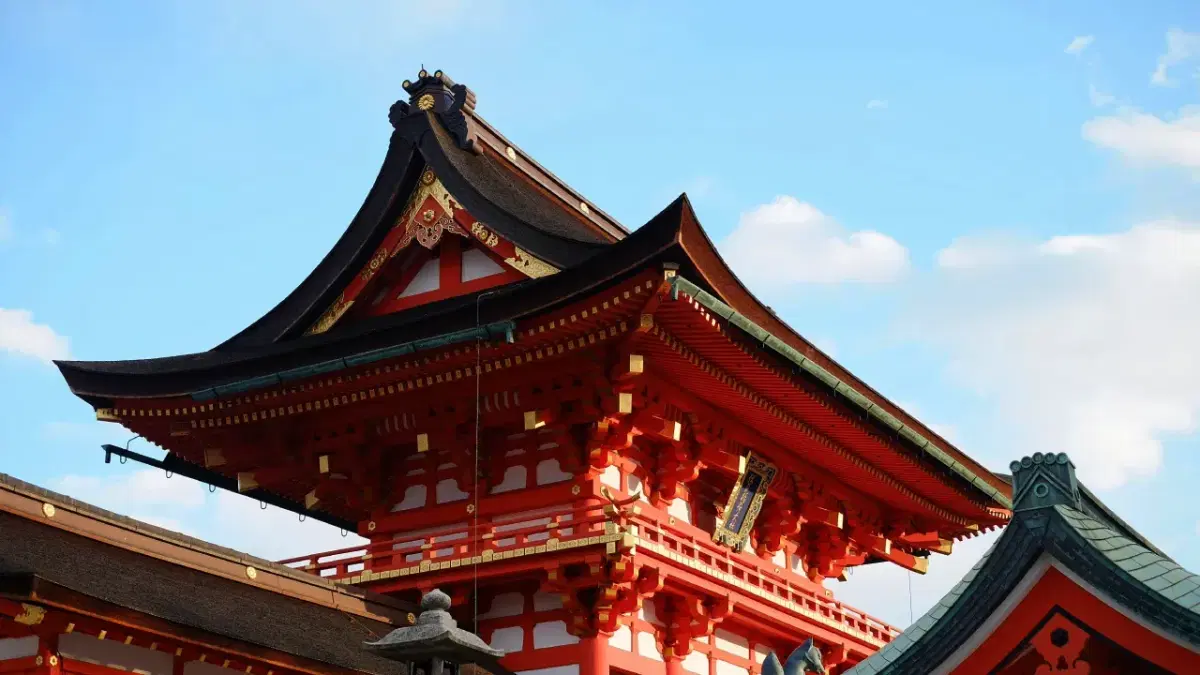
The main hal of the shrinel is where visitors pray. The architecture reflects traditional Shinto design, with bright vermilion accents contrasting beautifully against the surrounding greenery.
3. Fox (Kitsune) Statues
Throughout the shrine grounds, fox statues stand guard. They are considered sacred messengers of Inari(Japanese Diety) and often hold symbolic items such as rice sheaves or keys.
4. Mount Inari Hiking Trail
The shrine extends up Mount Inari via a network of forest trails. The full hike takes approximately 2–3 hours round-trip. Along the way, you will find smaller shrines, scenic viewpoints, and quieter sections away from crowds.
Fact: Fushimi Inari Taisha is open 24 hours a day, making it one of the few major shrines you can visit at sunrise or sunset.
Fushimi Inari Taisha Map & Walking Route
- Free entry
- Open 24 hours
- Main shrine area: 30–45 minutes
- Partial mountain hike: 1–1.5 hours
- Full summit hike: 2–3 hours round trip
The lower torii tunnels are the busiest, while the upper trails become progressively quieter.
Fushimi Inari Taisha Entrance Fee & Opening Hours
Fushimi Inari Taisha Ticket
- Free entry
Opening Hours
- Open 24 hours daily
- Shrine office hours: Typically 8:30 AM – 4:30 PM
Because there is no closing time, early morning or evening visits offer a dramatically different atmosphere.
Best Time to Visit Fushimi Inari Taisha for Fewer Crowds
Kyoto’s seasonal changes significantly impact the experience.
Best Time of Day
- Before 8:00 AM: Most peaceful
- After 6:00 PM: Beautiful sunset and fewer crowds
Best Season
- Spring (March–April): Pleasant weather
- Autumn (November): Colourful foliage
- Winter (January–February): Calm and less crowded
Avoid visiting between 10:00 AM and 3:00 PM if you want uninterrupted photos of the torii gates.
Read: Best time to visit Kyoto.
Crowd Expectations
Fushimi Inari is one of Kyoto’s most visited landmarks. The lower Senbon Torii section gets particularly crowded during midday. However, if you continue hiking upward, the crowds thin significantly.
Photography is allowed throughout the shrine grounds, but remain respectful and avoid blocking pathways.
How to Reach Fushimi Inari Taisha from Kyoto City Centre
By Train (Recommended)
- JR Inari Station (JR Nara Line): 2-minute walk
- Fukushima-Inari Station (Keihan Line): 5-minute walk
Travel time from Kyoto Station: 5 minutes by JR train.
By Taxi
The taxi takes approximately 15–20 minutes from central Kyoto to reach the temple, depending on traffic. Unlike temples such as Kinkaku-ji that rely heavily on buses, Fushimi Inari is extremely easy to reach by train.
Also read: Japanese transportation Guide.
Where to Eat Near Fushimi Inari Taisha
The approach street leading to the shrine offers few casual dining and local snacks:
Local Specialties
- Inari sushi (sweet tofu pocket sushi)
- Udon and soba noodles
- Matcha desserts
Recommended Restaurants
- Vermillion Cafe – Scenic café near the torii trails.
- Ramen Hiwamata Noboru – Popular local ramen spot.
- Cafe Goo – Cozy café for light meals.
Vegetarian options are limited compared to central Kyoto but available in select cafés.
Kyoto Hotels: Best Options by Budget
Luxury Hotels
- The Ritz-Carlton Kyoto
- Four Seasons Hotel Kyoto
- Hoshinoya Kyoto
Mid-Range Hotels
- Hotel Gracery Kyoto Sanjo
- Cross Hotel Kyoto
- Hotel The Celestine Kyoto Gion
Budget Hotels
- Sakura Terrace The Gallery
- Piece Hostel Kyoto
- Hotel Mystays Kyoto Shijo
Note: Public transport is required to reach Fushimi Inari from most hotel districts.
Things to Know Before Visiting Fushimi Inari Taisha
- Wear comfortable walking shoes (mountain trails involve stairs).
- Visit early morning for uninterrupted torii photos.
- Bring water if hiking to the summit.
- Respect shrine etiquette and avoid loud behaviour.
- Carry cash for charms and small shrine shops.
Why Fushimi Inari Taisha Is Worth Visiting
Fushimi Inari Taisha is not just a shrine, it is an experience. The endless torii gates create a rhythmic visual journey that symbolises spiritual transition. As you climb higher, the city noise fades, replaced by forest sounds and distant shrine bells. For first-time visitors to Japan, Fushimi Inari offers both visual drama and cultural depth. It combines accessibility with authenticity, making it a powerful addition to any thoughtfully designed Japan tour package.
FAQs
1. Where is Fushimi Inari Taisha located?
It is located in southern Kyoto, Japan.
2. How much time does it take to explore Fushimi Inari?
1–3 hours, depending on how far you hike.
3. Is there an entry fee at Fushimi Inari Taisha?
No, entry is free.
4. What is Fushimi Inari famous for?
It's thousands of vermilion torii gates.
5. Can you hike to the top of Fushimi Inari Taisha?
Yes, the full hike takes around 2–3 hours round trip.
6. Is Fushimi Inari open at night?
Yes, it is open 24 hours.
7. What is the best time to visit Fushimi Inari Taisha?
Early morning or late evening.
8. Is Fushimi Inari family-friendly?
Yes, but the full hike may be challenging for young children.
9. Is Fushimi Inari worth visiting?
Absolutely. It is one of Japan’s most iconic and unforgettable experiences.