
- Home
- Attractions
- Japan
- Kinkaku-ji Golden Pavilion Kyoto: Visitor Guide
Kinkaku-ji Golden Pavilion Kyoto: Visitor Guide
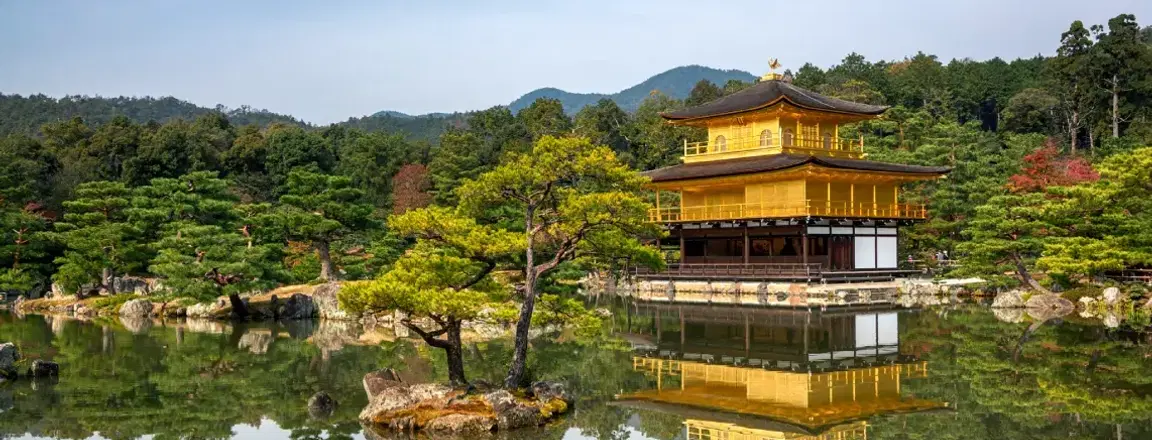
Kyoto, the former imperial capital of Japan, is a city where philosophy, religion, and politics quietly shaped a nation. Today, it is one of the best attractions in Japan, known for its vermilion torii gates and bamboo forests. Rising above a mirror-like pond in northern Kyoto stands Kinkaku-ji temple, a Kyoto temple so luminous it appears almost unreal. Centuries of history echo silently as gold leaf twinkles on quiet water and is surrounded by pine trees.
Among the most famous Zen Buddhist temples in Japan, Kinkaku-ji Temple Kyoto (officially Rokuon-ji) is also a UNESCO World Heritage Site. It was built in 1397, standing as a symbol of the Muromachi era's exquisite elegance, and is still one of Japan's most photographed places. If you are searching for depth beyond Kyoto’s tourist trail, Kinkaku-ji offers a rare moment of stillness, symbolism, and architectural harmony.
Read more: Kyoto travel guide.
Golden Pavilion(Kinkaku-ji Temple) Kyoto History
The initial purpose of Kinkaku-ji, built in 1397, was to serve as a retirement residence for Shogun Ashikaga Yoshimitsu. Following his death, the villa was converted into a Zen temple following his wishes. Kinkaku-ji belongs to the Rinzai sect of Zen Buddhism and remains an active religious site today.
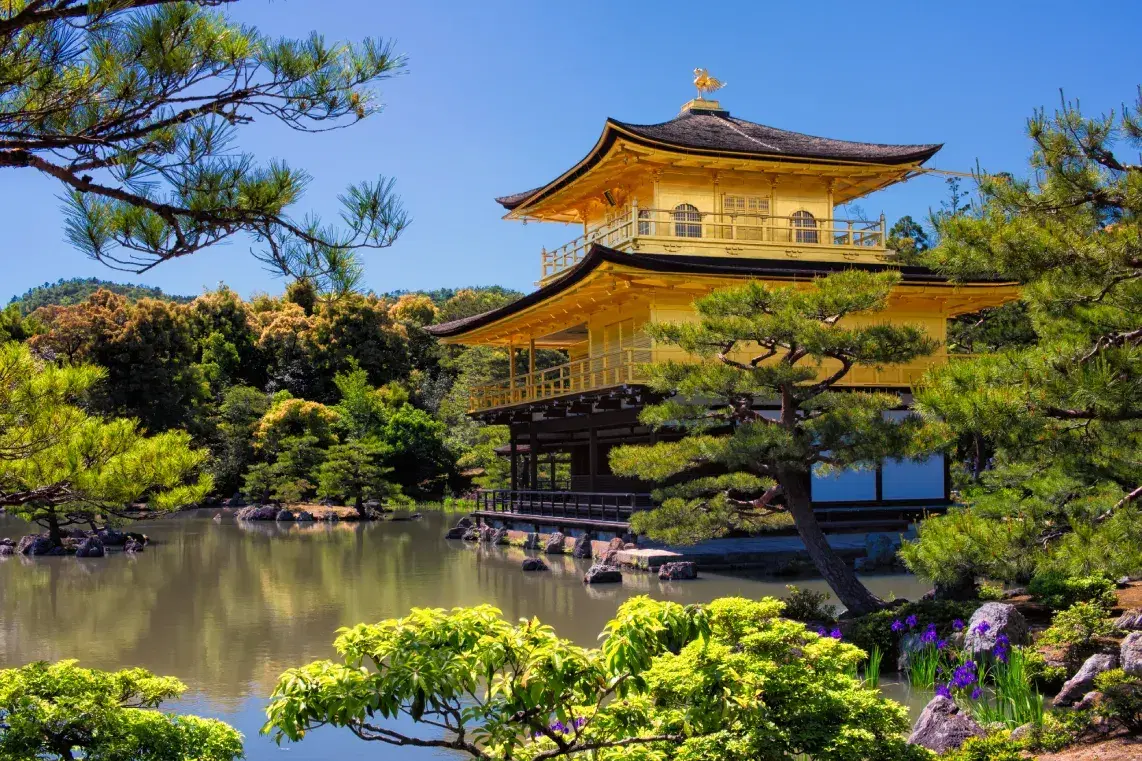
The Golden Pavilion was built to reflect the power and refined taste of Ashikaga Yoshimitsu. The top two floors of the temple are covered in gold leaf, which in Buddhism stands for spiritual awareness and purity. The building we see today is a reconstruction; the original was destroyed in 1950 and then rebuilt in 1955, but it still has the same vintage design. The event later inspired the novel The Temple of the Golden Pavilion by Yukio Mishima. Architecturally, the temple combines three styles in one structure: the first floor follows Heian-era palace design, the second reflects samurai residence style, and the third is built like a Chinese Zen hall topped with a golden phoenix. The nearby Mirror Pond is carefully designed to reflect the pavilion, highlighting the Buddhist idea that beauty and life are temporary.
Did you know? Kyoto was Japan’s capital for over 1,000 years before Tokyo.
Kinkaku-ji Temple Location
- Address: 1 Kinkakujicho, Kita Ward, Kyoto 603-8361, Japan
Located in northern Kyoto, the temple sits in a peaceful residential district surrounded by traditional gardens. The location of the temple makes it ideal for combining a visit to the temple with other things to do in Kyoto.
It pairs well with:
- Ryoan-ji
- Ninna-ji
- Arashiyama Bamboo Grove
What to See Inside Kinkaku-ji Temple, Kyoto
1. The Golden Pavilion (Kinkaku)
The Golden Pavilion is the centrepiece. The top two floors are completely covered in gold leaf, creating a dramatic reflection in the surrounding pond. Each season transforms the scenery:
- Spring: Framed by cherry blossoms
- Summer: Lush green contrast
- Autumn: Fiery red maple leaves
- Winter: Snow-covered serenity
The golden phoenix statue at the roof’s peak symbolises rebirth and imperial authority.
2. Kyoko-chi (Mirror Pond)
Kyoko-chi, the mirror pond at the temple, contains carefully placed islands and stones representing Buddhist cosmology. The pavilion’s reflection in the water creates one of Japan’s most iconic photographic scenes. It is not merely a photographic landmark but a visual expression of Zen cosmology.
3. Sekka-tei Teahouse
It is a traditional teahouse within the temple grounds where visitors can enjoy matcha and sweets while overlooking the garden landscape.
4. Anmintaku Pond
It is a smaller pond located in the temple premises. It is a sacred pond and is believed to never dry up, symbolising continuity and spiritual endurance.
Fact: Kinkaku-ji Temple attracts millions of visitors annually and is one of the most visited places in Kyoto and a UNESCO World Heritage Site.
Kinkaku-ji Temple Map & Walking Route
- One-way circular route
- Approx. 20–30 minutes
- Cannot enter the pavilion
- Exit through the souvenir and tea area
Kinkaku-ji Temple Entrance Fee & Opening Hours
Kinkaku-ji Temple Ticket
- Adults: ¥500(₹295 approx.)
- Children: ¥300(₹180 approx.)
Opening Hours
- 9:00 AM – 5:00 PM (Daily)
Unlike many temples in Kyoto, Kinkaku-ji does not offer nighttime illumination events. Entry is ticketed, and visitors follow a one-way walking route around the gardens.
Note: INR conversion approximate; subject to exchange rate fluctuations.
Best Time to Visit Kinkaku-ji Temple for Fewer Crowds
Kinkaku-ji Temple is beautiful year-round, as Kyoto weather experiences seasonal shifts, each transforming the temple’s scenery. Crowd levels vary significantly throughout the year.
Best Time of Day
- Early morning (9:00–10:00 AM): Arrive at opening for softer light and fewer crowds.
- Late afternoon (after 3:30 PM): Slightly calmer, though lighting is stronger.
Best Season
- Autumn (November): Peak beauty, but very crowded.
- Winter (January–February): Fewer visitors; snow creates a magical setting.
Expect peak crowds between 10:30 AM and 3:00 PM, especially during the cherry blossom and autumn foliage seasons.
Read: Best time to visit Kyoto.
Crowd Expectations
Expect heavy crowd arrivals between 11:00 AM and 2:00 PM, especially during the peak cherry blossom and autumn foliage season. Photography during peak hours may require patience due to the heavy crowd. There are no night illuminations and no interior access.
How to Reach Kinkaku-ji Temple from Kyoto City Centre
By Bus (Recommended)
From Kyoto Station:
- From Kyoto Station, buses 101 and 205 depart frequently, but travel time can extend beyond 50 minutes during peak traffic.
- Travel time: ~50 minutes
- Get off at the Kinkaku-ji-michi stop
By Taxi
You can reach the temple from Central Kyoto by taxi as it is approximately 25–30 minutes away, depending on traffic.
Unlike central Kyoto temples, Kinkaku-ji is not directly accessible by train, making the bus the most practical option.
Where to Eat Near Kinkaku-ji Temple
The area around Kinkaku-ji offers small local eateries serving:
- Udon and soba noodle dishes
- Matcha desserts
- Traditional Kyoto sweets (yatsuhashi)
- Casual Japanese set meals
Vegetarian options are available in select restaurants, but are limited compared to central Kyoto.
Also read: Indian restaurants in Japan
Kyoto Hotels: Best Options by Budget
Luxury Hotels
For a premium stay with top-class service and elegant design:
- The Ritz-Carlton Kyoto – Riverside luxury near downtown.
- Four Seasons Hotel Kyoto – Beautiful garden setting in Higashiyama.
- Hoshinoya Kyoto – Exclusive riverside retreat in Arashiyama.
Best for: Japan Honeymooners, luxury travellers, special occasions.
Mid-Range Hotels
Comfortable, well-located, and good value:
- Hotel Gracery Kyoto Sanjo – Great central location.
- Cross Hotel Kyoto – Modern stay near Gion.
- Hotel The Celestine Kyoto Gion – Quiet and elegant in the historic district.
Best for: Couples, families, first-time visitors.
Budget Hotels
Simple, clean, and affordable options:
- Sakura Terrace The Gallery – Near Kyoto Station.
- Piece Hostel Kyoto – Stylish and budget-friendly.
- Hotel Mystays Kyoto Shijo – Practical and centrally located.
Best for: Solo travellers, students, and budget-conscious trips.
Note: None of these hotels is within walking distance of Kinkaku-ji; public transport is required.
Check out: Japan in May
Things to Know Before Visiting Kinkaku-ji Temple
- Photography is allowed outdoors, but visitors cannot enter the pavilion itself.
- Follow the designated walking path; the route is one-way.
- Arrive early during peak seasons to avoid large tour groups.
- Carry cash for entrance tickets.
- Respect the quiet Zen atmosphere.
Why Kinkaku-ji Temple Is Worth Adding to Your Kyoto Itinerary
Kinkaku-ji is not just a golden structure rising above a pond; it is Kyoto’s quiet masterpiece. The shimmering gold leaf, the still Mirror Pond, and the carefully placed stones and pines come together to create a scene that feels almost unreal. Here, political ambition, Zen philosophy, and architectural precision blend seamlessly, reflecting the refined elegance that defines Kyoto’s cultural identity.
For first-time visitors to Japan, Kinkaku-ji offers an unforgettable introduction to classical Japanese aesthetics. More than a landmark, it is an experience of balance and beauty, which is why it deserves a place in every Japan tour package, especially for those who want their journey to include not just destinations, but meaning.
FAQs
1. Where is Kinkaku-ji Temple located?
It is located in northern Kyoto, Japan.
2. How much time does it take to explore Kinkaku-ji Temple?
Approximately 1 to 1.5 hours is ideal.
3. Is there any entry fee for Kinkaku-ji Temple?
Yes, there is a small entrance fee (¥500 for adults).
4. Can you enter the Golden Pavilion?
No, visitors cannot enter the pavilion; viewing is from the garden path.
5. Why is Kinkaku-ji covered in gold?
The gold leaf symbolises purity and spiritual illumination in Zen Buddhism.
6. Is Kinkaku-ji Temple worth visiting?
Yes, it is one of Kyoto’s most iconic landmarks and a UNESCO World Heritage Site.
7. What is the best season to visit Kinkaku-ji Temple?
Autumn for foliage, winter for snow-covered scenery.
8. Is Kinkaku-ji Temple family-friendly?
Yes, the walking path is easy and suitable for visitors of all ages.
9. Why is Kinkaku-ji called the Golden Pavilion?
Because its upper floors are entirely covered in gold leaf, creating its signature radiant appearance.