
Waterfalls in Meghalaya: 15 Essential Cascades from Cherrapunji to Dawki
The waterfalls in Meghalaya aren’t just pretty sights—they’re part of the land itself. With towering cliffs, rain-fed valleys, living root bridges, and rivers that can go from calm to roaring in hours, this place is full of natural wonders. This guide isn’t just a list of places to visit; it’s a helpful resource for anyone who wants to know the best times to go, how to get there, and what to expect.
Here, you’ll find quick details about each waterfall, tips for visiting safely, and advice on planning your trip. Whether you’re exploring on your own or with local help, remember that in Meghalaya, timing, respect for nature, and listening to locals are key.
Quick Guide to Meghalaya Waterfalls
- Travel Times: Most trips start from Shillong. Be ready for delays caused by landslides, fog, or traffic, especially when heading to Cherrapunji (Sohra), Jaintia Hills, or Amlarem.
- Best Seasons to Visit:
- Monsoon (June–September): For powerful, dramatic waterfalls.
- Post-Monsoon (October–December): For clear blue pools and safer trails.
- Difficulty Levels:
- Easy: Roadside viewpoints.
- Moderate: Short hikes or steps.
- Hard: Steep climbs, long treks, or tricky descents.
Important Rules and Safety Tips
- Krangsuri Falls (Amlarem/Jowai): Entry fees and life jackets are required (₹30–₹100 for entry, ~₹100 for jackets). Guards are strict about safety near the pool.
- Nongriat & Double Decker Root Bridge: Be ready for over 3,000 steep steps one way. A local guide is highly recommended unless you’re used to tough hikes.
- Off-the-Grid Spots (Shympe Falls, Mawsawa, Khoh Ramhah, Krem Chympe): Some places need village permission or a guide. Always ask locals before heading out.
- Jaintia Hills Backroads: Local drivers know the best routes and conditions. Their experience can save you time and trouble.
Top Waterfalls in Meghalaya
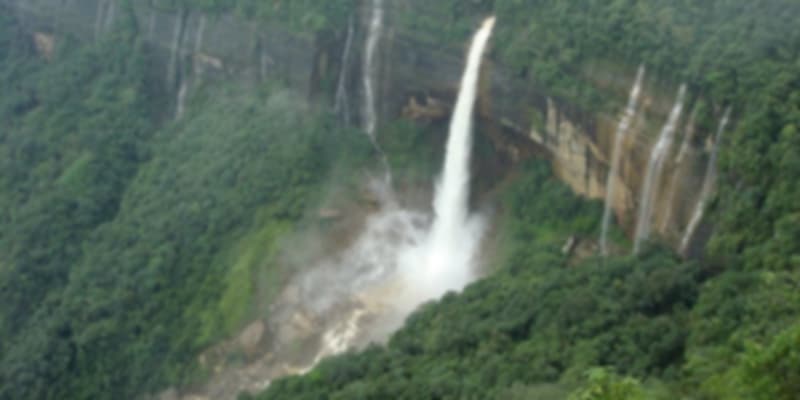
Waterfalls in Meghalaya
Image Credits: Google Images
Nohkalikai Falls (Cherrapunji)
- Access & difficulty: Easy; viewpoint steps from the roadside
- Best time: Monsoon for scale and sound; post-monsoon for visibility
- Safety: Stay within designated viewpoints, fog and slick rock are common
- Nearby: Mawsthe Mai Cave, Seven Sisters Falls, Dainthlen Falls
- Photo tip: Wide lens, polariser for colour, early morning mist for depth
Wei Sawdong Falls (Near Nongriat)
- Access & difficulty: Hard; steep descent (descent takes 20–40 minutes depending on conditions). The climb back is strenuous.)
- Best time: Post-monsoon, when pools clear and footing improves
- Safety: Guides recommended; slippery rock and exposed drops
- Nearby: Nongriat village, Double Decker Living Root Bridge
- Reference: Community trip notes and conditions are often discussed on Reddit travel threads.
Krangsuri Falls (Amlarem, Jaintia Hills)
- Access & difficulty: Easy to Moderate; paved path and steps (~15 minutes)
- Best time: Post-monsoon and winter for blue water clarity
- Fees: Entry + life jacket mandatory
- Nearby: Thlumuwi Stone Bridge, Dawki/Umngot River, Nartiang Monoliths
- Notes: One of the most regulated swimming spots in Meghalaya, with mandatory life jackets and supervision—but conditions still depend on rainfall and water flow.
Nongriat & Rainbow Falls
- Access & difficulty: Hard; long stair descent from Tyrna village
- Best time: Post-monsoon for Rainbow Falls colour and trail safety
- Safety: Hire a guide, carry cash for village fees
Best Time to Visit Meghalaya Waterfalls
| Season | Flow & Color | Photography | Acolour & Safety | Best Falls |
| Monsoon (Jun–Sep) | Maximum force, silted water | High drama, fast shut Colourpeeds | Slippery trails, flash floods | Nohkalikai, Seven Sisters, Wah Kaba |
| Post-monsoon (Oct–Dec) | Strong flow, blue pools | Long exposures, rich color | Safer descents | Wei Sawdong, Krangsuri, Tyrshi |
| Winter (Jan–Feb) | Lower flow, crystal rivers | Reflections, clean light | Best trekking conditions | Dawki/Umngot, Borhill |
| Pre-monsoon (Mar–May) | Variable flow | Softer contrast | Hot but accessible | Elephant Falls, Phe Phe |
Also read: Best time to visit Meghalaya
How to Reach Meghalaya Waterfalls
- Starting Point: Guwahati (by air or train), then drive to Shillong.
- Travel Times:
- Shillong to Cherrapunji: 2–3 hours (weather-dependent).
- Shillong to Dawki: 3 hours.
- Tips: Start early for Nongriat, Wei Sawdong, and Rainbow Falls to avoid afternoon rain.
Entry Fees, Permits & Local Rules for Meghalaya Waterfalls
- Small entry fees are common across sites
- Village areas may require check-ins or token payments
- Carry ID and small cash
Waterfall Difficulty Levels in Meghalaya
- Easy: Nohkalikai, Seven Sisters, Borhill
- Moderate: Krangsuri, Tyrshi, Wah Kaba
- Hard: Nongriat trek, Wei Sawdong descent
- Pack shoes with grip, rain protection, a power bank, and respect weather warnings.
Suggested Meghalaya Waterfall Itineraries
1. Cherrapunji Day Trip
- Visit Nohkalikai, Seven Sisters, Dainthlen, and Wah Kaba Falls.
- Add Mawsmai Cave if you have time.
2. Nongriat & Rainbow Falls (1–2 Days)
- Explore the Double Decker Root Bridge and Rainbow Falls.
- Start early, carry water, and prepare for a tough hike.
3. Jaintia Hills (1–2 Days)
- Visit Krangsuri, Tyrshi, and Phe Phe Falls.
- Add Nartiang Monoliths or Dawki to your trip.
4. Dawki & East Khasi Hills
- Go boating on the Umngot River, visit Borhill Falls, and explore Mawlynnong.
- Winter is the best time for clear views.
Conclusion
The waterfalls in Meghalaya reward travellers who think in seasons and gradients and have respect. From the roar of Nohkalikai to the glass-clear calm of Dawki, these landscapes demand patience and local travellers. Follow village rules, avoid shortcuts, carry out what you bring in, and rely on local knowledge when terrain turns serious.
FAQs
Monsoon offers powerful, dramatic waterfalls, while post-monsoon provides clearer water, safer trails, and better visibility, making it the most balanced time to visit.
Rainbow Falls near Nongriat reliably shows rainbows in sunlight, while Seven Sisters and Krangsuri may occasionally display them depending on light, mist, and timing.
Swimming is relatively safe with mandatory life jackets and supervision, but conditions vary with rainfall, so always follow local safety rules and avoid strong currents.
The trek involves around 3,000–3,500 steep steps downward, with a challenging return climb requiring stamina, proper footwear, hydration, and careful pacing throughout.
Most waterfalls require small entry fees, while guides are recommended for remote, steep, or poorly marked trails to ensure safety and easier navigation.

Recommended articles for you








Discover Packages




















Need help in planning?
Talk to our Travel Experts