
European Food Culture: What Indian Travellers Should Eat & Expect
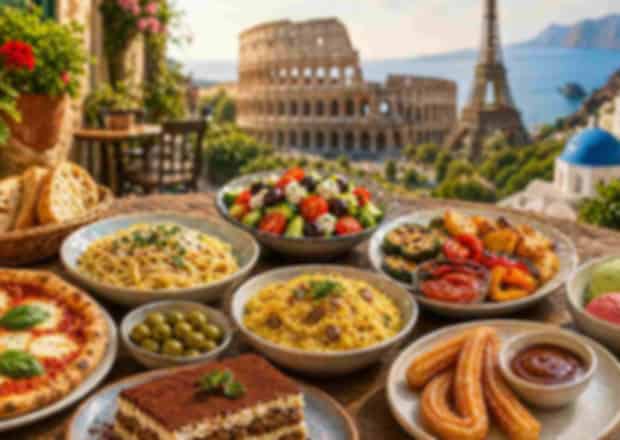
You can plan the most detailed plan for a trip to Europe and still completely miss the most immersive part of being in Europe, which is sitting down at a table and eating the way the locals do. Europe food culture isn’t a side attraction. It is the attraction.
The continent is home to three of the world’s top food cities (Naples, Milan, and Bologna); the birthplace of haute cuisine (France), and the inventor of pizza, pasta, tapas, croissants, and gelato. Every country eats differently. Every region within that country eats differently. And the dining rituals, ingredients, and table manners shift the moment you cross a border.
For Indian travellers, whether you’re on a Europe honeymoon tour package, a family Europe trip, or a solo adventure, understanding food culture isn’t just about knowing what to eat. It’s knowing how to eat, where to go, what to avoid, and how to navigate Europe’s kitchen as a vegetarian.
Key Takeaways
- Europe food culture varies dramatically by country. Italy and Greece are the most vegetarian-friendly; Germany and France are the most challenging.
- Dining is slow and social across Southern Europe, and you can expect lunches that last 2–3 hours.
- Water is not free in most European restaurants; always order it specifically. Tap water is readily available everywhere and is safe to drink.
- Naples, Milan, and Bologna are ranked the world’s top three food cities in 2025–26 (TasteAtlas).
- Apps to use: HappyCow (vegetarian restaurants), TheFork (reservations), TasteAtlas (dish discovery).
- Indian travellers on Europe trip packages can request vegetarian or Jain meals; always confirm at booking.
Europe’s Food Culture: What You Need to Know
Before diving country by country, here are the broad truths that shape eating across the continent.
- Meals are sacred, not rushed. In France, Italy, Spain, and Greece, lunch can last two hours. Dinner can stretch to three. Don’t expect to wolf down a meal and leave. Sitting, talking, and eating slowly is considered respectful. Rushing a waiter is not.
- Seasonality is everything. Europe food culture is deeply tied to what’s fresh and local. Menus change with the seasons. Summer means tomatoes, zucchini, fresh berries, and stone fruits. Asking for something out of season in a good restaurant will raise eyebrows.
- Each region has its own cuisine. “Italian food” is not one thing; it’s Neapolitan pizza, Bolognese ragù, Venetian cicchetti, Sicilian arancini, and Roman cacio e pepe, all entirely distinct. The same applies to France, Spain, and Germany. Always eat regional, not generic.
- Bread is cultural currency. In France, it’s placed directly on the tablecloth (no plate). In Italy, it’s for mopping up sauce (called fare la scarpetta). Wasting bread is considered disrespectful across most of Europe. Take only what you’ll eat.
Europe food culture by Country – What Indian Travellers Need to know
Europe doesn’t have one single food culture. Each country has its own flavours, dining habits, meal timings, and traditions. For Indian travellers, knowing these differences can make it easier to find familiar vegetarian options while still enjoying authentic local food.
Italy – The Vegetarian’s Paradise
Italy tops every list, and for good reason. It’s arguably the most accessible European cuisine for Indian palates and vegetarian preferences.
Why it works for Indians: Much of Italian cuisine is naturally vegetarian-friendly; pasta, pizza, risotto, antipasti, soups, and veggie paninis are widely available. The flavours- tomato, basil, olive oil, garlic, parmesan- feel familiar and comforting to Indian taste buds.
Must-try dishes:
- Cacio e Pepe (Rome) – Pasta with just cheese and black pepper; deceptively simple, deeply satisfying
- Pizza Margherita (Naples) – The original, still the best; UNESCO-protected dough technique
- Risotto alla Milanese (Milan) – Saffron-scented rice; yes, saffron, exactly like Indian biryani’s soul ingredient
- Gelato – Not ice cream; creamier, denser, more intensely flavoured; eat it from a gelateria, never a plastic-lidded cup
- Tiramisu – Espresso-soaked sponge and mascarpone cream; the dessert every Indian has tried at home, and it’s never quite right until you eat it in Venice
Dining rules in Italy:
- Cappuccino is a breakfast drink only. Ordering one after dinner marks you as a tourist immediately.
- Don’t ask for pineapple on pizza. Just don’t.
- Coperto is a small cover charge per person; it’s not a scam, it’s standard.
Insider tip: Bologna, not Rome or Florence, is Italy’s food capital. Visit Quadrilatero market and try a fresh piadina with ricotta; it’ll spoil all other sandwiches.
France – The Art of Eating
French food culture is less about specific dishes and more about a philosophy: quality over quantity, pleasure over efficiency, and the belief that a meal shared is never wasted time.
UNESCO recognition: French gastronomic culture has been on the UNESCO Intangible Cultural Heritage list since 2010 — the only national cuisine to receive this honour.
Must-try (vegetarian-friendly options):
- Croissant, but only from an artisan boulangerie, not a supermarket; the difference is night and day.
- Ratatouille is the Provençal vegetable stew that’s deeply warming and completely plant-based.
- Soupe à l’oignon (French onion soup) is technically vegetarian if you skip the beef stock version.
- Crêpes, in Brittany, buckwheat galettes filled with cheese, egg, and mushrooms are a complete meal.
- Macarons, éclairs, tarte tatin are French-invented modern pastries; every city has outstanding pâtisseries.
Dining rules in France:
- Keep your hands on the table (not in your lap)
- Bread goes on the tablecloth, not a plate
- Avoid dish modifications in traditional bistros
- Tipping isn’t mandatory; 5–10% is generous
For Indian travellers: Paris has a strong Indian food scene. Dishoom, Saravana Bhavan, and many South Indian spots offer great vegetarian options.
Spain – Tapas, Timing & the Art of Grazing
Spanish food culture operates on a completely different clock. Lunch is the main meal and happens between 2 and 4 PM. Dinner starts at 9–10 PM. If you show up at 7 PM at a restaurant, it’ll be empty or closed.
The tapas culture: Tapas are small plates meant for sharing, once free bar snacks, now a full dining style. You try multiple dishes, eat slowly, and share everything, very similar to Indian thali-style eating.
Must-try (vegetarian-friendly):
- Patatas bravas – Fried potatoes with spicy tomato sauce; the one dish that appears on every tapas menu in Spain
- Pan con tomate – Grilled bread rubbed with fresh tomato and olive oil; Catalonia’s breakfast staple, deceptively addictive
- Gazpacho – Cold tomato soup from Andalusia; a revelation in summer heat
- Churros con chocolate – Fried dough dipped in thick hot chocolate; Spain’s answer to India’s jalebi
Paella note: Authentic paella comes from Valencia and traditionally includes seafood or meat. Vegetable paella exists, but purists will tell you it’s not the original. Try it in Valencia, not Madrid.
Greece – Mediterranean Simplicity, Maximum Flavour
Greek food culture is built on olive oil, fresh vegetables, legumes, cheese, and herbs. It’s one of the most naturally vegetarian-friendly cuisines in Europe and one whose flavour principles (spice, freshness, dairy, and herbs) resonate strongly with Indian palates.
Must-try:
- Spanakopita – Spinach and feta phyllo pastry; crispy, savoury, completely vegetarian
- Horiatiki (Greek salad) – Tomato, cucumber, olives, red onion, giant slab of feta; no lettuce, no dressing, just olive oil
- Moussaka – Layered eggplant, potato, and béchamel; ask about the version, as some include meat
- Loukoumades – Honey-drizzled fried dough balls; Greece’s answer to gulab jamun, right down to the syrup
Greek mezze culture: A style of dining with multiple small shared plates, usually 6–8 dishes for the table. It’s the best way to try a variety of flavours, similar to tapas and Indian-style sharing.
Germany, Austria & Switzerland – Hearty Food with Plenty of Cheese
Germany, Austria, and Switzerland share a love for hearty meals built around bread, potatoes, cheese, and meat. Vegetarian choices can be less obvious than in Italy or Greece, so you may need to look beyond the main dishes. The good news? Cheese, potatoes, pastries, and baked dishes give vegetarians plenty to work with.
Vegetarian-friendly dishes to try:
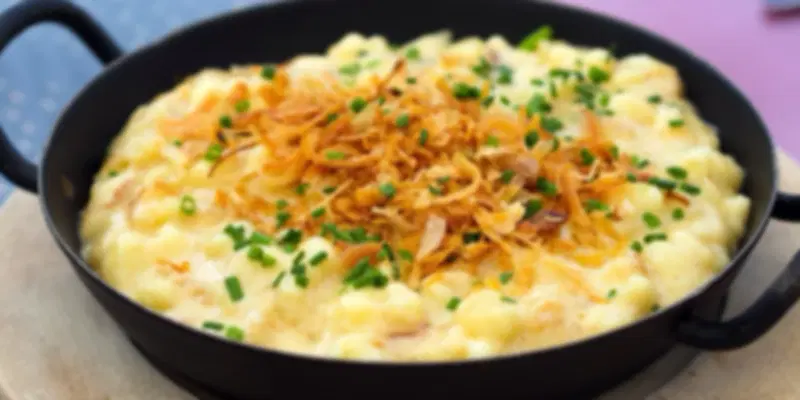
- Käsespätzle (Germany/Austria): Soft egg noodles baked with cheese and topped with crispy onions. Think of it as a richer, Alpine-style mac and cheese.
- Zwiebelkuchen (Germany): A savoury onion tart, especially popular during autumn in wine-growing regions.
- Rösti (Switzerland): A crispy grated-potato pancake that works well with a fried egg or cheese for a filling vegetarian meal.
- Apfelstrudel (Austria): Thin pastry filled with spiced apples. Have it warm with vanilla sauce or ice cream.
Berlin is the vegetarian exception: If you are vegetarian or vegan, Berlin is one of the easiest cities in the region for plant-based food. You’ll find everything from vegan cafés to Indian, Middle Eastern, and international restaurants, making it much easier to take a break from traditional German food.
Don’t leave Switzerland without trying its classics: Swiss chocolate and cheese are an essential part of the experience. Try a traditional fondue or raclette, then save room for Swiss chocolate. Both are excellent options for vegetarians, although it is always worth checking the ingredients if you have specific dietary restrictions.
Portugal – Fresh, Simple & Easy to Explore
Portugal offers a lighter change of pace after the heavier food traditions of Central Europe. Its cuisine combines fresh vegetables, beans, rice, bread, olive oil, and seafood, with plenty of simple dishes that can work for vegetarian travellers.
One treat you absolutely shouldn’t skip is pastel de nata, Portugal’s famous custard tart. Pick one up warm from a local pastelaria in Lisbon and pair it with a coffee for a simple afternoon break.
Dining Etiquette in Europe – What Indian Travellers Often Get Wrong
Dining in Europe can feel quite different from eating out in India, especially when it comes to tipping, water, meal timings, and service. A few simple etiquette tips can help you avoid awkward moments and enjoy your meals with confidence.
- Tipping: Varies by country, €1–2 in Italy, 5–10% in France, round up in Germany, 10–12.5% in the UK.
- Water: Water is not free in restaurants, you will have to order bottled or carry a refillable bottle and filll it from tap water(which is readily available).
- Pacing: Meals are slow with courses, so don’t rush or ask for the bill early.
- Dress code: Smart casual for fine dining, especially in France & Italy.
Vegetarian & Jain Food Survival Guide for Indians in Europe
Eating vegetarian in Europe is easier than it may seem, but Jain travellers need a little more planning. Knowing which countries and cities have better options, along with using the right food apps, can save time and avoid last-minute confusion.
- Best countries for vegetarians: Italy, Greece, Spain, UK (veg-friendly & diverse options)
- Challenging countries: Germany, Hungary, Poland (improving in major cities)
Useful apps:
- HappyCow (veg/vegan spots)
- TheFork (restaurant bookings)
Jain food: It is limited outside Indian restaurants, but available in cities like London, Paris, Amsterdam (confirm in advance)
European Food Experiences Worth Planning Your Trip Around
These aren’t restaurants. These are food events that should anchor your travel dates.
- La Tomatina, Spain (Aug): World-famous tomato festival followed by local feasting—fun, messy, and unforgettable.
- Oktoberfest, Germany (Sept–Oct): Giant food & beer celebration with Bavarian dishes and growing veg options.
- Truffle Season, France & Italy (Nov–Jan): Taste premium truffles at local fairs for far less than restaurant prices.
Ready to Taste Europe?
Europe food culture isn’t something you study; it’s something you experience one meal at a time. A pizza in Naples is eaten standing at the counter. A croissant in Paris at 8 AM is still warm from the oven. A mezze spread in Athens as the sun sets behind the Acropolis. These are the moments that make people return to Europe again and again. Not the monuments, the meals.
Explore our handcrafted Europe tour packages, designed for Indian travellers, with Indian meal options, expert cultural guidance, and curated food experiences built into every itinerary.
FAQ: European Food Culture for Indian Travellers
Q: Which European country has the most vegetarian-friendly food?
Italy is the easiest, as pasta, pizza, and risotto are naturally vegetarian. Greece is a close second with mezze, legumes, and fresh salads, all with flavours that suit Indian palates.
Q: Is it hard to find Indian food in Europe?
Not in major cities, London, Paris, Amsterdam, Zurich, Frankfurt, and Rome all have great Indian food. London stands out for variety and quality. Use Google Maps or Zomato for smaller towns.
Q: What is the dining etiquette I must know before going to Europe?
Three rules cover most situations: don’t rush meals, don’t expect free water, and tip modestly (5–10%). In Italy, avoid cappuccino after lunch; while in France, keep your hands on the table, and in Spain, dinner starts after 9 PM.
Q: What European desserts must I try as an Indian traveller?
Gelato (Italy), crème brûlée (France), churros con chocolate (Spain), loukoumades (Greece), Apfelstrudel (Austria), and Swiss chocolate from a Läderach or Sprüngli counter. All are vegetarian. All are exceptional.
Q: Which food is most eaten in Europe?
There is no single food eaten most across Europe because diets differ between countries. However, bread, potatoes, pasta, vegetables, cheese, meat, and grains are common staples across many European countries.
Q: How has Europe food culture changed over time?
The history of European food culture has been influenced by trade, migration, agriculture, and new ingredients. Foods such as tomatoes, potatoes, chocolate, and coffee eventually became important parts of European cooking.
Q: Why is food culture different in each European country?
Food culture differs because every country and region has its own climate, ingredients, history, and traditions. This is why dishes and cooking methods can change significantly even between neighbouring European regions.
Q: What are some interesting Europe food culture facts?
Interesting Europe food culture facts include France’s UNESCO-recognised gastronomic traditions and Spain’s strong tapas culture. Greece is known for shared mezze, while Italy has highly regional cooking traditions.
Q: Why is regional food important in Europe?
Regional food is important because traditional recipes often use local ingredients and reflect the history of a particular place. Trying regional dishes can therefore give travellers a deeper understanding of European food traditions.
Q: What ingredients are commonly used in European cuisine?
Common ingredients include bread, potatoes, vegetables, grains, cheese, olive oil, butter, herbs, and seasonal produce. Their importance changes by region depending on local agriculture, climate, and culinary traditions.
Q: What is the difference between European cuisine and continental food?
European cuisine covers the many traditional cuisines found across Europe, while continental food is a broader term often used for Western-style European dishes. It can include pasta, soups, salads, grilled dishes, breads, and pastries.

Recommended articles for you











Discover Packages


















Europe City Packages
Packages By Departure City
Packages By Theme
Packages By Duration
Europe Combo Packages
Europe Nearby Destinations

Need help in planning?
Talk to our Travel Experts