
18 Best Places to Visit in Denpasar for an Unforgettable Bali Trip

Wondering what the best places to visit in Denpasar are on your Bali trip? From the Bajra Sandhi Monument and Bali Museum to Pasar Badung and Pura Agung Jagatnatha, the city offers plenty to explore beyond Bali's beaches.
Wondering which places to visit in Denpasar during your Bali trip? From the Bajra Sandhi Monument and Bali Museum to Pasar Badung and Pura Agung Jagatnatha, Denpasar offers a mix of history, temples, traditional markets and everyday Balinese city life.
Why Denpasar is Different from Other Bali Destinations
Denpasar is Bali’s capital and administrative centre. While destinations such as Seminyak and Canggu are known for beaches, restaurants and nightlife, Denpasar offers a closer look at Balinese history, religious traditions, local shopping and daily city life.
- Culture and history: Visit temples, monuments, museums and historic buildings.
- Traditional markets: Browse fresh produce, spices, textiles, handicrafts and local snacks.
- Everyday Balinese life: Explore neighbourhoods, food stalls and public parks.
- Coastal breaks nearby: Sanur’s beaches are a good addition if you have extra time.
- A different side of Bali: Denpasar is less focused on resort experiences, although its main attractions and markets can be busy, particularly during local events and peak visiting hours.
If you are exploring the best places to visit in Bali, consider setting aside a day for Denpasar’s cultural attractions. You can also explore the island with Bali tour packages.
Top Cultural & Historical Attractions in Denpasar You Must Visit
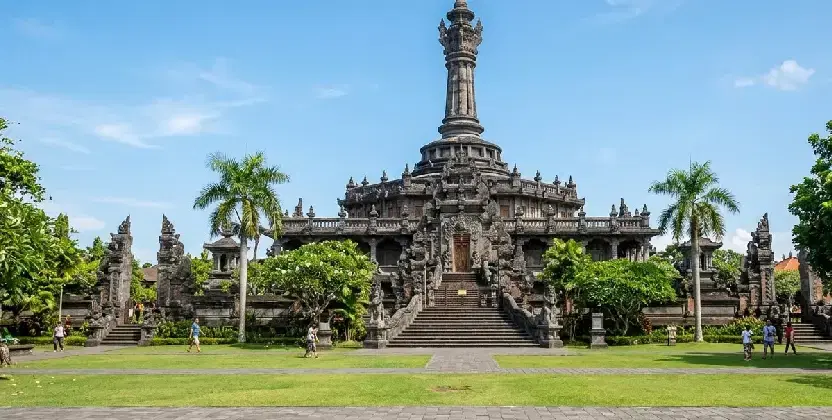
Explore Denpasar’s rich heritage through its ancient temples, traditional markets, museums and historic landmarks. These attractions offer a closer look at Balinese culture.
1. Bajra Sandhi Monument
Located in the Renon area, the Bajra Sandhi Monument is one of Denpasar’s most recognisable landmarks. Its architecture is inspired by the bajra (vajra), a ritual thunderbolt associated with Balinese Hindu ceremonies, while its base reflects Balinese cosmology. Inside, detailed dioramas depict important events in Bali’s history, including the island’s struggles and cultural development. Visitors can also climb to the upper level for panoramic views of Denpasar, making the monument a worthwhile stop for travellers interested in Balinese history and heritage.
- Address: Renon, Denpasar, Bali.
- Entry Fee: IDR 100,000 (approx. ₹540) per international adult; IDR 50,000 (approx. ₹270) per child
- Opening hours: Check current timings before visiting.
- Ideal duration: 1–2 hours.
- Best time to visit: Morning or late afternoon.
- How to reach: Take a taxi or app-based ride from central Denpasar.
Visitor note: Opening days and access can change. Check locally before travelling.
2. Pura Jagatnatha Temple
Located in central Denpasar, Pura Jagatnatha is an active Hindu temple dedicated to Sang Hyang Widhi Wasa, the supreme God in Balinese Hinduism. The temple is known for its intricately designed shrine and traditional Balinese architecture. During prayer times and religious ceremonies, visitors may see worshippers presenting offerings and participating in rituals. As an active place of worship, the temple requires modest clothing, and access to certain areas may be restricted during ceremonies. Visitors should follow local instructions and respect the temple’s religious customs.
- Address: Near Taman Puputan Badung, central Denpasar.
- Entry fee: Free
- Opening hours: Check locally, especially around prayer times.
- Ideal duration: 30–45 minutes.
- Best time to visit: Morning or early evening.
- How to reach: Take a taxi or walk from nearby central Denpasar attractions.
3. Bali Museum (Museum Bali)
The Bali Museum gives a clear view of the island’s history and traditions. The museum displays ancient tools, traditional costumes, sculptures, and ceremonial objects collected from different parts of Bali. Even the buildings themselves look artistic and traditional. This is one of those places where travellers understand the meaning behind many Balinese rituals and festivals they later witness around the island.
- Address: Jalan Mayor Wisnu, central Denpasar.
- Entry fee: IDR 100,000 (approx. ₹540) per international adult; confirm the current rate before visiting.
- Opening hours: Verify current timings and holiday closures.
- Ideal duration: 1–2 hours.
- Best time to visit: Morning.
- How to reach: Take a taxi or app-based ride to the museum near Taman Puputan Badung.
Note: It is closed on public holidays.
4. Maospahit Temple
Maospahit Temple is one of Denpasar’s oldest historical temples, known for its distinctive red-brick architecture and links to the Majapahit Kingdom. According to local historical accounts, the temple’s earliest structure, Candi Raras Maospahit, was established by the Balinese architect and minister Ki Kebo Iwa in 1278 AD (1200 Saka). Its East Javanese architectural influences distinguish it from many other Balinese temples. The complex features traditional brick shrines, terracotta statues and intricate reliefs, offering visitors a glimpse into Bali’s architectural and religious heritage
- Address: Jalan Sutomo area, Denpasar.
- Entry fee: No reliably confirmed standard tourist fee; check locally.
- Opening hours: Confirm locally.
- Ideal duration: 30–45 minutes.
- Best time to visit: Morning or late afternoon.
- How to reach: Use a taxi or app-based ride from central Denpasar.
5. Puri Pemecutan Palace
Puri Pemecutan Palace was once home to Denpasar’s royal family and still carries traces of its royal past. The detailed wooden carvings, traditional architecture, and antique collections quietly tell stories from another era. The palace is not grand or flashy, but it feels personal and historical.
- Entry fee: Confirm visitor access and charges with the palace.
- Address: Pemecutan area, Denpasar.
- Opening hours: Check in advance, as access may be restricted.
- Ideal duration: 30–60 minutes, depending on access.
- Best time to visit: Morning or early afternoon.
- How to reach: Take a taxi or app-based ride from central Denpasar.
Best Markets & Shopping Places in Denpasar
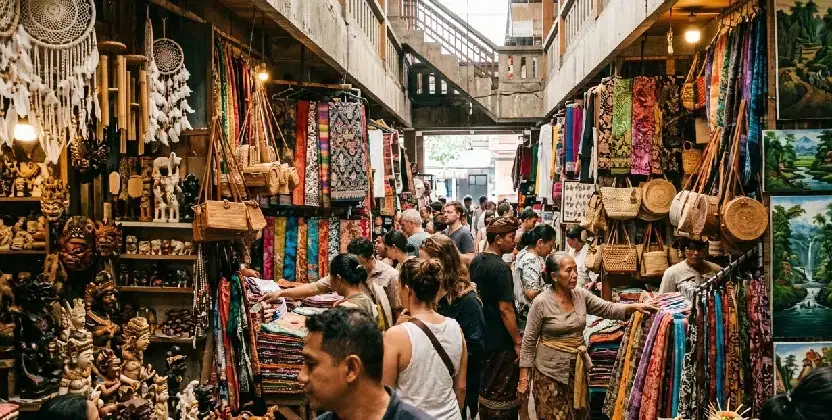
Discover Denpasar’s bustling traditional markets, local handicrafts, batik fabrics and Balinese souvenirs for an authentic shopping experience.
1. Pasar Kumbasari Art Market
Located just across the river from Pasar Badung, this market in Bali is famous for handicrafts and handmade Balinese souvenirs. Small stalls sell paintings, wooden carvings, batik clothes, bags, jewellery, and decorative items at much lower prices compared to tourist shopping streets. Bargaining is common here, which makes shopping even more interesting.
- What to buy: Balinese handicrafts, wooden carvings, paintings, batik fabrics, jewellery, bags and home décor.
- Address: Jalan Gajah Mada, Denpasar, Bali, Indonesia.
- Opening hours: Check current market and individual stall timings locally.
- Ideal duration: 1–2 hours.
- Best time to visit: Morning or afternoon, when more stalls are operating.
- How to reach: Walk from Pasar Badung across the river or take a short taxi or app-based ride from central Denpasar.
Underrated & Hidden Places in Denpasar You Shouldn’t Miss
Explore Denpasar’s lesser-known temples, quiet cultural spots and local neighbourhoods to discover a side of Bali beyond its popular tourist attractions. Here are some of the hidden places to visit in Denpasar:
1. Werdi Budaya Art Centre
Werdi Budaya Art Centre, also known as Taman Werdhi Budaya, is a major cultural complex in Denpasar that hosts traditional dance performances, art exhibitions and cultural events. It is particularly lively during the Bali Arts Festival, which usually takes place from mid-June to mid-July and runs for around a month. The festival brings together performers, artists and cultural groups from across Bali, showcasing traditional music, dance, crafts and regional art forms. Visitors can explore the complex to experience Balinese culture beyond the island’s beaches and resorts.
- Entry fee: Access to the grounds may be free, but special performances, exhibitions or other events may require tickets. Confirm the charges for your visit.
- Address: Jalan Nusa Indah, Denpasar.
- Opening hours: Vary by event and venue access.
- Ideal duration: 1–2 hours; allow extra time for performances.
- Best time to visit: During cultural exhibitions or the Bali Arts Festival.
- How to reach: Take a taxi or app-based ride from central Denpasar.
2. Kampung Arab (Wanasari), Denpasar
Kampung Arab, associated with the Wanasari area of Denpasar, reflects the city’s Arab-Indonesian heritage and multicultural history. Rather than a major tourist attraction, it is primarily a residential neighbourhood where visitors can observe local streets, community life and the area’s cultural character. Travellers can explore the surrounding neighbourhood and look for local eateries and shops, while being mindful that this is a lived-in community rather than a purpose-built sightseeing destination. Specific restaurants and heritage sites should be verified before being recommended.
- Entry fee: Free to walk through public streets; food and shopping cost extra.
- Address: Wanasari area, Denpasar, Bali. Confirm the precise destination with your driver before travelling.
- Opening hours: Public streets are generally accessible throughout the day; individual businesses have their own timings.
- Ideal duration: 30–60 minutes.
- Best time to visit: Late afternoon, when exploring the neighbourhood and finding open eateries may be more convenient.
- How to reach: Take a taxi or Grab/Gojek ride to the Wanasari area from central Denpasar.
Travel tip: Visit Kampung Arab if you are interested in local neighbourhoods and Denpasar’s cultural diversity. If your itinerary focuses on established tourist attractions, prioritise the city’s temples, museums and traditional markets instead.
3. Taman Puputan Badung
Sometimes the best travel experiences are the simplest ones. Taman Puputan Badung is a large public park where locals gather in the evenings to relax, walk, and spend time with family. Food stalls line the nearby streets, children play around the open spaces, and the atmosphere feels calm after a busy day of sightseeing. It is a great place to slow down and observe local life naturally.
- Entry fee: Free; parking charges may apply.
- Address: Central Denpasar, near the Bali Museum and Pura Jagatnatha Temple.
- Opening hours: Check local park access and any event restrictions.
- Ideal duration: 30–60 minutes.
- Best time to visit: Late afternoon or evening.
- How to reach: Walk from nearby central attractions or take a short taxi ride.
Top Beaches in Denpasar
Denpasar is home to several beautiful beaches along Bali’s southeastern coastline, offering peaceful sunrise views, calm swimming spots and scenic waterfront walks. From the popular shores of Sanur Beach to the quieter stretches of Mertasari Beach, these coastal destinations are ideal for relaxing, cycling, enjoying local food and experiencing Bali’s laid-back beach culture.
1. Sanur Beach
Sanur Beach is one of the most popular beaches in Denpasar, known for its golden sand, calm waters and beautiful sunrise views. Protected by offshore coral reefs, it is a great spot for swimming, snorkelling and other water activities when sea conditions permit. The paved beachfront promenade is ideal for morning walks and cycling, while nearby cafés and seafood restaurants offer plenty of places to relax.
- Best for: Sunrise views, families and leisurely beach walks
- Activities: Swimming, snorkelling, cycling and photography
- Best time to visit: April to October, preferably early morning
- Entry fee: Free; parking and some activities may cost extra
2. Karang Beach
Karang Beach is a peaceful coastal spot in the Sanur area, known for its tranquil atmosphere, traditional fishing boats and picturesque sunrise views. Its sandy shoreline makes it a pleasant place to unwind away from busier tourist areas. Visitors can stroll along the shore, take photographs, enjoy the sea breeze and explore nearby cafés. The beachfront walkway also connects Karang Beach with other parts of Sanur.
- Best for: Quiet mornings, couples and photography
- Activities: Beach walks, cycling, sunrise watching and photography
- Best time to visit: Early morning, particularly from April to October
- Entry fee: Free; parking may incur a charge
3. Sindhu Beach
Sindhu Beach is a charming beach in northern Sanur, popular for its sandy shoreline, gentle waves and relaxed local atmosphere. Traditional Balinese fishing boats add character to the scenery, while the eastern-facing coast offers beautiful sunrise views. Visitors can enjoy swimming when conditions are suitable, stroll along the beachfront path or relax at nearby cafés. The Sindhu Fish Market is also worth visiting to experience local fishing culture and sample fresh seafood.
- Best for: Local food, sunrise views and relaxed beach outings
- Activities: Swimming, canoeing, beach walks and seafood tasting
- Best time to visit: Early morning, from April to October
- Entry fee: Free; parking and water activities may cost extra
4. Mertasari Beach
Mertasari Beach lies at the southern end of Sanur and is known for its wide sandy shoreline, relaxed surroundings and scenic coastal views. It is a good choice for travellers seeking a quieter beach experience, with opportunities for family outings and leisurely walks. The nearby Dream Island recreational area features wooden bridges, swings and shaded spaces for relaxation. The beach is also popular for kite flying during suitable weather conditions.
- Best for: Families, peaceful beach outings and coastal scenery
- Activities: Kite flying, photography, beach walks and relaxation
- Best time to visit: April to October, especially in the morning
- Entry fee: Generally free; parking and recreational facilities may incur charges
5. Cemara Beach
Cemara Beach is a quieter stretch of the Sanur coastline, offering a relaxed setting for visitors who prefer peaceful seaside walks over crowded tourist areas. The beach features sandy shores, coastal scenery and views of traditional fishing boats. It is a pleasant place to unwind, take photographs and enjoy the sea breeze. Visitors can also explore the surrounding Sanur neighbourhood, walk along the beachfront promenade and stop at nearby cafés for refreshments.
- Best for: Couples, peaceful walks and photography
- Activities: Beach walks, cycling, sunrise watching and relaxation
- Best time to visit: Early morning, particularly from April to October
- Entry fee: Free; parking may incur a charge
Travel tip: Sanur's beaches face east, making them ideal for sunrise views. Visit early in the morning for cooler weather and quieter surroundings. Although beach access is generally free, parking fees and charges for selected recreational activities may apply. Swimming conditions can vary with tides, currents and weather, so check local conditions before entering the water.
Food Markets in Denpasar
Food markets in Denpasar offer a taste of everyday Balinese life, with traditional snacks, fresh tropical fruits, rice dishes and affordable street food. From the busy stalls around Pasar Badung to evening food vendors and local warungs, these markets are ideal for travellers who want to try authentic Indonesian flavours without spending much.
1. Pasar Badung (Badung Market)
Pasar Badung is one of Denpasar’s best-known traditional markets, popular for fresh produce, spices, flowers and local ingredients. Explore the surrounding streets to look for food stalls selling Indonesian snacks, rice meals and freshly prepared dishes. Early morning is ideal for experiencing the market’s busiest hours and seeing how locals shop for daily essentials.
- Best for: Fresh produce, local snacks and traditional ingredients
- Food to try: Nasi campur, traditional Indonesian cakes and tropical fruits
- Best time to visit: Early morning
- Entry fee: Free; food and purchases are charged separately
2. Pasar Kumbasari Art Market
Located across the river from Pasar Badung, Pasar Kumbasari is primarily known for handicrafts, textiles, souvenirs and traditional Balinese products. It is a convenient addition to a food-focused walk around central Denpasar, with nearby streets offering opportunities to find local snacks and casual eateries.
- Best for: Combining souvenir shopping with local food
- Food to try: Indonesian snacks and traditional sweets available from nearby vendors
- Best time to visit: Morning or afternoon
- Entry fee: Free; shopping and food cost extra
3. Pasar Senggol and Local Evening Food Stalls
Pasar Senggol is a term associated with traditional evening market settings where visitors may find cooked meals, snacks and local street food. For travellers exploring Denpasar after sightseeing, an evening food market can be a good place to sample affordable Indonesian dishes and observe local dining culture. However, the exact location, operating days and current stall availability should be confirmed before visiting, as the name may refer to different local markets.
- Best for: Evening street food and local dining experiences
- Food to try: Nasi campur, satay and traditional Indonesian snacks, depending on stall availability
- Best time to visit: Early evening, after confirming market hours
- Entry fee: Generally free; food purchases are charged separately
4. Jalan Teuku Umar Food Scene
Jalan Teuku Umar is a busy commercial street in Denpasar with restaurants, cafés and casual eateries serving Indonesian and international cuisine. Although it is not a traditional food market, it is a useful stop for travellers looking for a wider choice of meals, from quick lunches to relaxed dinners.
- Best for: Casual dining and varied food options
- Food to try: Nasi ayam, nasi campur and Indonesian rice dishes
- Best time to visit: Lunch or dinner
- Entry fee: Free to explore; meal prices vary by restaurant
One-Day Denpasar Itinerary With Timings and Costs
This one day itinerary prioritises the traditional markets in the morning, when fresh produce and market activity are at their busiest, followed by cultural attractions and an evening food stop. It is a suggested route rather than a fixed schedule; opening hours and traffic may require adjustments.
Time | Activity | Estimated cost per person |
| 7:00–8:30 AM | Explore Pasar Badung and try a local breakfast | IDR 25,000–50,000 (₹135–270) |
| 8:30–9:30 AM | Walk around Pasar Kumbasari Art Market | Free entry; shopping extra |
| 9:30–10:00 AM | Travel to Bali Museum and nearby attractions | Transport extra |
| 10:00–11:30 AM | Visit Bali Museum | Confirm current admission |
| 11:30 AM–12:15 PM | Explore Pura Jagatnatha and Taman Puputan Badung, subject to access | Generally free |
| 12:15–1:15 PM | Lunch at a local nasi campur or nasi ayam warung | IDR 25,000–60,000 (₹135–324) |
| 1:15–2:00 PM | Travel towards Renon | Transport extra |
| 2:00–3:30 PM | Visit Bajra Sandhi Monument | Confirm current admission and opening hours |
| 3:30–4:30 PM | Travel towards Sanur and take a break. | Transport extra |
| 4:30–6:00 PM | Walk along Sanur Beach and enjoy the coastal views. | Free entry; activities extra |
| 6:00–7:30 PM | Dinner at a local eatery or a verified evening food market | IDR 35,000–80,000 (₹189–432) |
Denpasar Trip Cost for One Day
A day in Denpasar can be relatively affordable if you focus on local food, traditional markets and attractions with free entry. Your total budget will depend on museum admission, shopping, transport and whether you hire a private driver.
Expense | Budget traveller | Comfortable traveller |
| Local food and drinks | IDR 75,000 (₹405) | IDR 150,000 (₹810) |
| Local transport | IDR 100,000 (₹540) | IDR 200,000 (₹1,080) |
| Attraction entry fees | IDR 100,000 (₹540) | IDR 200,000 (₹1,080) |
| Shopping and snacks | IDR 50,000 (₹270) | IDR 150,000 (₹810) |
| Estimated total per person | IDR 325,000 (₹1,755) | IDR 700,000 (₹3,780) |
These estimates exclude accommodation, flights, airport transfers and major paid activities. The comfortable budget assumes paid transport and additional spending; a private driver shared by a group may change the per-person cost.
Safety and Etiquette in Denpasar
Denpasar is a useful destination for experiencing Balinese culture, but visitors should respect religious customs and take ordinary precautions in busy markets and public areas.
- Dress appropriately at temples: Wear clothing that covers your shoulders and knees. Many temples require a sarong and sash, which may be available to borrow or rent at the entrance.
- Respect temple restrictions: Some temples restrict entry to menstruating women or other visitors under particular circumstances. Follow the rules displayed at each temple and ask staff if you are unsure.
- Be mindful during ceremonies: Keep a respectful distance from worshippers, avoid blocking processions and never step over religious offerings placed on the ground.
- Ask before taking photographs: Seek permission before photographing worshippers, priests or private ceremonies. Follow restrictions on photography inside shrines and sacred areas.
- Keep belongings secure: Busy markets can be crowded, so keep valuables close and be aware of your surroundings.
- Use transport carefully: Confirm the fare or app booking details before travelling, and wear a helmet when using a scooter.
- Check food ingredients: Ask whether dishes contain pork, seafood, shrimp paste or other ingredients you avoid. Mention allergies clearly when ordering.
Religious customs can vary between temples and ceremonies, so follow local instructions rather than assuming the same rules apply everywhere.
Essential Travel Tips for Visiting Denpasar
- Plan your budget: Denpasar is generally affordable for Indian travellers, especially when you eat at local warungs and explore traditional markets.
- Carry cash: Small shops, food stalls and traditional markets may not accept cards, so keep some Indonesian rupiah handy.
- Check food ingredients: Vegetarian options include vegetable-based nasi goreng, tofu dishes and noodles. Confirm ingredients, as some dishes contain shrimp paste, fish sauce or meat stock.
- Arrange mobile connectivity: Indian travellers can purchase a local Indonesian SIM at the airport or from authorised retailers. Passport registration and identity verification may be required when buying or activating a SIM. Keep your passport available and confirm the provider’s current registration requirements before purchase.
- Choose a SIM or eSIM: For a local Indonesian SIM, foreign visitors may need to show a valid passport and complete the operator’s registration process. Requirements vary by provider, so check before purchasing. An eSIM is a convenient alternative if your phone supports it; check whether the plan requires identity verification and whether your device can access the required network.
- Dress modestly at temples: Cover your shoulders and knees, and wear a sarong and sash where required.
- Respect local customs: Follow temple rules, avoid interrupting ceremonies and ask permission before photographing worshippers.
- Bargain politely: Negotiation is common at traditional markets, particularly when buying souvenirs, textiles and handicrafts.
Conclusion: Is Denpasar Worth Visiting?
Denpasar is worth visiting if you want to understand Bali beyond its beach resorts. The best places to visit in Denpasar reveal a more cultural and everyday side of Bali. It suits travellers interested in traditional markets, Balinese temples, museums, local food and everyday city life. A day trip is generally enough to cover several major attractions.
However, travellers primarily looking for beach clubs, resort relaxation and nightlife may prefer staying in Seminyak, while those seeking a quieter coastal atmosphere may enjoy Sanur more. Consider Denpasar a cultural day trip rather than a compulsory overnight stop, unless its central location fits your wider Bali tour packages.
FAQs
1. What are the best places to visit in Denpasar, Bali?
The best places to visit in Denpasar include Bajra Sandhi Monument, Bali Museum, Pura Jagatnatha Temple, Maospahit Temple, Pasar Badung and Kumbasari Art Market. These attractions showcase Balinese history, religious traditions, local shopping and everyday city life.
2. How many days are enough to explore Denpasar?
One day is enough to explore Denpasar’s main cultural attractions, temples and traditional markets. Spend two days if you want to explore at a relaxed pace, sample local food and visit Sanur’s beaches.
3. What is the best time to visit Denpasar, Bali?
April to October is generally a good time to visit Denpasar, as this is Bali’s dry season. The Bali Arts Festival usually takes place from June to July, while July and August tend to attract more tourists.
4. How far is Denpasar from Ubud, Seminyak and Ngurah Rai Airport?
Ngurah Rai International Airport is approximately 10–15 km from parts of Denpasar, Seminyak is around 8–12 km away, and Ubud is approximately 25–30 km away. Travel times vary with traffic and your exact destination.
5. Is Denpasar safe for tourists?
Denpasar is generally suitable for tourists who take normal precautions. Keep valuables secure in crowded markets, use reputable transport services, follow traffic rules and respect local customs at temples and religious ceremonies.
6. Is Denpasar worth visiting if I only have a few days in Bali?
Yes, Denpasar is worth visiting if you enjoy Balinese history, temples, traditional markets and local food. If you have only a few days in Bali, set aside half a day or one full day for the city rather than changing accommodation.
7. What should I wear when visiting temples in Denpasar?
Wear modest clothing that covers your shoulders and knees. Many temples require a sarong and sash, which may be available at the entrance. Follow posted restrictions and respect religious ceremonies.
8. Where can I eat vegetarian food in Denpasar?
Vegetarian options are available at local warungs, cafés and casual restaurants. Look for vegetable nasi goreng, tofu and tempeh dishes, vegetable noodles and rice meals. Ask about shrimp paste, fish sauce and meat stock before ordering.
9. Is shopping cheaper in Denpasar than in Ubud, and should you bargain at Pasar Badung and Kumbasari?
Denpasar’s traditional markets offer local produce, textiles, handicrafts and souvenirs at varying prices. Shopping is not always cheaper than in Ubud. Bargaining is more common at souvenir stalls in Kumbasari Art Market, while fixed-price goods and everyday groceries at Pasar Badung generally should not require negotiation.
10. Which temples are worth visiting in Denpasar?
Pura Jagatnatha and Maospahit Temple are notable temples in Denpasar. Pura Jagatnatha is dedicated to Sang Hyang Widhi Wasa, while Maospahit Temple is known for its red-brick architecture and historical links to the Majapahit Kingdom. Dress modestly and follow local temple rules.
11. Which markets are best for shopping in Denpasar?
Pasar Badung is known for fresh produce, spices, flowers and local ingredients, while Kumbasari Art Market offers handicrafts, batik fabrics, paintings, jewellery and souvenirs. Visit early for market activity and check individual stall timings before travelling.
12. What is the best time to visit Denpasar, Bali?
April to October is the dry season and a good time to explore Denpasar’s temples, museums and markets. June–July brings the Bali Arts Festival, while July–August sees peak tourist crowds. Since Denpasar is primarily a cultural destination, comfortable sightseeing weather matters more than beach conditions.