
Top Festivals in Singapore 2026-27: Dates, Locations & Travel Tips
Singapore's festivals offer a different way to experience the city, from Chinese New Year celebrations in Chinatown to Deepavali's festive lights in Little India and Hari Raya gatherings in Geylang Serai. The top festivals in Singapore reflect the country's Chinese, Indian, Malay and Buddhist traditions, alongside national celebrations and seasonal events.
Planning your trip around a festival can help you discover cultural performances, temple traditions, festive markets and neighbourhood decorations. Many public celebrations are free to experience, making them easy to add to your Singapore package. This guide covers the major festivals, 2026 dates, locations, what to expect, the best months to visit and practical tips for getting around and enjoying each celebration respectfully.
Key Takeaways
- Singapore celebrates festivals throughout the year, with dates varying by calendar and tradition.
- Chinatown is a useful area for Chinese New Year and Mid-Autumn Festival activities.
- Little India is a key destination for Deepavali and Thaipusam.
- Geylang Serai and Kampong Glam are worth checking for Hari Raya celebrations.
- Some public displays are free, while ticketed events and special programmes may require advance booking.
- Confirm dates, transport arrangements and event advisories before visiting.
Singapore Festival Calendar 2026-27: Festivals by Month
Festival | 2026 date | 2027 date | Where to focus |
| Chinese New Year | 17–18 February | 6–7 February | Chinatown and citywide celebrations |
| Thaipusam | 1 February | 22 January is listed by a festival calendar; reconfirm locally | Sri Srinivasa Perumal Temple and Sri Thendayuthapani Temple |
| Hari Raya Puasa | 21 March | 10 March | Geylang Serai and Kampong Glam |
| Good Friday | 3 April | 26 March | Churches and services; check individual programmes |
| Vesak Day | 31 May | 20 May | Buddhist temples |
| National Day | 9 August | 9 August | National Day Parade venue and citywide displays |
| Mid-Autumn Festival | 25 September; Chinatown programme ran 19–20 September | Expected around September; event dates to be confirmed | Chinatown and other community celebrations |
| Deepavali | 8 November | 28 October | Little India |
| Christmas | 25 December | 25 December | Orchard Road, shopping districts and citywide displays |
Note: Islamic festivals like Hari Raya Puasa follow the lunar calendar.
Festivals in Singapore
1. Chinese New Year: Chinatown Celebrations & Chingay Parade

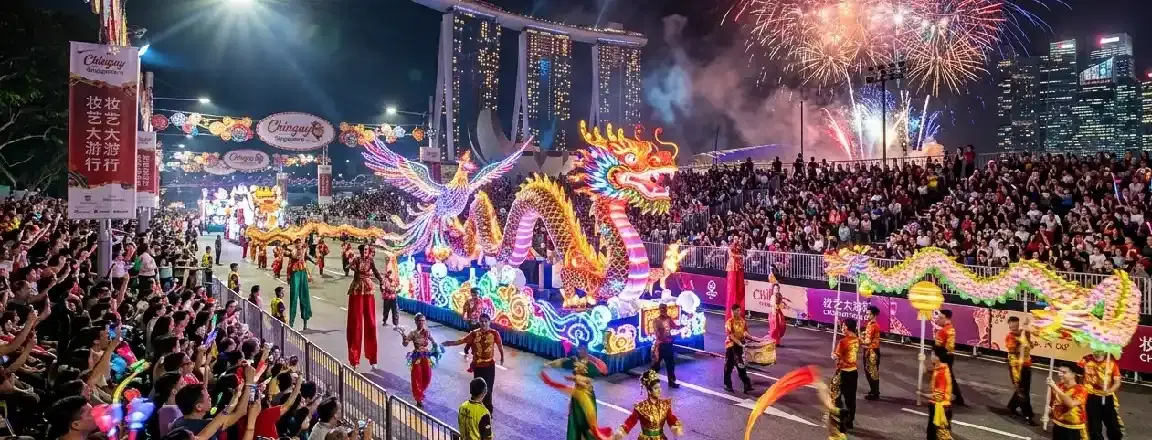
Chinese New Year is one of the main festivals in Singapore that attracts millions of visitors annually. This 15-day celebration turns Singapore into a festive wonderland. On this occasion, you may watch Lion and Dragon dances and feel the local traditions. On top of that, you could also see the renowned Chingay Parade with its fancy floats and cultural performances as the streets are decorated. The event culminates with the mind-blowing fireworks on Marina Bay.
- Where to visit: Chinatown, South Bridge Road, Temple Street
- Celebrated Months: January and February
Tips: Book your hotel early - prices double during this period. The best photo opportunities happen during the evening light displays.
2. Lantern Festival (Mid‑Autumn): Chinatown Night Lights

Witnessing the glowing night sky of Singapore during the Lantern Festival in January. It is also referred to as the Mid-Autumn Festival in Singapore and is celebrated to mark the end of the Lunar New Year. One of the most exciting things to do in Singapore during this time is walking on the streets of Chinatown and seeing the floating lights. Visit Chinatown after sunset to catch the lanterns just as they’re lit against the twilight sky.
- Where to Visit: Chinatown, New Bridge Road and Eu Tong Sen Street
- Celebrated Month: January
3. Thaipusam 2026: Temple Processions in Little India

Thaipusam is one of the famous festivals in Singapore, which offers very strong cultural experiences. It is a two-day event which signifies the victory of good over evil. It is observed as an honour to Lord Murugan, who is also the deity of war and success. If you want to enjoy the greatest Thaipusam, do visit the Hindu temples in Singapore, where the aroma of incense, the rhythm of the drums, and glittery kavadi ornaments conjure a magical moment.
- Where to Visit: Sri Srinivasa Perumal Temple, Sri Thendayuthapani Temple
- Celebrated Month: January/February
Tips: If attending Thaipusam, stay hydrated and wear breathable cotton clothing. Crowds can be dense by mid-morning.
4. Deepavali: Little India Lights, Food & Celebrations

Singapore's Little India becomes very colourful with the illuminated surroundings and Kolam patterns (decoration made using rice flour at doorsteps to bring goodwill) during Diwali. This is a celebration of the victory of light over darkness and good over evil. During these five days of celebrating Diwali, you can visit the food markets and enjoy cultural performances. The Dipavali Food Village along Campbell Lane are the best place to witness the nightlife in Singapore during festival time.
- Where to visit: Mustafa Centre and Little India
- Celebrated Months: October and November
5. Hari Raya Puasa: Kampong Glam & Geylang Serai

Hari Raya Puasa is the celebratory end to the fasting season or month of Ramadan and involves community activities in the Malay residential community of Singapore. This is one of the festivals in Singapore which is most significant to the muslim community. It is commemorated by praying in the mosques and the households of the family. At this period, Kampong Glam is a place of festive gathering with the Sultan Mosque being the place of prayer for the community members.
- Where to Visit: Kampong Glam, Geylang Serai
- Celebrated Months: November and December
6. Vesak Day 2026: Buddhist Celebrations in Singapore

Vesak Day is celebrated as the birthday and enlightenment of Buddha, peacefully in the temples throughout Singapore. On this day Buddha bathing ritual is observed, and scented water is poured upon the Buddha idols. It symbolises mental and spiritual purification. Be a part of this holy day by offering candles, flowers and Joss sticks in monasteries in Singapore. Additionally, lighting a lamp on Vesak Day symbolises inner peace and mindfulness.
- Where to visit: The Buddha Tooth Relic Temple in Chinatown and Kong Meng San Phor Kark
- Celebrated Month: May
Best Time to Experience Festivals in Singapore
The best time to visit Singapore for festival fun is throughout the year. However, January to March can be crowded with higher prices for hotels and flights. So plan accordingly.
Season | Months | Key Festivals | Experience |
| Peak Season | Jan - Mar | Chinese New Year, Thaipusam | Spectacular, crowded, higher prices. |
| Sweet Spot | Apr - May, Sep - Nov | Vesak Day, Diwali | Impressive, manageable crowds, and affordable. |
| Year-Round | Most months | Various multicultural celebrations | Always something to experience, a diverse culture. |
How to Get Around Singapore During Festivals?
Singapore's MRT system connects all major festival areas efficiently. The Circle Line serves Little India perfectly. The North East Line provides direct access to Chinatown. Special shuttle buses are frequently used during Singapore's big events.
Tips: To witness the street performances, explore the festival attractions by walking. You'll miss authentic street-level experiences if you stay in vehicles too long.
Where to Shop During Singapore's Festivals?
For festive shopping in Singapore, you can visit Orchard Road, Bugis Street Market and Chinatown Street Market. Don't miss the Singapore Christmas markets at Gardens by the Bay.
Tips for Visiting Festivals in Singapore in 2026-27
- When visiting temples during festivals, wear clothes that cover your shoulders and knees.
- Maintain a respectful distance during religious ceremonies and personal devotions.
- Accept the offered food graciously during open house celebrations.
- Book your accommodation at least 1-2 months in advance during peak festival seasons for a reasonable price.
- Avoid taking flash photos inside temples during rituals, and always remove shoes before entering.
Conclusion: Plan Your Singapore Trip Around These Festivals
The festivals in Singapore give Indian travellers more than colourful streets and cultural events, they offer a closer look at the Chinese, Indian, Malay and Buddhist traditions that shape the city. From the lively celebrations of Chinese New Year and Deepavali to the spiritual experiences of Thaipusam and Vesak Day, each festival offers something different.
If you want to experience Singapore at its most festive, plan your trip around the celebration that interests you most. Check the festival dates, choose the right neighbourhood, book your stay early during busy periods and follow local customs at religious sites. With the right planning, you can combine Singapore's major festivals with sightseeing, food, shopping and other experiences for a more memorable holiday.
FAQs
1. What are the top festivals in Singapore?
A: The top festivals in Singapore include Chinese New Year, Thaipusam, Deepavali, Hari Raya Puasa, Vesak Day, Mid-Autumn Festival, National Day and Christmas. Each festival offers a different cultural experience across areas such as Chinatown, Little India and Kampong Glam.
2. What is the best time to visit Singapore for festivals?
A: January to March is a lively period for festivals in Singapore, especially for Chinese New Year and Thaipusam. October and November are also popular for Deepavali and other cultural celebrations, while major festivals take place throughout the year.
3. Which festivals are celebrated in Singapore in 2026?
A: Major festivals in Singapore in 2026 include Chinese New Year, Thaipusam, Holi, Vesak Day, Dragon Boat Festival, National Day, Mid-Autumn Festival, Deepavali, Hari Raya Puasa and Christmas.
4. Which festivals in Singapore are best for Indian travellers?
A: Deepavali and Thaipusam are especially relevant for Indian travellers. Little India is the main area to experience these celebrations, with temple rituals, festive lights, cultural performances, food and colourful street decorations.
5. Where can I experience festivals in Singapore?
A: Chinatown is popular for Chinese New Year and Mid-Autumn Festival, Little India for Thaipusam and Deepavali, and Kampong Glam and Geylang Serai for Hari Raya celebrations. Marina Bay also hosts major citywide events such as National Day celebrations.
6. Are festivals in Singapore free to attend?
A: Many public festival celebrations in Singapore are free to experience, including street decorations, cultural displays and public events. Some ticketed performances and special events may charge an entry fee.
7. Which festival is celebrated in Little India, Singapore?
A: Little India hosts major Indian festivals such as Deepavali and Thaipusam. Visitors can see festive lights, temple ceremonies, cultural activities and traditional food around the neighbourhood during these celebrations.
8. What should tourists wear when visiting festivals in Singapore?
A: Tourists should wear modest clothing when visiting temples or religious ceremonies in Singapore. Cover your shoulders and knees, remove your shoes where required and follow the instructions given at the place of worship.
9. Can tourists participate in festivals in Singapore?
A: Yes, tourists can experience many festivals in Singapore through public celebrations, cultural performances, street events and festive markets. Visitors should respect religious ceremonies, local customs and photography rules when attending.
10. How can I travel around Singapore during festivals?
A: The MRT is one of the easiest ways to travel between festival areas in Singapore. Walking is also useful around Chinatown, Little India and Kampong Glam, while buses and taxis can help when roads are crowded or temporarily closed.
11. Which Singapore festivals are celebrated in October and November?
A: Deepavali is the main festival for visitors to experience in Singapore during October and November. Little India becomes especially lively with festive lights, decorations, cultural activities and food during the celebration.
12. Which festivals are celebrated in Singapore in January and February?
A: Chinese New Year and Thaipusam are among the major festivals celebrated in Singapore during January and February. Chinatown is the main area for Chinese New Year, while Thaipusam is centred around Hindu temples and Little India.
13. Is Deepavali celebrated in Singapore?
A: Yes, Deepavali is widely celebrated in Singapore, especially in Little India. The area features colourful lights, kolam decorations, cultural events, festive shopping and food activities during the celebration.
14. Is Singapore crowded during major festivals?
A: Singapore can be more crowded during major festivals, particularly around Chinatown during Chinese New Year and Little India during Deepavali and Thaipusam. Hotels and flights may also cost more during popular festival periods.
15. What are the most important cultural festivals in Singapore?
A: Singapore's major cultural festivals include Chinese New Year, Thaipusam, Deepavali, Hari Raya Puasa, Vesak Day and Mid-Autumn Festival. They reflect the country's Chinese, Indian, Malay and Buddhist heritage.