
Chinese New Year in Thailand 2026: Complete Festival Guide
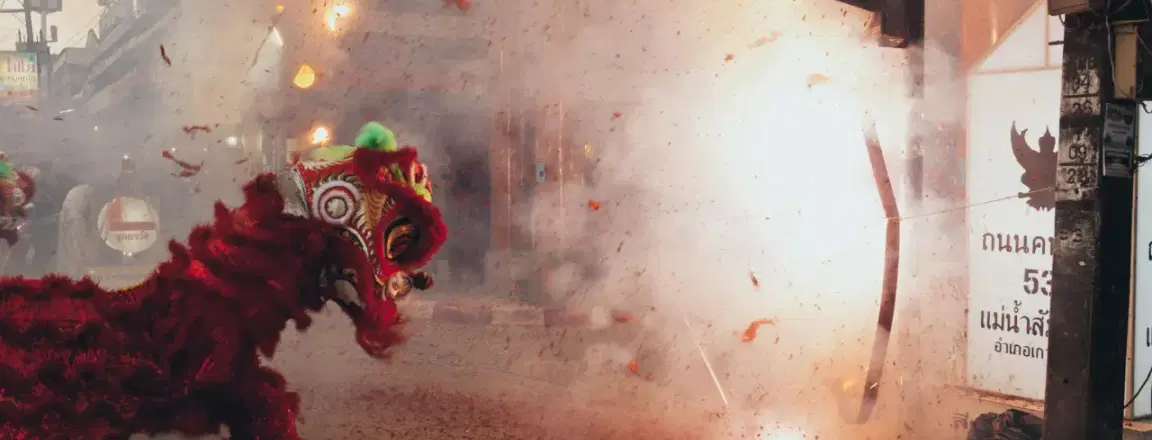
Chinese New Year in Thailand is one of the country’s most vibrant cultural celebrations, blending Chinese traditions with Thai hospitality and festive street celebrations. Celebrated widely in cities like Bangkok, Phuket, and Chiang Mai, the festival transforms Chinatown districts into lively hubs filled with dragon dances, lantern displays, fireworks, temple rituals, and delicious street food. Around 14% of Thailand’s population is of Chinese descent, adding deep cultural significance to the celebrations.
From colourful parades to spiritual ceremonies, it’s a fantastic time to explore the country through exciting Thailand tour packages and festive local experiences. If you're planning a trip to Thailand and your travel window overlaps with the Lunar New Year, rearranging your dates to be in Bangkok or Nakhon Sawan during the main celebrations is worth it.
When Is Chinese New Year in Thailand?
Chinese New Year is one of the most exciting festivals in Thailand, usually celebrated between late January and mid-February based on the lunar calendar. Thus, the dates change every year, but the celebrations often last for several days with temple visits, dragon dances, family gatherings, and lively street festivities across the country.
Year | Date | Zodiac Animal |
| 2025 | January 29 | Year of the Snake |
| 2026 | February 17 | Year of the Horse |
| 2027 | February 6 | Year of the Goat |
Festivities officially span 15 days, but for visitors, the first three days are the main event:
- Wan Jai (Preparation Day): The day before New Year's Eve. Families buy offerings, clean their homes (sweeping out bad luck), and prepare food for ancestor worship.
- Wan Wai (Worship Day): New Year's Eve. Families pray at home altars and at temples, offering incense, food, and paper money. Temples are packed from early morning.
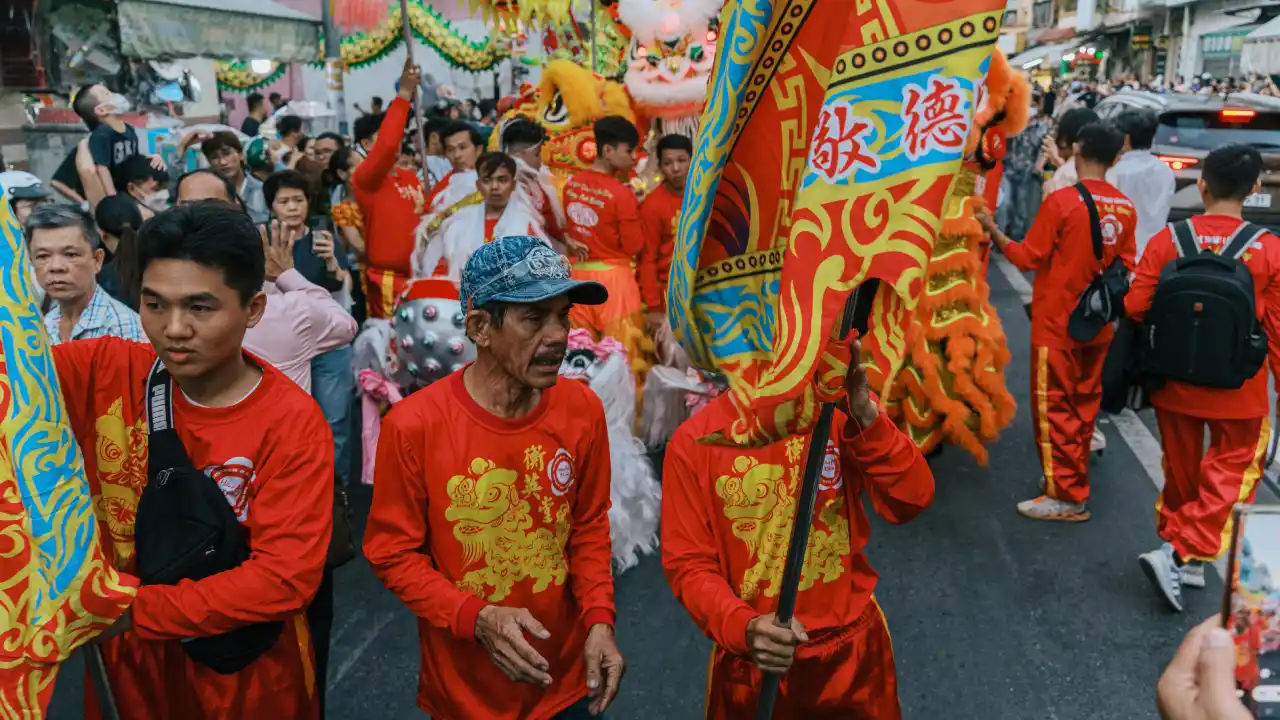
- Wan Thiew (New Year's Day): The main public celebration. Family visits, red envelopes (Ang Pao), lion dances, dragon parades, and large street gatherings.
Note: Chinese New Year is not a national public holiday in Thailand, so banks, government offices, and most businesses operate normally.
The 3-Day Structure: What Happens Each Day
Day 1 — New Year’s Eve (Wan Wai)
The celebrations begin with family reunion dinners and temple visits. In Bangkok’s Chinatown, Yaowarat Road comes alive with glowing lanterns, street food stalls, lion dances, and festive crowds. Temples like Wat Mangkon Kamalawat fill with worshippers praying for luck and prosperity in the new year.
Day 2 — New Year’s Day (Wan Thiew)
This is the most festive day, filled with dragon dances, colourful parades, and red decorations everywhere. Families exchange lucky red envelopes called Ang Pao, while locals dress in red to welcome good fortune and positive energy for the year ahead.
Day 3 — Second Day of the New Year
The celebrations become more relaxed as families spend quiet time together, and many shops reopen. Chinatown areas still feel festive, making it a great day to enjoy temple visits, local food, and cultural experiences without the biggest crowds of day 1 or 2.
Best Cities to Celebrate Chinese New Year in Thailand
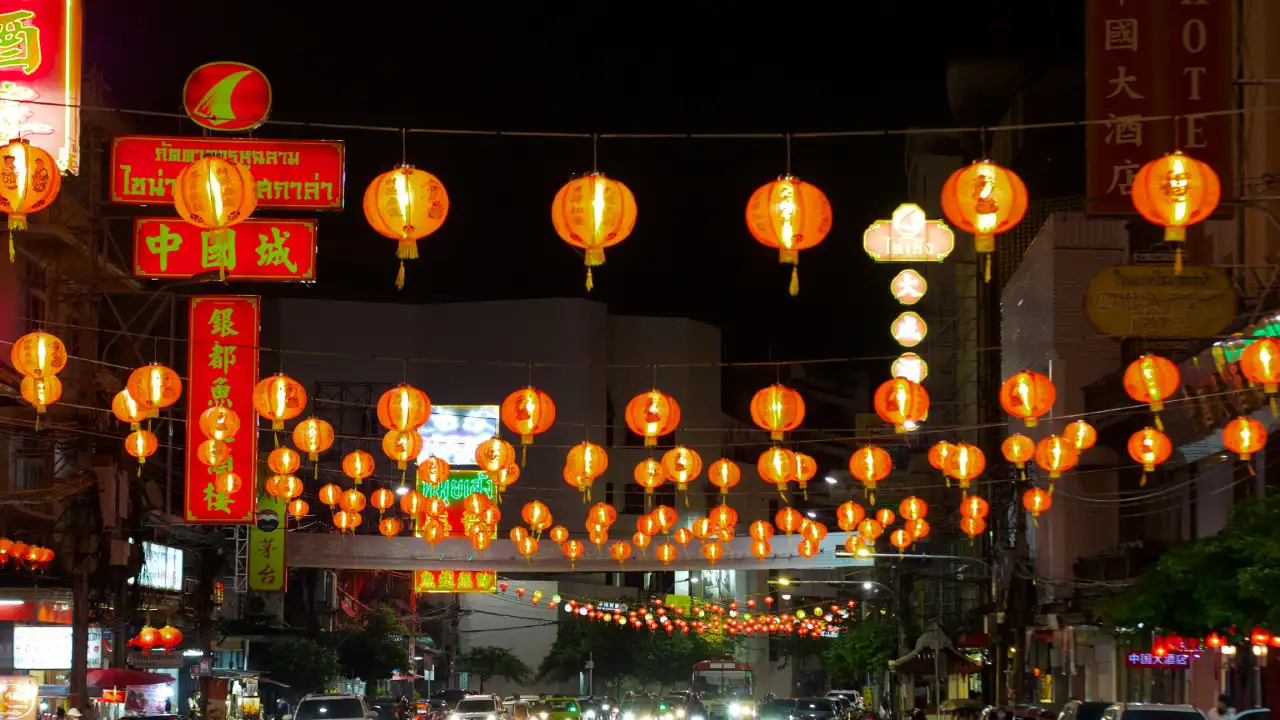
Bangkok — Yaowarat (Chinatown)
Home to one of Thailand’s largest Sino-Thai communities, Yaowarat Road is one of the best places to visit in Bangkok for the Chinese New Year. During this time, the place turns into a sea of red lanterns, street food stalls, and nonstop lion dance performances. The celebrations here are lively, energetic, and extremely crowded after sunset, especially along the main parade routes.
- Key spots to celebrate: Wat Mangkon Kamalawat, Yaowarat Road's main stretch, and Soi Yaowarat 1, 2, and 11.
Nakhon Sawan
Known for its long-established Chinese community, Nakhon Sawan hosts the famous Paknampho Festival, considered Thailand’s oldest Chinese New Year celebration. The festival features cultural parades, performances, and traditional ceremonies that reflect the city’s deep Chinese heritage in a more authentic and less touristy setting.
- Key spots to celebrate: Paknampho Festival parade route, Chao Pho-Chao Mae Na Pha Shrine, and the riverside festival area.
Phuket
Shaped by a strong Hokkien Chinese community, Phuket celebrates Chinese New Year with lantern-filled streets, lion dances, and shrine ceremonies in the Phuket Old Town area. The city’s Sino-Portuguese architecture adds a unique backdrop, creating a celebration that feels both cultural and visually beautiful for visitors.
- Key spots to celebrate: Phuket Old Town, Jui Tui Shrine, Thalang Road, and Dibuk Road.
Chiang Mai
If you’re looking for a quieter festive experience, Chiang Mai is one of the best places to visit in Thailand. It hosts smaller Chinese New Year celebrations around local markets and historic streets. Visitors can enjoy traditional performances, lantern decorations, and festive food stalls without dealing with overwhelming crowds, making the celebrations feel relaxed and easy to explore.
- Key spots to celebrate: Warorot Market, Chang Moi Road, and the Chinatown area near the Ping River.
Lampang
With a smaller but culturally active Chinese community, Lampang celebrates Chinese New Year through lion dances, Tai Chi demonstrations, Chinese music, and Yingge folk performances. The festival feels local and community-driven, offering travellers a more traditional and less commercial celebration experience.
- Key spots to celebrate: Prasan Maitri Road, local Chinese temples, central festival stage areas.
Best Cities Comparison Table
City | Crowd Level | Best For | Festival Length | How to Reach from Bangkok |
| Bangkok (Yaowarat) | Very High | Maximum spectacle, first-timers | 3+ days | Already there |
| Nakhon Sawan | Medium | Authentic, oldest procession | 3–5 days | 3 hrs bus from Mo Chit |
| Phuket | Medium | Photography, Old Town setting | 2–3 days | Fly or overnight bus |
| Chiang Mai | Low | Relaxed, combined temple trip | 2 days | Fly or overnight train |
| Lampang | Low | Off-beaten path | 3 days | 1.5 hrs from Chiang Mai |
What to Eat During Chinese New Year in Thailand?
Chinese New Year in Thailand is also a celebration of food, family, and good fortune. From symbolic sweets to festive street snacks, many traditional dishes are believed to bring luck, prosperity, and happiness for the year ahead.
Here’s a quick look at some popular foods commonly enjoyed during Chinese New Year celebrations across Thailand:
- Bak kwa (grilled pork jerky): A CNY staple, sold in vacuum-packed packs at shopfronts along Yaowarat in the days before the festival
- Tang yuan (glutinous rice balls in sweet soup): Eaten on the 15th day (Yuan Xiao Festival), symbolizing family unity
- Crispy roast duck and roast pork (char siu): Available at Yaowarat's famous roast meat shops year-round, but at higher volume during CNY
- Braised pork knuckle (khao kha moo): Thai-Chinese comfort food widely available in the Chinatown area
- Nian gao (sticky rice cake): Sweet, dense rice cake eaten for luck; available at Chinese pastry shops in Chinatown
For vegetarian Indian travellers: The standard CNY feast is meat-heavy. However, during Yaowarat's festival, several dedicated vegetarian/vegan Chinese-Thai stalls operate. You need to look for signs with the Thai letter เจ (jay = vegan). Additionally, Buddhist Chinese-Thai families often keep vegan days around religious events, so options exist but require active searching.
Chinese New Year Customs You Should Know
- Family Reunion Dinners: Families gather on New Year’s Eve to enjoy symbolic dishes believed to bring luck, happiness, and prosperity for the year ahead.
- Giving Red Envelopes: Elders give red envelopes, or “ang pao,” filled with money to children and unmarried relatives as a symbol of blessings and good fortune.
- Wearing red: Standard on New Year's Day and encouraged for visitors. Avoid wearing black or white — both are associated with mourning in Chinese tradition.
- What to avoid saying: Don't reference death, illness, debt, or bad luck. Avoid breaking anything (it's seen as inauspicious).
- At temples during CNY: Arrive early if you want to light incense. Long queues form at popular temples from dawn.
- Cleaning Homes Before New Year: Homes are cleaned before the festival to remove bad luck, while cleaning on New Year’s Day is often avoided.
Essential Tips For Visiting Thailand During Chinese New Year
- Book accommodation early: Yaowarat-adjacent hotels in Bangkok fill up fast for CNY. Aim to book 6–8 weeks in advance. If budget is a constraint, stay in Silom or Ari and take the MRT to Hua Lamphong, then walk to Yaowarat.
- Dining reservations: Popular Yaowarat restaurants book out 3–4 weeks before the main dates. If you have a specific restaurant in mind, call ahead. Many Thai-Chinese restaurants across the city run CNY set menus with higher minimum spends.
- Transport in Yaowarat during CNY: Yaowarat Road itself is often closed to vehicles on the main nights. Take the MRT to Hua Lamphong and walk 10–15 minutes, or take a river boat to Ratchawong Pier.
- Costs during CNY: Street food prices in Yaowarat remain standard. Hotel prices near Chinatown rise 20–40% during peak nights. Plan for this.
Conclusion
Chinese New Year in Thailand is more than just a festival — it’s a vibrant mix of culture, community, food, and tradition. From the energetic streets of Yaowarat Road to smaller local celebrations in Chiang Mai and Phuket, the festival offers travellers a unique cultural experience filled with lanterns, performances, temple visits, and festive food. Whether you enjoy lively street celebrations or quieter community traditions, the Chinese New Year is one of the most exciting times to experience Thailand.
FAQs
Is Chinese New Year a public holiday in Thailand?
No, Chinese New Year is not an official public holiday in Thailand. Banks, offices, and most businesses usually remain open, although celebrations are widely held in cities with large Chinese communities.
When is Chinese New Year in 2027?
Chinese New Year in 2027 falls on February 6 and marks the beginning of the Year of the Goat according to the Chinese zodiac calendar.
Where is the best place to celebrate Chinese New Year in Thailand?
Yaowarat Road is the most popular place for Chinese New Year celebrations in Thailand, known for its dragon dances, lantern displays, street food, and lively festival atmosphere.
What should I wear to CNY celebrations in Thailand?
Red clothing is highly recommended during Chinese New Year because it symbolises luck, happiness, and prosperity. It’s also best to avoid black or white outfits, as they are traditionally linked with mourning.
How crowded is Yaowarat during Chinese New Year?
Yaowarat Road becomes extremely crowded, especially after sunset on New Year’s Eve and New Year’s Day. Arriving early is the best way to explore comfortably and enjoy the celebrations.
Can vegetarians find food at Yaowarat during CNY?
Yes, vegetarian food is available during Chinese New Year in Yaowarat. Look for stalls displaying the Thai symbol “เจ” (Jay), which indicates vegan or vegetarian-friendly food options.