
- Home
- Attractions
- Bali
- Tirta Empul Temple Bali 2026: Tickets, Melukat Ritual, Dress Code & Guide
Tirta Empul Temple Bali 2026: Tickets, Melukat Ritual, Dress Code & Guide
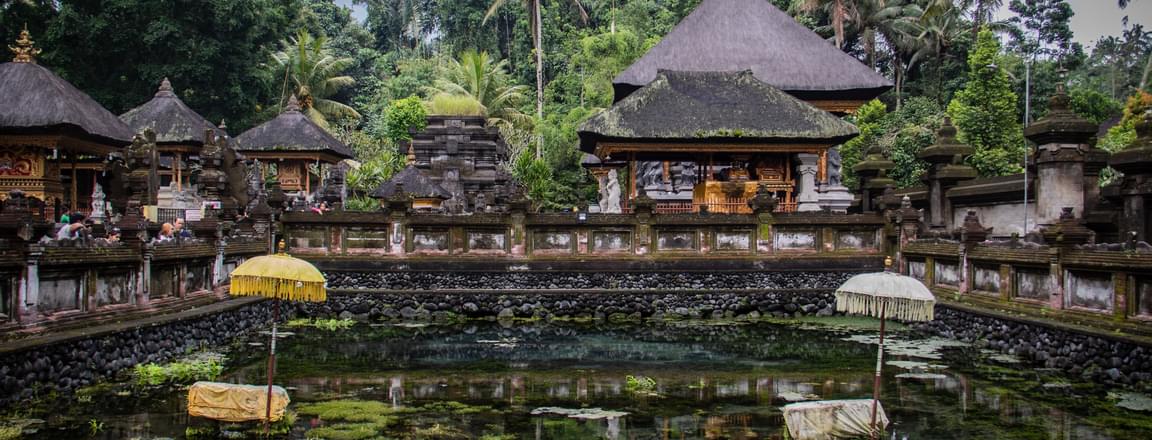
Imagine a temple built around a natural spring that has been sacred for more than 1,000 years. Tirta Empul Temple is a sacred Balinese Hindu water temple in Tampaksiring, Bali, famous for its holy spring and melukat purification ritual. Devotees visit the temple to pray and bathe under the sacred water spouts, while visitors can explore the temple, observe the ritual and, where permitted, participate respectfully. Visitors can also watch this living tradition or take part in the ritual themselves, making it different from a typical sightseeing stop for your Bali package.
For travellers, knowing what happens here, how to dress, when to visit, and whether you can join the purification ritual makes the experience much easier and more respectful. This Bali guide covers everything you need to know before visiting, including the temple's history and legend, location, purification pools, dress code, ticket prices, best time to visit and tips.
Tirta Empul Temple at a Glance
Quick Info | Details |
| Location | Manukaya, Tampaksiring, Gianyar, Bali |
| From Ubud | Approx. 15 km / around 30–45 minutes |
| Famous for | Holy spring and melukat purification |
| Temple type | Balinese Hindu water temple |
| Time needed | Around 1–2 hours |
| Best time | Early morning |
| Dress code | Modest clothing + sarong/sash |
| Melukat | Participation may be available to visitors subject to temple rules |
| Best for | Culture, spirituality, history and photography |
Tirta Empul Temple History and Legend
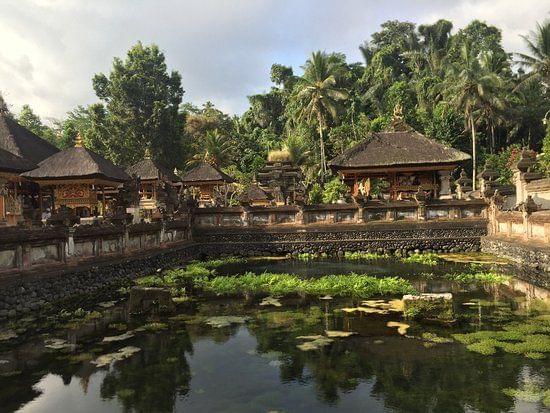
Tirta Empul Temple is a sacred Hindu temple in Tampaksiring, Bali, known for its natural holy spring and purification rituals. The temple is still an active place of worship. Balinese Hindus visit the sacred spring to pray and take part in melukat, a traditional purification ritual. The temple complex also has courtyards, shrines, bathing pools and other spaces used for religious activities.
How Old Is Tirta Empul Temple?
The sacred site has documented roots dating back to at least the 10th century. A 962 AD inscription refers to a water structure associated with the site, while the temple complex has developed and changed over many centuries. This makes Tirta Empul an important part of Bali’s long history and one of the most beautiful temples in Bali.
The Legend of Tirta Empul Temple: Indra and Mayadenawa
Tirta Empul is also connected to an important Balinese Hindu legend about the god Indra and the powerful king Mayadenawa.
According to the legend, Mayadenawa poisoned a spring to harm the followers of the God Indra. Indra then created a sacred spring with healing water to help them. This spring is believed to be the source of Tirta Empul.
What Does Tirta Empul’s Holy Water Symbolise?
For Balinese Hindus, the holy water at Tirta Empul is closely linked with purification and spiritual cleansing. During melukat, worshippers bathe under the temple’s water spouts as part of a religious ritual.
The practice shows the close relationship between water, spirituality, and community life in Bali. Tirta Empul therefore remains more than a historic attraction. It is a living religious site where traditional practices continue today.
Cultural Importance of Tirta Empul Temple
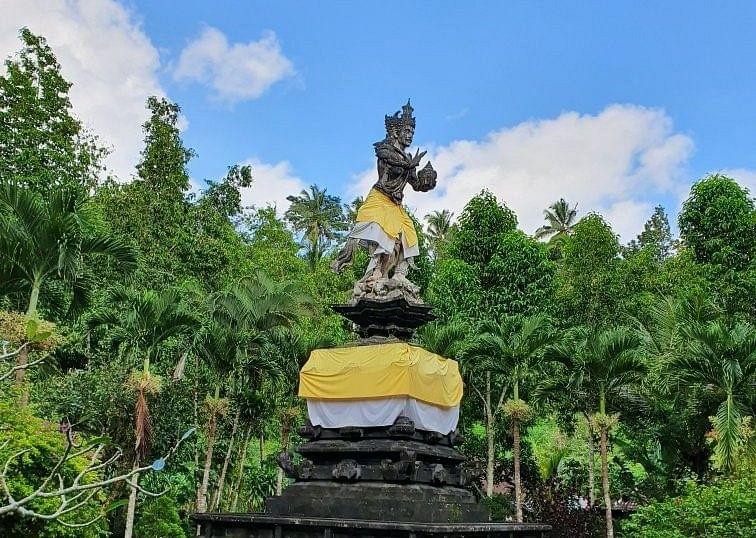
Tirta Empul is important because it brings together religion, water, tradition and everyday Balinese life. Its main cultural importance comes from:
- Active worship: Balinese Hindus visit the temple for prayers, ceremonies and purification rituals.
- Sacred spring water: The natural spring is central to the temple and its religious practices.
- Purification: Visitors taking part in the melukat ritual move through the temple’s purification pools and use the sacred water as part of the ceremony.
- Balinese traditions: The temple shows how Hindu beliefs and local Balinese customs are closely connected.
- Living culture: Visitors may see families praying, making offerings and attending ceremonies at the temple.
Things to Do at Tirta Empul Temple
The best things to do at Tirta Empul Temple include taking part in the melukat purification ritual, seeing the sacred spring, exploring the temple courtyards and observing Balinese Hindu ceremonies. The temple is still an active place of worship, so visitors should explore quietly and follow local rules.
1. Participate in the Melukat Purification Ritual
The Melukat purification ritual is one of the main reasons people visit Tirta Empul Temple. Melukat is a Balinese Hindu purification ritual that uses holy water. At Tirta Empul, worshippers enter the sacred pools and cleanse themselves under the water spouts. The ritual has religious meaning and is part of the temple's living spiritual tradition.
2. See the Sacred Spring
The natural spring is the source of the holy water used in Tirta Empul's purification pools. The spring rises inside the temple complex and its water is channelled into the bathing pools through a series of stone spouts.
The spring is located in the temple's inner courtyard, known as the jeroan. This area also contains Hindu shrines and is used for prayer. Photography is allowed in many areas, but visitors should avoid photographing people during private prayers or ceremonies without permission.
3. Explore the Temple Courtyards
Tirta Empul is divided into several temple areas, each with a different purpose. The outer courtyard, middle courtyard, and inner courtyard form the main parts of the complex.
As you walk through the temple, you can see:
- Traditional Balinese gates and courtyards
- Hindu shrines and stone sculptures
- Flower and palm-leaf offerings
- Religious decorations and umbrellas
- The sacred spring and purification pools
TIP: Some areas may be restricted during prayers or ceremonies. So, always follow signs and instructions from temple staff.
4. Watch Balinese Hindu Ceremonies and Offerings
Tirta Empul is an active Hindu temple, so religious ceremonies are part of everyday life here. Depending on the day of your visit, you may see worshippers wearing traditional clothing, carrying offerings and gathering for prayers.
What Happens at the Tirta Empul Purification Pools?
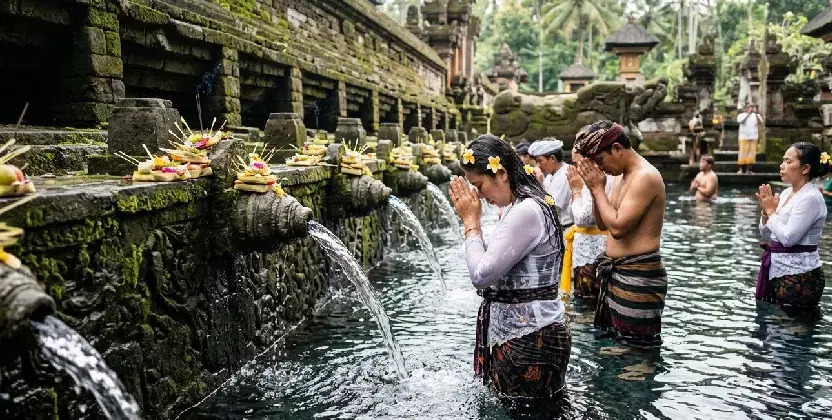
The purification pools at Tirta Empul Temple are one of its most important features. The pools are filled with water from the temple’s sacred spring and lined with carved stone spouts. Balinese Hindus use these sacred waters as part of a traditional purification ritual.
Visitors taking part in the melukat purification ritual enter the pool and move from one spout to another in an orderly sequence. They stand under the water spouts and place their head under the flowing water as part of the purification process.
You do not have to take part in the ritual to visit Tirta Empul. Visitors can watch the ceremony from the designated areas and enjoy the temple respectfully. If you choose to enter the purification pool, follow the temple’s rules and local customs.
What to Wear at Tirta Empul Temple?
Visitors to Tirta Empul Temple must dress modestly and wear a sarong and sash when entering the temple. If you plan to join the melukat purification ritual, wear comfortable clothes that can get wet.
Simple Dress Code for Tirta Empul
- Wear a sarong and sash inside the temple.
- Keep your shoulders and knees covered.
- Avoid revealing or beachwear-style clothing in the temple area.
- If joining melukat, wear something underneath that you are comfortable getting wet.
- Carry a towel and dry clothes for after the ritual.
- Follow any additional instructions given by temple staff or guides.
Tirta Empul Temple Tickets: 2026 Prices and Entry Fees
Tirta Empul Temple requires an entrance ticket, but ticket prices can vary by visitor category and may change over time.
- Adults: IDR 75,000 (~ ₹405)
- Children aged 5–12: IDR 50,000 (~ ₹270)
- Melukat: No separate fee, although the temple entrance ticket still applies
- Sarong and sash: Available for a small rental fee if you do not bring your own
Is Melukat Included in the Tirta Empul Temple Ticket?
Yes. There is no separate fee for taking part in the melukat purification ritual. You only need to pay the temple entrance fee, and you may have additional small costs for sarong rental or voluntary offerings.
Best Time to Visit Tirta Empul Temple
The best time to visit Tirta Empul Temple is early in the morning, around 7:00 to 9:00 AM. The weather is cooler, the temple is usually less busy, and you can explore the grounds more peacefully. Here is what to expect at different times:
- Early morning (7:00–9:00 AM): A good time for a quieter visit. Morning temperatures are cooler, and there are usually fewer visitors.
- Midday: The temple can become busier as more tourists and tour groups arrive. The purification pools may also be more crowded.
- Weekdays: These can be quieter than weekends, but visitor numbers vary depending on local ceremonies and religious events.
- Full moon and new moon days: These dates are important in the Balinese Hindu calendar and may bring more worshippers to the temple. Expect more activity around the prayer and purification areas.
How to Reach Tirta Empul Temple from Ubud?
From Ubud, Tirta Empul Temple is about a 30 to 40 minute drive north through Tampaksiring. Families can hire a private driver for the day, use a ride-hailing app, or join an organised half-day or full-day tour.
| Travel Option | Details | Cost (Approx.) | Notes |
| Scooter | Popular self-ride option for exploring Bali | IDR 80,000–150,000/day (~ ₹430–800) | Scenic route, but traffic can be busy during peak hours |
| Private Driver | Comfortable car with a local driver | IDR 500,000–1,000,000/day (~ ₹2,700–5,400) | Best for families, couples, or full-day trips |
| Guided Tour | Pre-planned cultural day tour | Varies by package | Usually includes Tegallalang Rice Terraces, coffee plantations, waterfalls, and Gunung Kawi Temple |
Note: The temple is located around 30–40 minutes from Ubud depending on traffic.
Places to Visit Near Tirta Empul Temple
If you have extra time after visiting Tirta Empul Temple, several popular attractions are located within a short drive. These places can easily be combined into the same day trip, allowing you to experience more of Ubud's culture, nature, and history.
- Tegallalang Rice Terraces (15–20 minutes): Admire Bali's famous emerald-green rice terraces, enjoy scenic walking trails, and relax at cafés overlooking the valley.
- Gunung Kawi Temple (10 minutes): Explore one of the best historical sites in Bali, featuring ancient rock-cut shrines surrounded by lush greenery and rice fields.
- Tegenungan Waterfall (35–40 minutes): Enjoy one of the island's most popular waterfalls, where you can admire the cascading water, take photographs, or cool off with a refreshing dip.
- Goa Gajah (Elephant Cave) (25–30 minutes): Discover an ancient Hindu archaeological site known for its carved cave entrance, peaceful gardens, and historic bathing pools.
- Ubud Monkey Forest (30–35 minutes): Walk through a sacred forest inhabited by hundreds of long-tailed macaques while exploring centuries-old temple ruins beneath towering tropical trees.
- Ubud Art Market (30–35 minutes): Shop for handmade Bali souvenirs like handicrafts, paintings, textiles, jewellery, and souvenirs while experiencing the lively atmosphere of central Ubud.
- Campuhan Ridge Walk (35–40 minutes): Take a peaceful walk along one of Ubud's most scenic nature trails, offering beautiful valley views and a relaxing escape from the town's busy streets.
Tirta Empul Temple Etiquette: What Visitors Should and Shouldn't Do
What You Should Do at Tirta Empul
- Dress modestly: Wear the required sarong and sash before entering the temple.
- Follow temple instructions: Pay attention to signs and guidance from temple staff.
- Observe before joining: Watch the melukat ritual first, so you understand where to go and what to do.
- Keep away from offerings: Give flower offerings, incense, and other religious items plenty of space.
- Speak quietly: Keep your voice low, especially near people who are praying.
- Respect restricted areas: Do not enter areas that are closed to visitors.
- Follow the correct water-spout sequence: If you join melukat, use only the spouts permitted for the ritual. Two spouts are reserved for rites connected with the dead and should not be used for melukat.
What You Shouldn't Do at Tirta Empul
- Don't treat the purification ritual as a photo opportunity.
- Don't touch or move religious offerings.
- Don't enter restricted temple areas.
- Don't photograph people during private prayers or ceremonies without permission.
- Don't use water spouts that are reserved for specific religious rites.
- Don't block worshippers or stand in the way of a ceremony.
- Don't behave as if Tirta Empul is simply a sightseeing attraction.
Planning Your Tirta Empul Temple Visit
Tirta Empul offers much more than just beautiful architecture. The temple combines history, spirituality, culture, and natural beauty in a way that feels genuine and memorable.
Even travellers who normally do not visit many temples in Bali often enjoy Tirta Empul because the experience feels active and real rather than staged for tourists. So, whether you come for the purification ritual, photography, cultural learning or peaceful surroundings, Tirta Empul Temple is one of those Bali attractions where slowing down for a few hours feels completely worthwhile.
FAQs
1. What is Tirta Empul Temple famous for?
Tirta Empul Temple is famous for its sacred natural spring, holy water purification pools and melukat purification ritual. It is an active Balinese Hindu temple where devotees pray, make offerings and take part in traditional ceremonies.
2. Where is Tirta Empul Temple located?
Tirta Empul Temple is located in Manukaya village near Tampaksiring, Gianyar Regency, Bali. It is about 15 km from Ubud and usually takes around 30–40 minutes to reach by car, depending on traffic.
3. Can tourists enter Tirta Empul Temple?
Yes, tourists can enter Tirta Empul Temple by paying the required entrance fee and following the temple's dress code and visitor rules. Visitors can explore the temple, see the sacred spring and observe religious activities respectfully.
4. Can tourists take part in the Tirta Empul purification ritual?
Yes, visitors may be able to take part in the melukat purification ritual, provided they follow the temple's rules and local customs. Participation is optional, and visitors can also watch the ritual without entering the purification pools.
5. What is the melukat ritual at Tirta Empul?
Melukat is a traditional Balinese Hindu purification ritual that uses holy water. At Tirta Empul, participants enter the purification pool and stand under designated water spouts as part of a religious ceremony for spiritual cleansing.
6. How does the Tirta Empul purification ritual work?
Participants enter the purification pool and move through the permitted water spouts in sequence, placing their head under the flowing holy water as part of the ritual. Visitors should observe the process first and follow instructions from temple staff, guides or local worshippers.
7. What should I wear to Tirta Empul Temple?
Visitors should wear modest clothing that covers the shoulders and knees and use the required sarong and sash inside the temple. If you plan to take part in melukat, wear comfortable clothes that can get wet and bring a towel and dry clothes.
8. Do I need a sarong at Tirta Empul Temple?
Yes, visitors are expected to wear a sarong and sash when entering the temple. If you do not have one, sarongs may be available at the temple or from nearby providers, depending on current arrangements.
9. What is the best time to visit Tirta Empul Temple?
The best time to visit Tirta Empul Temple is generally early morning, around 7:00 to 9:00 AM. The weather is cooler, the temple can be quieter, and the purification pools may be less crowded than later in the day.
10. How long do you need at Tirta Empul Temple?
Most visitors should allow 1 to 2 hours at Tirta Empul Temple. A shorter visit is enough to explore the temple, while visitors taking part in melukat may need additional time for changing, the ritual and drying off afterwards.
11. How much is the Tirta Empul Temple entrance fee?
The Tirta Empul Temple entrance fee listed in this guide is IDR 75,000 (~ ₹405) for adults and IDR 50,000 (~ ₹270) for children aged 5–12. Fees and visitor categories can change, so travellers should confirm the current price before visiting.
12. Is melukat included in the Tirta Empul Temple entrance fee?
Yes. The temple entrance ticket covers entry and melukat participation.
13. Can non-Hindus take part in melukat at Tirta Empul?
Visitors who are not Balinese Hindus may be permitted to participate in melukat, but the ritual should be approached as a religious practice rather than a tourist activity. Follow the temple's instructions and participate only if the ritual is open to you.
14. Is Tirta Empul Temple suitable for families with children?
Yes, Tirta Empul can be visited by families with children. Children do not have to take part in melukat, and families can explore the temple and observe the purification ritual from designated areas while following temple rules.
15. Is photography allowed at Tirta Empul Temple?
Photography is allowed in many parts of Tirta Empul, but visitors should avoid photographing people during private prayers or ceremonies without permission. Do not use photography or filming in restricted areas or interfere with religious activities.
16. What should I bring to Tirta Empul Temple?
Bring modest clothing, a sarong and sash if required, comfortable footwear, cash for entry and a towel and change of clothes if you plan to join melukat. A waterproof bag can also be useful for keeping phones and other belongings dry.
17. How far is Tirta Empul Temple from Ubud?
Tirta Empul Temple is approximately 15 km from Ubud. The journey usually takes around 30–40 minutes by car, although travel time can be longer during busy periods.
18. Can I visit Tirta Empul Temple and other Bali attractions on the same day?
Yes. Tirta Empul can be combined with nearby attractions such as Tegallalang Rice Terraces, Gunung Kawi Temple and other Central Bali sights. A half-day or full-day itinerary gives you enough time to visit several attractions without rushing.
19. Is Tirta Empul Temple worth visiting?
Tirta Empul is worth considering if you want to experience Bali's living religious culture, sacred water traditions and historic temple architecture. The experience is particularly different from a typical sightseeing stop because the temple remains an active place of worship.
20. Can I visit Tirta Empul without doing melukat?
Yes. You can visit Tirta Empul without participating in the purification ritual. Visitors can explore the temple, see the sacred spring and observe religious activities while following the temple's dress code and visitor rules.