
- Home
- Attractions
- Switzerland
- Lake Lucerne, Switzerland: The Complete Travel Guide (2026)
Lake Lucerne, Switzerland: The Complete Travel Guide (2026)
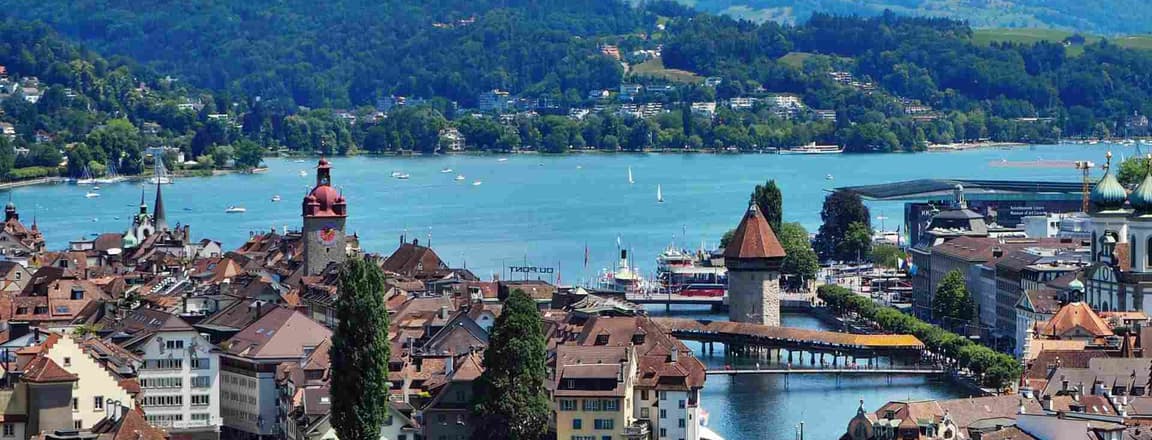
Cradled in the heart of Central Switzerland at 434 metres above sea level, Lake Lucerne is known locally as Luzern or Vierwaldstättersee. It is one of Europe's most dramatic alpine destinations. Unlike wide, flat lakes, Lake Lucerne, Switzerland features winding, fjord-like arms that twist between steep mountains. Every viewpoint along its 114 km shoreline offers a completely different scenic character, making it one of the absolute best places to visit in Lucerne.
Towering above the water are the iconic peaks of Mount Pilatus, Mount Rigi, and Mount Titlis. Each summit is easily accessible by world-famous mountain railways and panoramic cable cars. On calm days, the deep cobalt water perfectly mirrors the Swiss Alps and the medieval towers of Lucerne, Switzerland, a scene so postcard-perfect it almost feels staged.
Whether you are planning a quick day trip within Switzerland or customising a multi-week Switzerland tour package, this premium holiday destination deserves a spot on your itinerary.
Quick Facts: Lake Lucerne at a Glance
Detail | Info |
| German name | Vierwaldstättersee |
| Location | Central Switzerland, Canton of Lucerne |
| Altitude | ~434 m above sea level |
| Surface Area | ~114 km² |
| Length | ~38 km |
| Best Season | May to October |
| Nearest City | Lucerne (Luzern) |
| Distance from Zurich | ~55 km / ~50 min by car or train |
| Distance from Bern | ~100 km / ~1 hr by train |
| Tripadvisor Rating | 4.7/5 — Top attraction in Lucerne |
Where is Lake Lucerne Located in Switzerland?
Lake lucerne switzerland is centrally located, sitting roughly 50 kilometres south of Zurich. The Lucerne Lake basin spans across four historic Swiss cantons: Lucerne, Uri, Schwyz, and Obwalden. This cross-canton span creates its unique, star-shaped layout with deep alpine basins.
The city of Lucerne sits on the northwestern shore. It serves as the primary transport gateway for visitors exploring nearby peaks like Mount Pilatus and Mount Rigi. From Lucerne, visitors can have easy access to some of the most scenic destinations in Switzerland.
How to Reach Lake Lucerne from Zurich, Bern & Interlaken
Switzerland's rail and road network makes Lake Lucerne exceptionally easy to reach from every major city in the country.
By Train (Recommended)
From Zurich, direct trains run to Lucerne every 30 minutes and take approximately 50 minutes, making it one of the easiest day trips in Switzerland. From Bern, the journey takes just under an hour with a change at Olten or a direct InterRegio service. From Interlaken, the scenic route via Brienz or Meiringen takes around 2 hours, though the views are spectacular enough to make the extra time worthwhile.
Once you arrive at Lucerne's main train station (Luzern Bahnhof), the lake is literally a two-minute walk from the platforms, one of the most dramatic train-station-to-lake arrivals in Switzerland.
Indian traveller tip: If you're travelling with a Swiss Travel Pass, you get unlimited train travel to Lucerne plus discounts on most mountain railways and lake cruises.
By Car
Drive to Lucerne on the A2 or A14 motorway from Zurich, or via the A8/A2 from Bern or Interlaken. Parking in the city centre is limited and expensive; the P+R Zentralstrasse and Carparkhaus Altstadt are the best-known options. Arriving before 9:00 AM is advisable in summer, especially on weekends.
Lake Lucerne Boat Cruises & Tickets
The finest way to experience the region is on the water, with the official ferry operator, Schifffahrtsgesellschaft des Vierwaldstättersees (SGV). It runs a historic fleet of five paddle steamers and modern motor vessels across Lucerne Lake.
Best Lake Lucerne Cruise Routes
- Classic Mountain Loop: Lucerne to Weggis and Vitznau (1.5 hours one way). This route connects you to the base stations of Mount Rigi and Mount Pilatus.
- Historic Cruise: Lucerne to Brunnen (2.5 hours). This path sails directly past Rütli Meadow, the birth site of the Swiss Confederation in 1291, one of the most significant historical sites in Switzerland.
- Gotthard Panorama Express: A premium, full-day boat-and-train combination across the Alps from Lucerne to Lugano.
Lake Lucerne Cruise Ticket Prices
- Standard Tickets: One-way tickets range from CHF 20 to CHF 60 (~₹2,500–₹7,300) depending on your route and cabin class.
- Pass Discounts: Swiss Travel Pass holders ride 100% free on all scheduled, regular SGV ferry services.
How to Book Lake Lucerne Cruises & Mountain Railways
Swiss Mountain railways and cruises can be booked directly through the SGV and Pilatus/Rigi railway websites or bundled through your Switzerland itinerary. A few critical booking tips to keep in mind:
- Peak Season Deadlines: Book the Pilatus Golden Round Trip and Rigi cogwheel tickets at least 48 hours ahead in peak season (June–September) — they do sell out quickly.
- The Swiss Travel Pass Advantage: This is generally the simplest option if Lake Lucerne is one stop on a wider Switzerland trip. It completely removes the need to book cruises and several mountain railways separately.
- Mobility & Accessibility: If you're travelling with young children or have mobility considerations, most SGV boats and the Pilatus/Rigi railways are step-accessible; always double-check the specific vessel or rail car specifications when booking.
Best Mountains to Visit Around Lake Lucerne
Mount Pilatus: The Dragon Mountain
Rising steeply to 2,132 metres on the southwestern shore, Mount Pilatus is the most dramatic of the summits overlooking Lake Lucerne.
The classic "Golden Round Trip" combines a lake cruise from Lucerne to Alpnachstad, ascent on the world's steepest cogwheel railway (48% gradient), a panoramic walk along the summit ridge, and descent by cable car to Kriens, followed by a bus back to Lucerne.
- Elevation: 2,132 metres above sea level.
- Golden Round Trip: Take a boat cruise from Lucerne to Alpnachstad. Ride the world's steepest cogwheel railway (48% gradient) to the summit. Descend via panoramic cable car to Kriens, then take Bus 1 back to the city.
Mount Rigi: The Queen of the Mountains
Mt Rigi stands at 1,797 metres and is best reached from Vitznau or Weggis, both accessible by boat cruise. The Rigi Vitznau cogwheel train, the first mountain railway in Europe (opened 1871), still carries passengers to the summit today.
From the top, the panoramic view encompasses Lake Lucerne, Lake Zug, Lake Lauerz, and, on clear days, an arc of the Alps from Mont Blanc to Santis. It is one of the most photographed viewpoints in all of Switzerland.
- Elevation: 1,797 metres above sea level.
- Historic Railway: Accessible by boat from Lucerne to Vitznau. Board Europe’s oldest cogwheel train (opened 1871) up to Rigi Kulm.
- Summit Views: Features 360-degree panoramas of Lake Lucerne, Lake Zug, and the snow-capped Alps.
Things to Do at Lake Lucerne
Lake Lucerne is far more than a scenic backdrop; the region offers a full calendar of activities for every kind of traveller, from relaxed cultural visits to active mountain adventures.
Exploring Lucerne's Old Town (Altstadt)
Begin any visit to Lake Lucerne with a walk through Lucerne's remarkably preserved medieval Old Town.
- Chapel Bridge (Kapellbrücke): Built in 1333, Chapel Bridge (Kapellbrücke) is Europe's oldest covered wooden bridge. Walk inside to view historic 17th-century ceiling paintings. Chapel Bridge is an unmissable starting point for any visit to the lake.
Insider Tip: To photograph it without the crowds, visit before 8:00 AM when the morning mist still sits on the Reuss River.
- The Lion Monument (Löwendenkmal): This 10-metre rock carving of a dying lion honours the Swiss Guards who fell during the French Revolution. Mark Twain famously called it "the most mournful and moving piece of stone in the world".
- The Musegg Wall: Often missed by day-trippers, this medieval rampart features nine historic watchtowers. You can climb inside four of them for an elevated, panoramic view of the lake basin completely free of charge.
Go Hiking Around the Lake
The hills, ridgelines, and forest paths surrounding Lake Lucerne are among the best hiking places in Switzerland. Routes range from easy lakeside strolls to demanding ridge walks above 2,000 metres.
Trail highlights:
- Bürgenstock Ridge Walk (The Felsenweg): A spectacular, relatively flat 2-hour cliffside trail carved directly into the rock face. It leads you straight to the Hammetschwand Elevator, the highest outdoor lift in Europe, which whisks you up to a breathtaking 1,132-metre viewpoint.
- Rigi Hochflue Loop: A more challenging 3-to-4-hour moderate alpine trek. This trail cuts through dense pine forests and open alpine meadows, rewarding hikers with a dramatic, aerial view over the eastern fjord-like arm of the lake.
- The Swiss Path (Weg der Schweiz): A historic 35-kilometre trail wrapped around the southern Urnersee arm. Section A (from Rütli Meadow to Bauen) takes roughly 3 hours and is highly accessible, featuring dramatic rock tunnels and hidden lake beaches perfect for a quick summer swim.
Watersports on the Lake of Lucerne
Beyond cruises, Lake Lucerne's sheltered bays and consistently calm summer mornings make it ideal for watersports:
- Lido Swimming: Visit Lido Lucerne, Weggis Bay, or Gersau. Summer water temperatures reach a refreshing 19°C to 22°C in July and August.
- Stand-up paddleboarding (SUP): Rent stand-up paddleboards (SUP) in Weggis or Brunnen before noon for the calmest water conditions.
- Sailing and kayaking: Organised through the Lucerne Sailing School and various sports clubs around the lake.
The water temperature reaches a swimable 19–22°C in July and August, cold by tropical standards but refreshing after a mountain hike.
Places to Visit Near Lucerne, Switzerland
Lucerne's central location makes it one of the best bases for day trips anywhere in Switzerland.
- Zurich: 50 minutes away by train. Ideal for luxury shopping, premium museums, and vibrant nightlife.
- Interlaken & Jungfraujoch: 2 hours away via train. Your connecting gateway to the "Top of Europe" glacier stations, the iconic Jungfrau Railway.
- Rhine Falls: 1.5 hours north. Experience Europe's most powerful waterfall, the Rhine Falls near the town of Schaffhausen.
- Engelberg & Mount Titlis: 45 minutes by direct train. Features glacier crevasses and the world's first rotating cable car.
Food and Restaurants Around Lake Lucerne
If you want to try authentic Swiss dishes in Lucerne, you will have plenty of choices. The city is home to cosy Beizen, lakeside restaurants, and modern eateries serving both local and international food.
Traditional Swiss dishes to try:
- Luzerner Chügeli-Pastete: a puff pastry shell filled with veal, mushroom, cream, and white wine ragout; Lucerne's signature dish.
- Rösti: crispy pan-fried shredded potato, often served with cheese, eggs, or lake fish.
- Felchen (whitefish): freshwater fish from the lake, pan-fried with lemon butter and seasonal vegetables.
- Swiss cheese fondue and raclette: available year-round, especially comforting in shoulder season.
Typical costs:
Item | Approx. Cost (CHF) | Approx. INR |
| Main meal | 25–45 | ₹2,500–₹4,500 |
| Coffee | 5–7 | ₹500–₹700 |
| Lake fish dish | 30–50 | ₹3,000–₹5,000 |
Indian traveller note: Lucerne has a growing number of Indian-friendly and vegetarian dining options
Best Time to Visit Lake Lucerne
Season | Months | What to Expect | Best For |
| Peak Season | June to September | Clear skies, warm temperatures (22–26°C), all cruises and mountain railways running, highest crowds and prices. | Cruises, mountain summits, swimming, hiking |
| Shoulder Season | April–May & October | Fewer visitors, pleasant temperatures, some mountain railways still in limited service, lush spring foliage or autumn colour. | Photography, quieter sightseeing, and lower costs |
| Winter Season | December to March | Snow-covered peaks, Christmas markets, occasional low cloud over the lake, but a dramatic, moody atmosphere. | Festive visits, skiing on Rigi and Pilatus |
Pro tip for Indian travellers: Lucerne in October is significantly less crowded than the July–August peak, yet the autumn foliage around the lake produces some of its most photogenic scenes.
Top Lake Lucerne Hotels
Finding the right place to stay is critical for your trip. Luxury properties and boutique Lake Lucerne hotels are scattered across both the city centre and the lakeside resort towns.
- Lucerne City Centre: Best for first-time visitors who want easy access to the train station, Chapel Bridge, and urban dining.
- Weggis & Vitznau: Ideal for travellers seeking quiet, luxury wellness resorts with direct, private access to the shores of Luzern.
- Bürgenstock Resort: A world-famous luxury enclave perched on a ridge directly above the lake basin, offering unmatched aerial views.
Practical Tips for Visiting Lake Lucerne
- Arrive early. Lucerne's Old Town becomes extremely crowded by mid-morning from June to August. The earliest lake cruises (departing 8:00–9:00 AM) offer both peace and the best light for photography.
- Book mountain railways in advance. The Pilatus Golden Round Trip and Rigi services sell out during peak season. Book at least 48 hours ahead online.
- Swiss Travel Pass vs. day tickets. If visiting Lake Lucerne as part of a wider Switzerland trip, the Swiss Travel Pass pays for itself quickly, as it covers the train to Lucerne, all lake cruises, and gives discounts on every major mountain railway.
- Wear layers. Even in summer, temperatures on Pilatus or Rigi can be 10–15°C cooler than at lake level, and afternoon cloud is common.
- Carry cash. While most establishments accept cards, the smaller lakeside villages and boat snack bars may be cash-only.
- Download offline maps. Signal is patchy on mountain trails and the lake's more remote southern arms.
Is Lake Lucerne Worth Visiting?
Yes. Lake Lucerne consistently ranks among the most beautiful places to visit in Switzerland and appears on nearly every serious list of Swiss attractions. Unlike alpine destinations that require significant effort to reach, Lucerne combines extraordinary natural beauty with excellent infrastructure, historical depth, and year-round accessibility.
Conclusion: Why Visit Lake Lucerne, Switzerland
Between the mountains framing it, the medieval city at its edge, and a public transport network that makes almost every corner of it reachable without a car, Lake Lucerne earns its reputation as one of the most complete stops on a Switzerland itinerary.
Two to three days gives you plenty of time to check off the best places to visit in Lucerne. You can wander the historic Old Town. Cruise the deep blue waters on a paddle steamer. Conquer at least one epic mountain peak. Plus, you will still have time to slow down for a lakeside hike or a refreshing alpine swim. Stop scrolling and start packing! Your dream Swiss getaway is just a few clicks away.
FAQs
How many days do you need at Lake Lucerne?
A minimum of 2 full days is recommended, one for Lucerne's Old Town, Chapel Bridge, and a lake cruise, and one for a mountain excursion (Pilatus or Rigi). A third day allows for a day trip to Engelberg or the Swiss Path hiking trail.
How Far is Lucerne from Zurich?
Approximately 50 kilometres by road. By direct InterCity train from Zurich HB (main station), the journey takes around 45 minutes. From Zurich Airport, the journey is approximately 60 minutes with one direct train.
Can you swim in Lake Lucerne?
A: Yes. The lake has several designated public swimming areas (Badi) with changing facilities and lifeguards. Lido Lucerne is the largest and best-equipped. Water temperatures are comfortable for swimming between June and September.
Is Lake Lucerne good for families?
Exceptionally so. The boat cruises, cogwheel railways, and accessible mountain viewpoints are well-suited to children of all ages. The William Tell mythology woven into the region's landscape also resonates with older children who enjoy history and legend.
Can you visit Lake Lucerne without a car?
Absolutely. The lake is one of the most accessible destinations in Switzerland by public transport. Frequent trains serve Lucerne from all major Swiss cities, and the boat cruise network connects every lakeside village without the need for a car.
Is Lake Lucerne worth visiting in winter?
Yes, though the experience is very different. The Christmas market at Lucerne's waterfront is one of the finest in Switzerland. Some mountain railways and summer cruise routes pause in winter, but the core lake scenery, Old Town, and cable cars to Pilatus and Rigi remain accessible
What are the best things to do at Lake Lucerne in winter?
Winter at Lake Lucerne offers snow-covered mountain views, festive Christmas markets, scenic lake cruises, and visits to Lucerne's medieval Old Town. You can also ride the cable cars to Mount Pilatus or Mount Rigi, enjoy winter hiking, or go skiing while taking in spectacular Alpine scenery.
Can you take a Lake Lucerne cruise in winter?
Yes. Regular Lake Lucerne cruises operate throughout the winter, although some seasonal routes may have reduced schedules. Winter cruises provide beautiful views of snow-capped mountains and the lakeside villages, making them a peaceful way to explore the region.
Can you reach Mount Pilatus and Mount Rigi from Lake Lucerne?
Yes. Both Mount Pilatus and Mount Rigi are easily accessible from Lake Lucerne. You can take a boat to Alpnachstad for the Pilatus cogwheel railway (summer) or cable car connections (year-round), while boats to Weggis or Vitznau connect directly to Mount Rigi via cable car or Europe's oldest cogwheel railway.
What is the price of a Lake Lucerne cruise?
Lake Lucerne cruise tickets typically cost between CHF 20 and CHF 60 (approximately ₹2,500–₹7,300) for a one-way journey, depending on the route and cabin class. If you have a Swiss Travel Pass, all scheduled SGV lake cruises are included at no additional cost.