Best Diving Spots in Bali 2026: Top Dive Sites, Costs, Marine Life & Best Time to Visit
Most travellers visit Bali for its beaches, temples and sunsets. Beneath its crystal-clear waters, the best diving spots in Bali attract thousands of divers each year with vibrant coral reefs, historic shipwrecks and diverse marine life. Bali sits within the Coral Triangle, one of the world's richest marine ecosystems. So, whether you are taking your first diving lesson or are a certified diver, searching for manta rays, sea turtles, reef sharks, or the famous mola mola (ocean sunfish), Bali has dive sites for every skill level. Before you dive in, this Bali guide will help you discover the best diving locations in Bali, the marine life you can expect to see, the best time to go diving, and practical tips to help you plan a safe and memorable underwater adventure.
Best Diving Spots in Bali at a Glance (2026 Comparison)
Not sure which dive site to choose? This table compares the best scuba diving spots in Bali based on experience level, marine life encounters, and underwater highlights to help you find the perfect match.
Dive Spot | Skill Level | Signature Feature | Currents |
| Manta Point (Nusa Penida) | Beginner–Intermediate | Reef manta ray encounters | Moderate |
| Crystal Bay (Nusa Penida) | Advanced | Oceanic sunfish encounters | Strong |
| Bat Cave (Nusa Penida) | Intermediate | Underwater rock formations & swim-throughs | Moderate |
| Batu Ringgit (Nusa Penida) | Advanced | Pelagic marine life & fast currents | Strong |
| Batu Niti (Nusa Penida) | Intermediate–Advanced | Coral-covered underwater cliffs | Moderate |
| Gerombong (Nusa Penida) | Advanced | Giant trevallies, barracudas & schooling fish | Strong |
| Blue Corner (Nusa Lembongan) | Advanced | Sharks, rays & pelagic species | Strong |
| Mangrove Point (Nusa Lembongan) | Beginner–Intermediate | Healthy hard coral gardens | Calm–Moderate |
| Shark Point (Nusa Lembongan) | Intermediate | White-tip reef sharks | Moderate |
| USAT Liberty Shipwreck (Tulamben) | Beginner–Advanced | Historic World War II shipwreck | Calm |
| Coral Garden (Tulamben) | Beginner | Colourful coral reefs & reef fish | Very calm |
| Seraya Secrets (Tulamben) | Intermediate–Advanced | Rare critters & muck diving | Calm |
| Boga Shipwreck (Tulamben) | Intermediate | Coral-covered wreck exploration | Calm–Moderate |
| Amed Reef (Amed) | Beginner | Vibrant coral gardens & turtles | Very calm |
| Agung (Amed) | Beginner–Intermediate | Healthy reefs & tropical fish | Calm |
| Sidem (Amed) | Intermediate | Nudibranchs, frogfish & ghost pipefish | Calm |
| Blue Lagoon (Padang Bai) | Beginner | Calm coral gardens & marine life | Very calm |
| Jetty (Padang Bai) | Intermediate–Advanced | Black-sand muck diving & rare species | Calm |
| Secret Bay (Gilimanuk) | Intermediate | Macro biodiversity hotspot | Very calm |
| Menjangan Island | Beginner–Intermediate | Coral walls and crystal-clear waters | Very calm |
Top Diving Locations in Bali for Every Type of Diver
The best diving spots in Bali have something for every underwater explorer. To help you choose the right location, here are Bali's top diving regions and the must-visit dive sites within each.
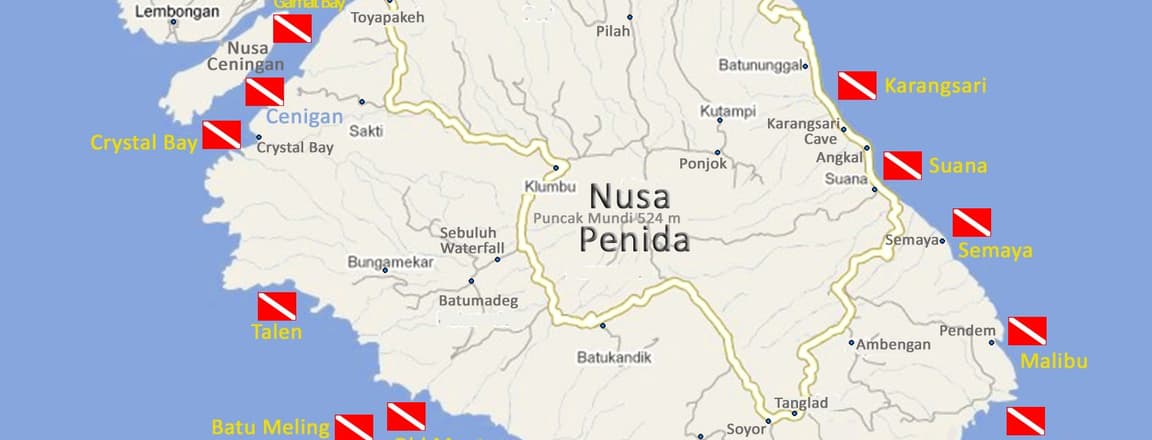
Nusa Penida Diving Sites: Manta Rays, Mola Mola & Drift Diving
Nusa Penida Island is one of the most famous diving destinations in Indonesia. The region is known for its dramatic underwater landscapes, strong currents and exceptional pelagic encounters.
Manta Point
Manta Point is one of Bali's most iconic dive sites. Here, divers can watch majestic reef manta rays throughout the year. With relatively shallow depths and frequent manta sightings, Manta Point is one of the best places in Bali to experience a close-up encounter with these magnificent creatures.
Best for: Manta rays and underwater photography
Crystal Bay
Crystal Bay is one of the best scuba diving spots in Bali for spotting the elusive mola mola (ocean sunfish), which is most commonly seen between July and October. Known for its crystal-clear waters and excellent visibility, the site offers unforgettable underwater encounters during the mola mola season. However, due to strong and unpredictable currents, Crystal Bay is best suited to experienced divers.
Best for: Mola Mola sightings
Bat Cave
Bat Cave is a spectacular dive site known for its dramatic underwater rock formations, coral-covered walls, and exciting swim-through passages. The site is rich in marine life, offering opportunities to spot reef sharks, sea turtles, large schools of tropical fish, and vibrant soft corals. With its unique underwater landscape and healthy reef ecosystem, Bat Cave is a rewarding dive for those looking to combine stunning scenery with diverse marine encounters.
Best for: Underwater caverns and reef exploration
Batu Ringgit
Batu Ringgit is a thrilling drift dive known for its strong currents and abundant pelagic marine life. These nutrient-rich waters attract large schools of fish, eagle rays, tuna, and occasional reef sharks, creating exciting underwater encounters. Because of its fast-moving currents and dynamic conditions, Batu Ringgit is best suited to experienced divers looking for an exhilarating drift diving experience.
Best for: Drift diving
Batu Niti
Batu Niti is a stunning wall dive known for its steep underwater cliffs, vibrant coral-covered reefs, and exceptional visibility. Divers can expect to encounter large schools of tropical fish, sea turtles, and occasional pelagic species cruising through the deeper waters.
Best for: Wall diving
Gerombong
Gerombong is one of Nusa Penida's premier deep dive sites, renowned for its strong currents and exciting pelagic marine life. Divers often encounter giant trevallies, barracudas, reef sharks, and impressive schools of jacks patrolling the blue water.
Best for: Pelagic encounters
Beyond its incredible dive sites, Nusa Penida offers much more to explore, from dramatic viewpoints and pristine beaches to hidden natural attractions. Plan your island adventure with our detailed Nusa Penida guide to discover the top places to visit beyond diving.
Nusa Lembongan
Located just north of Nusa Penida, Nusa Lembongan is renowned for its exhilarating drift dives, vibrant coral reefs, and nutrient-rich waters teeming with marine life. The island's diverse dive sites offer everything from colourful reef fish and sea turtles to larger pelagic species, making it a favourite destination for both underwater photographers and experienced divers.
Blue Corner
Blue Corner is one of the most popular drift diving sites around Nusa Lembongan, renowned for its strong currents and spectacular pelagic marine life. Here, divers frequently encounter reef sharks, eagle rays, sea turtles, and massive schools of pelagic fish cruising through the blue water.
Best for: Advanced drift diving
Mangrove Point
Mangrove Point is one of Nusa Lembongan's most popular dive sites, celebrated for its healthy hard coral reefs, crystal-clear visibility, and abundant marine life. During favourable tides, the site offers gentle drift dives through colourful coral gardens filled with large schools of tropical fish, sea turtles, and a variety of reef species.
Best for: Coral reefs and beginner-friendly drift dives
Shark Point
Shark Point lives up to its name with frequent sightings of white-tip reef sharks, making it one of Nusa Lembongan's most exciting dive sites. Alongside these predators, divers can also encounter sea turtles, rays, and large schools of colourful reef fish cruising over healthy coral reefs.
Best for: Shark sightings
Tulamben
Tulamben is Bali's most famous shore diving destination and offers an exceptional combination of historic shipwrecks, coral reefs, macro life, and easy beach entries suitable for all experience levels.
USAT Liberty Shipwreck
The USAT Liberty Shipwreck is Bali's signature dive and one of the world's easiest wreck dives to access from shore. Covered in colourful corals, the wreck is home to turtles, barracudas, giant trevallies, bumphead parrotfish, and countless reef fish.
Best for: Wreck diving
Coral Garden
Coral Garden is one of Tulamben's most popular dive sites, located just a short swim from the USAT Liberty Shipwreck. The site is known for its colourful coral bommies, thriving artificial reef structures, and calm, shallow waters that support an abundance of marine life.
Best for: Beginners and marine biodiversity
Seraya Secrets
Seraya Secrets is one of the best muck diving sites in Bali, renowned for its extraordinary macro marine life and exceptional underwater photography opportunities. This black-sand dive site is home to pygmy seahorses, frogfish, mimic octopuses, colourful nudibranchs, ghost pipefish, and countless other tiny, well-camouflaged creatures.
Best for: Macro photography
Boga Shipwreck
Boga Shipwreck is one of Tulamben's most rewarding wreck dives. Intentionally sunk to create an artificial reef, the wreck is now covered in vibrant corals and supports a thriving underwater ecosystem. Here, divers can encounter lionfish, moray eels, sea turtles, and a wide variety of tropical reef fish while exploring its coral-covered structure and swim-through sections.
Best for: Artificial reef diving
Amed
Amed combines relaxed shore diving with beautiful coral reefs, volcanic slopes, and exceptional macro life. It is ideal for both beginners and underwater photographers.
Amed Reef
Amed Reef is an ideal choice for beginners, underwater photographers, and anyone looking to enjoy a leisurely reef dive. It is known for its calm conditions, excellent visibility, and vibrant hard coral reefs.
Best for: Easy reef diving
Agung
Agung is a scenic reef dive known for its healthy coral ecosystems and diverse marine life. Here, divers can expect to encounter butterflyfish, angelfish, parrotfish, moray eels, and the occasional reef shark while exploring its colourful coral reefs.
Best for: Coral gardens
Sidem
Sidem is one of Amed's top macro diving sites, renowned for its incredible diversity of small marine life and excellent underwater photography opportunities. Divers can regularly spot colourful nudibranchs, shrimps, frogfish, ghost pipefish, and other rare, well-camouflaged critters hidden among the sand and coral.
Best for: Macro diving
Padang Bai
Padang Bai offers one of the widest varieties of diving in Bali, with calm coral reefs, muck diving, drift dives, and deeper sites suitable for experienced divers.
Blue Lagoon
Blue Lagoon is one of Padang Bai's most popular beginner-friendly dive sites, known for its calm waters, colourful coral gardens, and excellent visibility. Divers can encounter sea turtles, cuttlefish, octopuses, and a wide variety of tropical reef fish while exploring its healthy coral reefs.
Best for: Beginners
Jetty
The Jetty is a must-visit destination for macro photographers and divers hoping to discover some of Bali's most elusive underwater species. This black-sand dive site is famous for sightings of frogfish, rhinopias, ghost pipefish, blue-ringed octopuses, colourful nudibranchs, and a variety of other rare, well-camouflaged critters.
Best for: Macro diving
Secret Bay (Gilimanuk)
Secret Bay (Gilimanuk) is widely regarded as the best muck diving site in Bali and one of Southeast Asia's premier destinations for macro diving. Its calm, silty seabed is home to an extraordinary variety of rare and well-camouflaged marine creatures, making every dive a rewarding treasure hunt.
Best for: Macro photography, rare marine life, critter hunting
Menjangan Island
Located within West Bali National Park, Menjangan Island is one of the best diving spots in Bali. The island is renowned for its crystal-clear visibility, gentle currents, and spectacular coral wall dives. The island's pristine reefs are home to colourful coral gardens, sea turtles, reef fish, and a rich diversity of marine life, offering unforgettable underwater experiences in a protected environment.
Best for: Wall diving, coral reefs, underwater photography, turtle encounters
Best Time for Diving in Bali
Bali offers excellent diving throughout the year, but the best conditions depend on the marine life you want to see and the type of dive experience you're looking for.
- Dry season (April–October): This is widely considered the best time to visit Bali for diving, with calmer seas, excellent visibility and comfortable water temperatures. It is also the mola mola season, with the highest chances of spotting these elusive ocean sunfish around Crystal Bay and other Nusa Penida dive sites.
- Wetter season (November–March): The season also features warm water temperatures for diving. While some days may bring rougher surface conditions and slightly reduced visibility, many dive sites remain accessible, and underwater life continues to be abundant.
Scuba Diving in Bali vs. Snorkelling in Bali
Factor | Scuba Diving | Snorkelling |
| Depth | Up to 18–30 metres | Surface level |
| Equipment | Tank, regulator, BCD | Mask, snorkel, fins |
| Training required | Yes (certification or guided intro) | No |
| Best for | Divers wanting depth and wreck/reef access | Casual swimmers, families |
| Typical cost (per session) | IDR 900,000-2,150,000 (Rs. 4,840-11,560) per dive | Often bundled free with beach day tours |
Practical Tips for Diving in Bali
A safe and enjoyable diving experience in Bali depends on choosing the right dive site, understanding local conditions, and preparing the right equipment. Keep these practical tips in mind before heading underwater:
- Choose a dive site that matches your experience level: Beginners should start with calmer sites like Tulamben and Amed, while more experienced divers can explore current-heavy locations such as Nusa Penida and Candidasa.
- Check sea conditions before every dive: Bali's currents, especially along the east coast and around Nusa Penida, can change quickly. Always follow your dive operator's safety recommendations and confirm conditions before entering the water.
- Inspect rental equipment carefully: Before your dive, check essential gear such as the regulator, BCD straps, mask, and fins to ensure everything fits properly and works correctly.
- Wait before flying after diving: Allow at least 18–24 hours after your final dive before taking a flight or travelling to high-altitude areas like Kintamani to reduce the risk of decompression-related issues.
- Carry the right exposure protection: A 5mm wetsuit is recommended for cooler dive sites around Nusa Penida, where water temperatures can occasionally drop to around 20°C, especially outside the warmer months.
Final Thoughts on Planning Your Bali Dive Trip
The best diving spots in Bali offer far more than just beautiful underwater views. From swimming alongside giant manta rays at Nusa Penida and exploring the historic USAT Liberty Shipwreck in Tulamben to discovering rare macro creatures at Seraya Secrets and Secret Bay, the best diving locations in Bali provide completely different marine experiences depending on where you dive. Whether you are planning your first underwater adventure or adding it as a part of the best things to do in Bali in your Bali package, it is advisable to choose a certified dive operator before diving.
FAQs
1. What are the best diving spots in Bali for beginners?
The best diving spots in Bali for beginners are Tulamben, Amed, Menjangan Island, and Blue Lagoon in Padang Bai. These sites offer calm waters, gentle currents, excellent visibility, and easy access to colourful coral reefs, making them ideal for first-time divers and beginner-friendly PADI courses.
2. Which is the best dive site in Bali to see manta rays?
Manta Point in Nusa Penida is the best dive site in Bali to see manta rays. Reef manta rays can be spotted throughout the year around its cleaning stations, where they glide gracefully above divers.
3. When is the best time to go diving in Bali?
The best time to go diving in Bali is from April to October, during the dry season when seas are generally calmer and underwater visibility is better. If you want to spot Mola Mola (ocean sunfish) at Crystal Bay in Nusa Penida, plan your dive between July and October, when sightings are most common.
4. Is scuba diving in Bali safe?
Yes, scuba diving in Bali is generally safe when you dive with a certified operator, follow safety instructions, and choose sites according to your experience level. Always check weather conditions, currents, equipment quality, and instructor credentials before entering the water, especially around current-heavy areas like Nusa Penida.
5. How much does scuba diving cost in Bali in 2026?
A single scuba dive in Bali typically costs around IDR 900,000–2,150,000 (approximately Rs. 4,840–11,560) per dive, depending on the location, dive centre, equipment rental, and inclusions. A PADI Open Water certification course usually costs around IDR 4,500,000–8,000,000 (approximately Rs. 23,850–42,400).
6. Can beginners dive at Nusa Penida?
Beginners can dive in some areas around Nusa Penida only with proper guidance and suitable conditions. Beginners should start with calmer sites like Tulamben, Amed, or Menjangan Island.
7. Where can I see Mola Mola in Bali?
The best place to see Mola Mola (ocean sunfish) in Bali is Crystal Bay, Nusa Penida. These rare giant fish are usually spotted between July and October when colder currents bring them closer to cleaning stations. Sightings depend on ocean conditions and are never guaranteed.
8. Which diving spot in Bali is best for underwater photography?
The best diving spots in Bali for underwater photography are Manta Point, Seraya Secrets, Secret Bay, Tulamben, and Menjangan Island. These locations offer opportunities to photograph manta rays, colourful coral reefs, shipwrecks, macro creatures and diverse marine life.
10. Do I need a diving certification to dive in Bali?
No, you do not need a certification for a beginner discovery dive in Bali. Certified instructors provide safety briefings, basic training, and guided dives at beginner-friendly sites. However, a PADI Open Water certification is required for deeper and more advanced dive sites.
11. Is Bali better for scuba diving or snorkelling?
Bali is better for scuba diving if you want to explore deeper reefs, shipwrecks, underwater walls, and encounter larger marine animals. Snorkelling is a great option for travellers who prefer shallow waters and easier experiences, with popular spots including Menjangan Island, Nusa Lembongan, and Amed.