
- Home
- Attractions
- Japan
- Horyu-ji Temple Nara Guide: History, Oldest Wooden Buildings & Tickets
Horyu-ji Temple Nara Guide: History, Oldest Wooden Buildings & Tickets
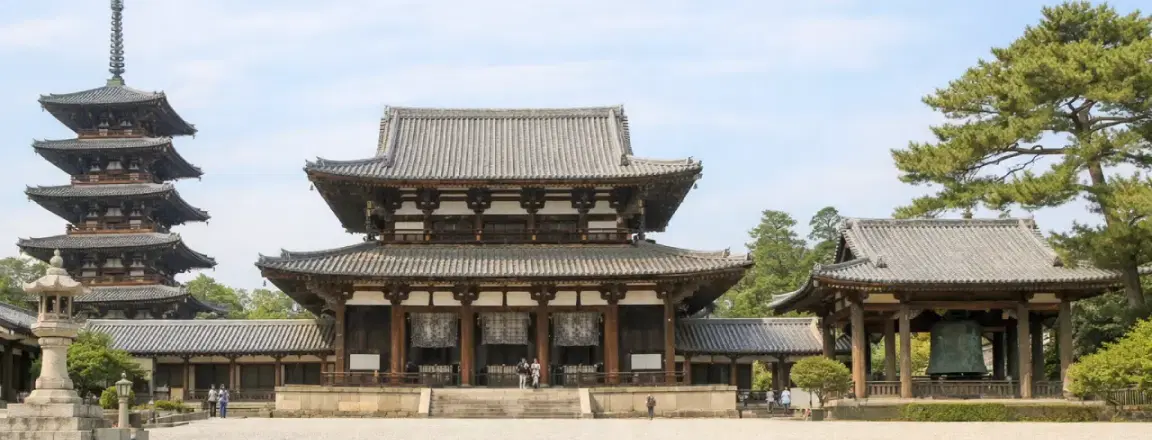
Japan’s spiritual foundations were shaped long before Kyoto became the cultural capital. In the quiet outskirts of Nara stands Horyu-ji, one of the world’s oldest surviving wooden temple complexes and a cornerstone of early Japanese Buddhism.
While many travellers focus on Todai-ji for its monumental scale, Horyu-ji offers something rarer, architectural antiquity. Founded in the 7th century, it preserves some of the oldest wooden buildings on Earth and provides an intimate look at the Asuka period, when Buddhism first took root in Japan. Today, Horyu-ji is part of the UNESCO-listed Buddhist Monuments in the Horyu-ji Area, making it one of Japan’s most historically important religious sites.
Read more: Top things to do in Nara
Horyu-ji Nara History: Birthplace of Japanese Buddhism
Horyu-ji was originally founded in 607 AD under the patronage of Prince Shotoku, a key figure in introducing Buddhism to Japan. Although the initial complex was destroyed by fire, it was rebuilt in the late 7th century, and many of those reconstructed structures still stand today.
Unlike later Zen temples in Kyoto, Horyu-ji reflects early continental influences from China and Korea. The temple became a major centre for Buddhist learning and art, shaping religious practice across Japan.
The Western Precinct (Sai-in) contains the world’s oldest surviving wooden structures, including the main hall (Kondo) and the five-storey pagoda.
Did you know? The timber used in parts of Horyu-ji dates back over 1,300 years.
Read more: Buddhist temples in Japan
What to See Inside Horyu-ji Temple
1. Kondo (Main Hall)
The Kondo houses some of Japan’s oldest Buddhist statues, including a Shaka Triad attributed to sculptor Tori Busshi. The atmosphere is subdued and contemplative, in stark contrast to the grandeur of Nara’s larger temples.
The architecture features:
- Curved rooflines with continental influence
- Ancient wooden joinery techniques
- Early Buddhist iconography
2. Five-Storey Pagoda
Standing beside the Kondo, the pagoda is one of the world's oldest wooden pagodas. Inside its base are clay relief sculptures depicting scenes from the Buddha’s life.
Unlike later decorative pagodas, this structure represents early Buddhist cosmology in architectural form.
3. Chumon Gate & Cloister
The covered corridor surrounding the inner courtyard creates a peaceful enclosure. The symmetry and proportion reflect early temple design principles brought from mainland Asia.
4. Eastern Precinct (To-in)
The Eastern area features the octagonal Yumedono (Hall of Dreams), associated with Prince Shotoku. This section is quieter and less crowded, offering a reflective end to your visit.
Horyu-ji Temple Location
- Address: 1-1 Horyuji Sannai, Ikaruga, Nara 636-0115, Japan
Horyu-ji is located in Ikaruga, about 12 km southwest of central Nara. Unlike temples inside Nara Park, it sits in a more rural, peaceful setting.
Nearby sites you can combine:
- Yakushi-ji
- Toshodai-ji
- Todai-ji
If you're planning a cultural deep dive into Nara’s UNESCO heritage, these temples create a powerful historical circuit.
Also visit: Meiji Shrine
Horyu-ji Temple Map & Walking Route
- Enter through the South Gate
- Explore the Western Precinct (Kondo + Pagoda)
- Walk along the cloister corridor
- Visit the Great Treasure Gallery
- Proceed to Eastern Precinct (Yumedono Hall)
Recommended duration: 1.5 to 2 hours
The layout is open and easy to navigate, with fewer directional constraints compared to Kyoto temples.
Read more: Japan temples vs shrines
Horyu-ji Entrance Fee & Opening Hours
Horyu-ji Ticket Price
- Adults: ¥1,500 (approx. ₹830)
- Children: ¥750 (approx. ₹415)
Note: INR conversion is approximate and may vary with exchange rates.
Opening Hours
- February 22 – November 3: 8:00 AM – 5:00 PM
- November 4 – February 21: 8:00 AM – 4:30 PM
Last entry is usually 30 minutes before closing.
Cash is recommended, though some counters may accept cards.
Best Time to Visit Horyu-ji for Fewer Crowds
Unlike central Nara temples, Horyu-ji sees moderate tourist traffic.
Best Time of Day
- Early morning (8:00 – 9:30 AM)
- Late afternoon (after 3:00 PM)
Best Season
- Spring (March–April): Mild weather, cherry blossoms nearby
- Autumn (November): Comfortable temperatures
- Winter: Quietest season with a contemplative atmosphere
Because it is slightly outside Nara city centre, it remains calmer than sites inside Nara Park.
How to Reach Horyu-ji from Kyoto
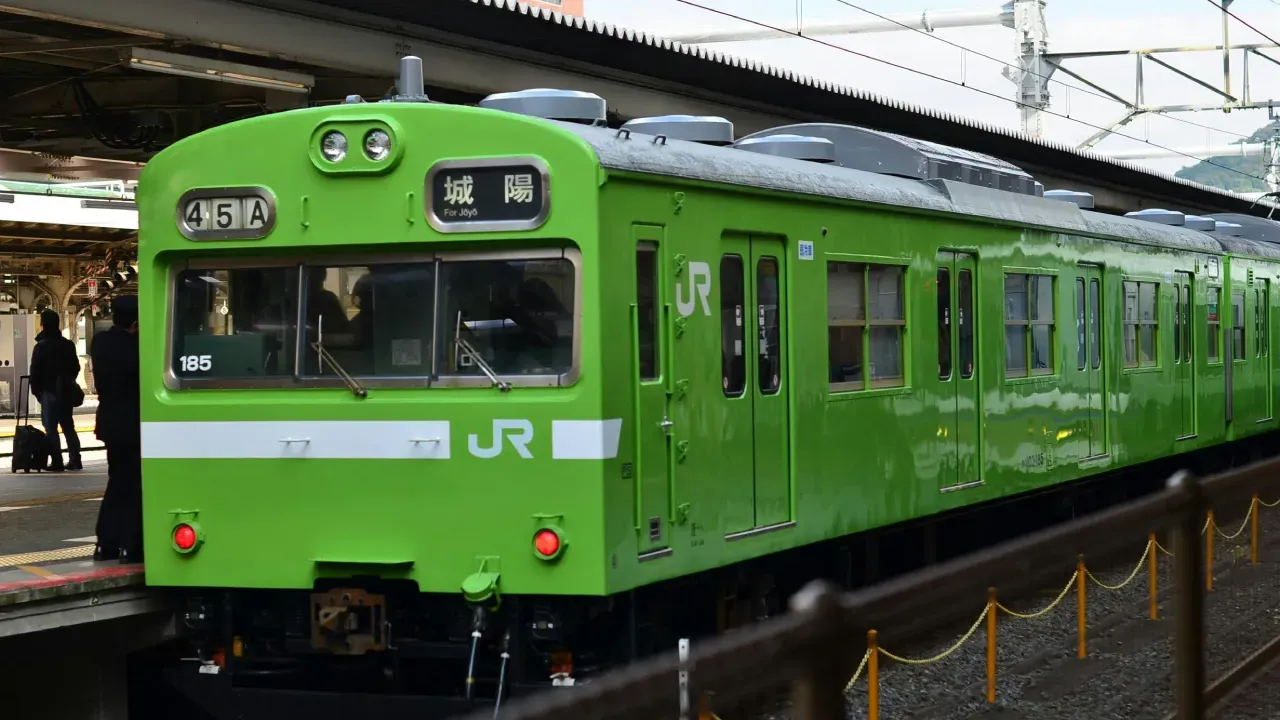
From Kyoto:
- Take the JR Yamatoji Line to Horyu-ji Station (approx. 45–50 minutes)
- 20-minute walk or short bus ride to the temple
Horyu-ji is often included in extended Nara itineraries or multi-day Japan cultural tours.
Also read: Traditional Japanese art
Where to Eat Near Horyu-ji Temple
Dining options are simpler compared to Nara Park but still satisfying.
Local Japanese
- Small soba and udon restaurants near Horyu-ji Station
- Traditional Japanese set meals in family-run eateries
Café Options
- Local coffee shops near the temple entrance
- Light snack counters within walking distance
Many travellers return to central Nara for a wider variety of restaurants.
Things to Know Before Visiting Horyu-ji
- Photography is restricted inside certain halls
- The complex is large but peaceful
- Wear comfortable shoes
- Allocate extra time for the Treasure Gallery
- Less commercialised than the Nara Park temples
Why Horyu-ji Is Worth Adding to Your Japan Itinerary
If Todai-ji represents imperial power, Horyu-ji represents origin. It preserves the architectural DNA of Japanese Buddhism and offers a rare opportunity to stand inside structures that predate most of Europe’s medieval cathedrals.
For travellers crafting a culturally rich Japan itinerary, combining Horyu-ji with Nara’s central temples provides historical continuity, from Buddhism’s introduction to its political consolidation.
If your Japan tour package already includes Kyoto and Nara, Horyu-ji adds depth, authenticity, and UNESCO heritage value.
FAQs
1. Where is Horyu-ji Temple located?
Horyu-ji is located in Ikaruga, Nara Prefecture, Japan. It sits about 12 km southwest of central Nara city. The temple is easily accessible from Kyoto by train in around 45–50 minutes.
2. Why is Horyu-ji famous?
Horyu-ji is famous for housing some of the world’s oldest surviving wooden buildings. It dates back to the 7th century and represents early Japanese Buddhism. The temple complex is also a UNESCO World Heritage Site.
3. How much is the Horyu-ji entrance fee?
The entrance fee is ¥1,500 for adults and ¥750 for children. The ticket includes access to both the Western and Eastern precincts. Prices may vary slightly depending on updates by temple authorities.
4. How long should I spend at Horyu-ji?
Most visitors spend around 1.5 to 2 hours exploring the temple complex. This allows time for both precincts and the Treasure Gallery. History enthusiasts may choose to stay longer.
5. Is Horyu-ji part of a UNESCO World Heritage Site?
Yes, Horyu-ji is part of the UNESCO-listed “Buddhist Monuments in the Horyu-ji Area.” It was among Japan’s first World Heritage Sites. Its preserved wooden architecture makes it globally significant.
6. Can Horyu-ji be visited as a day trip from Kyoto?
Yes, Horyu-ji can be visited as a half-day or full-day trip from Kyoto. The journey takes approximately 45–50 minutes by JR train. It is often combined with other Nara cultural sites.
7. Is Horyu-ji less crowded than Todai-ji?
Yes, Horyu-ji generally sees fewer tour groups than central Nara temples. Its location outside Nara Park keeps crowds moderate. This makes it ideal for travellers seeking a quieter experience.
8. What is special about the Horyu-ji pagoda?
The five-storey pagoda at Horyu-ji is one of the oldest wooden pagodas in the world. It dates back to the late 7th century. Its design reflects early Buddhist cosmology and continental influence.
9. What is the significance of the Horyu-ji Temple?
Horyu-ji represents the early establishment of Buddhism in Japan. It preserves architectural techniques from the Asuka period. The temple played a foundational role in shaping Japanese Buddhist culture.
10. Is Horyu-ji Temple worth visiting?
Yes, Horyu-ji is worth visiting for its historical and architectural value. It offers a peaceful alternative to busier temples in Nara. The 1,300-year-old wooden structures make it culturally exceptional.
11. What is the oldest surviving wooden building in the world?
The Kondo (Main Hall) at Horyu-ji is widely regarded as the oldest surviving wooden building in the world. It dates back to the late 7th century. Its timber framework has remained intact for over 1,300 years.