
9 Best French Slang Words You Should Know Before Visiting France

“Comment ça va?” might be the first French phrase you learn, but it won’t help much when locals start using everyday slang. From cafés in Paris to busy street markets, casual French sounds very different from what you’ll find in most language books. That’s where French slang comes in. Learning a few common slang words can make conversations easier to follow, help you understand locals, and make everyday situations feel less confusing. You don’t need to speak perfect French to use them. You just need to know the right words and when to say them. In this guide, you’ll discover popular French slang words, their meanings, pronunciation, real-life examples, and the situations where it’s best to use casual expressions or stick to formal French.
Key Takeaways
- Learning a few common French slang words makes everyday conversations easier to understand.
- Locals usually appreciate it when visitors try to speak French. Start with polite words like bonjour, merci, and s’il vous plaît.
- French slang is best used with friends or in casual places like cafés, bars, or markets.
- Use vous instead of slang when speaking to strangers, hotel staff, shopkeepers, or anyone in a formal setting.
When to Use French Slang
French has a clear line between formal and informal speech. Strangers, hotel staff, waitstaff and officials are addressed with “vous,” the formal “you,” along with a simple “bonjour” and “merci.” Slang belongs in casual settings, with peers, in relaxed conversations, or once a local has already switched to a more informal tone with you. Getting the politeness basics right matters far more than knowing any slang word on this list.
Common French Slang Words and Phrases

1. Arrête de te la péter – Stop showing off
- Meaning: This phrase is used when someone is acting too proud, showing off, or trying too hard to impress other people.
- When to use: Only with friends or people you know well. It can sound rude if used with strangers or in formal situations.
- Example: “J’apprécie ce que tu essaies de dire, mais arrête de te la péter.”
(I like what you’re trying to say, but stop showing off.)
2. Laisser tomber – Forget it
- Meaning: This expression means “forget it,” “never mind,” or “let it go.” It’s often used when someone wants to stop discussing something or give up on it.
- When to use: Perfect for casual conversations with friends, family, or classmates.
- Example: “Laisse tomber, tu ne comprends pas.”
(Forget it, you don’t understand.)
3. J’ai un petit creux – I’m a little hungry
- Meaning: A common and friendly way to say you’re feeling a little hungry. It doesn’t mean you’re starving, just ready for a quick bite.
- When to use: You’ll often hear this before heading to a café, bakery, or restaurant.
- Example: “Tiens, j’ai un petit creux, allons au café.”
(Hey, I’m a little hungry. Let’s go to the café.)
4. À plus (A+) – See you later
- Meaning: A short version of à plus tard, meaning “see you later.” It’s one of the most common casual goodbyes in French.
- When to use: Use it with friends, classmates, or colleagues. It’s also popular in text messages and online chats.
- Example: “À plus, on se voit demain !”
(See you later. See you tomorrow!)
5. Un boulot – A job or work
- Meaning: Boulot is an informal word for a job or work. Many French speakers use it instead of the more formal word travail in everyday conversations.
- When to use: Suitable for casual chats about your job, studies, or workload.
- Example: “J’ai trop de boulot.”
(I have too much work.)

6. Bouffer – To eat
- Meaning: This is a very casual way to say “to eat.” It often suggests eating quickly or eating a lot, similar to saying “grab some food.”
- When to use: Best used with friends or family. Avoid using it in formal situations or restaurants.
- Example: “J’ai bouffé au moins dix croissants, ils étaient super bons.”
(I ate at least ten croissants. They were really good.)
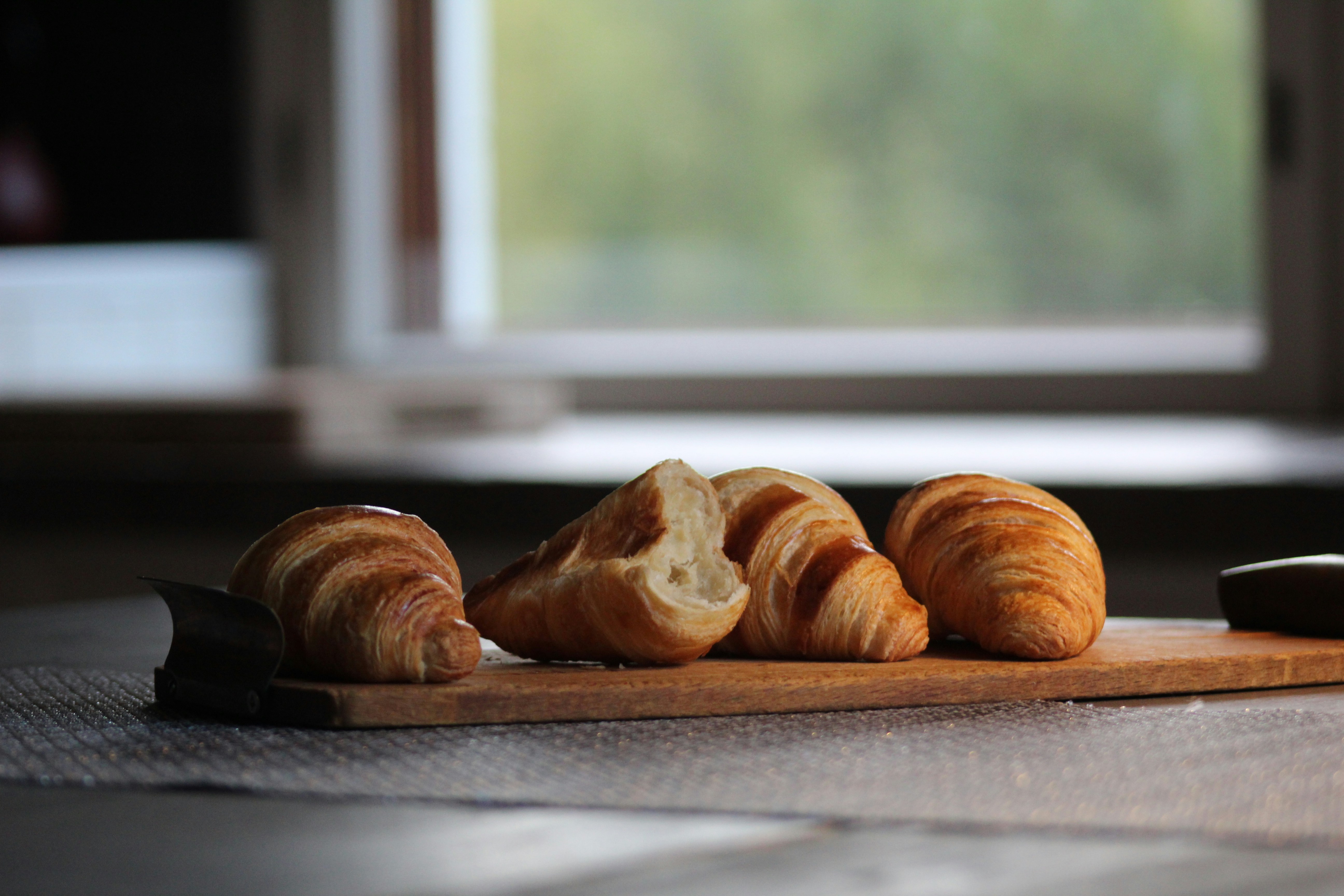
croissants- La bouffe
7. Une clope – A cigarette
- Meaning: Clope is the informal French word for a cigarette. You’ll often hear it in everyday conversations among smokers.
- When to use: Use it only in casual settings, as it’s slang and not suitable for formal conversations.
- Example: “Je peux te taxer une clope ?”
(Can I bum a cigarette?)
8. Ouf – Crazy or amazing
- Meaning: Ouf is a popular slang word used when something is surprising, unbelievable, exciting, or impressive. It’s especially common among younger French speakers.
- When to use: Use it to react to funny stories, exciting news, or anything unexpected.
- Example: “C’est ouf !”
(That’s crazy!)
9. Une poche – A bag (in Southern France)
- Meaning: In southern France, poche is often used to mean a shopping bag instead of its usual meaning, “pocket.” This regional difference can surprise many travellers.
- When to use: You may hear it while shopping at supermarkets, local stores, or markets in southern France.
- Example: “Vous avez une poche pour ranger les courses, s’il vous plaît ?”
(Do you have a bag for my groceries, please?)
What Is Verlan in French Slang?
Verlan is a popular type of French slang where the syllables of a word are switched around to create a new word. The name verlan itself comes from l’envers, which means “backwards.” For example, fou (crazy) becomes ouf. You’ll hear these words often in casual conversations, especially among younger French speakers. Learning a few common verlan words can make it much easier to understand everyday French and follow natural conversations.
Where You’ll Hear French Slang in France
Most French slang words are used in casual conversations, not formal situations. Here’s where you’re most likely to hear them:
- With friends and classmates: Words like ouf, bouffer, and arrête de te la péter are common in relaxed conversations.
- At work: You’ll often hear boulot instead of the more formal word travail when people talk about their jobs.
- At cafés or while eating: J’ai un petit creux is a natural way to say you’re feeling a little hungry before grabbing a snack or meal.
- While shopping in southern France: Some locals use une poche instead of un sac when talking about a shopping bag.
- In formal places: When speaking to hotel staff, shopkeepers, or older people, it’s better to use standard French and polite expressions instead of slang.
Tips for Using French Slang Naturally
Using French slang is fun, but using it at the right time makes all the difference. Keep these simple tips in mind:
- Start with polite French: Say bonjour, merci, and s’il vous plaît before using any slang.
- Use slang in casual conversations: It’s best with friends, classmates, or people around your age.
- Avoid slang in formal settings: Speak standard French when talking to hotel staff, shopkeepers, waiters, or officials.
- Listen before you copy: Pay attention to how locals use slang before trying it yourself.
- Learn the meaning first: Some slang words can sound rude or confusing if used in the wrong situation.
- Don’t overuse slang: A few well-placed words sound more natural than trying to use slang in every sentence.
- Keep learning new expressions: French slang changes over time, so you’ll always hear new words from younger speakers and different regions.
Final Thoughts: Should You Learn French Slang Before Visiting France?
None of these words are essential for a trip to France; plenty of travellers get by comfortably with “bonjour”, “merci”, and a phone translator. But dropping in even one or two of these French slang naturally, at the right moment, tends to get a smile rather than confusion. Combined with the basics of polite, formal address, a little slang goes a long way toward making a France trip feel more like a conversation and less like a transaction.
Planning the trip itself is the easier part. Explore France Tour Packages for itineraries covering Paris, Provence and beyond, and if shopping is on the agenda, our guide to shopping in Paris covers where to go by budget and style.
FAQs
1. What is French slang?
French slang is a collection of informal words and expressions used in everyday conversations. These words are common among friends, younger speakers, and in casual situations but are usually avoided in formal settings.
2. What are some common French slang words?
Some common French slang words include ouf (crazy or amazing), boulot (work), bouffer (to eat), and à plus (see you later). These words can help travellers understand casual conversations in France.
3. How do you say “how are you” in French slang?
In French slang, people often say ça va ? or ça roule ? to casually ask “how are you?” These expressions are mostly used with friends or people you already know.
4. What does “c’est ouf” mean in French slang?
“C’est ouf” means “that’s crazy” or “that’s amazing” in French slang. It comes from fou, meaning crazy, and is an example of verlan wordplay.
5. What is verlan in French slang?
Verlan is a type of French slang where parts of words are reversed to create new expressions. For example, fou becomes ouf, a word commonly used by younger French speakers.
6. How do you say “okay” in French slang?
A casual way to say okay in French slang is ok, d’accord, or sometimes ça marche. These expressions are commonly used in relaxed conversations with friends or locals.
7. Is French slang different from standard French?
Yes, French slang is different from standard French because it uses informal words and shortcuts that are not usually taught in language books. It is mostly used in casual conversations rather than professional settings.
8. What are some French slang phrases used in texting?
French texting slang often includes short expressions like à plus (see you later), mdr (laughing), and tkt (don’t worry). These are common in messages but may not be suitable for formal writing.
9. What are some French slang words for friends?
French slang words for friends include pote and mec, which are often used in casual conversations. They are similar to saying “buddy” or “dude” in English.
10. Why should travellers learn French slang before visiting France?
Learning French slang helps travellers understand real conversations beyond textbook French. A few common expressions can make interactions in cafés, markets, and social places feel more natural.

Recommended articles for you












Discover Packages

















Europe City Packages
Packages By Departure City
Packages By Theme
Europe Combo Packages
Europe Nearby Destinations

Need help in planning?
Talk to our Travel Experts