
UNESCO Sites in Sri Lanka: Complete List of 8 World Heritage Sites
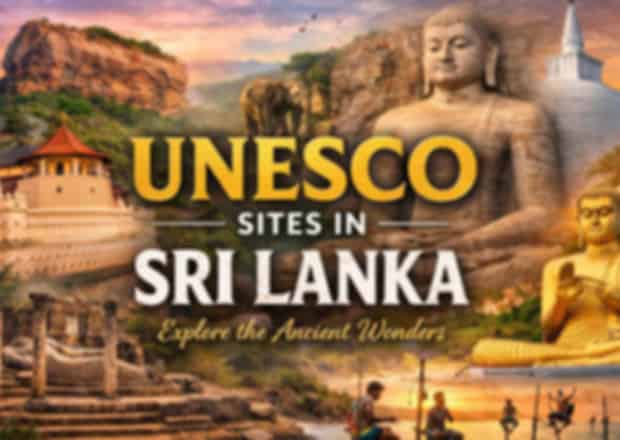
Sri Lanka isn’t just about beaches and wildlife; it’s a destination deeply rooted in history, culture, and timeless heritage. The UNESCO sites in Sri Lanka showcase the island’s rich legacy, from centuries-old kingdoms and sacred traditions to remarkable architecture and biodiversity. With 8 UNESCO World Heritage Sites, Sri Lanka offers travellers a chance to explore ancient cities, historic landmarks, sacred temples, and pristine natural landscapes.
From the sacred city of Kandy to the ancient rock fortress of Sigiriya and the iconic Dambulla Cave Temple, these sites reflect the true essence of Sri Lanka’s cultural and natural legacy. Whether you’re a history enthusiast, a culture explorer, or a curious traveller, these UNESCO sites in Sri Lanka promise experiences that go far beyond the usual Sri Lanka itinerary.
If you’re planning your journey, many Sri Lanka tour packages are thoughtfully designed to help you explore these heritage landmarks seamlessly, without missing out on their stories, significance, and beauty.
How Many UNESCO World Heritage Sites Are There in Sri Lanka?
There are 8 UNESCO World Heritage Sites in Sri Lanka, which are further divided into 2 categories:
- 6 Cultural Sites
- 2 Natural Sites
These sites reflect the country’s evolution, from ancient Sinhalese kingdoms to colonial influences and ecological richness.
Quick Overview of UNESCO Sites in Sri Lanka
| Site | Type | Location | Best For |
| Sigiriya | Cultural | Central | Iconic rock fortress |
| Anuradhapura | Cultural | North Central | Ancient capital |
| Polonnaruwa | Cultural | North Central | Medieval ruins |
| Dambulla | Cultural | Central | Cave temples |
| Kandy | Cultural | Central | Spiritual & cultural hub |
| Galle Fort | Cultural | South | Colonial charm |
| Sinharaja Forest | Natural | Southwest | Biodiversity |
| Central Highlands | Natural | South-central | Wildlife & trekking |
UNESCO Sites Map & Zones in Sri Lanka
Understanding the geography helps in planning a smarter trip:
- Cultural Triangle: Sigiriya, Dambulla, Anuradhapura, Polonnaruwa
- Hill Country: Kandy, Central Highlands
- South Coast: Galle Fort, Sinharaja Forest
Complete List of UNESCO Sites in Sri Lanka
Sri Lanka is home to 8 UNESCO World Heritage Sites, spanning ancient cities, sacred temples, colonial landmarks and biodiversity-rich natural landscapes. Here’s the complete list of the UNESCO Sites in Sri Lanka, along with what makes each site worth visiting.
1. Ancient City of Sigiriya (Lion Rock)

Often called the “Eighth Wonder of the World”, Sigiriya is a 200-metre-high rock fortress that combines architecture, engineering, and art from the 5th century. It was built by King Kasyapa. What makes Sigiriya truly unique is its fusion of palace, fortress, and landscaped gardens, all built on a single rock.
What makes Sigiriya a UNESCO Site: Sigiriya is recognised for its advanced urban planning, including water gardens, symmetrical layouts, and hydraulic systems far ahead of its time.
Top things to see:
- Lion’s Paw entrance carved into rock
- Sigiriya frescoes (ancient wall paintings)
- Mirror Wall with 1,800-year-old inscriptions
- Summit ruins of King Kasyapa’s palace
Time required: 2–3 hours
Best time to visit: Early morning (6:30 AM – 9:00 AM)
Insider tip: Most travellers underestimate the climb; after 9 AM, both heat and crowds increase significantly.
2. Sacred City of Anuradhapura
Anuradhapura, Sri Lanka’s first capital, dates back to the 4th century BCE and stands as one of the oldest continuously inhabited cities in the world. Anuradhapura reflects the rise of early Buddhist civilisation, with massive stupas, sacred relics, and an entire city built around spirituality and monastic life.
Why it’s UNESCO-listed: It showcases early Buddhist civilisation, monumental stupas, and sophisticated irrigation systems.
Key attractions:
- Ruwanwelisaya Stupa (massive white dome)
- Jaya Sri Maha Bodhi (sacred fig tree)
- Jetavanaramaya (one of the tallest ancient structures)
- Abhayagiri Monastery complex
Time required: Half to full day
Best time to visit: Morning or late afternoon
Pro tip: Hire a guide or tuk-tuk driver; it’s a vast site spread across multiple zones.
3. Ancient City of Polonnaruwa
Polonnaruwa, the medieval capital of Sri Lanka, represents a golden age of urban planning and architectural sophistication. Built after the decline of Anuradhapura, this UNESCO site in Sri Lanka is known for its well-preserved ruins, intricately carved stone structures, and advanced irrigation systems that highlight the ingenuity of ancient Sri Lankan kingdoms.
UNESCO significance: Known for its well-preserved ruins and advanced irrigation systems like Parakrama Samudra.
Must-see spots:
- Gal Vihara (four Buddha statues carved in granite)
- Royal Palace ruins
- Audience Hall & Lotus Bath
- Parakrama Samudra reservoir
Time required: 3–5 hours
Best time to visit: Morning
Pro tip: Cycle rentals are the best way to explore; distances between sites are large.
4. Rangiri Dambulla Cave Temple
Perched atop a rocky hill, the Dambulla Cave Temple is the largest and best-preserved cave temple complex in Sri Lanka, with a history spanning over 2,000 years.
Why UNESCO-listed: Its murals and statues represent a continuous tradition of Buddhist art.
What to explore:
- 5 caves with 150+ Buddha statues
- Ceiling murals depicting Buddha’s life
- Golden Temple at the base
Time required: 1.5–2 hours
Best time to visit: Early morning or sunset
Insider tip: Expect monkeys near the entrance. Keep your belongings secure.
5. Sacred City of Kandy
Nestled amidst misty hills, Kandy is Sri Lanka’s cultural and spiritual heart, and the last royal capital of the Sinhala kingdom. This UNESCO-listed city is home to the revered Temple of the Tooth Relic, making it one of the most important pilgrimage destinations for Buddhists worldwide. Unlike other heritage cities in Sri Lanka, Kandy is still alive with rituals, making it feel less like a monument and more like a living cultural centre.
UNESCO importance: It houses the Temple of the Tooth Relic
Top experiences:
- Temple of the Tooth rituals
- Kandy Lake walk
- Cultural dance performances
- Esala Perahera festival (July/August)
Time required: 1 full day
Best time to visit: Evening (for temple ceremonies)
Pro tip: Time your visit with the evening pooja for a more immersive experience.
6. Galle Fort
Galle Fort is a living heritage site that beautifully blends European colonial architecture with South Asian coastal charm. Originally built by the Portuguese in the 16th century and later fortified by the Dutch, Galle Fort is one of the best attractions in Sri Lanka. Unlike other colonial forts in Asia, Galle Fort is still a living town, where boutique cafes, heritage homes, and ocean-facing ramparts coexist within centuries-old walls.
Why it’s UNESCO-listed: It’s one of the best examples of a fortified European city in South Asia.
Things to do:
- Walk along the fort walls at sunset
- Visit Galle Lighthouse
- Explore cafes, boutiques & art galleries
- Discover hidden alleys and museums
Time required: 2–4 hours
Best time to visit: Evening
Pro tip: Stay overnight inside the fort for a more immersive experience.
7. Sinharaja Forest Reserve
Hidden in the southwestern part of Sri Lanka, Sinharaja Forest Reserve is the country’s last remaining tropical rainforest and a global biodiversity hotspot. This UNESCO-listed natural site is home to an incredible variety of biodiversity, making it one of the most important ecological zones in South Asia.
UNESCO significance: It’s a biodiversity hotspot with a high level of endemic species.
What to expect:
- Rare birds like the Sri Lankan blue magpie
- Unique reptiles and amphibians
- Dense jungle trekking trails
Time required: Half to full day
Best time to visit: January–April, August–September
Pro tip: Go with a naturalist guide; spotting wildlife on your own is difficult.
8. Central Highlands of Sri Lanka

The Central Highlands of Sri Lanka encompass a group of protected mountain areas known for their dramatic landscapes, unique ecosystems, and rare wildlife. Recognised as a UNESCO World Heritage Site, this region includes Horton Plains, the Knuckles Mountain Range, and Peak Wilderness, all of which play a crucial role in conserving the island’s biodiversity.
Why it’s UNESCO-listed: High-altitude ecosystems with unique flora and fauna found nowhere else.
Top experiences:
- World’s End cliff at Horton Plains
- Trekking in Knuckles Mountains
- Adam’s Peak pilgrimage
- Leopard spotting (rare but possible)
Time required: 1–2 days
Best time to visit: January–April
Pro tip: Start Horton Plains trek early (before 6 AM) to avoid clouds blocking the view.
Cost to Visit All UNESCO Sites in Sri Lanka
Planning your budget is crucial when covering all UNESCO sites in Sri Lanka. Here’s an approximate breakdown of entry fees for international travellers (with SAARC discounts where applicable):
UNESCO Sites Entry Fee Breakdown
| Site | Entry Fee (LKR) | Approx INR | Notes |
| Sigiriya | 11,935 | ₹3,460 | SAARC: ~6,820 LKR (USD 20); includes museum |
| Anuradhapura | 9,990 | ₹2,900 | Includes museum; half-ticket ~4,995 LKR |
| Polonnaruwa | 9,990 | ₹2,900 | Includes museum; cycle rental extra |
| Dambulla Cave Temple | 3,000–3,500 | ₹870–1,015 | Temple dress code applies |
| Kandy (Temple of Tooth) | 1,000–1,500 | ₹290–435 | City is free; small donation/entry for temple |
| Galle Fort | Free | Free | Museums extra (~₹87–350) |
| Sinharaja Forest Reserve | 2,700–3,500 + guide 2,500–4,000 | ₹780–1,015 + guide | Guide mandatory; total ~₹1,510–2,175 |
| Central Highlands (Horton Plains avg.) | 4,300–11,500 | ₹1,250–3,335 | Varies by gate/vehicle; arrive by 6–7 am |
Additional Costs to Consider
- Cycle rental in Polonnaruwa: ~LKR 690–1,035 (₹200–300)
- Local guides: ~LKR 1,725–6,900 (₹500–2,000) per site
- Transport between sites: ~LKR 51,725–103,450 (₹15,000–30,000), depending on your itinerary and transport type
Budget Insight
For a 7–10-day UNESCO trail in Sri Lanka, plan approximately:
- Budget trip: LKR 137,930–206,900 (₹40,000–60,000)
- Mid-range trip: LKR 206,900–310,345 (₹60,000–90,000)
How to Cover All UNESCO Sites in Sri Lanka (7–10 Days Itinerary)
Here’s a practical route followed by most Sri Lanka packages:
- Arrival & exploration from Colombo to Anuradhapura – ancient ruins & heritage (over the first two days)
- Cultural Triangle highlights covering Sigiriya & Dambulla – iconic landmarks (third day)
- Discovering Polonnaruwa’s historic ruins and architecture (fourth day)
- Hill country stay in Kandy with cultural and scenic experiences (fifth & sixth day)
- Into the Central Highlands with Ella or Horton Plains views (seventh day)
- Rainforest escape in Sinharaja Forest, rich in biodiversity (eighth day)
- Coastal finale in Galle with colonial charm before departure (last two days)
This route efficiently covers both cultural and natural sites.
Which UNESCO Sites Should You Prioritise?
- Short trip (4–5 days): Sigiriya, Kandy, Galle
- Culture-focused: Anuradhapura, Polonnaruwa, Dambulla
- Nature lovers: Sinharaja + Central Highlands
Best Time to Visit UNESCO Sites in Sri Lanka
- December to April: Ideal for cultural sites (Sigiriya, Kandy, Anuradhapura)
- January to April & August–September: Best for nature sites (Sinharaja & Highlands)
Note: Avoid peak monsoon months for smoother travel.
Read more: Best time to visit Sri Lanka
Travel Tips for Visiting UNESCO Sites in Sri Lanka
- Wear modest clothing at temples
- Start early to avoid crowds and heat
- Carry cash for entry tickets
- Hire guides at major sites for deeper context
- Stay hydrated, as many sites involve walking/climbing
Why UNESCO Sites in Sri Lanka Are Worth Visiting
UNESCO sites in Sri Lanka are not just tourist attractions; they are living stories of ancient kingdoms, spiritual traditions, and ecological richness. From the engineering brilliance of Sigiriya to the untouched biodiversity of Sinharaja, each site offers a completely different experience.
If you’re looking to truly understand Sri Lanka beyond its beaches, these heritage sites are essential. The easiest way to explore them all? Opt for a well-planned Sri Lanka itinerary that combines history, nature, and seamless travel.
FAQs
1. How many UNESCO World Heritage Sites are there in Sri Lanka?
A: Sri Lanka has 8 UNESCO World Heritage Sites: 6 cultural sites and 2 natural sites. They include ancient cities, sacred religious landmarks, colonial heritage and biodiversity-rich landscapes.
2. Which is the most famous UNESCO site in Sri Lanka?
A: Sigiriya, also known as Lion Rock, is arguably the most famous UNESCO site in Sri Lanka. Its ancient rock fortress, landscaped gardens, frescoes and panoramic views make it one of the island’s most iconic attractions.
3. Can you visit all the UNESCO sites in Sri Lanka in one trip?
A: Yes. You can visit all 8 UNESCO sites in around 7–10 days with a well-planned route. A typical itinerary connects the Cultural Triangle with Kandy, the Central Highlands, Sinharaja Forest and Galle.
4. What is the best time to visit UNESCO sites in Sri Lanka?
A: December to April is generally a good period for exploring cultural sites such as Sigiriya, Anuradhapura, Polonnaruwa and Kandy. For natural sites, conditions vary by region, so check local weather before planning hikes and rainforest visits.
5. Are there natural UNESCO sites in Sri Lanka?
A: Yes. Sri Lanka has two natural UNESCO World Heritage Sites: Sinharaja Forest Reserve and the Central Highlands of Sri Lanka. Both are recognised for their exceptional biodiversity, endemic species and unique ecosystems.
6. Which UNESCO sites are near Colombo?
A: Galle Fort is one of the most accessible UNESCO sites from Colombo and can be visited as part of a southern Sri Lanka trip. Kandy is also relatively accessible from Colombo, although it is farther inland.
7. Which UNESCO sites in Sri Lanka are cultural heritage sites?
A: Sri Lanka’s six cultural UNESCO sites are the Ancient City of Sigiriya, Sacred City of Anuradhapura, Ancient City of Polonnaruwa, Rangiri Dambulla Cave Temple, Sacred City of Kandy and Old Town of Galle and its Fortifications.
8. Is Sigiriya a UNESCO World Heritage Site?
A: Yes. Sigiriya is a UNESCO World Heritage Site recognised for its ancient urban planning, architecture, gardens, frescoes and hydraulic engineering. The rock fortress dates to the reign of King Kashyapa in the 5th century.
9. Is Kandy a UNESCO World Heritage Site?
A: Yes. The Sacred City of Kandy is a UNESCO World Heritage Site and was the last royal capital of the Kingdom of Kandy. Its most important landmark is the Temple of the Sacred Tooth Relic.
10. Is Galle Fort a UNESCO World Heritage Site?
A: Yes. Galle Fort and its fortifications are a UNESCO World Heritage Site. The historic fort showcases Portuguese and Dutch colonial architecture and remains a living urban area with shops, cafes, galleries and heritage buildings.
11. Can you visit multiple UNESCO sites in Sri Lanka on one trip?
A: Yes. Several UNESCO sites are located within practical travel distances of one another. Sigiriya, Dambulla, Anuradhapura and Polonnaruwa can be combined in a Cultural Triangle itinerary, followed by Kandy, the Central Highlands and southern sites.
12. Which UNESCO sites in Sri Lanka are best for nature and wildlife?
A: Sinharaja Forest Reserve and the Central Highlands are the best UNESCO sites for nature and wildlife. Sinharaja is ideal for rainforest trekking and birdwatching, while the Central Highlands offer mountain landscapes, endemic species and hiking opportunities.
13. Are all UNESCO sites in Sri Lanka open to tourists?
A: The major UNESCO sites in Sri Lanka are generally accessible to visitors, but opening hours, entrance rules and access to specific areas can vary. Natural sites may also have weather-related restrictions, so check local conditions before travelling.
Recommended articles for you







Discover Packages












Sri lanka City Packages
Packages By Departure City
Packages By Theme

Need help in planning?
Talk to our Travel Experts